REVIEW · ROME
Colosseum Small Group Experience Official Guided Tour
Book on Viator →Operated by Rome Colosseum Tours | Official Guided Tours · Bookable on Viator
Fast entry into Rome’s most famous amphitheater. This official Colosseum small group experience is built around efficient timed access and a strong route that pairs the arena with the nearby 24-hour Forum/Palatine tickets. I like that you’re not stuck staring at a guidebook alone, yet you still get freedom to wander afterward. One drawback to weigh: the day runs on tight timing, and security delays can change how smooth it feels.
You can choose a guided option or a self multilingual audio app option, with morning or afternoon start times to match your schedule. I also like the practical rule that keeps things moving: you’re expected at the meeting point with 30-minute early check-in, then you still need time to clear security. If you pick the audio option, you’ll need your own phone (no older than 2020) and bring earphones yourself.
In This Review
- Key highlights worth caring about
- Booking value: what your $59 actually buys
- Meeting at the Colosseum: timing that keeps you out of trouble
- What small-group size really changes on crowded days
- Entering the Colosseum: UNESCO status meets real-world logistics
- Roman Forum and Latin Forum Romanum: turning ruins into a city map
- Arch of Constantine and the Temple of Venus and Roma: two quick hits
- Palatine Hill: where emperors lived before you got the tickets
- Guided tour vs self audio: pick the mode that fits your brain
- If you book the guided option
- If you book the self audio option
- A few small details that can make or break the day
- Who this tour suits best (and who should reconsider)
- Should you book this Colosseum small-group experience?
- FAQ
- How long is the Colosseum small-group experience?
- Is this tour offered in English only?
- What’s included with the ticket?
- Are Roman Forum and Palatine Hill tickets valid after the tour?
- If I choose the self audio option, what do I need?
- Do I get a tour guide with every option?
- When should I arrive at the meeting point?
- Are bags and pets allowed?
Key highlights worth caring about
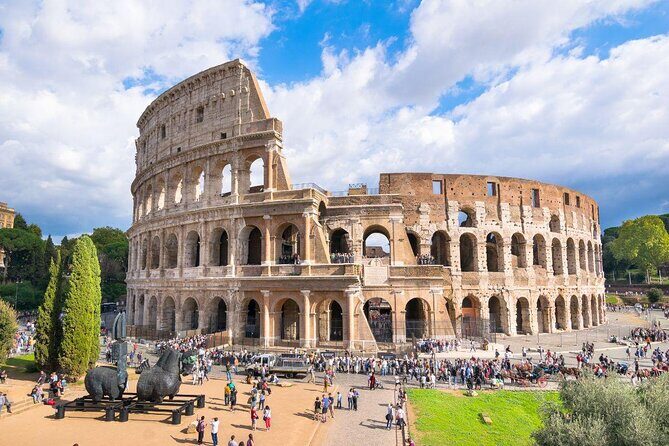
- Small group size (max 24) helps keep the experience more human than cattle-line tourism.
- Two different formats: live guide if you book the guided option, or a self-paced audio route with the app.
- Timed Colosseum entry plus admission and reservation fees included in your price.
- Roman Forum + Palatine Hill access for 24 hours, so you can come back later the same day.
- Route packed with big Roman landmarks, including the Arch of Constantine and the Temple of Venus and Roma.
Booking value: what your $59 actually buys
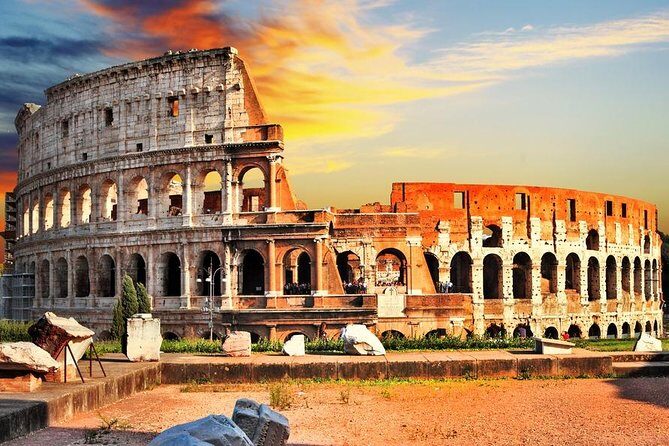
At $59.03 per person, you’re paying for more than a ticket. Yes, the Colosseum entrance ticket is included (valued at €18), and there’s also a Colosseum reservation fee included (valued at €2). On top of that, you get entry coverage for the Colosseum plus Roman Forum and Palatine Hill included for all options, with those Forum/Palatine tickets valid for 24 hours.
So the “extra” portion of the price is for the things that save your time and stress in Rome: a coordinated timed slot, a set meeting point, and the storytelling layer—either through a guide (guided option) or a phone-based audio route (self audio option). In a place where lines can turn your day into a waiting game, that value math usually holds up.
More Small Group tours for the Colosseum & Ancient Rome
Meeting at the Colosseum: timing that keeps you out of trouble
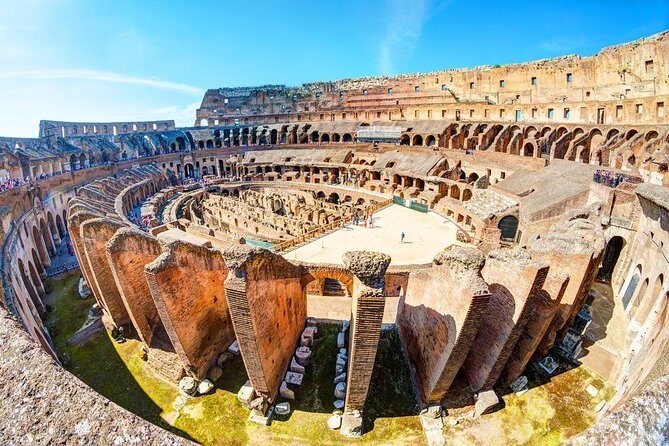
This tour is run like a timed entry product, not a casual stroll. You must be at the meeting point (Colosseum, Piazza del Colosseo, 1) for check-in at least 30 minutes before departure. The rules also say you should plan for security screening and allow at least 20 minutes to clear it.
That matters for two reasons. First, if you arrive late, you can’t join the group or reschedule without paying again (no refunds for no-shows are part of the deal). Second, security lines and capacity controls can delay departure, and the operator notes that timing can shift based on the monument’s administration and events.
Practical pro tip: treat the meeting point as your “start time,” not your “arrival time.” If you’re already hungry, sweaty, or juggling kids, you’ll feel the pressure. Build in buffer and you’ll stay in a better mood for the Colosseum itself.
What small-group size really changes on crowded days
With a maximum of 24 travelers, this format tends to feel tighter and more manageable than mass tours. That usually means:
- you’re more likely to move as a unit,
- it’s easier for the guide to keep track of everyone,
- and you spend less time playing catch-up in big crowd choke points.
In the best cases, guides run it with brisk, efficient routing through key spots. In the less-great cases (and you should know this risk), the pace and delivery can depend heavily on guide audio quality, microphone performance, and accent clarity. Some people have praised guides for moving smoothly through crowds; others have complained about thin microphone sound or an accent that made details hard to catch.
Bottom line: if you care most about accurate explanations, consider booking the guided option and be ready to choose earplugs/your comfort level appropriately. If you don’t want to rely on spoken commentary, the self audio option can be a steadier fit.
Entering the Colosseum: UNESCO status meets real-world logistics
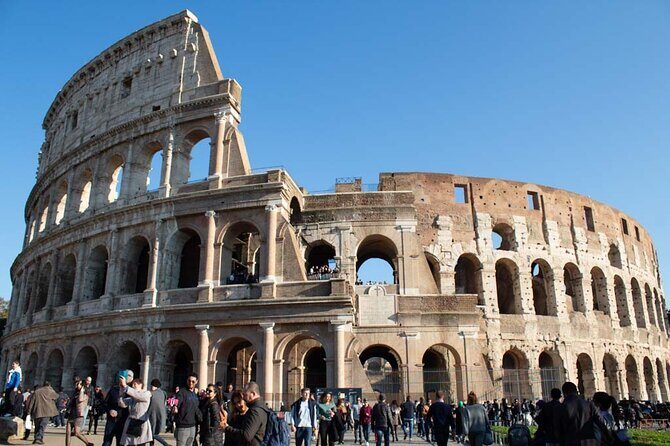
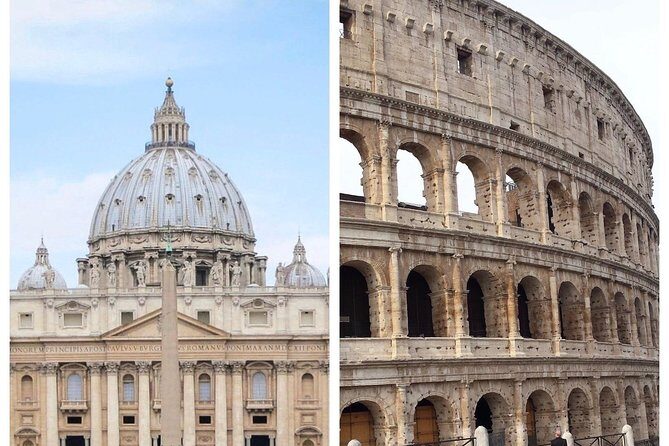
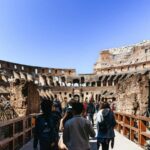
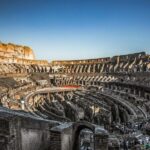
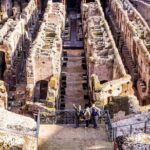
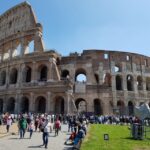
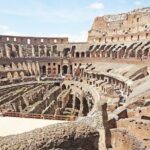
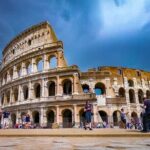
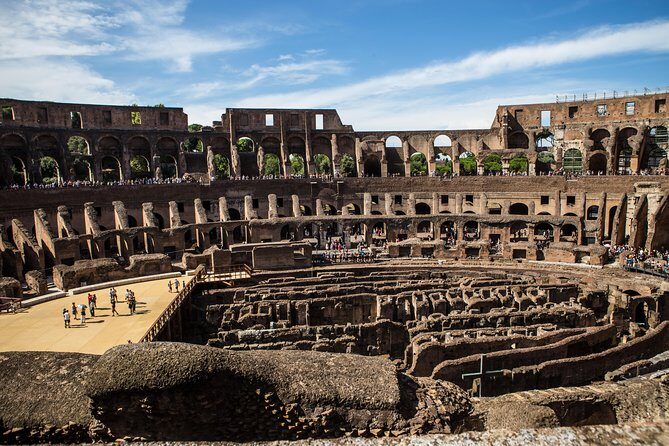
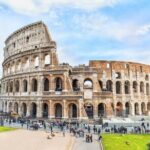
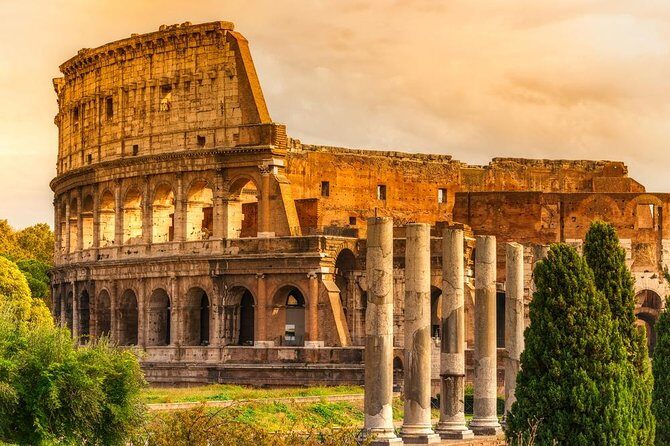
The Colosseum is one of those sights that looks familiar before you even go. Officially, it’s tied to Rome’s UNESCO listing, and it’s also been recognized as one of the New Seven Wonders of the World. What you’ll feel once you’re there is the scale plus the layered meaning—this was entertainment, politics, and public identity all at once.
Your ticket includes admission to the Colosseum. From there, the guided or audio portion is designed to point you toward the most meaningful parts of the experience so you’re not just walking perimeter loops wondering what you’re looking at.
A realistic note: while the general duration is listed around 1 hour to 1 hour 15 minutes, timing can stretch due to security, crowd movement, and capacity rules. That’s normal in the Colosseum world. If your schedule is tight after the tour, I’d plan a little slack.
Roman Forum and Latin Forum Romanum: turning ruins into a city map
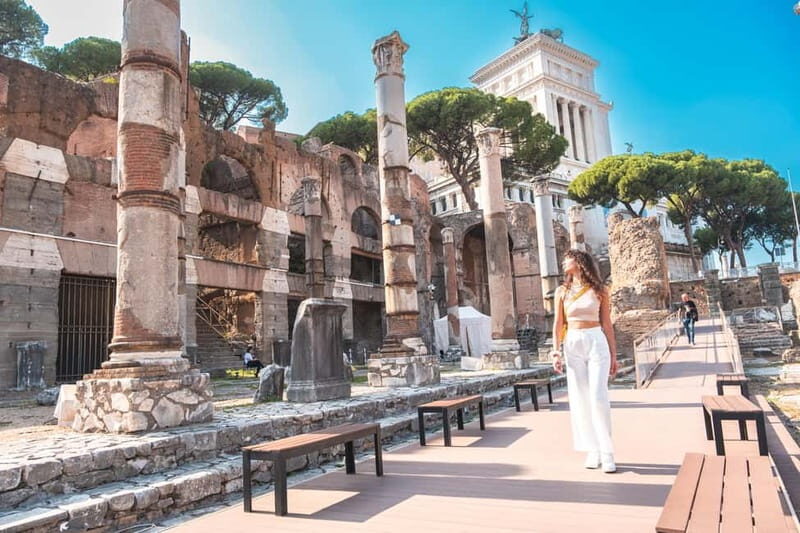
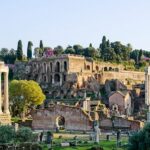
After the Colosseum, you move into the Roman Forum area—low ground between the Palatine and Capitoline hills, and one of the most important public spaces in ancient Rome. This isn’t just one temple or one arch. It’s a whole political and social machine laid out in stones.
Here’s what makes this stop special: it explains what the Forum was doing for Romans. In republican times it hosted public meetings and law courts, and it was even associated with gladiatorial combats. Under the empire, the Forum’s role shifted more toward ceremonial and religious spectacle, with major temples and monuments lining the space.
You may notice a lot of the surviving structures named in the route, including:
- Temple of Castor and Pollux
- Temple of the Deified Caesar
- Mamertine Prison
- Curia (senate house)
- Temple of Saturn
- Temple of Vesta
- Temple of Romulus
- Arch of Titus
- Arch of Septimius Severus
- Cloaca Maxima
Even if you’re not memorizing names, you’ll start recognizing the “why” behind each landmark: where power was displayed, where rituals happened, and how the Forum functioned as the city’s central stage.
One drawback to consider: if your guide’s mic is hard to hear, or your group moves fast, you might feel like you’re catching only fragments. If spoken explanations tend to slip past you, the self audio option can help because you can pause and replay as you walk.
Other guided tours in Rome

Arch of Constantine and the Temple of Venus and Roma: two quick hits
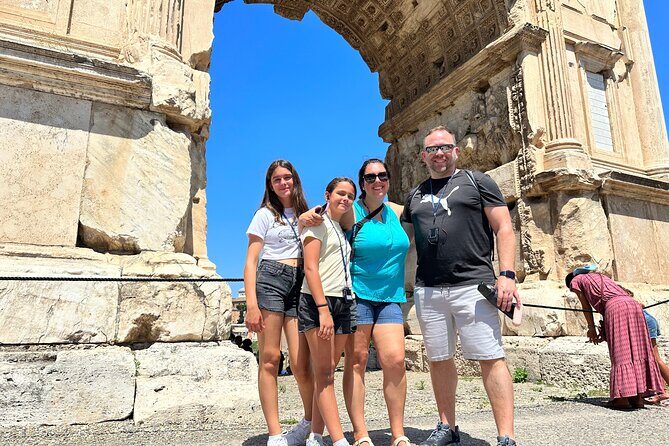
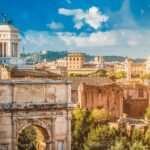
Between the Colosseum and Palatine Hill, you’ll see the Arch of Constantine. This triumphal arch commemorates Constantine the Great’s victory over Maxentius at the Battle of Milvian Bridge in AD 312. It was commissioned by the Roman Senate and dedicated in 315, and it’s the largest Roman triumphal arch.
Why it’s worth your time: it’s not just a monument. It’s an instant lesson in how Rome celebrated victories and staged authority on a major city route (the Via Triumphalis, used for triumphant processions). You’re seeing propaganda made of stone—massive, frontal, and meant to be read from a distance.
Then you have the Temple of Venus and Roma, thought to have been the largest temple in ancient Rome. It was created under Emperor Hadrian, with construction beginning in 121, inaugurated in 135, and completed around 141 (with restoration after damage by fire in 307). It’s dedicated to Venus Felix and Roma Aeterna—Venus as good fortune and Rome as eternal.
That pairing—Constantine’s victory and Hadrian’s Rome-by-design—gives you a strong sense of how Rome used architecture to fuse identity, religion, and political messaging.
Palatine Hill: where emperors lived before you got the tickets
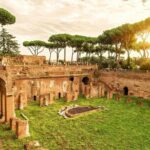
Palatine Hill is often described as the centremost of Rome’s Seven Hills, and it’s tied to the idea of being an early nucleus of the Roman Empire. Today it’s mostly an open-air museum, with the Palatine Museum housing finds from excavations.
This is where Rome shifts from “public stage” to “private power.” Imperial palaces were built here beginning with Augustus. Before imperial times, the hill was largely home to wealthy residents, so you’re stepping into a place that evolved from elite living into imperial rule.
If you like panoramic thinking, Palatine Hill is a smart follow-up to the Forum. You start to connect distance and control: the political center below, the authority above.
There’s also a natural story built into the landscape itself. Palatine originally had two summits separated by depression, called Palatium (the higher part) and Germalus (or Cermalus). The site’s recorded size expanded over time in regional catalogues, which hints at how the hill was managed as an essential zone, not a casual neighborhood.
Guided tour vs self audio: pick the mode that fits your brain
You’ll choose between an official guided tour option and a self audio-guided option.
If you book the guided option
A tour guide is included, and they’re the person providing live interpretation as you move through Colosseum and the Forum/Palatine area. Some guides have earned praise for strong organization and efficient routing even with crowds. Names that have shown up in positive experiences include Eva and Eddie/Eddy, with mentions of clear, patient explanations and an archaeologist-style approach.
Still, the risks are real. Some visitors have flagged microphone quality and speech clarity as issues. And pacing can be a mismatch if you prefer slower, longer stops.
If you book the self audio option
You’ll get a multilingual audio storytelling app (English plus Chinese, German, French, Italian, Spanish). It’s described as unlimited access to self-guided features, so you can keep using the app as you explore within the area.
But you need your own earphones (not included). And your smartphone must be of the latest generation, with a cutoff stating no older than 2020. If your phone is an older model, you could end up unable to use the app as intended—so check that before you go.
I like the self audio format when I want control: you can pause at a specific arch or temple and spend a few extra minutes reading the visual clues, instead of racing to “the next stop.”
A few small details that can make or break the day
These are the kinds of rules that sound boring until you’re standing in front of a locked gate:
- Small bags only: large bags and suitcases aren’t permitted, and there are no cloakrooms at the monument.
- ID must match the booking: you’ll need a valid passport or ID document matching the full names provided when booking.
- Pets aren’t allowed inside the venue.
- Children must travel with an adult.
Also, expect some variation. The operator warns that exact timings and reservations can change depending on administration availability and decisions on the booking day. Weather can also affect conditions in outdoor areas like Palatine Hill.
Who this tour suits best (and who should reconsider)
This is a good fit for:
- First-timers who want the big sights linked together in one efficient run
- People short on time who still want meaningful context at Colosseum, Forum, and Palatine Hill
- Visitors who like having structure, but also appreciate that Forum and Palatine access runs for 24 hours afterward
It’s a weaker fit if:
- You’re extremely sensitive to sound quality and can’t handle mic audio
- You strongly dislike strict timing rules and long security lines
- You plan to move slowly and would resent being grouped and redirected
Should you book this Colosseum small-group experience?
Yes—if you want a time-managed visit that covers the Colosseum and the surrounding power core of Rome in one package. The value is strongest when you treat it as a ticketed, organized entry system with built-in storytelling, plus the practical perk of returning later for Forum/Palatine within the same 24-hour window.
I’d especially book it if you’re the type who gets more out of your photos when you understand what you’re photographing. If you tend to zone out during guided talks, the self audio option can still work well because you control the pace.
Just do two things before you go: bring a phone that meets the app requirements (if using audio), and plan to arrive early enough to clear security without stress.
FAQ
How long is the Colosseum small-group experience?
It’s listed at about 1 hour to 1 hour 15 minutes, though actual timing can vary based on security and monument capacity regulations.
Is this tour offered in English only?
The experience is listed as offered in English. For the self audio option, the audio app also supports multiple languages.
What’s included with the ticket?
You get entrance coverage for the Colosseum, Palatine Hill, and the Roman Forum for all options, with Colosseum entry and reservation fees included as part of the package.
Are Roman Forum and Palatine Hill tickets valid after the tour?
Yes. Palatine and Roman Forum entry tickets are valid for 24 hours for both options.
If I choose the self audio option, what do I need?
You’ll need a smartphone (no older than 2020) and your own earphones, since earphones are not included.
Do I get a tour guide with every option?
Tour guide service is included only if you choose the guided tour option. If you choose self audio, a tour guide is not included.
When should I arrive at the meeting point?
You’re required to be at the meeting point for check-in at least 30 minutes before the tour departure time, and you should allow at least 20 minutes for security.
Are bags and pets allowed?
Large bags/backpacks/suitcases are not permitted, and only very small bags are allowed. Pets are not allowed inside the venue.