REVIEW · ROME
Colosseum and Palatine Hill: Unveil Rome’s Ancient Spectacles
Book on Viator →Operated by ROMA IN TOURS · Bookable on Viator
Three sites, one unforgettable walk through Rome. In about two hours, you connect the Colosseum, the Roman Forum, and Palatine Hill into a single story, with reserved entry and a certified guide who keeps the details organized. You also get a mobile ticket, so you’re not stuck hunting paper in the middle of the crowd.
I love how the route follows Rome’s real center of power: you’ll walk along the Via Sacra and see where emperors and generals once paraded, then turn toward Palatine Hill to make sense of the legends. Another big plus is the way the guide anchors what you’re seeing with dates and names, from Vespasian and Titus to the myths of Romulus and Remus.
One consideration: this is a shared group tour (up to 24 people), so if you want lots of back-and-forth questions, you may have to work with the group pace. Also, the time you select can shift to another slot on the same day if that start time runs into ticket timing limits.
In This Review
- Key things to know before you go
- How the 2-hour route makes the big sights make sense
- Entering the Colosseum with reserved timing and a guide’s map
- Roman Forum: from marketplace to the main street of emperors
- Palatine Hill: myths, palaces, and Rome’s top vantage point
- Price and value: what $162.19 really covers
- Group size, guide quality, and the question-time tradeoff
- Meeting point and what to bring to avoid losing time
- Should you book this Colosseum, Roman Forum, and Palatine Hill tour?
- FAQ
- Is this tour private?
- What language is the tour offered in?
- How long is the experience?
- What tickets are included?
- What identification do I need to enter?
- Is food or drink included?
Key things to know before you go
- Reserved entry for the Colosseum and Roman Forum, plus Palatine Hill access, so you’re not piecing tickets together on the fly
- A structured 2-hour loop that gives you 40 minutes at each stop: Colosseum, Forum, and Palatine Hill
- English-language guidance with a certified guide
- Identification matters: your passport or ID must match the booking name to get in
- Shared group dynamics: up to 24 people, which can limit questions depending on the day
- Plan for time shifts: if your chosen start time is unavailable, you may be moved to another slot the same day
How the 2-hour route makes the big sights make sense
Rome’s ancient sites can feel like three separate movie sets when you visit them alone. This format fixes that by keeping the sights close in time and linking them with a narrative: spectacle (the Colosseum), politics and religion (the Roman Forum), and the origin story and imperial power base (Palatine Hill).
You’ll spend roughly 40 minutes at each place—Colosseum first, then the Roman Forum, then Palatine Hill—so the tour doesn’t pretend you’ll see everything in one go. Instead, it helps you see the key parts quickly: the big architectural moments, the main streets and civic buildings, and the hill that anchors Rome’s founding myths.
It’s also a smart use of a limited schedule. The tour’s duration is short enough that you can still plan a second activity the same day, but not so short that you barely step inside.
More Colosseum, Forum & Palatine combos for the Colosseum & Ancient Rome
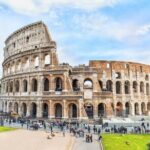
Entering the Colosseum with reserved timing and a guide’s map
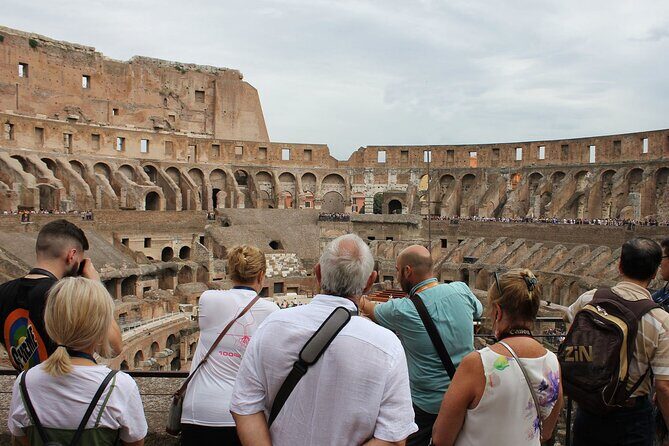
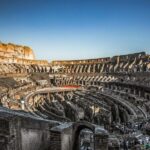
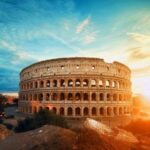
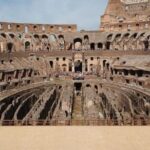
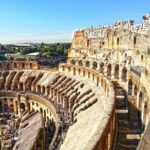
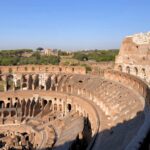
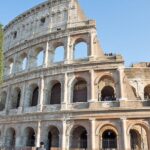
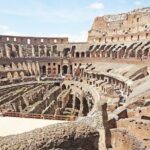
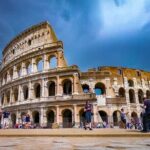
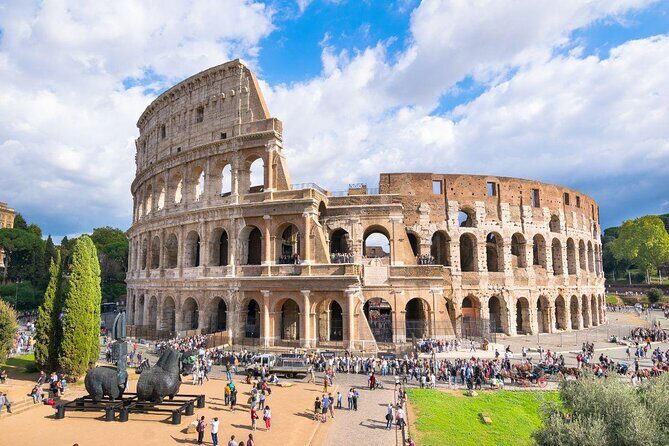
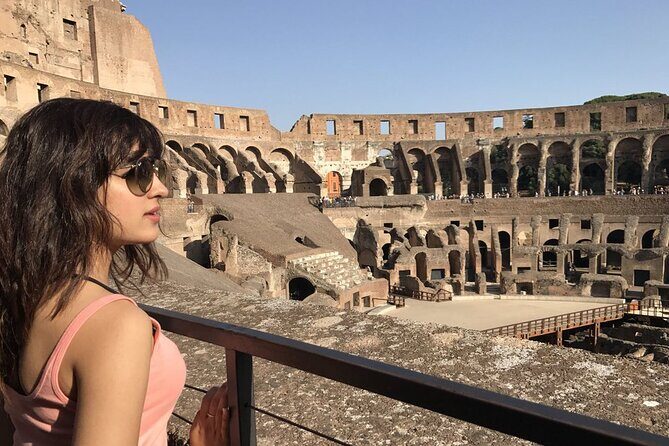
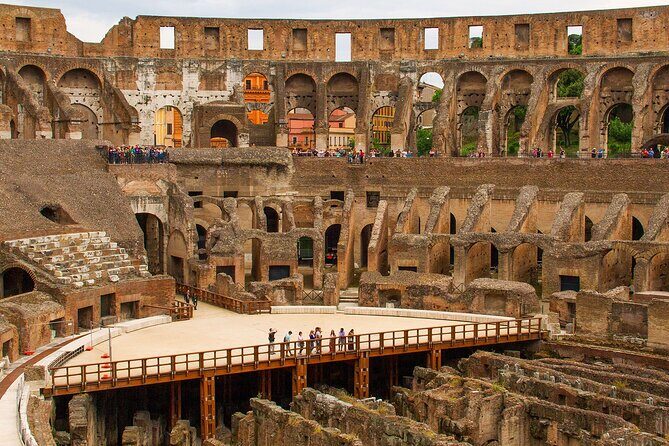
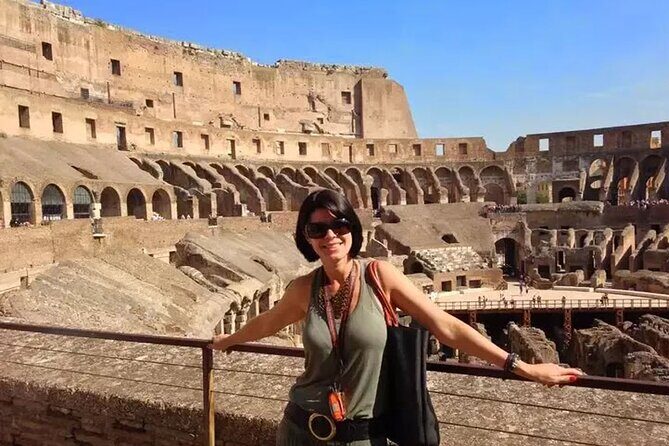
The Colosseum is the star for a reason: it’s the largest Roman amphitheater in the world, with capacity estimates ranging from about 50,000 to 87,000 spectators. Even if you’ve seen photos, the scale hits different once you’re inside the structure and the stone framing pulls you toward the arena.
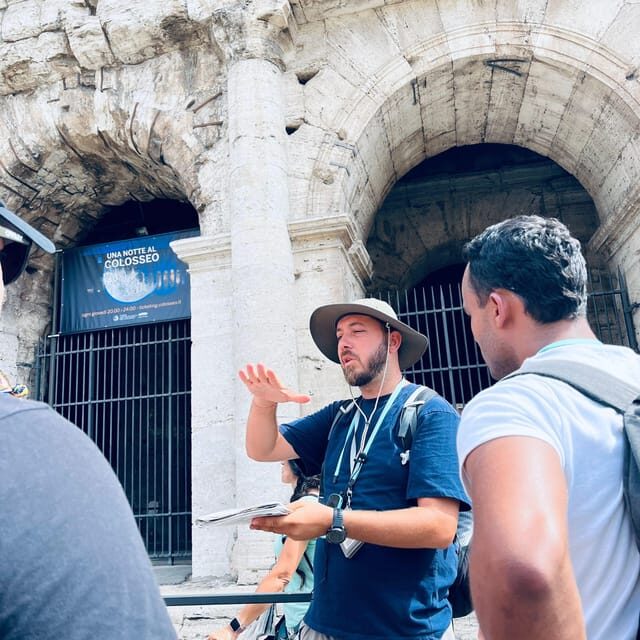
This is a place where context matters. You’ll learn that it was originally called the Flavian Amphitheater (in Latin, Amphitheatrum Flavium / Amphitheatrum), built on the eastern edge of the Roman Forum area. Construction started under Vespasian in 70 AD and was completed under Titus, who inaugurated it on April 21, 80 AD. Later changes came under Domitian in 90 AD.
You’ll also hear why the name Colosseum became common only in the Middle Ages. The term is connected to a deformation of the Latin adjective colosseum, meaning colossal—linked to how it looked among the smaller, low houses of the time.
What I like for practical travelers: reserved entry plus a guide usually means less time “figuring out where to stand.” It still won’t be a quiet experience—Rome can be crowded—but you’ll spend more minutes reading the building instead of waiting at the wrong entrance.
Small reality check: a shared group can make it harder to stop, stare, and ask follow-ups. If you’re the type who loves details, keep a short list of questions ready and ask during natural pauses.
Roman Forum: from marketplace to the main street of emperors
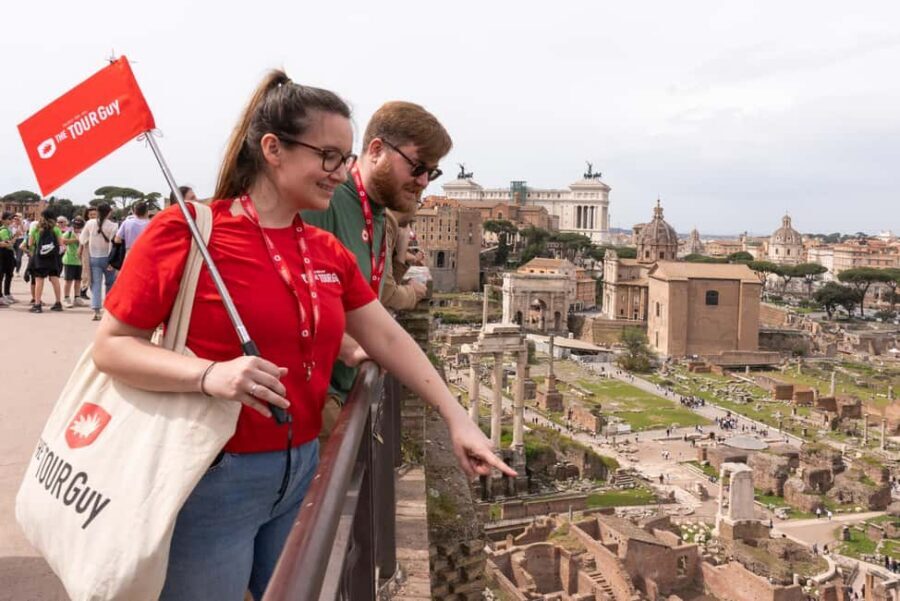
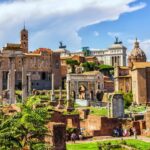
After the Colosseum, the Roman Forum feels like a different kind of power. It began as a marketplace area, and citizens called it the Forum Magnum—often simply Forum—so it wasn’t just ceremonial. It became Rome’s central zone for commerce and religion, surrounded by ruins of government buildings that stretch across centuries, including monuments as old as the 7th century BC.
Your walk includes the Via Sacra, the main street of Ancient Rome. This is the route where emperors such as Augustus and Hadrian, and generals celebrating triumphs, paraded toward the Forum. Even without seeing the original crowds, you can picture the choreography: processions, speeches, civic drama—played out where stone remnants still line your path.
The best part of the Forum segment is the variety of spaces you’re guided through. The tour includes time at major areas such as:
- the interior of the old Senate
- the dwellings of the Vestal Virgins
- the Temples of Vesta
- the area of Septimius Severus
- the Triumphal Arches of Titus
Seeing these in a tight sequence helps you understand why people described this zone as Rome’s operating center. You’re not only looking at “cool ruins,” you’re seeing how religious authority, law, and public ceremony were tied together.
Practical tip: the Forum is outdoors and uneven in places. Wear shoes you trust and keep water in your daypack when the weather is warm. Even a short 40-minute stop can feel longer when you’re trying to read stone text while avoiding slips.
Palatine Hill: myths, palaces, and Rome’s top vantage point
Palatine Hill is the kind of stop that can get overlooked—especially when people only chase the Colosseum “photo moment.” The tour keeps Palatine Hill in the middle of the experience on purpose, because you can’t truly understand Rome’s beginnings without it.
From this hill you’ll connect three big ideas:
1) It towers over the Roman Forum and the Circus Maximus.
2) The ruins of ancient palaces, once home to emperors, still show the elite scale of life here.
3) It sits at the center of Rome’s most important myth: the legend of Romulus and Remus.
The payoff is that your mental picture of Rome becomes more coherent. The Colosseum shows public spectacle. The Forum shows civic and religious authority. Palatine Hill shows where leadership anchored itself—both in real power and in founding legend.
If you’re a first-time visitor: Palatine Hill is where the tour starts to feel more personal. It’s one thing to recognize names like Augustus; it’s another to stand on the hill that shaped how Romans explained where they came from.
Price and value: what $162.19 really covers
At $162.19 per person for a tour that’s about two hours, the value comes from three things: the guide time, the entry access across multiple sites, and the fact that reservations are part of the package.
Here’s what’s explicitly included:
- Certified guide
- Palatine Hill entrance ticket
- Entrance ticket to the Roman Forum
- Colosseum entrance ticket valued at €18 per person
- Colosseum reservation fee valued at €2 per person
- Online support and an online consultant to send boarding information
- Mobile ticket
- Offered in English
That mix is important. You’re paying for fewer unknowns on the day of your visit. When tickets and reservation fees are wrapped into the tour, you can spend your energy reading sites instead of comparing ticket types and entry rules.
What’s not included: food and drink, plus round-trip hotel transfers. So budget for water and a snack if you’re doing this earlier in the day or pairing it with another activity.
Also note the booking demand: on average, this tour is booked about 245 days in advance. That’s a strong sign that the schedule is popular, so if you have a must-do time slot, it’s worth locking it in early.
More Palatine Hill tours for the Colosseum & Ancient Rome

Group size, guide quality, and the question-time tradeoff
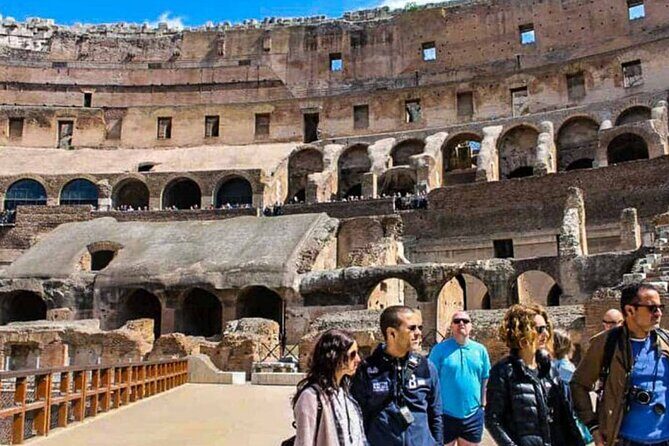
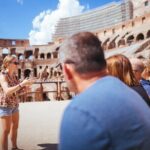
This tour is shared, not private, with a group size that can be 1 to 24 people. That range matters. In a smaller group, you can get more personal interaction. In a larger one, the guide has to keep everyone moving, and you’ll likely get fewer chances to ask long questions.
The good news is that guide quality seems to vary in a way you can plan around. In the reviews, Francesca is singled out for being fabulous, with strong English and a pleasant, easy style. If your tour happens to be led by someone like that, you’ll get more than facts—you’ll get explanations that make the stones feel connected instead of random.
Still, manage expectations: when the group is bigger, you may have less time to linger at a single arch or corner of the Forum. If you’re the type who needs to stop repeatedly to absorb details, consider adding time on your own after the tour for slower wandering.
Meeting point and what to bring to avoid losing time
The meeting point is Via di S. Giovanni in Laterano, 14, 00184 Roma RM, Italy. The tour ends back at the same meeting point.
Before you go, get your day organized so entry is smooth:
- Bring a valid passport or identification document that matches the name you used at booking.
- Expect to use a mobile ticket.
- Leave a WhatsApp number so support can contact you once you book.
- Plan to arrive with a little buffer at the start time so you’re not rushed before your Colosseum entry.
The meeting point is near public transportation, which helps if your plans in Rome change. But don’t rely on last-minute sprinting. With ancient sites, the bottlenecks tend to be the same each day.
One more real-world note: if the chosen time slot isn’t available close to the date, you may be transferred to another time on the same day. On last-minute bookings, if seats are unavailable, the option may be moved to the following day.
Should you book this Colosseum, Roman Forum, and Palatine Hill tour?
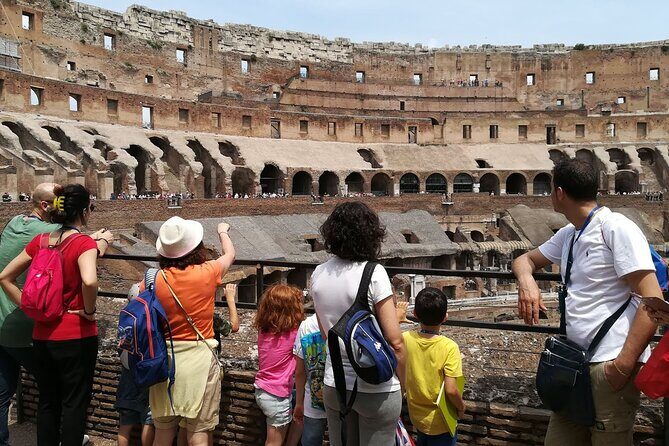
I’d book it if you want a guided route that connects the big three ancient stops without turning your day into ticket-stress and map-stress. It’s a good fit for first-timers, time-crunched visitors, and anyone who wants Roman ruins explained with names, dates, and clear wayfinding—especially since the tour includes reserved entry and access to all three sites.
I would think twice if you’re set on a private experience or you dislike group-paced sightseeing. Because it’s shared (up to 24 people), the pace can limit questions and spontaneous detours. Also, if you’re locked into a tight schedule with other timed reservations, remember there can be start-time shifts to another slot on the same day.
If your goal is to see the Colosseum properly, walk the Forum’s main civic spaces, and finish on Palatine Hill to tie it all to Rome’s founding story, this is a practical, value-based way to do it in about two hours.
FAQ
Is this tour private?
No. It’s a shared tour with a group size that can range from 1 to 24 people.
What language is the tour offered in?
The tour is offered in English.
How long is the experience?
It’s approximately 2 hours.
What tickets are included?
You get entrance tickets for Palatine Hill and the Roman Forum, plus Colosseum entrance with a reservation fee included.
What identification do I need to enter?
You must present a valid passport or identification document that matches the name used when you booked.
Is food or drink included?
No. Food and drink are not included.