REVIEW · ROME
Rome Colosseum, Roman Forum & Palatine Hill Entry with AudioGuide
Book on Viator →Operated by Reliant Tours · Bookable on Viator
Three stops, one ticket, at your pace. This experience strings together the Colosseum, Roman Forum, and Palatine Hill on the same day, using a timed start so you can arrive, get inside, and move without waiting on a group. I like the self-guided format here because you control the walking pace and photo stops, and I like that you still get context through an English digital audio guide.
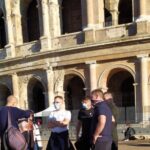
One caution: you do not skip the mandatory security checks. Even with timed entry, you’ll still need to plan time for security, so go in ready to handle crowds without getting grumpy.
If you’re aiming for a 2.5–3 hour Rome power walk, this is a strong fit. You’ll start at Piazza del Colosseo, 1, then finish back at the same meeting point, with bathroom access on site and room to add temporary exhibitions if you feel like it.
In This Review
- Key Things to Know Before You Go
- Entering the Colosseum With a Timed Ticket
- Roman Forum Access: Power, Courts, and Old-School Politics
- Palatine Hill: Rome’s Earliest City Core to Imperial Apartments
- The Audio Guide Reality: English on WhatsApp, Your Phone, Your Headset
- Price and What You’re Actually Paying For
- When to Go: Morning vs Afternoon With Real Crowd Logic
- Smart Tips to Avoid the Usual Ticket-Access Problems
- Should You Book This Colosseum, Roman Forum & Palatine Hill Entry With Audio?
- FAQ
- How long is the Colosseum, Roman Forum & Palatine Hill entry experience?
- Is the tour guided?
- What’s included with the ticket for the Colosseum?
- Which areas do I have access to for the Roman Forum and Palatine Hill?
- What language is the audio guide in?
- How do I get the audio guide on my phone?
- Do I need to bring headphones?
- Where is the meeting point?
- Can I change or cancel the booking?
Key Things to Know Before You Go
- Timed Colosseum entry helps you avoid the slowest ticket lines
- First and Second Tier access means you’re in the main venue areas, not the arena floor
- Open entrance to the Roman Forum, Palatine, and Imperial Forum keeps the day flexible
- English audio guide via WhatsApp is delivered digitally to your phone
- No live guide and no headset included, so bring your own listening setup
- Security still required even if the ticket queue is shorter
Entering the Colosseum With a Timed Ticket

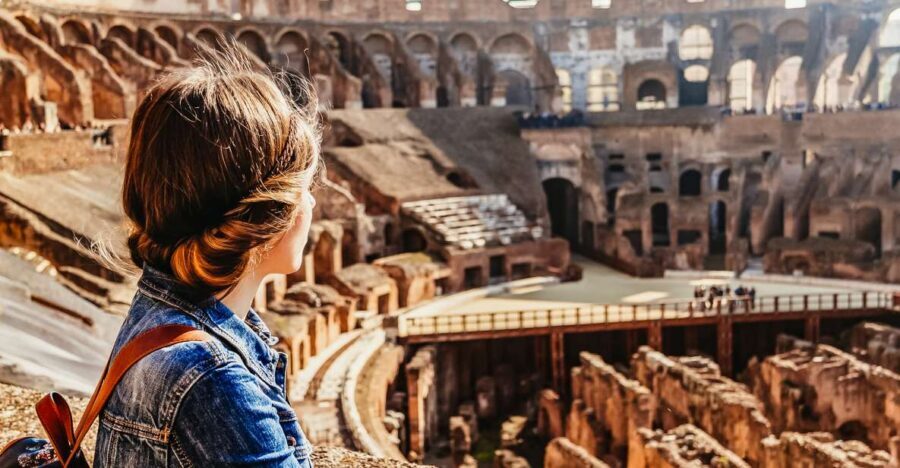
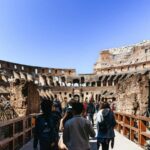
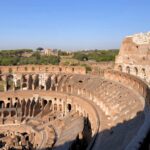
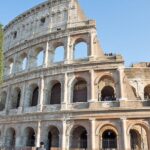
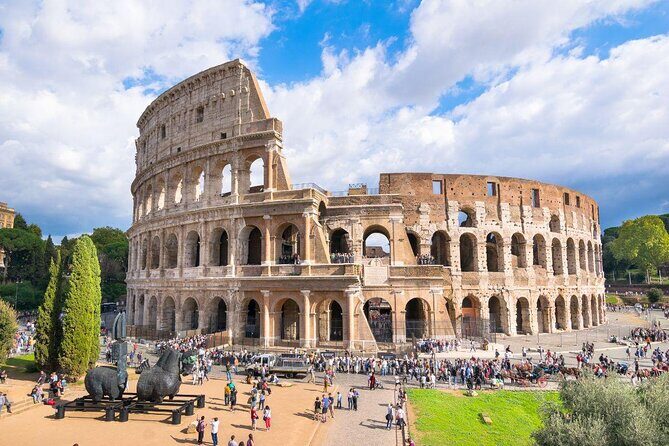
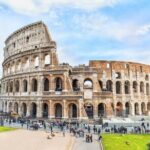
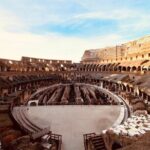
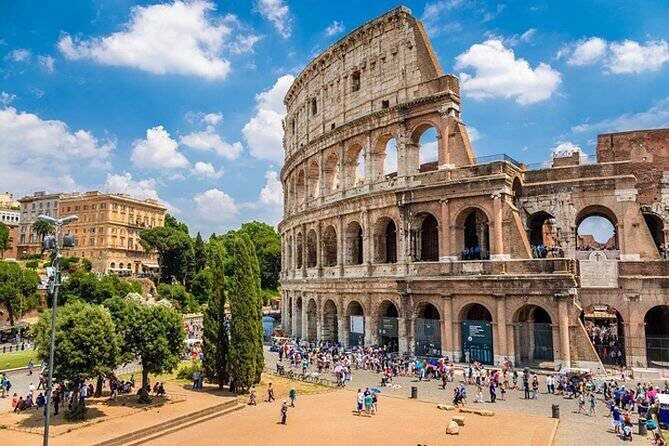
The Colosseum is the kind of place that makes you lower your phone and look up. It’s the Flavian Amphitheatre, built in the 1st century CE under the emperors of the Flavian dynasty, and it earned its popular name from a nearby colossal statue. More than a big stone circle, it was a working machine for public spectacle—think gladiatorial games and animal hunts—plus complex stage-related engineering that supported the show.
This ticket gets you into the Colosseum at a precise time, which is the main reason it’s worth booking instead of just showing up and hoping. The big practical win is that you’re not spending your prime morning or afternoon staring at the most frustrating part of the process: the ticket office queue.
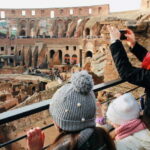
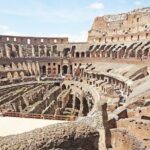
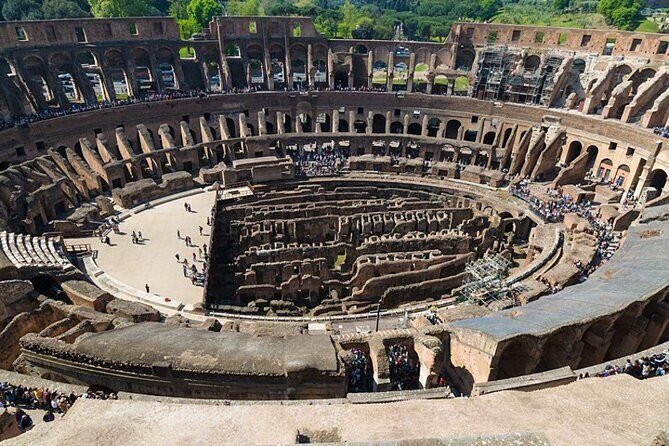
Inside, you’ll explore at your own speed. That matters because the Colosseum isn’t one straight walk—it’s layers of arches, viewpoints, and spots where you’ll want an extra minute to match what you’re seeing to what you’re learning. You’ll also have access to the first and second tiers, which keeps you in the heart of the arena’s architecture without trying to squeeze in extra areas that aren’t included here.
Drawback to watch for: if you’re expecting to step straight in with no security time, temper that idea. The “skip-the-ticket-line” angle is about ticket handling, not the mandatory checks. Build in patience, because crowds can make everything feel slower than the ticket time suggests.
More Colosseum, Forum & Palatine combos for the Colosseum & Ancient Rome
Roman Forum Access: Power, Courts, and Old-School Politics
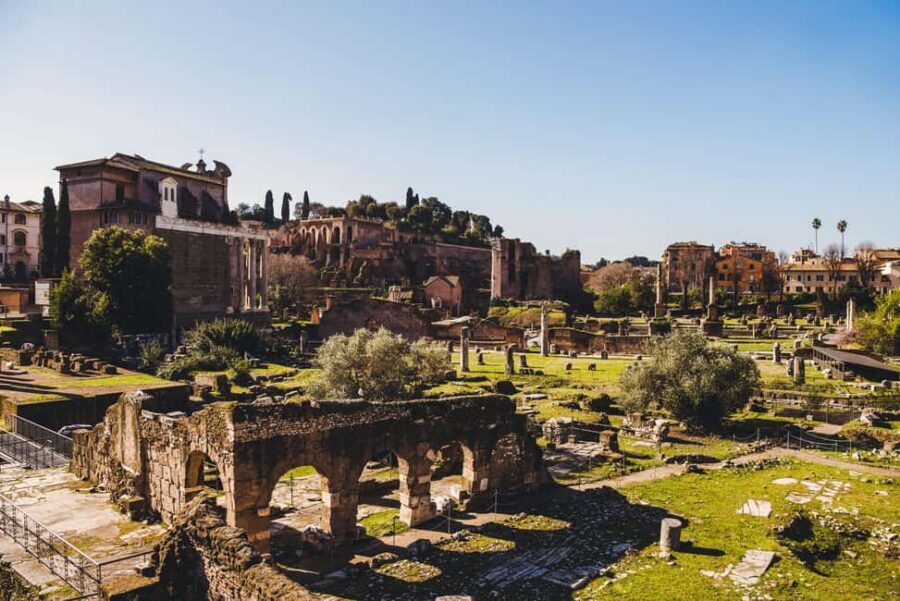
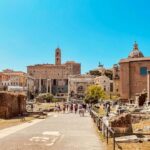
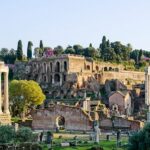
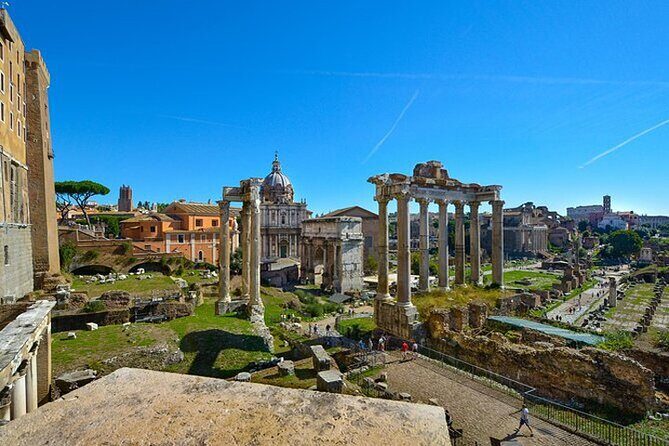
After the Colosseum, you’ll head into the Roman Forum, the place that served as Rome’s public center for over a thousand years. Before all the marble and monuments, the valley was originally swampy. It was reclaimed much later—by the late 7th century BCE—and then the Forum grew into Rome’s administrative, religious, and commercial hub.
The Forum is full of “why it matters” moments. You’re looking at how Rome changed across centuries. Early on, the area held buildings tied to politics and worship, then later—especially by the 2nd century CE—the civil basilicas became crucial for legal and judicial activities.
When you walk through, try not to treat it like a single ruin field. It’s more like a timeline made of stone. You can spot the way later emperors added prestige monuments to reinforce authority. Key landmarks associated with that imperial layering include:
- The Temple of Vespasian and Titus
- The Temple of Antoninus Pius and Faustina
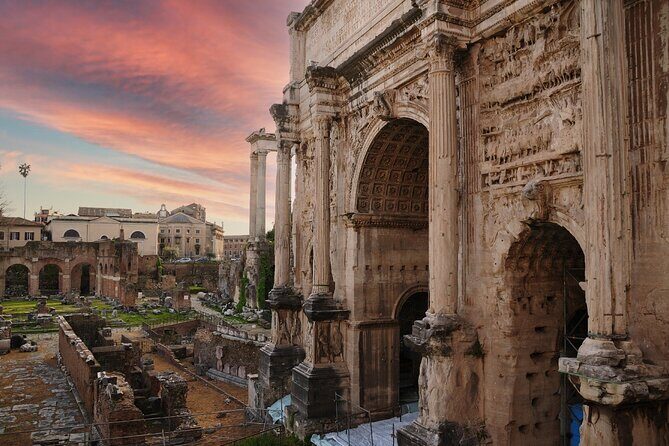
- The Arch of Septimius Severus (built in 203 CE to celebrate victories over the Parthians)
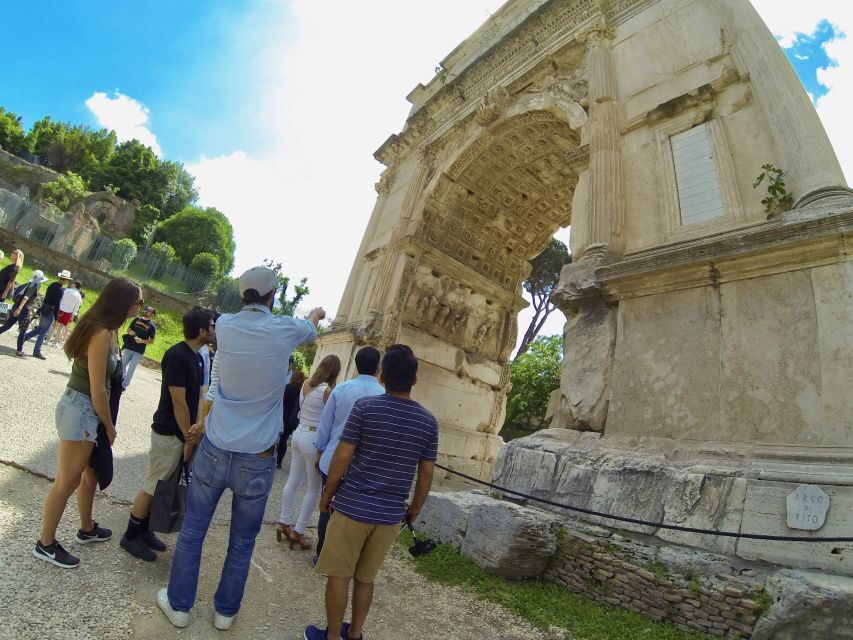
Because your entry here is open (not a tight guided sequence), you can pace yourself based on how much you want to read, look, and photograph. This is where a digital audio guide can help, but you’ll also rely heavily on the site’s signage to connect names to stones.
One practical consideration: the Forum covers real ground. If the heat is up, shorten photo stops and spend your time where you can actually slow down and take in the layout.
Palatine Hill: Rome’s Earliest City Core to Imperial Apartments
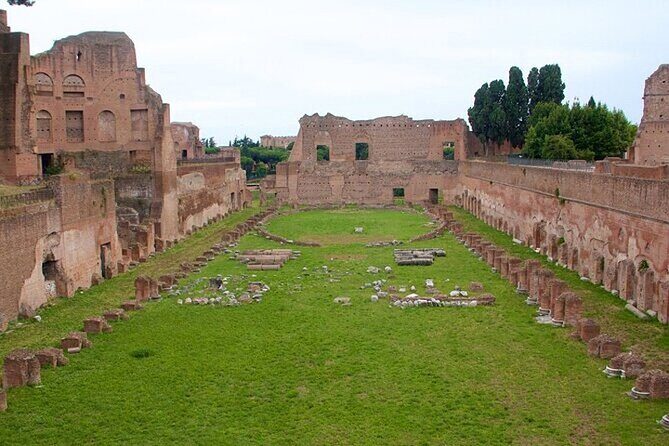
Palatine Hill feels different the moment you arrive. It preserves remains of the earliest settlements tied to the earliest core of Rome—so it’s not just “another ruin.” The hill also connects to key civic cults, including the worship of Magna Mater (Cybele).
Then the story shifts. Between the 2nd and 1st centuries BCE, Palatine became the residential district for the Roman aristocracy. Think elegant houses with painted and paved interiors; one example tied to what survives is the House of the Griffins. Later, Augustus made a symbolic choice by building his own house here. His complex wasn’t just one building—it included multiple structures, such as the House of Livia.
Over time, Palatine became the stage for imperial living. The hill later hosted residences including the Domus Tiberiana, Domus Transitoria, and the Domus Aurea, and it evolved again under the Flavian emperors into a complex with public and private sectors, including what’s known as the Domus Augustana. That’s part of how the very word Palatium became tied to the idea of a palace.
You’ll love Palatine if you enjoy archaeology that feels like a layered “who lived where” story. Your walk can be as slow or fast as you want, but be prepared for uneven terrain and steps depending on your route. This is also where having a plan helps: if you try to cover every angle, the day can run long.
The Audio Guide Reality: English on WhatsApp, Your Phone, Your Headset
This experience includes a digital audio guide in English, delivered via WhatsApp only. That means your phone matters as much as your ticket.
Here’s the practical setup:
- The audio is sent digitally only if the phone number used for booking has WhatsApp
- You’ll listen using your own phone
- You should bring your own headset (headset is not included)
- You can’t count on getting audio through a typical tour-style device
I like this method because it usually lets you restart, pause, and move around without being stuck to a guide’s timing. Still, I’d plan like a realist. If your phone battery is low, your audio plan is low.
A smart approach: save the audio when you can and get to the site with a charged phone. And don’t assume you’ll have strong Wi‑Fi at the last minute. One real-world lesson from Rome ticket chaos: when you rely on connectivity, you can lose time fast. So have the ticket information and audio access ready before you leave your stop.
Also, audio is never the only source of learning on these sites. The signs are there for a reason, and some people find the audio adds less value than the onsite explanations. If you’re the type who loves reading, you’ll be fine without using every minute of audio.
Price and What You’re Actually Paying For
This costs $54.07 per person and runs about 2 hours 30 minutes to 3 hours. That sounds like a lot until you break down what’s included.
You’re paying for:
- A timed Colosseum reservation for the First and Second Tier
- Admission to the Roman Forum, Palatine, and Imperial Forum with open entry
- Admission to temporary exhibitions
- Administrative fees and taxes
- A digital English audio guide delivered by WhatsApp
You’re also getting a key experience design: no live guide. That’s a tradeoff. You save money and you get flexibility, but you won’t have a person leading you from stop to stop and translating the story into a clean narrative. If you’re happy reading signs and using the audio as a support, this format fits well.
What’s not included is equally important:
- No live guide
- No headset
- The offer doesn’t include skip-the-mandatory-security-line
- Access to the arena floor isn’t included at this price point; you’re working with the tier access included here
So is it value? For most people who want a self-paced day across all three sites, yes—especially when timed entry reduces the worst waiting moments. It’s less value if you want a very structured interpretation and you struggle to navigate without someone steering you.
More Roman Forum tours for the Colosseum & Ancient Rome

When to Go: Morning vs Afternoon With Real Crowd Logic
You can choose a morning or afternoon Colosseum entry time. That choice matters more than it sounds.
Early entry tends to give you:
- Cooler walking temperatures in many seasons
- More time before you feel squeezed by the day’s strongest crowd wave
Later entry can feel calmer because you’re arriving when some tour groups have already moved through. For example, one pattern you’ll often notice is that around late afternoon the vibe can loosen. It still won’t be empty, but it can be less exhausting.
My practical advice: pick the time that matches your energy, not the one that looks best on a chart. If you want photos without pressure, go later. If you want fewer heat problems, go morning.
Smart Tips to Avoid the Usual Ticket-Access Problems
Because this runs on digital delivery, do these simple things before you head out:
- Keep your phone charged and bring a working headset if you plan to use the audio
- Make sure the phone number connected to your booking has WhatsApp
- Double-check your date and time before you leave home, since changes can be impossible once you book
- Plan to arrive near the meeting point in daylight if you can; Piazza del Colosseo is a known meeting area, but it still helps to be oriented early
For your shoes, go comfortable. You’re walking across multiple big archaeological areas. And because you’re self-guided, you’ll likely spend more time stopping whenever something catches your eye—which is the point.
Should You Book This Colosseum, Roman Forum & Palatine Hill Entry With Audio?
Book it if you want:
- Timed Colosseum entry that reduces the worst waiting
- A self-paced way to cover Colosseum + Forum + Palatine in one go
- The convenience of an English audio guide on your phone via WhatsApp
- Access to the main tiers of the Colosseum (not the arena floor)
Skip this option (or plan a different one) if:
- You need a live guide to explain what you’re seeing
- You don’t want to rely on a phone and headset for audio
- You’re hoping for a no-security experience (security is mandatory)
If your schedule is fixed and you’re the type who enjoys walking and reading at your own rhythm, this is a solid, efficient way to hit three of Rome’s biggest sites without the extra cost of a guided format.
FAQ
How long is the Colosseum, Roman Forum & Palatine Hill entry experience?
It’s about 2 hours 30 minutes to 3 hours.
Is the tour guided?
No. It’s self-guided. You’ll have access to the sites and an audio guide.
What’s included with the ticket for the Colosseum?
Admission to the Colosseum with First Tier and Second Tier on a precise time entry.
Which areas do I have access to for the Roman Forum and Palatine Hill?
You get open entrance to the Roman Forum, Palatine, and the Imperial Forum.
What language is the audio guide in?
The audio guide is in English.
How do I get the audio guide on my phone?
It’s sent digitally via WhatsApp only. It will be delivered only if the phone number tied to your booking has WhatsApp.
Do I need to bring headphones?
Yes. Headset is not included, so you should bring your own.
Where is the meeting point?
You start at Piazza del Colosseo, 1, 00184 Roma RM, Italy, and the experience ends back at the same meeting point.
Can I change or cancel the booking?
This experience is non-refundable and cannot be changed for any reason.