REVIEW · ROME
Rome: Colosseum, Palatine Hill and Roman Forum Guided Tour
Book on GetYourGuide →Operated by Rutas Romanas · Bookable on GetYourGuide
Rome feels different when you stand inside it. This 2.5-hour guided tour strings together the Colosseum, Palatine Hill, and the Roman Forum with stories that make the stones feel human again, and with a guide-led pace that keeps things focused. I especially like the way you get multiple viewpoints at the Colosseum, not just a quick walk-by, and I love the Roman Forum stop where you’re placed in the middle of the action.
The one thing to plan around is the security check. It can create a queue on busy days, and some areas on Palatine Hill and the Forum may be harder to access in bad weather. Still, for most people, the time you save with ticket handling and headsets makes it worth the trade.
In This Review
- Key highlights worth your attention
- Why This Colosseum-Palatine-Roman Forum Combo Works So Well
- Meeting Point, Timing, and the Security Check Reality
- Outside the Colosseum: Getting Oriented Before You Go In
- Entering the Colosseum: Arena, Floors, and Optional Underground Access
- Arch of Titus and the Via Sacra Walk to Palatine Hill
- Palatine Hill: Imperial Residences You Can Actually Picture
- Down Into the Roman Forum Valley: The Stops That Tell a City’s Story
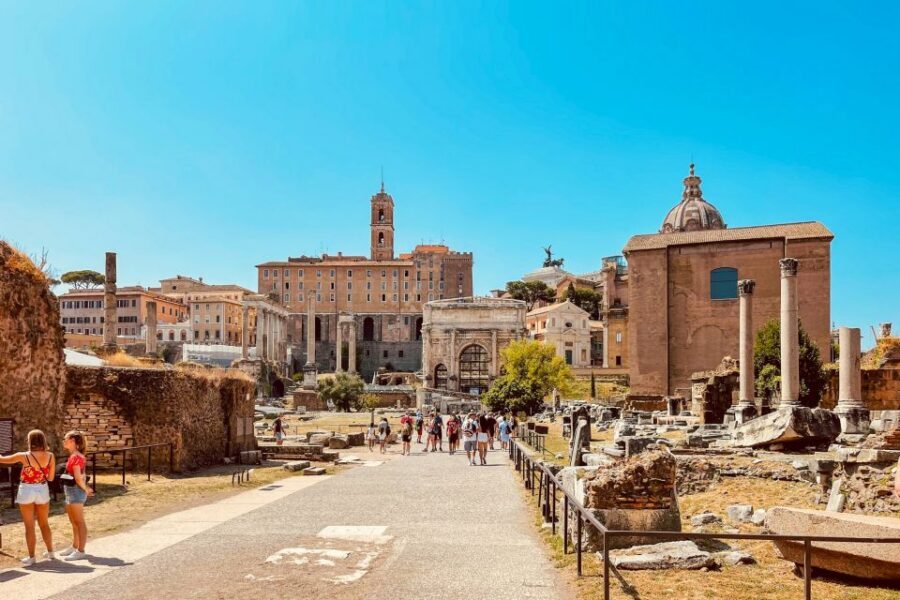
- Standing in the Central Forum: Curia, Tabularium, and Temple of Saturn
- Price and Value: What $52 Really Buys You
- Who This Tour Suits Best (and Who Should Think Twice)
- Should You Book This Colosseum, Palatine Hill and Roman Forum Tour?
- FAQ
- How long is the guided tour?
- What’s included in the ticket price?
- Do I need to buy separate tickets for each site?
- What languages are available for the live guide?
- Will I miss out if it rains?
- Is there a security check?
- Can I resell or transfer the tickets?
Key highlights worth your attention
- Skip-the-ticket-line entry to the Colosseum plus timed access through the surrounding complex
- Headsets included, so you can actually hear your guide without craning your neck
- Arch of Constantine and Arch of Titus stops that turn background facts into landmarks you can point at
- Palatine Hill imperial residences like Domus Augustana and Domus Flavia, not just general ruins
- Roman Forum sequence along Via Sacra, including the Basilica of Maxentius, Temple of Romulus, and House of the Vestals
- Central Forum viewpoint, with stops at Curia, Tabularium, and the Temple of Saturn
Why This Colosseum-Palatine-Roman Forum Combo Works So Well
This is one of those Rome tours that makes sense for a short visit. In about 2.5 hours, you hit three anchor sites that are otherwise hard to connect smoothly without spending your day on the wrong side of queues and confusion.
I like that the format isn’t just passing landmarks. You start at the Colosseum, then move outward toward Palatine Hill and down into the valley of the Forum. That arc helps you understand how ancient Rome looked from ground level: spectacle on one side, power and daily life nearby, and politics at the heart of it all.
The guide is the real difference-maker here. The tour includes live guidance in several languages (German, English, Spanish, Portuguese, Italian, French), plus headsets so the history doesn’t turn into a mumbling contest.
More Colosseum, Forum & Palatine combos for the Colosseum & Ancient Rome
Meeting Point, Timing, and the Security Check Reality
Your meeting point can vary depending on the option you book, so I’d plan to arrive with a little breathing room. Once you’re in the flow, the tour is structured around passing through security checks. On peak days, lines can happen, and you’ll want to treat that as part of the Rome experience rather than a failure on anyone’s side.
Also note the route order may switch. Sometimes you begin at the Colosseum and end at Palatine Hill and the Roman Forum. Other times, you start at the Forum area and finish at the Colosseum. The important thing is that you still cover the same core sights.
Finally, check your documents. Your ticket name has to match your ID, and these tickets can’t be resold or transferred for tour purposes. That matters more than most people expect, especially if you’re traveling with friends or a mixed group.
Outside the Colosseum: Getting Oriented Before You Go In
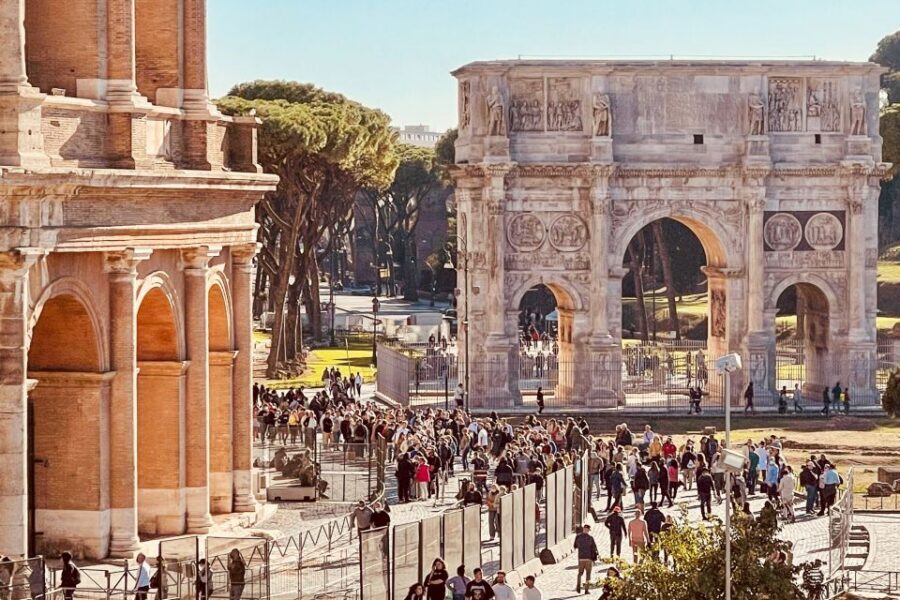
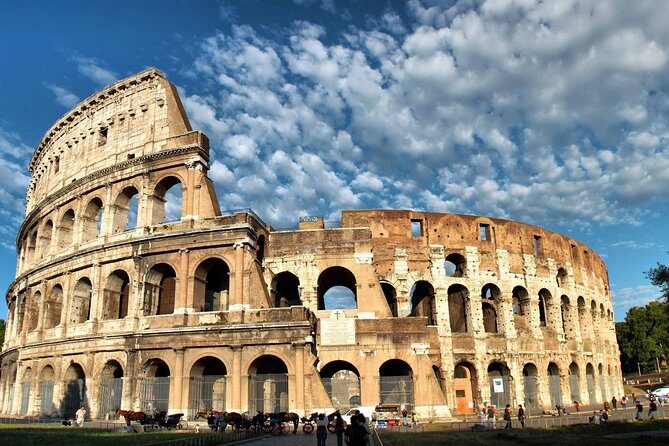
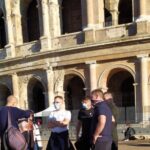
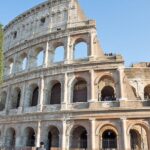
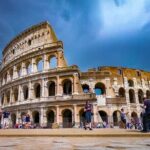
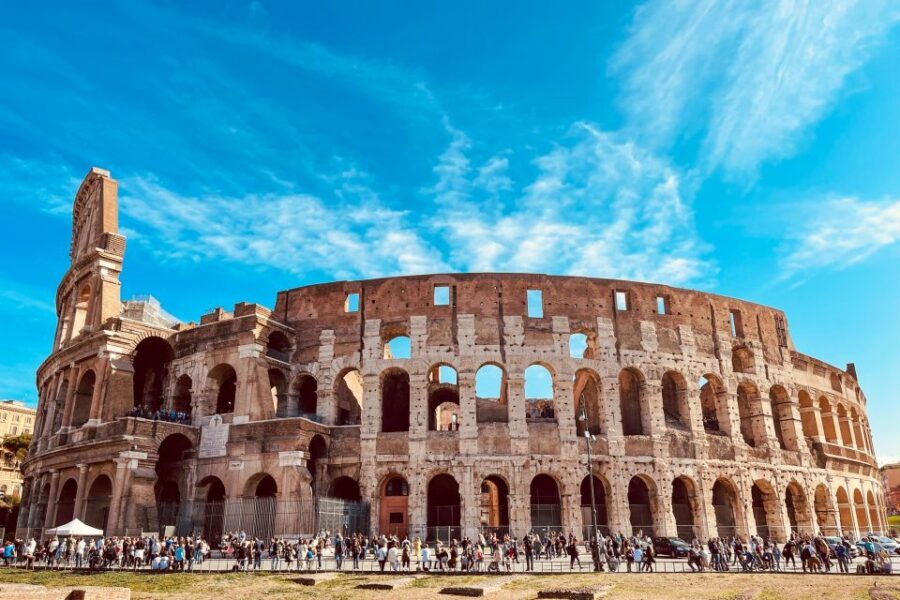
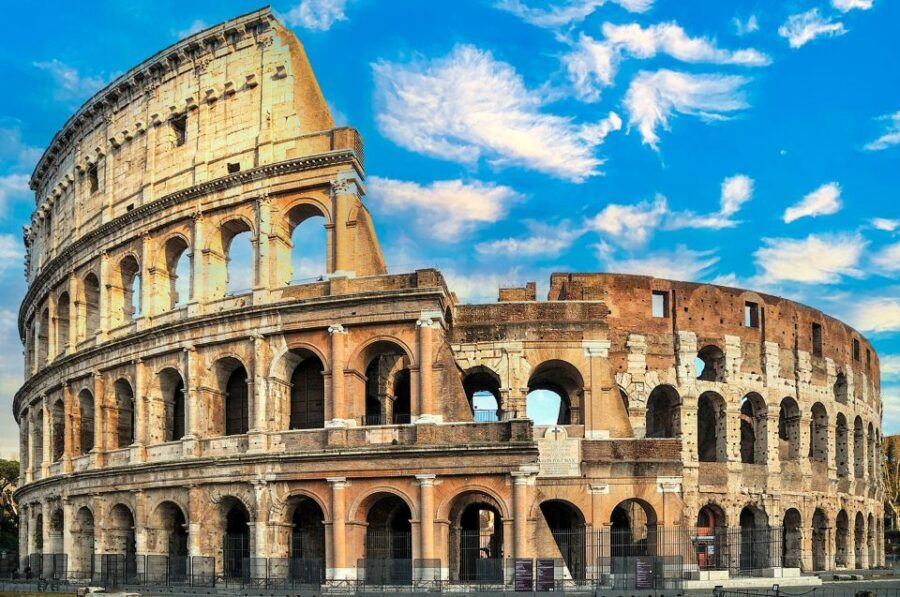
You don’t rush straight inside. The tour typically starts with a good look at the Colosseum from the outside, and your guide puts it in context—why this amphitheater became such a big deal, and how its design served the spectacle.
Then you get a memorable “pause and point” moment at the Arch of Constantine. This isn’t just a pretty backdrop. It’s a key monument tied to imperial messaging, and your guide highlights features you’d likely miss if you were trying to read plaques on your own while walking.
I like this approach because it helps your brain build a map. After you see the outside, the inside stops feel less random.
Entering the Colosseum: Arena, Floors, and Optional Underground Access
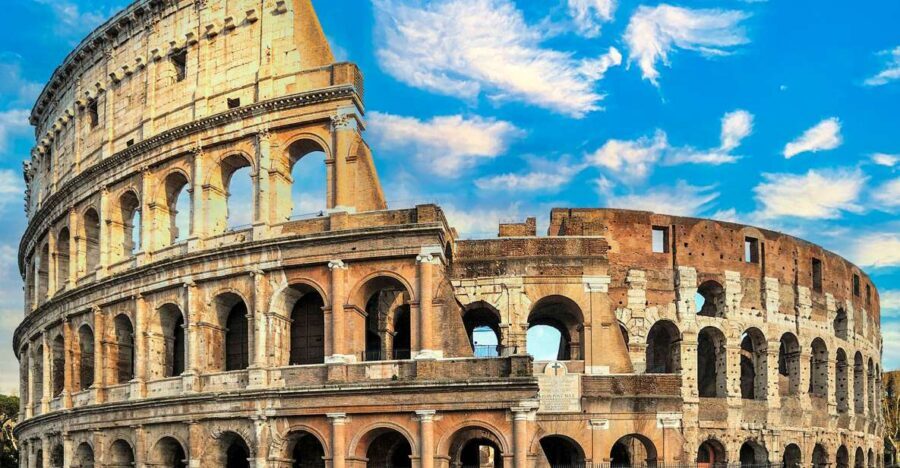
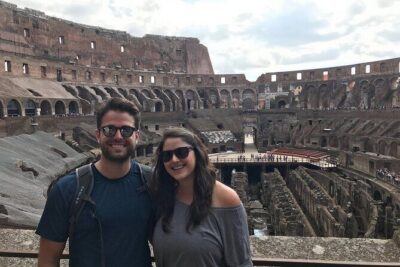
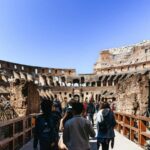
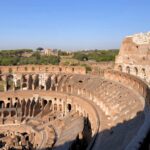
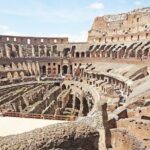
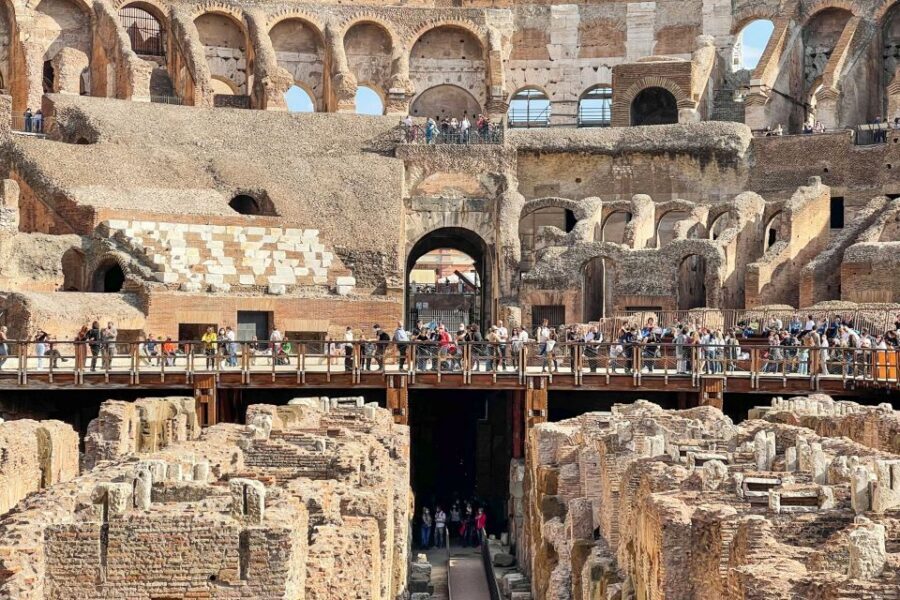
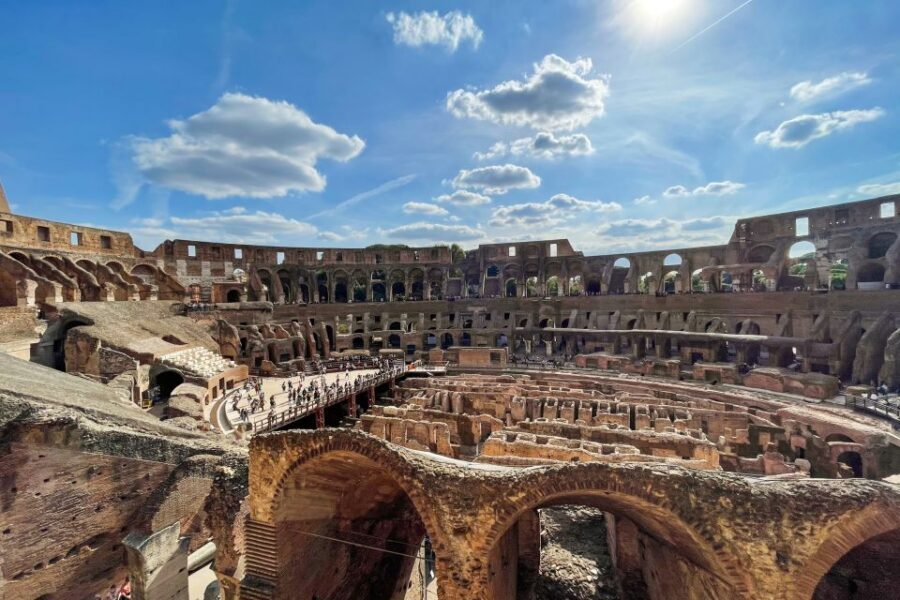
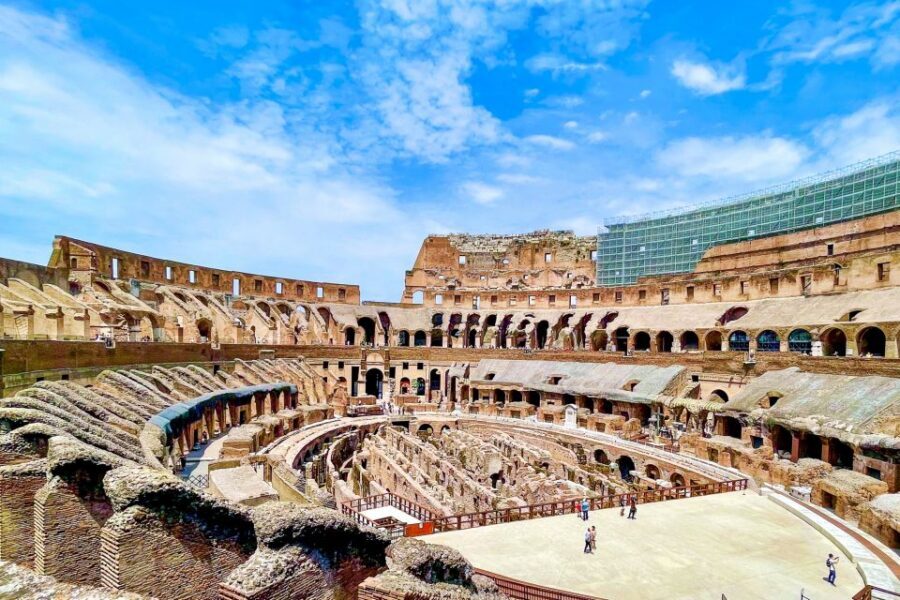
When you enter, you go through security and then step into the Colosseum itself. The experience here is all about scale and sightlines. You’re inside the largest amphitheater in the Roman world, so even if you’ve seen photos, your body understands the size only when you’re standing there.
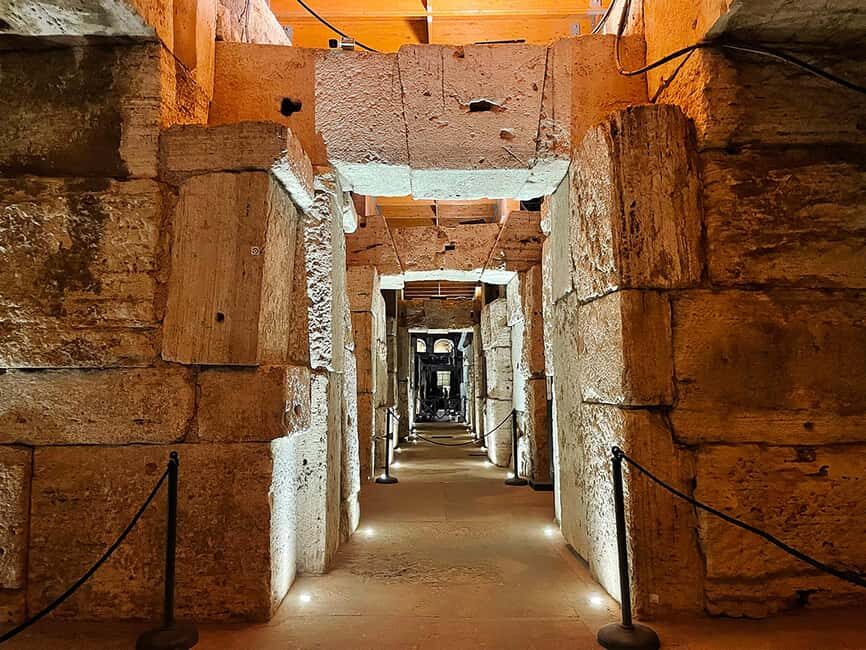
Depending on the option you select, you may also have arena access. If your tour title includes it, you’ll get in closer than the typical viewpoint. You’ll also learn what took place in this space and how the building worked as a stage.
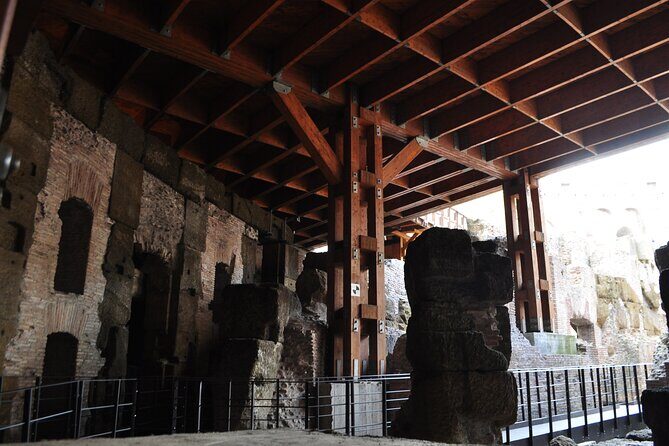
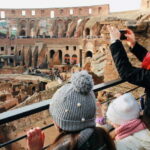
Another reason this tour feels more complete: you may see the arena and basement floor from a panoramic terrace when the underground-style option is included. That higher view helps you grasp how the crowd, the fighting space, and the infrastructure connect.
You also visit the first floor and admire the interior. Even if you’re not an architecture nerd, that interior walk gives your eyes something to do while your guide connects the dots between design and purpose.
Arch of Titus and the Via Sacra Walk to Palatine Hill
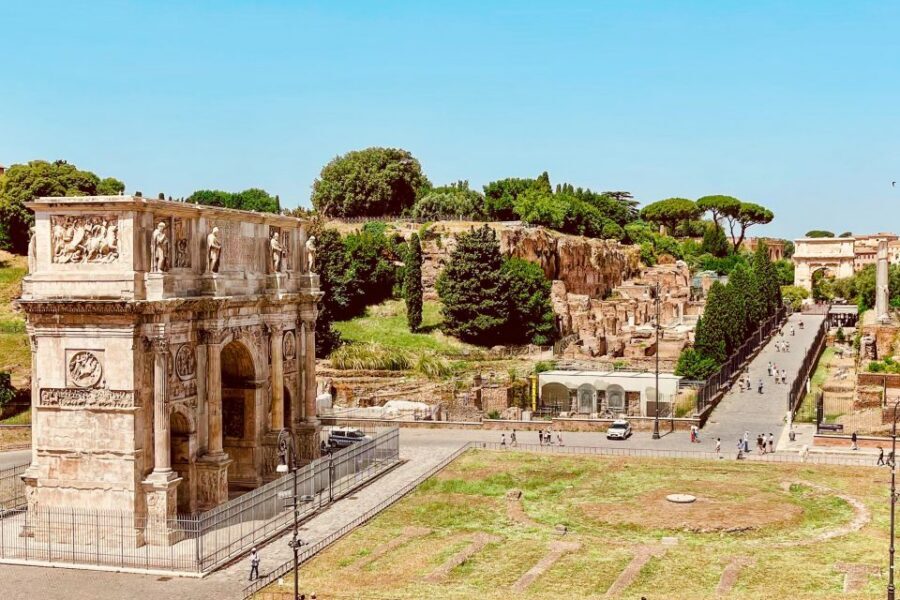
After the Colosseum portion, you shift toward the older heart of the city. On the way, you walk along the ancient Via Sacra, the famous processional road that guided ceremonies and power displays through the city’s most meaningful zones.
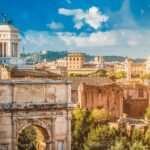
Right before you move into Palatine Hill and the Forum area, the tour includes a close-up stop at the Arch of Titus. It’s one of those monuments that looks instantly recognizable once you’re standing in front of it, but the details matter more up close. Your guide points out what makes the arch significant and what you should watch for.
This is also where the tour’s pacing helps. You’re not only collecting sights; you’re moving in a way that keeps the story coherent.
More Roman Forum tours for the Colosseum & Ancient Rome

Palatine Hill: Imperial Residences You Can Actually Picture
Palatine Hill can feel like a blur of ancient walls if you don’t have a plan. Here, the plan is clear. You explore the remains of the oldest settlement area in the city and then move into the imperial world.
Key stops include:
- Palatine Stadium
- Domus Augustana
- Domus Flavia
These aren’t just named on a list. In a guided format, you can see how the residences relate to one another and why the Romans built and rebuilt power here. The hill is steep and broken up, so it’s helpful when someone tells you what you’re looking at while you’re standing in the right spot.
If you like “how life worked” more than “what dates happened,” Palatine Hill is the place where the tour pays off. You’ll start to understand why rulers wanted the view, the location, and the symbolism.
One more practical note: Palatine Hill and parts of the Forum can be less accessible in bad weather. The tour still runs rain or shine, but some sections may be limited.
Down Into the Roman Forum Valley: The Stops That Tell a City’s Story
Then you go down into the valley that hosts the Roman Forum, often described as the political, religious, economic, and legal center of ancient Rome. That’s a big claim, and it makes sense only when you see how many different kinds of buildings share the space.
As you move along the Via Sacra, you pass major landmarks with specific “what am I looking at” context. The tour highlights:
- Basilica of Maxentius
- The bronze door of the Temple of Romulus
- The suspended door of the Temple of Antoninus and Faustina
- The Temple area (as part of the Via Sacra cluster you’re guided through)
- The House of the Vestals
I like these stops because they’re not just monuments in general. Doors, halls, and temple structures give you tangible clues about daily religion and civic rituals. And when your guide points out small details—especially with the door elements—it’s easier to remember what you saw later.
Also, you get that useful walking rhythm. The Forum is spread out. A guided route helps you keep your bearings and avoids the classic problem of seeing a beautiful ruin while missing the point of it.
Standing in the Central Forum: Curia, Tabularium, and Temple of Saturn
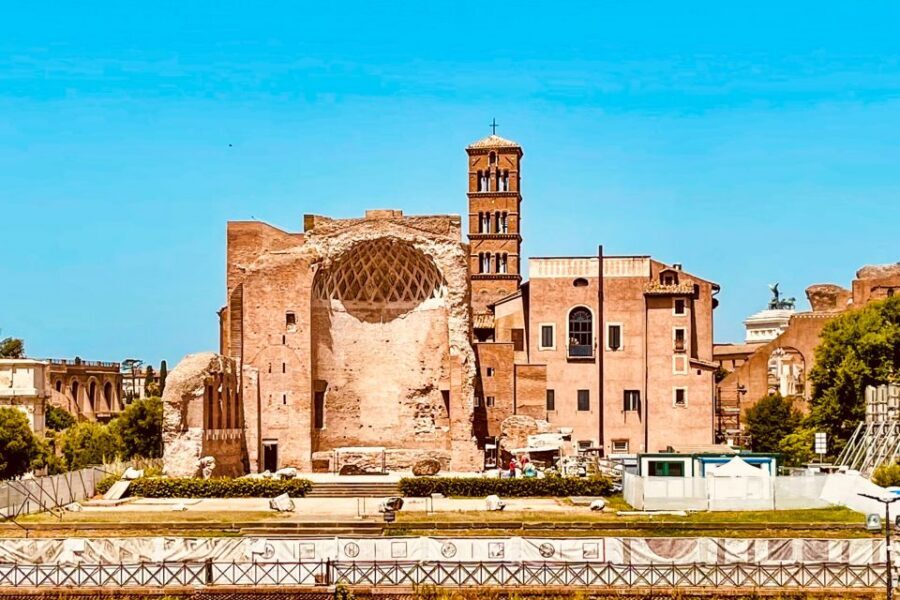
The best moment for many people comes in the center area of the Forum, where you’re guided to stand in a place that mattered for decisions and public life. You don’t just stroll through this zone—you learn it.
Stops include:
- Curia
- Arch of Septimius Severus
- Tabularium
- Temple of Saturn
- and more around the central cluster
What makes this part click is the combination of positioning and explanation. When you’re in the central area, it’s easier to imagine crowds, debates, and ceremonies moving through the space. If you’ve ever felt lost in archaeology ruins, this is the section where a guide most improves your experience.
It’s also a smart way to end thematically. Spectacle in the Colosseum, elite life on Palatine Hill, and civic power in the Forum—by the time you reach the central zone, everything connects.
Price and Value: What $52 Really Buys You
At $52 per person for about 2.5 hours, this tour isn’t just paying for a walk. You’re paying for three things that matter in Rome:
First, you’re getting entry tickets for the Colosseum, Roman Forum, and Palatine Hill. Second, you’re getting a live guide plus headsets, which helps a lot when the noise and crowding are high. Third, you get help with the “don’t waste time” part through skip-the-ticket-line access.
Security lines are still a reality, and some areas may be less accessible in bad weather. But if you want to feel confident you covered the main sites in a logical order, this is usually strong value.
And the pricing makes extra sense if you choose the option with arena access or underground access (these are listed as included options in the tour title). Those extra viewpoints turn the Colosseum from a photo opportunity into a real spatial understanding.
Who This Tour Suits Best (and Who Should Think Twice)
This tour is a good fit if you:
- want structure in a short time window
- prefer listening to a guide rather than reading every sign
- like seeing how monuments relate to each other across the city
- appreciate headsets, especially if crowds make it hard to hear
It may not suit you if you have mobility limitations. The tour data notes it’s not suitable for people with mobility impairments or wheelchair users, and it’s also not suitable for people with altitude sickness.
If you’re traveling with kids, it can work well. In the guides people mention, there’s a clear pattern of making the experience engaging. Names that repeatedly show up in positive feedback include Henry, Aphrodite, Leo, Alessandra, Alexandra, Ledion, and Vincenzo—and people praise their energy, humor, and ability to keep questions moving instead of shutting them down.
One last practical item: the tour doesn’t allow pets, drones, weapons, or large bags. Bring comfortable clothes and plan for standing and walking.
Should You Book This Colosseum, Palatine Hill and Roman Forum Tour?
I’d book this tour if you want maximum meaning per hour. You’ll cover the Colosseum, Palatine Hill, and the Roman Forum in a coherent route, with headsets and a guide who helps you see details that are easy to miss on your own.
Skip it only if you strongly dislike group logistics, you need an easier mobility setup, or you’re traveling with expectations that security won’t slow you down—because in Rome, that part is real.
If you want a Roman day that feels planned rather than chaotic, this one is a solid call.
FAQ
How long is the guided tour?
The tour duration is 2.5 hours.
What’s included in the ticket price?
It includes entry tickets for the Colosseum, the Roman Forum, and Palatine Hill, plus a live guide if you book that option. Headsets are included to hear the guide clearly. Arena access or underground access is included only if selected in the tour title.
Do I need to buy separate tickets for each site?
No. Entry tickets for the Colosseum, Roman Forum, and Palatine Hill are included.
What languages are available for the live guide?
The live guide is offered in German, English, Spanish, Portuguese, Italian, and French.
Will I miss out if it rains?
The tour runs rain or shine. Some areas of the Roman Forum and Palatine Hill might not be accessible during bad weather conditions.
Is there a security check?
Yes. Everyone must pass through a security check, and on busy days there might be a queue. The operator notes the queue is unavoidable and can delay the real start time.
Can I resell or transfer the tickets?
No. Tickets are non-transferable and must be used by the individuals who originally booked them, and the name on the ticket must match the ID.