REVIEW · ROME
Rome: Colosseum, Roman Forum, & Palatine Hill Guided Tour
Book on GetYourGuide →Operated by Memento Experiences by M.S.W. Srl · Bookable on GetYourGuide
Gladiator echoes, right where they happened. A guided sweep through the Colosseum and the Roman Forum & Palatine Hill turns Rome’s ruins into real stories about power, punishment, discipline, and even clemency. It’s also good value for the money since entry to the arena and key sites is included, and a live guide helps you make sense of what you’re staring at. One thing to keep in mind: a few people experienced less guidance than expected on the Forum/Palatine side, and the meeting details can shift if a guide is sick—so stay flexible and arrive ready.
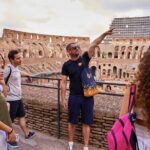
What I like most is the human part of the tour: guides (including names like Gloria, Fina, Lumi, Celine, Jeannette, and Francesco) tend to tell the site like a narrative, with humor and focus on how Romans lived and ruled. You also get that practical payoff—moving through crowded spaces without losing your place, and catching viewpoints over the Colosseum and Circus Maximus from Palatine Hill. If you’re looking for a strict, museum-style lecture every second, you might find the pacing more relaxed than you expect.
In This Review
- Key things to know before you go
- Why this 3-hour Colosseum–Forum–Palatine combo actually works
- Meeting at the Arch of Constantine (and how to not miss your group)
- Inside the Colosseum: arena entry plus the building story
- Roman Forum highlights: temples, emperors, and everyday power
- Palatine Hill walk: Romulus and Remus to imperial views
- Price and value: what $50 buys you (and what to watch)
- Guide quality is the real difference maker here
- Practical tips for a smoother day at these sites
- Should you book this Colosseum–Forum–Palatine guided tour?
- FAQ
- Where do I meet the guide?
- What’s included in the tour price?
- How long is the guided experience?
- Is the tour guided in English?
- Are food and drinks included?
- What should I bring for the visit?
- What items are not allowed?
Key things to know before you go
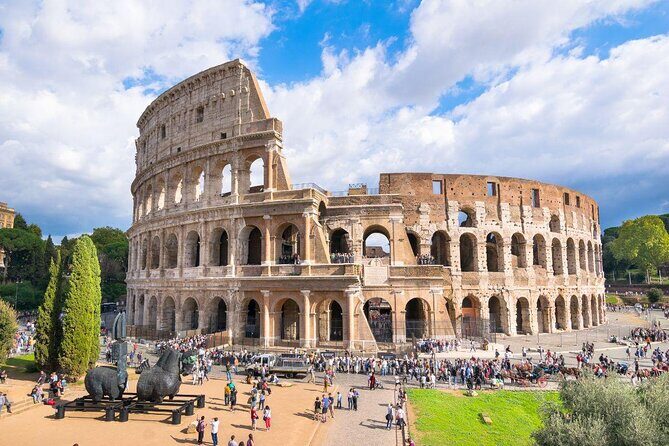
- Arena access inside the Colosseum gives you a front-row feel, not just a quick peek from outside.
- Story-first guidance connects architecture and politics to what people actually did and suffered.
- Palatine viewpoints are part of the plan, including looks toward the Circus Maximus.
- Small-group pacing helps you keep moving instead of getting swallowed by the crowd.
- Meeting point accuracy matters: Arch of Constantine, opposite the Colosseum side, guide holding a purple flag.
- Rules are strict once you’re close to the sites, so pack light and leave extra items behind.
Why this 3-hour Colosseum–Forum–Palatine combo actually works
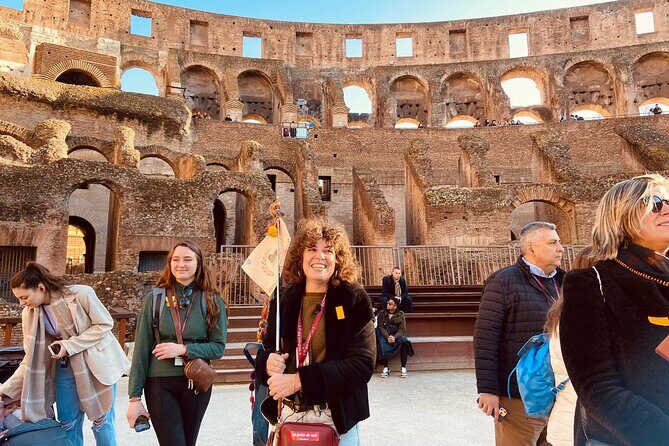
This tour is built for people who want the “Rome essentials” without spending half a day guessing what matters. In just three hours, you hit three layers of the ancient city: the show-and-spectacle arena of the Colosseum, the political and religious center of the Roman Forum, and the old hill neighborhoods on Palatine where legends and emperors overlap.
The value is in the combination. The Colosseum alone can feel like stone and scale, but when you pair it with what the Forum represented, the message becomes clearer: public power plus public entertainment, all in one city machine. Palatine adds the personal angle—who lived where, and why this high ground mattered.
The time is also realistic. You’re not trying to “do Rome” in one go. You’re doing the most intense concentration of ancient Rome, in a way that helps you leave with a sense of connection, not a pile of photos and unanswered questions.
More Colosseum, Forum & Palatine combos for the Colosseum & Ancient Rome
Meeting at the Arch of Constantine (and how to not miss your group)
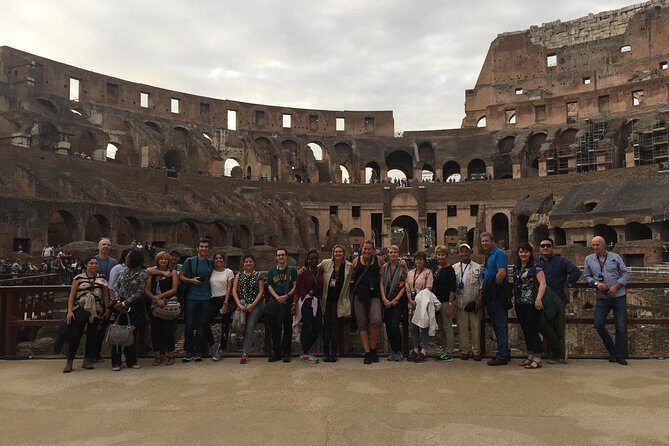
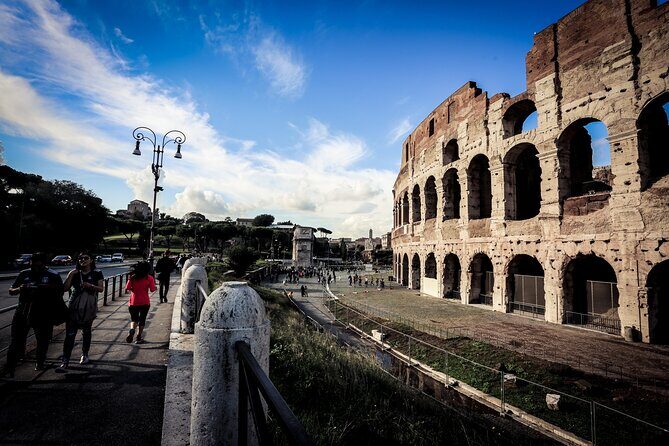
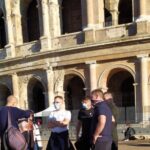
Your meeting point is the Arch of Constantine on the opposite side to the Colosseum, and your guide should be holding a purple flag. That sounds simple, but Rome crowds can make “just meet by the arch” feel like a scavenger hunt.
Here’s the practical mindset I recommend: arrive a few minutes early, scan for the purple flag, and take a moment to confirm you’ve got the right group before you wander off for coffee. If you’ve got your ticket confirmation handy, keep it accessible.
One important heads-up: there have been cases where meeting details changed at the last minute because a guide was sick, or the tour got handed off. That doesn’t automatically mean trouble, but it does mean you should keep your phone ready for updates and be willing to re-orient quickly if needed.
Inside the Colosseum: arena entry plus the building story
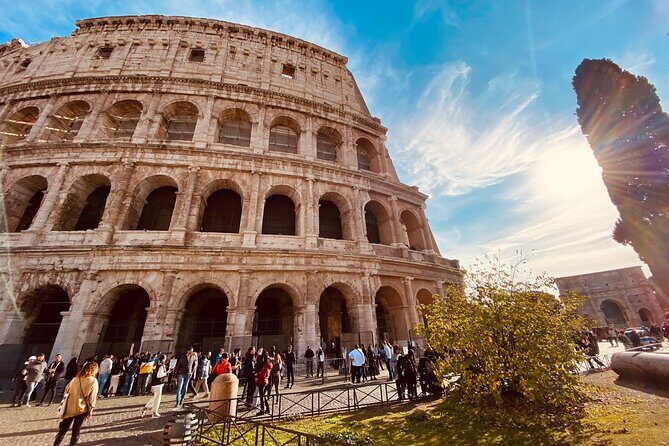
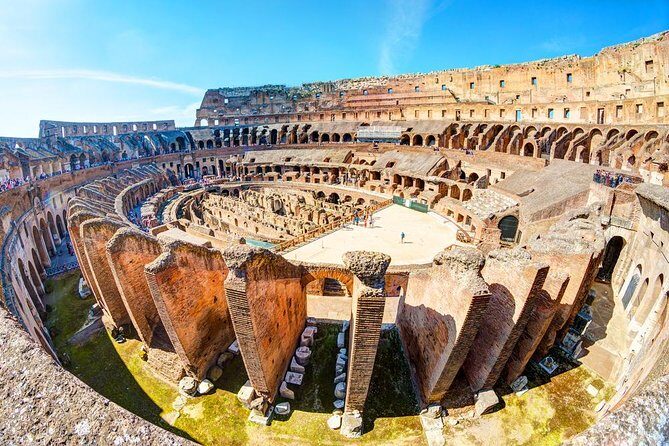
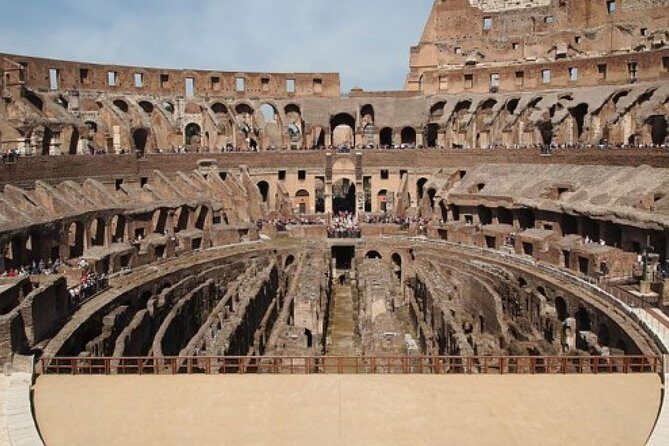
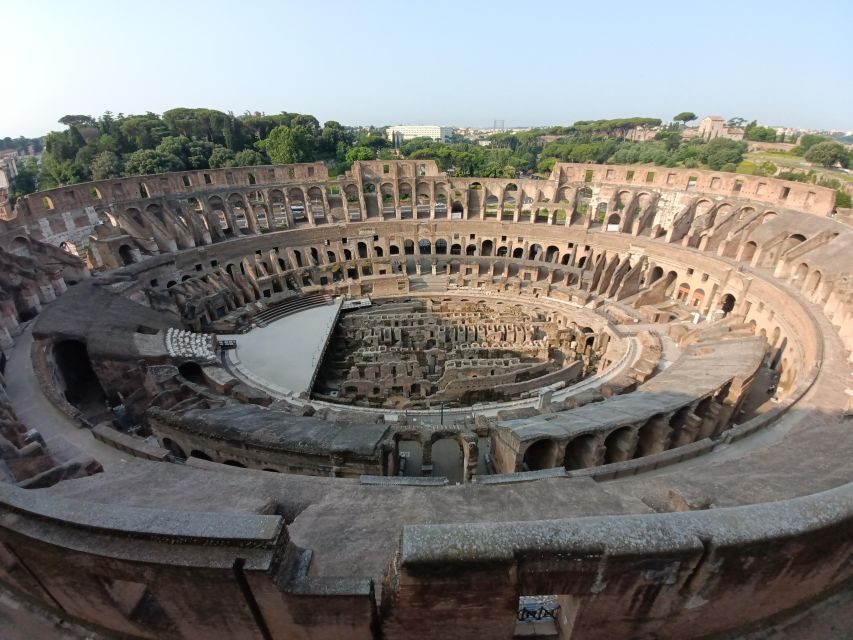
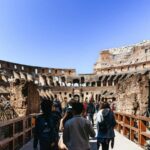
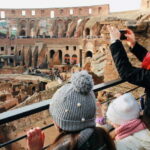
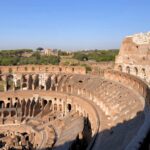
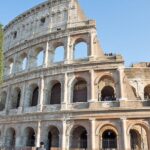
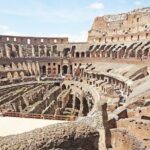
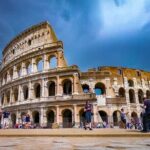
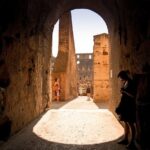
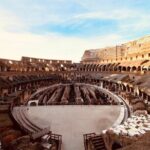
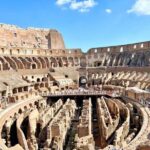
The Colosseum is the star, and this tour gets you close to where the action would have played out. The guided focus is not just on what the Colosseum looks like—it’s on how it worked and why it was built when it was built.
You’ll spend about an hour on this section, and the guide should walk you through themes like cruelty and spectacle, plus the Roman logic behind discipline and order. That story layer matters because the Colosseum isn’t just architecture; it’s a stage engineered to control a massive crowd and deliver spectacle at scale.
You’ll also learn why the Romans were so proud of their engineering. The big takeaway you should listen for is the difference between guessing and understanding. When you hear how the structure and design choices made crowd movement and event logistics possible, the building becomes more than a landmark—it becomes a system.
If you care about comfort, also note that one of the most praised parts of this tour is the arena portion. People describe it as less of a crush than some other areas, which is exactly what you want when you’re trying to hear a guide and actually see the space in front of you.
Roman Forum highlights: temples, emperors, and everyday power
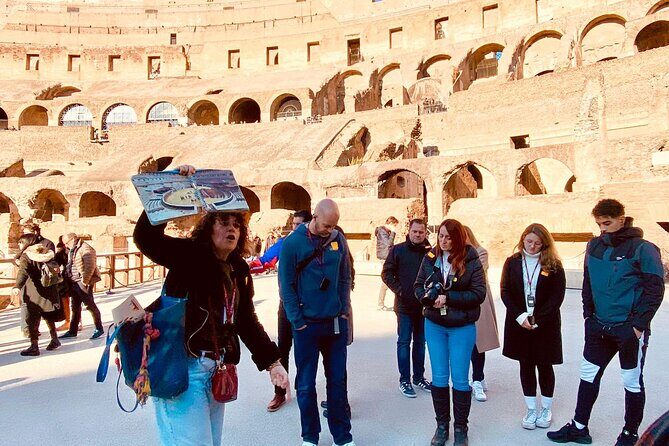
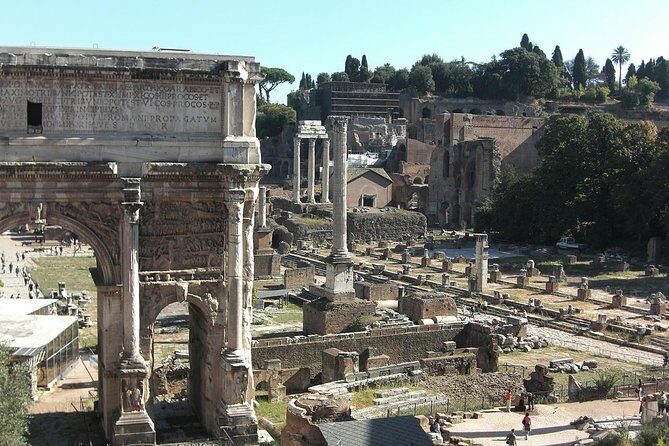
The Roman Forum can feel chaotic if you visit on your own, because it’s a scatter of ruins with a story that isn’t obvious at street level. With a guide, the Forum becomes legible—like someone turns the lights on and suddenly you can tell which spaces were for politics, religion, and public life.
In this tour, your Forum time is around 45 minutes. You’ll walk paths connected to emperors and pass ruins of temples, with the guide explaining the political and social reasons behind what you’re seeing. That context is what makes the Forum worth your attention, because the stones here weren’t just decorative; they were used to project authority.
A useful way to experience it: don’t focus only on the “big” remnants. Let the guide point out how Romans used different spaces to perform power. It’s a great way to understand why the Forum wasn’t only about the past—it was where the city argued with itself in public.
One practical note: the Forum can be one of the most crowded parts of the route. If you get a moment to stand and take in a view, take it. Even when you think you understand what you’re seeing, the Forum tends to make you realize how layered everything is.
Palatine Hill walk: Romulus and Remus to imperial views
Palatine Hill is where the story gets both older and more personal. You’ll walk with a guide for about 45 minutes, and you’ll hear the legend of Romulus and Remus as a way to explain why this area became tied to Rome’s origin story.
From there, the guide connects the legend to the reality of later Rome—how this hill area evolved into a kind of heartbeat for power. You’ll see why Palatine mattered socially and politically, and you’ll get time to look around so you can orient yourself in space. That orientation is key here because Palatine’s ruins are spread out, and it’s easier to appreciate what you’re looking at once you understand the layout.
The best “you can feel it” payoff is the viewpoints. You’ll enjoy views over the Colosseum and Circus Maximus, which makes the city feel like a living environment rather than a static museum. It’s also one of the easiest spots to connect history to geography—you start to see how rulers would have wanted to be where the sightlines and symbols were strongest.
If you’re traveling with kids or people who need short bursts, Palatine tends to work well. It offers variety: story, walking, and then a view to reset attention.
More Roman Forum tours for the Colosseum & Ancient Rome

Price and value: what $50 buys you (and what to watch)
At about $50 per person for roughly three hours, the big value lever is inclusion. You’re not only paying for a guide—you’re also getting entry that covers the Colosseum, arena access, the Roman Forum, and Palatine Hill.
That matters because Rome tickets and timed entry can add up fast, especially if you end up buying multiple admissions across different entrances and days. A guided package also saves decision fatigue. Instead of planning the order yourself, you follow a route that aims to make each stop make sense after the previous one.
That said, you should watch one practical thing: based on experiences shared with this tour, there can be mismatches in how guided the Forum/Palatine sections feel versus what people expected. One person reported that those sections felt self-guided rather than fully guided. Another person had the guide not appear at the first meeting point due to illness, then received help to keep the visit smooth.
So my advice is simple. When you arrive, confirm that your guide is leading all the planned sections, not just starting with the Colosseum. If you’re unsure, ask early and clear it up before you walk away from your group.
Guide quality is the real difference maker here
With tours like this, the structure is similar wherever you book. The difference is the person leading you.
In the name checks from past groups, I’m seeing a mix of styles: some guides lean humorous and energetic, some are very grounded in research, and some are good at keeping kids engaged for the full three hours. That matters because the Colosseum and Forum are crowded and visually overwhelming. A guide who can manage attention and explain what you’re seeing is the difference between feeling lost and feeling oriented.
One praised approach is storytelling that includes the moral edges of Roman entertainment—discipline and punishment alongside moments of mercy. That’s not just dramatic. It helps you understand the Roman worldview behind the spectacle.
Another strong signal: people mention staff stepping in when something goes wrong (like a guide being sick) to help you still see everything. That doesn’t erase the inconvenience, but it does increase the odds you’ll salvage your day instead of losing it.
Practical tips for a smoother day at these sites
Rome’s rules around major attractions can be strict, and you’ll save time by packing for compliance. Here’s what the tour information flags as not allowed: pets, weapons or sharp objects, baby strollers, luggage or large bags, food and drinks, alcohol and drugs, glass objects, and fireworks.
On the bring list, you should have a passport or ID card. That includes children, not just adults.
Also think about stamina and timing. Three hours is short for this much walking, so wear shoes you actually trust. You’ll be moving between the sites, then standing in areas where you’ll want to hear the guide without leaning into someone else’s personal space.
Finally, plan for crowds. Even with a guide and a small group option, you’ll still be in a high-volume area. The best mindset is to treat your visit like a guided route through a maze—listen to the guide, look where they point, and don’t be afraid to pause for a clear view even if you’re tempted to keep walking for photos.
Should you book this Colosseum–Forum–Palatine guided tour?
If you want the best-hit highlights of ancient Rome in a single half-day, this is an easy yes. The inclusion of entry to the arena, Forum, and Palatine Hill plus live English guidance is exactly the kind of value that reduces stress and boosts understanding.
Book it if:
- You prefer a guide to explain the why behind what you’re seeing.
- You want arena access, not just distant views.
- You like small-group pacing that helps you navigate crowds.
Consider a different option if:
- You hate uncertainty about meeting points and would rather have a fully self-paced plan.
- You need guaranteed guided instruction at every stop and can’t tolerate any deviation.
- You’re very sensitive to changes if a guide is unavailable at the first meeting area.
My bottom line: the tour shines when the guidance is present and the group stays together. If you show up early at the Arch of Constantine, spot the purple flag, and confirm your guide will lead the full route, you’ll leave with a much clearer picture of how Rome built its power from spectacle, politics, and place.
FAQ
Where do I meet the guide?
Meet at the Arch of Constantine on the opposite side to the Colosseum. Your guide will be holding a purple flag.
What’s included in the tour price?
The tour includes entry to the Colosseum (including the Arena), the Roman Forum, and Palatine Hill, plus a guided tour with a local guide.
How long is the guided experience?
The duration is 3 hours in total.
Is the tour guided in English?
Yes, the live tour guide operates in English.
Are food and drinks included?
No. Food and drinks are not included.
What should I bring for the visit?
Bring a passport or ID card. The information also notes passport or ID card for children.
What items are not allowed?
The tour info says not allowed items include pets, weapons or sharp objects, baby strollers, luggage or large bags, food and drinks, alcohol and drugs, glass objects, and fireworks.