REVIEW · ROME
Colosseum, Forum and Ancient Rome Semi-Private Guided Tour
Book on GetYourGuide →Operated by T&T Empire · Bookable on GetYourGuide
Three Rome icons in one guided loop.
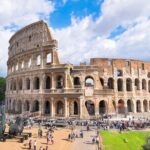
This semi-private tour strings together the Colosseum, Roman Forum, and Palatine Hill so you can see the big pieces without losing half your day to lines. I like that it’s built around a guided walk, with skip-the-line entry at each stop and a guide’s storytelling to connect what you’re looking at. The main thing to watch: with only 2.5 hours, the pacing can feel tight if you want to linger at every doorway and ruin.
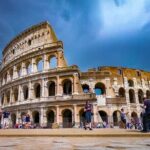
The Colosseum portion is a highlight for me because you’re actually guided inside, not just pointed at from the outside. I also like that you get headsets, which matters in crowded ancient sites where you’d otherwise miss key details. On top of that, you end up on Palatine Hill for the higher views over the Roman Forum area.
One possible drawback is time pressure. If you’re the type who likes to study inscriptions, read every sign, and wander off the route, you may wish you had more time in the Roman Forum.
In This Review
- Key things to know before you go
- A tight 2.5-hour plan for Rome’s three big sites
- Where you meet, what you bring, and how to start clean
- Skip-the-line entry: what it really buys you here
- Inside the Colosseum: gladiator stories and smart things to notice
- Roman Forum essentials: Arch of Titus and Temple of Saturn
- Palatine Hill: views, calm, and a higher perspective
- Group size, headsets, and pacing (the honest part)
- Price and value: is $146.14 a good deal?
- Should you book this Colosseum, Forum and Palatine tour?
- FAQ
- How long is the Colosseum, Forum and Ancient Rome semi-private guided tour?
- Does the tour include skip-the-line entry?
- What sites are included in the tour?
- Is the tour guide live, and what language is offered?
- How large is the group?
- Where do we meet the tour?
- When should I arrive for the meeting point?
- Do I need an ID?
- Is food or alcohol included or allowed during the tour?
Key things to know before you go
- Small group (limited to 8) means less waiting and more chances to ask questions.
- Skip-the-line entry for all three sites saves you time right when you most want it.
- Headsets included help you hear your guide in busy crowds.
- Roman Forum highlights include the Arch of Titus and Temple of Saturn so you don’t miss the big “where am I?” moments.
- Palatine Hill is your payoff for the walking with calmer vibes and sweeping views toward the Forum.
- 2.5 hours is a highlights sprint rather than a slow, deep Rome archaeology day.
A tight 2.5-hour plan for Rome’s three big sites
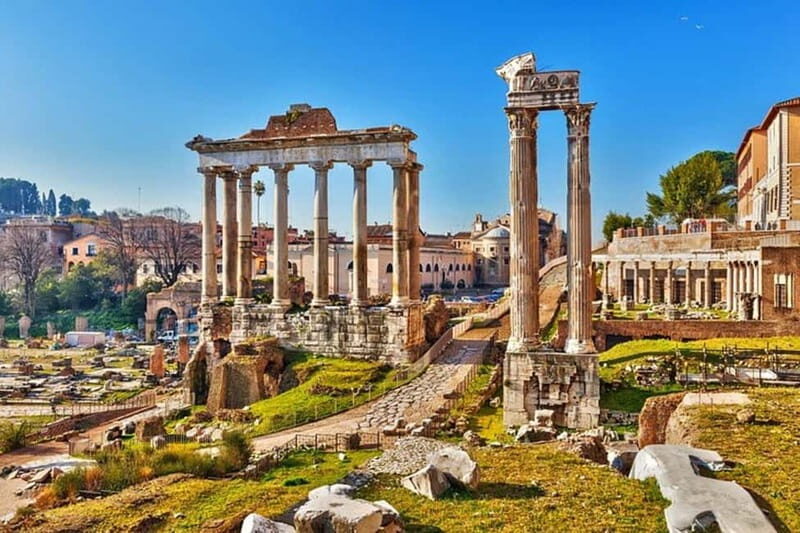
This tour is designed as a fast, focused circuit: Colosseum first, then the Roman Forum, and finally Palatine Hill. The total time is 2.5 hours, so you’re moving most of the time, stopping often, and getting the key stories as you walk.
That structure can be a gift if you’re short on time or you hate wasting daylight in queues. It’s also a smart way to orient yourself, because the guide explains how the spaces connect—what the Colosseum’s events meant, how the Forum functioned, and why Palatine Hill sits above it all. You’ll leave with a mental map that’s hard to build on your own in one day.
But here’s the real trade-off: you’re not getting an all-day museum treatment. The Roman Forum especially rewards patience—more time lets you compare layouts, absorb scale, and step back for better photo angles. If that’s your style, consider whether you want extra independent time after the tour (even just 30–45 minutes) to cool down and explore at your own pace.
More Colosseum, Forum & Palatine combos for the Colosseum & Ancient Rome
Where you meet, what you bring, and how to start clean
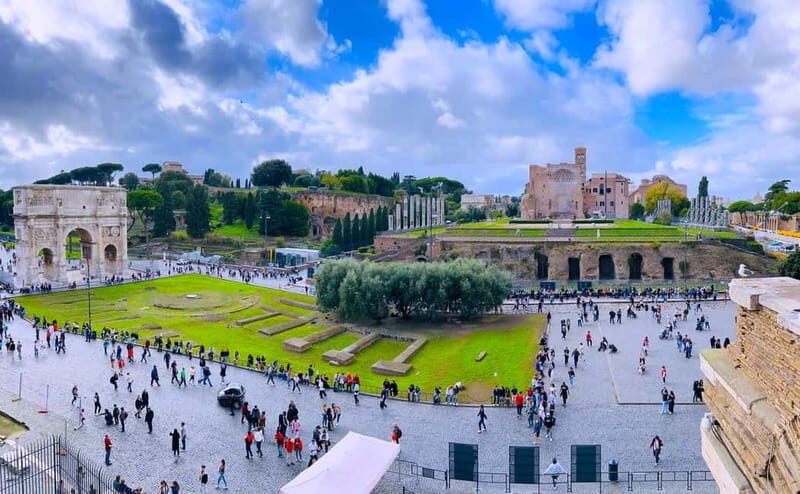
Meeting point is precise: the green souvenir kiosk outside the lower-level exit of COLOSSEO METRO. Your guide’s team holds an “Empire Tour” sign, so it’s usually straightforward to spot them.
Arrive 15 minutes early. I’m a fan of doing this for small-group tours because it reduces stress at the start—everyone gets oriented, you get your ticket situation handled quickly, and you’re not rushing when you’re about to step into major sites.
Bring water and a valid ID (passport or ID card). A copy is accepted, but don’t show up empty-handed. Also note what isn’t allowed: no outside food or drinks during the tour, and no alcoholic drinks in the vehicle.
Finally, this experience is English and not suitable for wheelchair users, so plan accordingly if mobility is a concern.
Skip-the-line entry: what it really buys you here
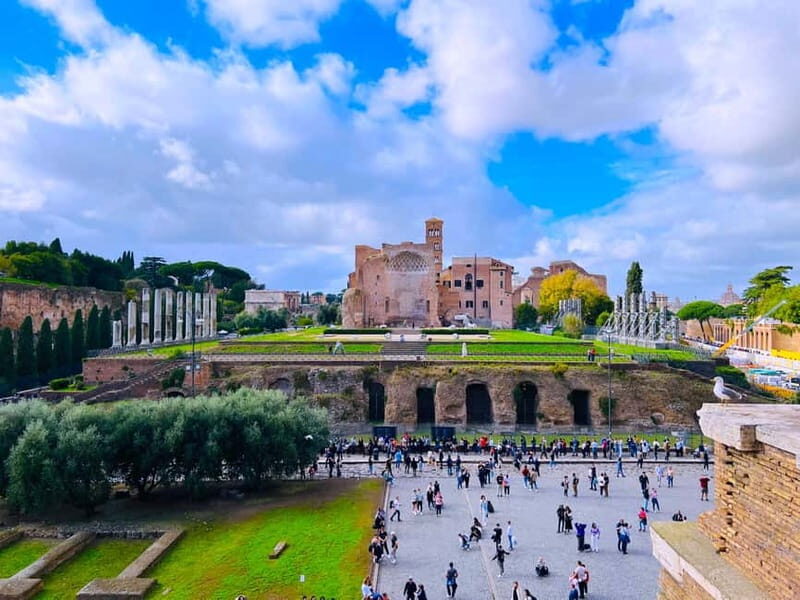
Skip-the-line is the reason to choose this format, especially at the Colosseum. At peak times, lines can eat your energy. By packaging skip-the-line tickets for the Colosseum, Roman Forum, and Palatine Hill, the tour protects your schedule so you spend time looking at ancient Rome instead of waiting to enter it.
This also affects how the day feels. Without lines, your body clock stays in sync—you can handle the walking, listen to the guide, and then still have energy for the views from Palatine Hill. With lines, you often end up tired and distracted, which makes even the most spectacular ruins blur together.
The other detail I like: you’re not juggling ticket machines and timed entry stress on your own. You join the group, the staff handle the entry flow for your tickets, and you get a guided route that keeps you moving logically between sites.
Just keep expectations honest: skip-the-line doesn’t mean “no lines anywhere.” It means you’re bypassing the main queue for these entries, but there will still be crowds inside and you’ll still deal with the reality of security checks and visitor movement.
Inside the Colosseum: gladiator stories and smart things to notice
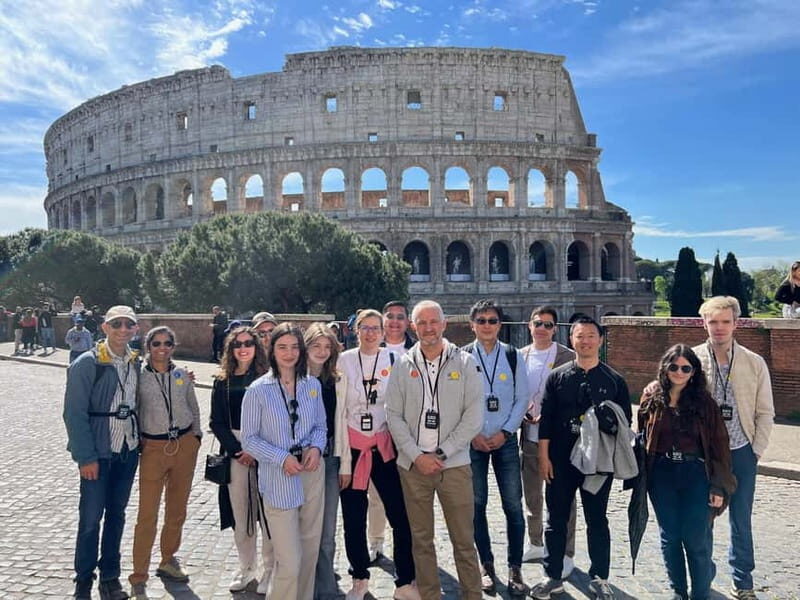
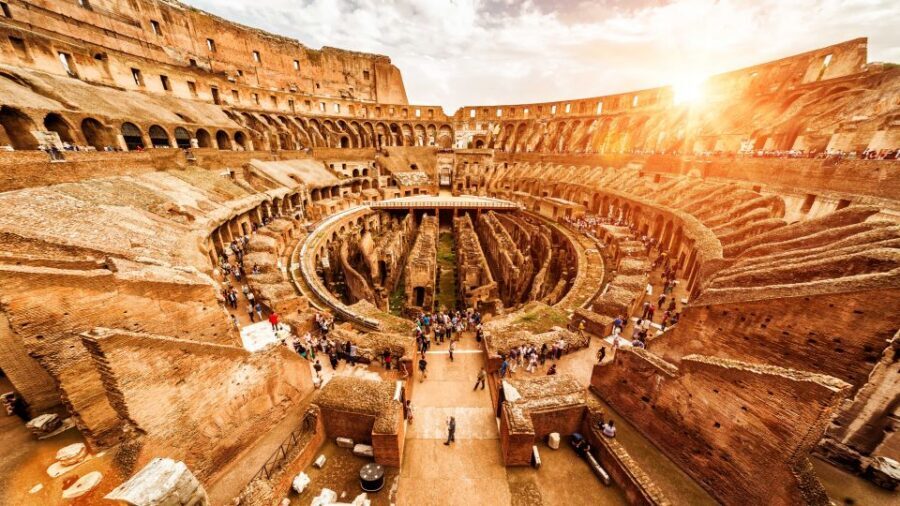
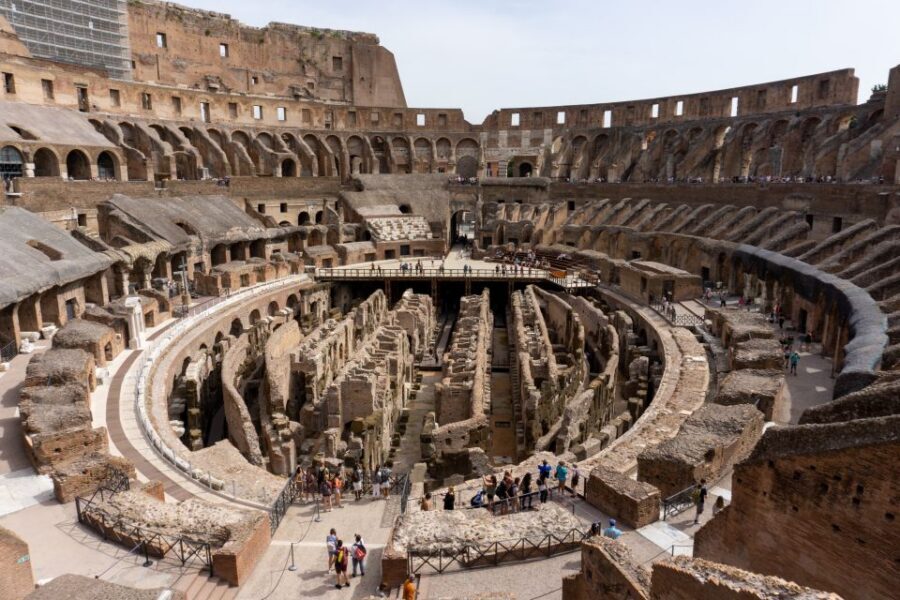
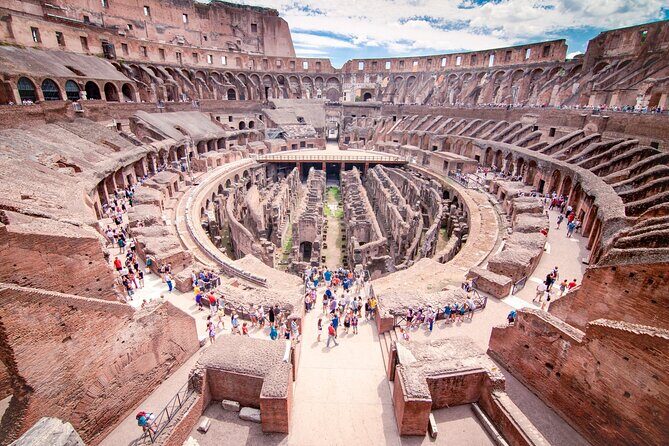
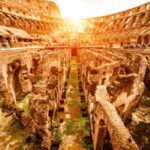
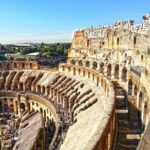
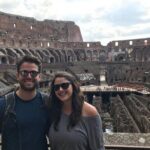
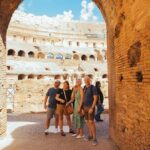
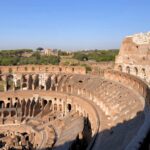
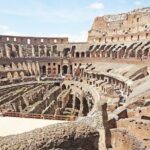
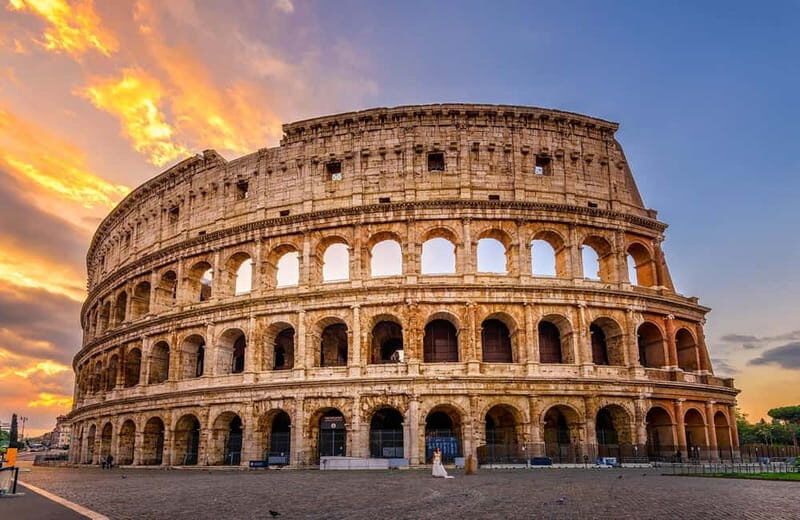
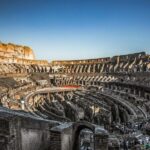
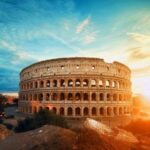
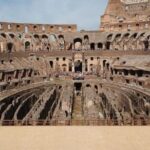
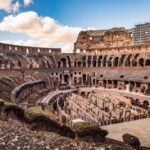
You start in the Colosseum area and enter for a guided walk. Once you’re inside, your guide connects what you’re seeing to the spectacle that made the Colosseum famous—stories tied to gladiator battles and the types of public events that filled the arena.
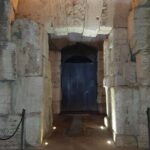
Here’s what I’d tell you to watch for, even if you’re just on a highlights tour. Look for how the seating layers relate to the performance space. Notice the rhythm of openings and corridors, then listen to how the guide explains movement and crowd flow. That mental picture helps you understand why the building was designed the way it was.
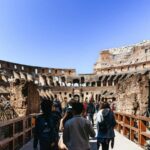
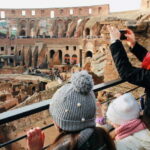
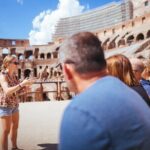
Your visit also benefits from the tour’s built-in listening setup: headsets. In the Colosseum, sound bounces and crowds swell, so being able to hear your guide clearly makes a real difference. You’re more likely to absorb the story instead of constantly trying to catch fragments over the noise.
There’s a practical side too. The tour is timed, so you may not have long, quiet moments inside the arena floor or every corner of the complex. If you want long photo sessions, plan for it after the tour. For many people, though, this guided approach is the sweet spot: you get the big architecture and the human stories without wandering aimlessly.
Roman Forum essentials: Arch of Titus and Temple of Saturn
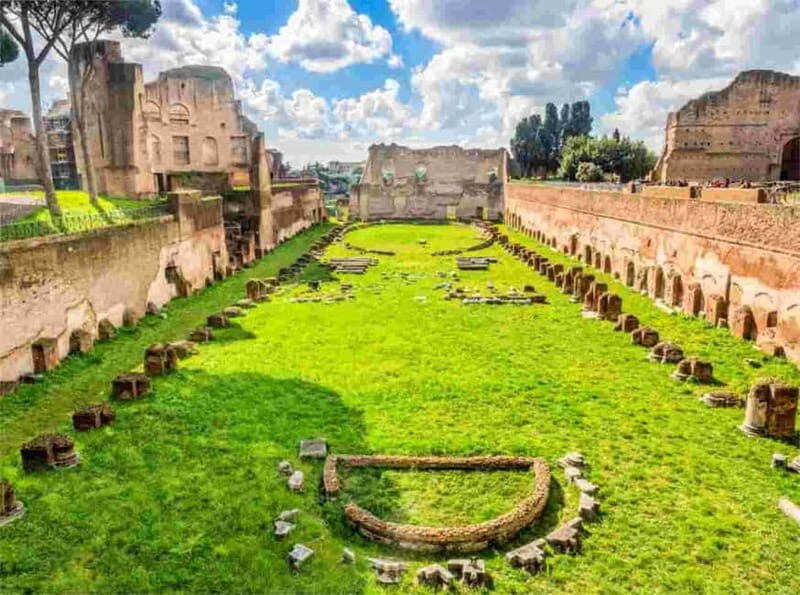
After the Colosseum, the route shifts into the Roman Forum. This is the part that people often find both inspiring and confusing—ruins look like scattered stones until someone gives you the proper anchors. That’s where a guide helps most.
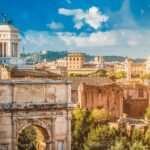
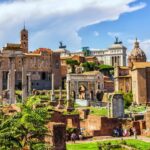
Your Forum visit focuses on major remnants that make the space feel real. You’ll see important structures such as the Arch of Titus and the Temple of Saturn, plus you’ll learn how this area served as the heart of public life in Ancient Rome.
I recommend mentally dividing the Forum into layers of meaning while you listen. First, think of it as a center of power and public ceremony. Next, picture it as a place where people moved, argued, traded, and voted. When you’re guided through that logic, the ruins stop being random and start acting like a map of civic life.
Also, take the timing seriously. Because the whole tour is only 2.5 hours total, you’re not going to do the Forum like a day trip. The Forum rewards time, and if you want to read more signs, compare viewpoints, or stop for longer pauses, you may feel the pace. A simple fix: build your schedule so you’re not cramming a second long activity immediately after.
Still, even with limited time, you’ll come away with clearer orientation—knowing what each ruin was for and why it mattered in the bigger picture.
More Ancient Rome tours for the Colosseum & Ancient Rome
Palatine Hill: views, calm, and a higher perspective
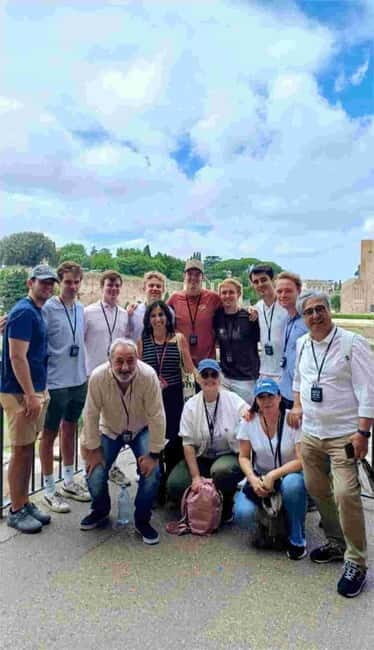
The final stop is Palatine Hill. This is a great ending point because it’s higher and more open than the Forum floor, so it feels like a natural “exhale” after the denser ruins below.
Your guide helps you connect what you’re seeing back to the Forum. From Palatine, you get better views over the area, which makes the geography click fast. When you understand the elevation and layout, it becomes easier to imagine how ancient Romans experienced these spaces day to day.
This stop is also described as more peaceful and serene, and that tracks with how the hill often feels during visitor hours: less chaotic than the Forum’s tight corridors. It’s a nice chance to reframe what you learned earlier—events from the Colosseum, civic life from the Forum, and status and power tied to the hill.
Just remember the tour’s overall length. The time you have here is enough for the big viewpoints and the guide’s highlights, but not enough for a slow wander through every angle. If you want more, arrive early on your own for a longer Palatine add-on later, or plan a separate timed ticket day if Palatine is your top priority.
Group size, headsets, and pacing (the honest part)
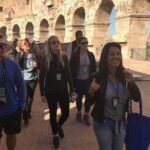
This is a small-group tour with a limit of 8 participants. That size is a big deal in Rome, where large groups can mean you spend your whole time trying to follow a moving line. Here, the route feels more like a guided walk with room to hear and ask questions—without turning into a private tour bill.
Your guide is a live local professional (English) and you’re given headsets so you can listen comfortably as the group moves. That prevents the classic problem where you’re straining to hear over other tourists, wind, and architecture acoustics.
Pacing is the other truth. The tour is 2.5 hours total across three major sites, so you will move. That’s not automatically bad—it keeps you from getting bogged down. But if you’re the kind of traveler who wants to slow down and study every corner, you may end up wishing you had extra time in the Roman Forum.
A smart strategy: if you know you’ll want more time, choose the rest of your day carefully. Don’t schedule something that depends on peak energy right after. This tour is active, and it’s easier to enjoy when you’re not instantly hustling to the next stop.
Price and value: is $146.14 a good deal?
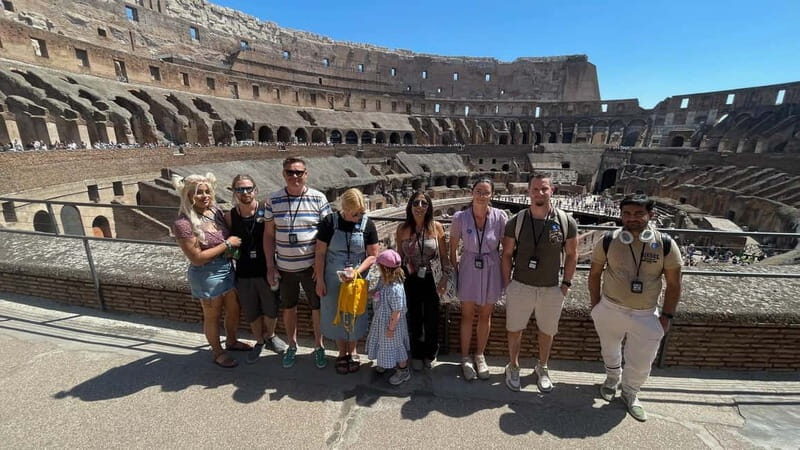
The price is $146.14 per person for a 2.5-hour semi-private guided tour covering three of Rome’s top ancient sites. That sounds steep until you break down what you’re actually getting.
You’re paying for:
- Skip-the-line entry tickets to the Colosseum, Roman Forum, and Palatine Hill
- A professional expert local guide (English)
- Headsets
- Small group handling (limited to 8)
If you try to piece this together on your own, you’ll likely spend time dealing with timed entry management and potentially lose the flow that makes a multi-site visit work. Skip-the-line alone is often the deciding factor when you’re trying to fit Rome highlights into a limited schedule.
That said, you’re also paying for efficiency. This isn’t an unlimited-time exploration. If your priority is deep, unhurried reading and wandering, you may prefer either more time on-site or a longer tour format.
My practical take: this is a strong value if you want the big three, you want a guide to explain what you’re seeing, and you’re trying to avoid the headache of coordinating entries. It’s a weaker value if you already feel comfortable navigating ancient Rome sites and you’d rather spend your time reading and wandering without a fixed route.
Should you book this Colosseum, Forum and Palatine tour?
Book it if you fit this profile:
- You want to see the Colosseum + Forum + Palatine Hill in one go.
- You like guided storytelling so the ruins make sense fast.
- You value skip-the-line access and small-group pacing.
- You’re okay with a highlights approach in exchange for getting the orientation you need.
Consider a different option if:
- You want lots of slow time in the Roman Forum or you plan to stop and read many details.
- You’re sensitive to tight timing and don’t enjoy being moved along a route.
- Mobility needs mean you need wheelchair-friendly access (this one isn’t suitable for wheelchair users).
If you want the best of ancient Rome without turning your day into a logistics puzzle, this tour is a solid pick. It’s efficient, guided, and built around the exact places most people want to understand—before Rome gets away from them.
FAQ
How long is the Colosseum, Forum and Ancient Rome semi-private guided tour?
It lasts 2.5 hours.
Does the tour include skip-the-line entry?
Yes. Skip-the-line entry tickets are included for the Colosseum, Roman Forum, and Palatine Hill.
What sites are included in the tour?
You visit the Colosseum, the Roman Forum, and Palatine Hill.
Is the tour guide live, and what language is offered?
You’ll have a live tour guide in English, and headsets are provided to hear the guide clearly.
How large is the group?
The group is small and limited to 8 participants.
Where do we meet the tour?
Meet at the green souvenir kiosk outside the lower-level exit of COLOSSEO METRO. Staff will be holding an Empire Tour sign.
When should I arrive for the meeting point?
Arrive 15 minutes early.
Do I need an ID?
Yes. Bring a valid ID, and a copy is accepted.
Is food or alcohol included or allowed during the tour?
Food and drinks are not included, and food is not allowed. Alcohol and drugs are not allowed, and alcoholic drinks in the vehicle are also not allowed.