REVIEW · ROME
Rome: Colosseum, Arena and Palatine Hill Small-Group Tour
Book on GetYourGuide →Operated by Carpe Diem Tours · Bookable on GetYourGuide
Rome’s arena access feels like time travel. This small-group tour has you step inside the Colosseum and onto the arena floor with a licensed local guide, then continue up to Palatine Hill and across to the Roman Forum. You get the kind of route that most people never see: in through the Gladiator’s Gate, like the shows’ own cast.
I especially like the practical setup. You’ll have headphones so you can actually hear your guide, even when the crowd noise is high. And I like that the tour doesn’t just point at stones; it connects the sites to how Rome worked day to day.
One consideration: the time is tight. You spend about 1 hour in the Colosseum, about 30 minutes on Palatine Hill, and then you finish in the Forum—so if you want a lot of slow wandering in only one area, you may feel the schedule nudges you along.
In This Review
- Key points to know before you go
- Entering the Colosseum from the Gladiator’s Gate
- Meeting at the Arch of Constantine (and why that start helps)
- The Colosseum tour: what you actually spend time on
- Palatine Hill in 30 minutes: emperors, villas, and elite Rome
- Roman Forum: finishing where Roman life collided
- Small-group pacing, headphones, and guide quality
- Value check: is $107.62 a good deal for three major sites?
- Who this tour fits best
- Quick tips to make the most of your 3 hours
- Should you book this Colosseum arena tour?
- FAQ
- How long is the Rome: Colosseum, Arena and Palatine Hill Small-Group Tour?
- Where do I meet the guide?
- Does the tour always start at the Colosseum?
- Where does the tour end?
- Is the tour conducted in English?
- What’s included in the price?
- What do I need to bring?
Key points to know before you go
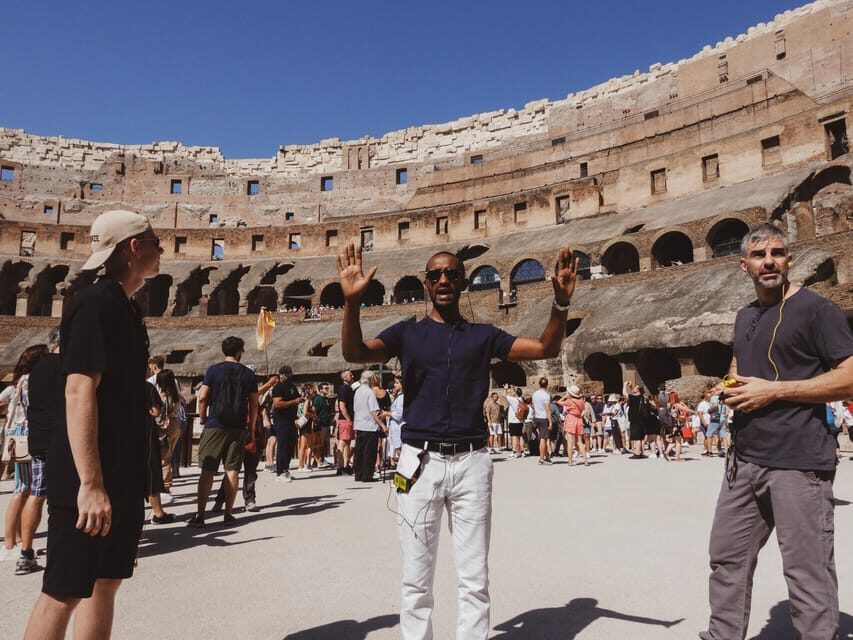
- Arena floor access via the Gladiator’s Gate so you experience the Colosseum from the same level as the action
- Headphones included for clear commentary and an easier time staying with the group
- Small group feel with manageable numbers, which helps with questions and photo stops
- Palatine Hill in a focused burst—emperors’ homes and elite villas without wasting time
- Roman Forum as the finale where politics, myths, and everyday life overlap in one place
Entering the Colosseum from the Gladiator’s Gate
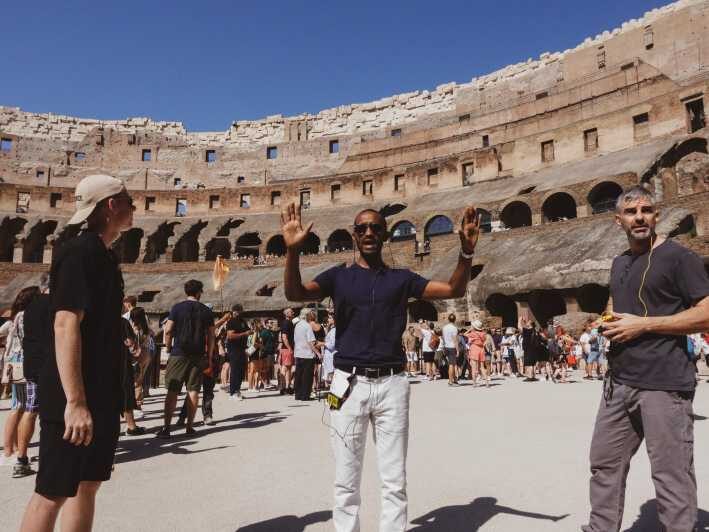
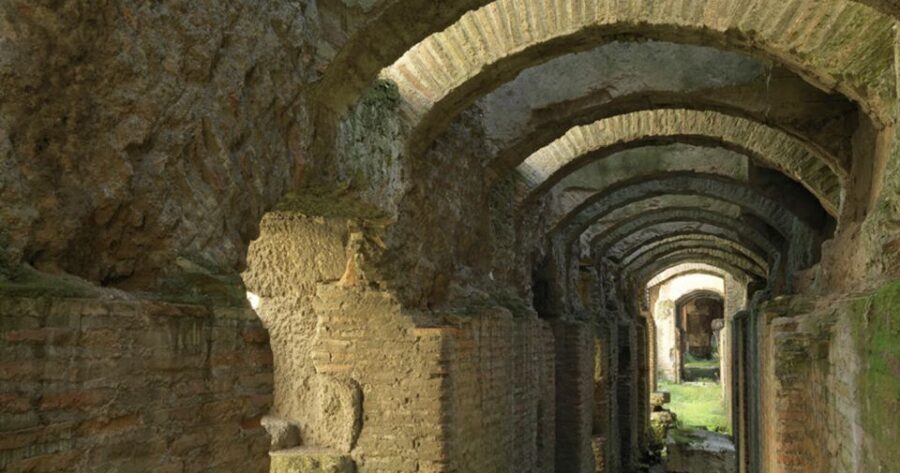
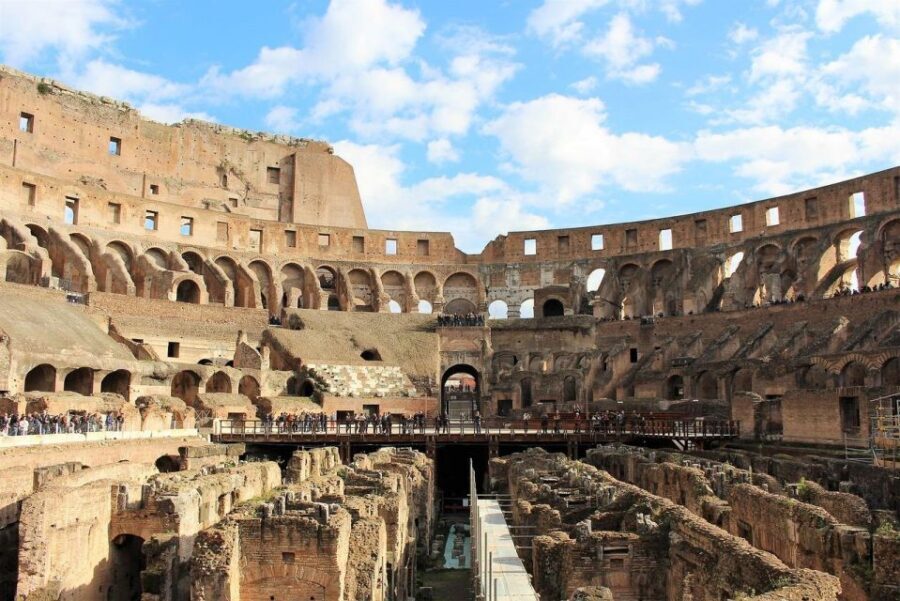
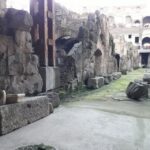
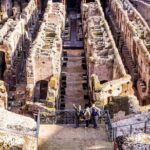
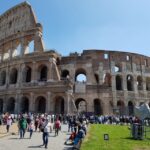
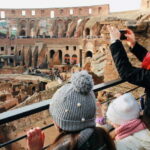
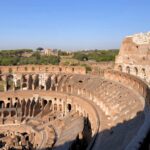
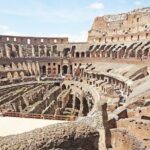
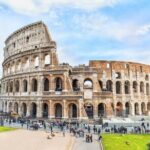
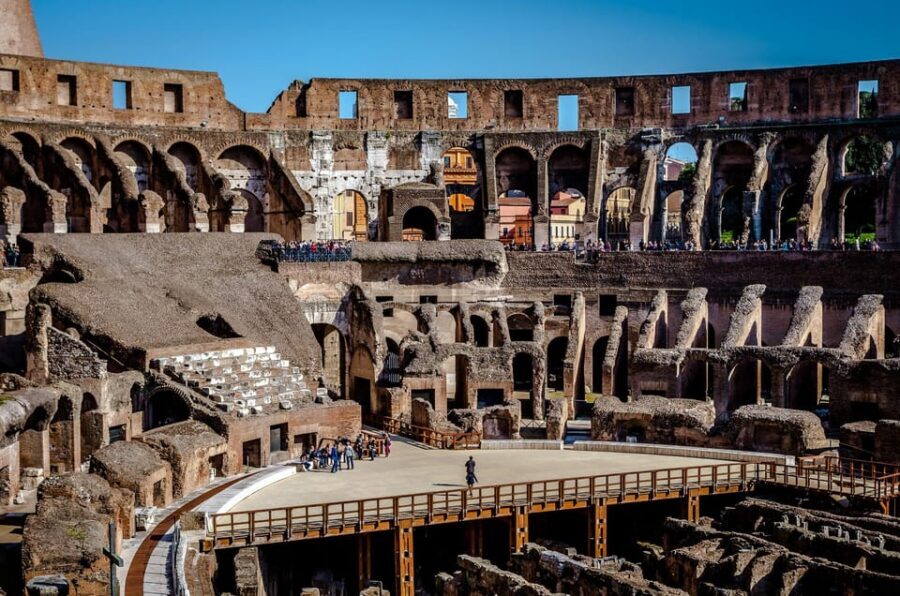
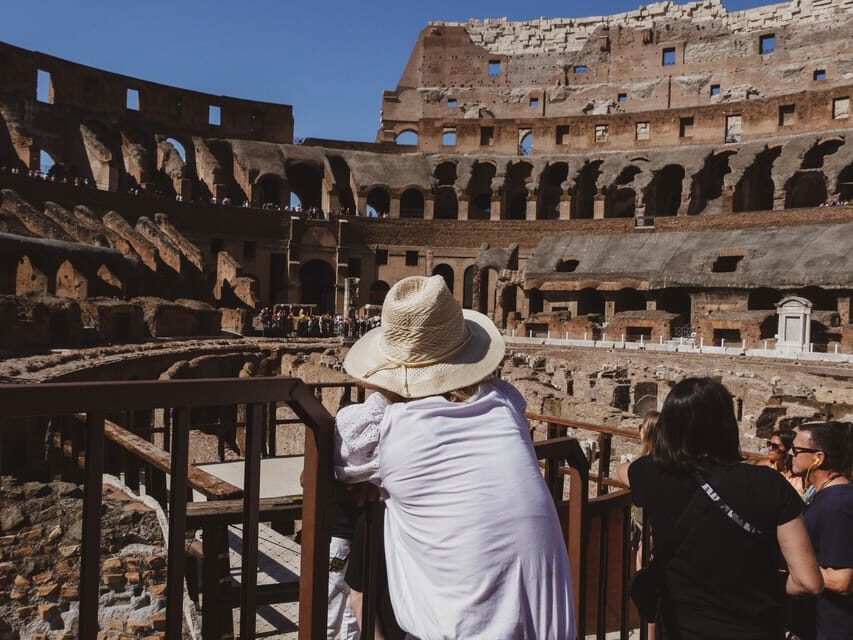
The biggest reason this tour is worth your time is simple: you don’t just view the Colosseum. You go inside and onto the arena floor. That means you’re standing in the space where the spectacle happened, not watching it from the perimeter like a tourist photo backdrop.
The route matters, too. You’ll enter through the Gladiator’s Gate, described here as the path the gladiators used. Even if you know the basics of Roman games, your brain still needs a moment to adjust when you’re physically on that level—wide, open, and designed for noise to bounce around.
This is also where a good guide pays off. You’ll get context about Rome at its height—when emperors ruled, money and goods arrived from around the empire, and the Colosseum served as the city’s public stage for shows and power.
More Colosseum, Forum & Palatine combos for the Colosseum & Ancient Rome
Meeting at the Arch of Constantine (and why that start helps)
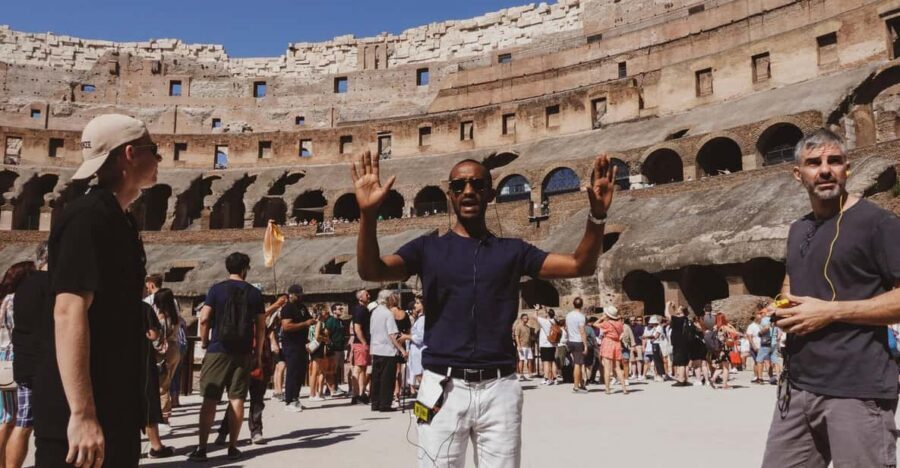
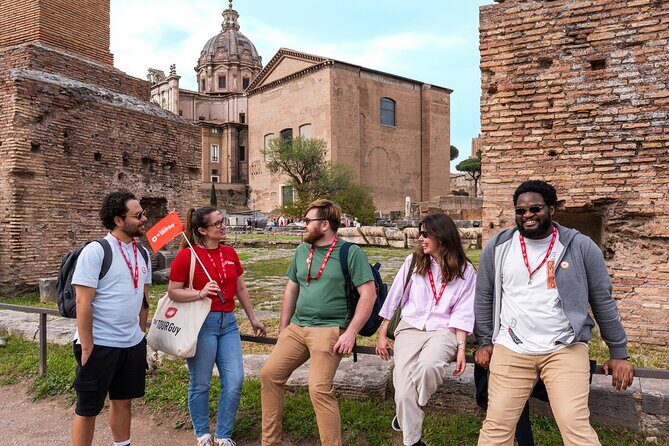
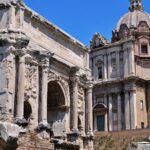
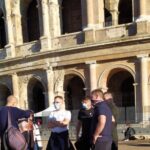
You meet at the Arch of Constantine, with your guide holding a yellow flag. The meeting instructions specify the side furthest away from the Colosseum, which helps you avoid the classic Rome chaos of blurry directions and too many tour groups.
Plan to arrive a few minutes early. Not because you’ll be rushing—because you’ll want a smooth start so the guide can get the group moving right away.
One key detail: depending on the ticket timing available, the tour may start with the Colosseum or may start with the Roman Forum/Palatine Hill first. Either way, you’ll still cover all three areas. But it does change the order, so don’t assume your first stop is always the amphitheatre.
Bring your passport or ID card. You’ll want it on hand that day, especially if minors are in your group.
The Colosseum tour: what you actually spend time on
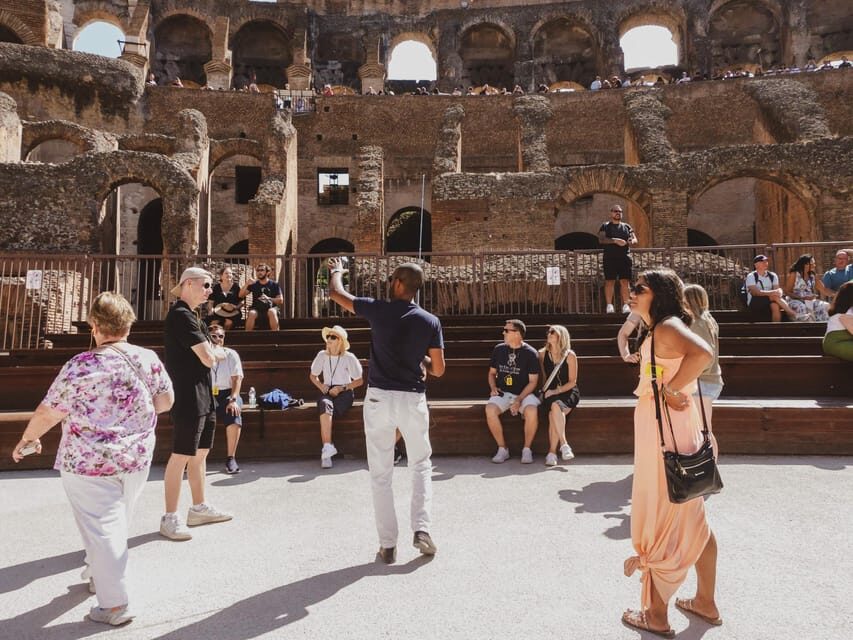
You get about 1 hour for the Colosseum itself, guided. That time is focused on getting you inside the complex and making sense of what you’re seeing—especially once you’re standing on the arena floor.
Here’s what I’d pay attention to during that hour:
- The feel of the space: the scale looks different when you’re at ground level.
- The show-world perspective: your guide will help connect the crowds’ reactions and the flow of action to the architecture.
- Small orientation cues: once you know the layout, the Colosseum stops feeling like an overwhelming ruin and starts feeling like a designed machine.
If you’re the type who likes technical history, you might get a guide who answers extra questions and really digs into how the place worked. Some guides are known for being strong at history and Q&A, and you can expect clear explanations through the headphones.
Possible drawback to keep in mind: the schedule doesn’t treat the Colosseum as a long, leisurely stroll. It’s built for moving you through highlights and then continuing. One common preference I can’t ignore: if you think you’ll want much more time in the Forum than the Colosseum, you may feel the balance is a bit weighted toward the amphitheatre.
Palatine Hill in 30 minutes: emperors, villas, and elite Rome
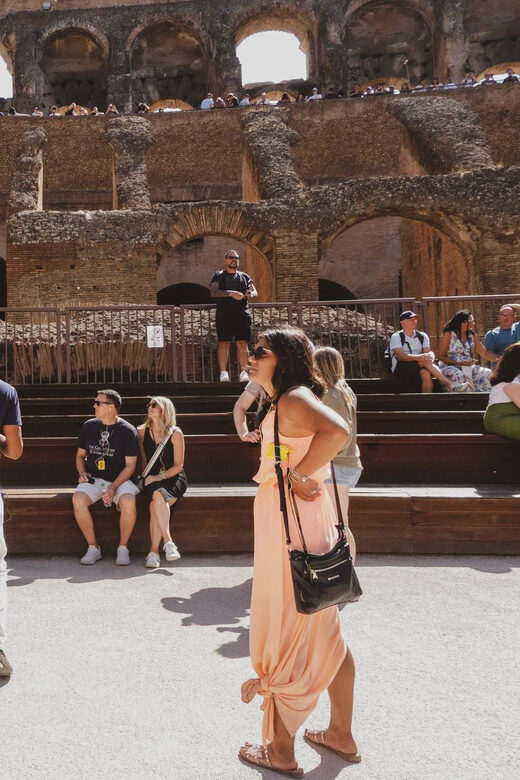
After the Colosseum, you’ll head to Palatine Hill for about 30 minutes. This is the part of the tour that many people think they’ll enjoy less—until they’re standing on the ground where the elites built their power bases.
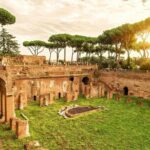
Palatine Hill is described here as the home turf of emperors, with palaces and luxury villas for the high-ranking crowd. You’ll see remains scattered around the hill, and your guide will rebuild the neighborhood around what’s left.
A half-hour is short, but it can be a smart move. Palatine Hill covers a lot of ground and a lot of eras, and a guided time box helps you get the big picture fast:
- Who lived here and why
- How elite housing reflected political status
- How the hill fits into the broader story of Rome
If you want a long, detailed walk with lots of stopping points, you might later return on your own. But as a guided highlight within a three-hour experience, this gives you the essentials without turning your day into a half-marathon.
Roman Forum: finishing where Roman life collided
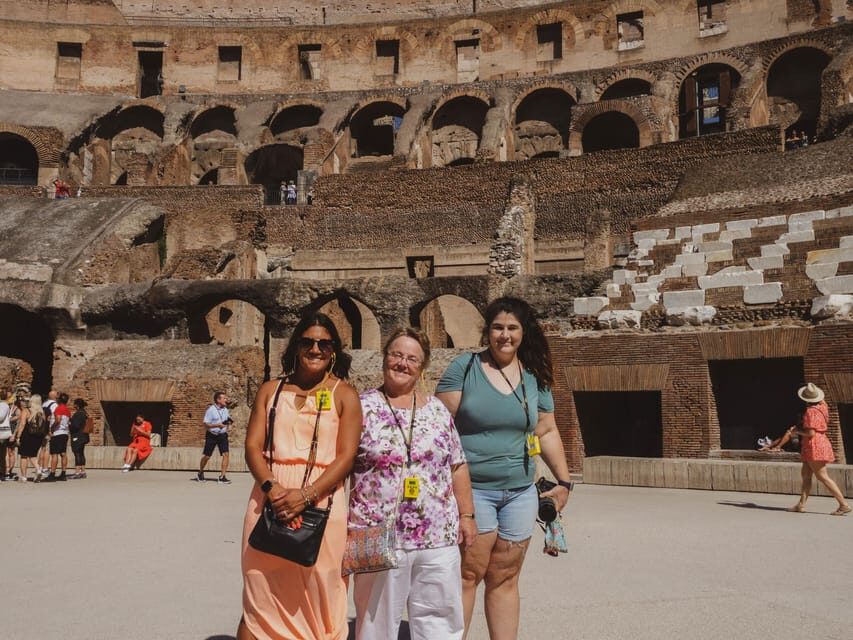
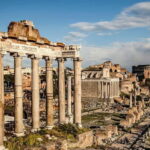
The tour ends with the Roman Forum as your finale. The Forum is where Rome’s daily energy shows up in stone: government activity, public life, and the stories people used to explain their world.
Your guide helps you weave through the enormous ruins, and you’ll hear it framed as more than just famous speeches or political drama. The Forum is portrayed here as a place with real people moving through it—from mythical founders to high-level senators to humble market stall keepers.
This stop is where you’ll likely feel the tour’s logic click. After the grandeur of the Colosseum and the elite spaces of Palatine Hill, the Forum gives you the nuts-and-bolts engine of the city. It’s the most human part of the complex, even though it’s made of fragments.
The headphones help on this one, too. The Forum can feel open and busy in a way that makes it hard to follow directions without sound support. With the guide right there, you get a clearer picture of what you’re looking at and why it mattered.
More Palatine Hill tours for the Colosseum & Ancient Rome


Small-group pacing, headphones, and guide quality
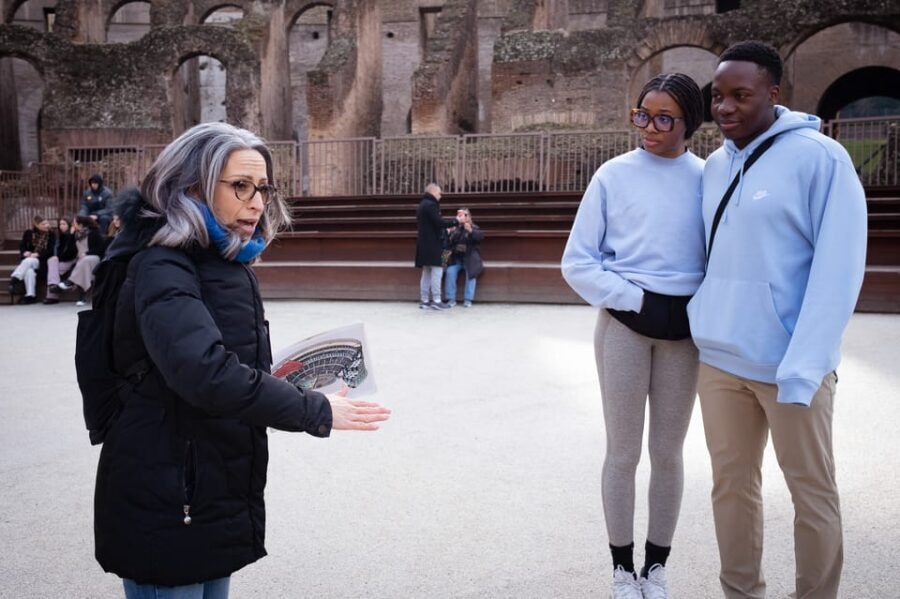
This is where the experience starts feeling different from a big-bus tour. The format is small-group, and the included headphones make a real difference. You’re not constantly craning your neck or guessing what the guide is saying over the noise.
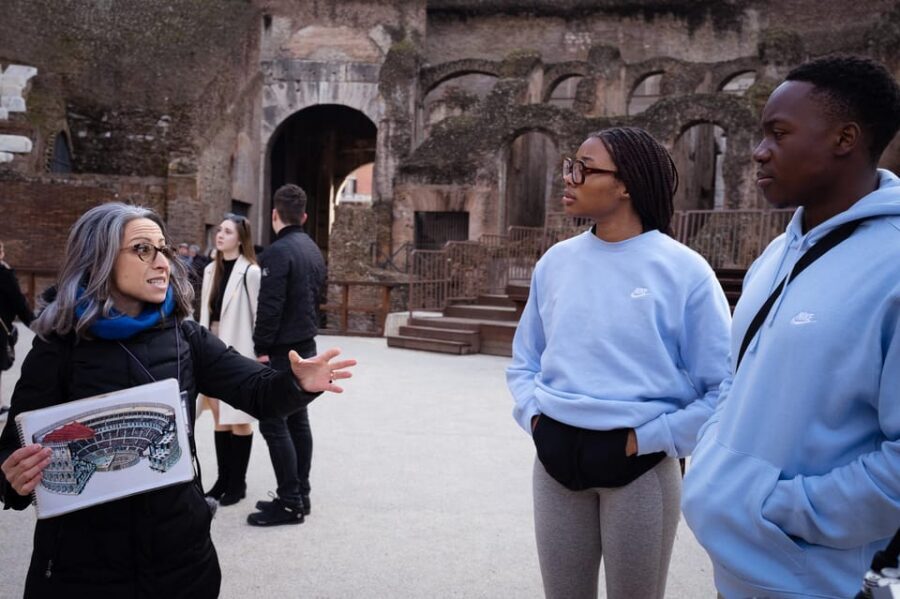
You’ll also notice how small-group pacing supports better interaction. One of the standout themes in the guide stories here is how comfortable they seem with questions and explanations. Guides like Giorgio and Lynn are highlighted for being strong at answering queries and making the material feel understandable. Others—like Felicity, Ivana, Barbara, Lia, and Susana—are noted for being engaging, organized, and good at guiding you to strong viewpoints for photos.
A practical bonus: some guides actively look for shade when the sun is intense. If you’re traveling in the hotter months, that little habit can make the tour feel easier to manage without rushing your comfort.
Value check: is $107.62 a good deal for three major sites?
At $107.62 per person for a roughly 3-hour guided experience, this tour’s value depends on what you care about.
You’re paying for:
- A licensed local guide (live commentary)
- Headphones
- A route that gets you into the Colosseum and out onto the arena floor, then continues through Palatine Hill and the Roman Forum
That combination is hard to replicate if you’re trying to DIY it on your own. Yes, you can visit these sites independently, but you’ll still need to sort your timing, figure out where to go next, and piece together the story without a guide. Here, the flow is set up for you.
Also, there’s a schedule wrinkle worth knowing: Colosseum admission is free on the first Sunday of the month, and tours are discounted on those days. If your dates line up, that’s one of the best ways to stretch your budget.
Food isn’t included, so you’ll want to plan a meal either before or after. But for three headline stops, not having a meal included usually means you stay efficient and don’t lose half your morning to a restaurant detour.
Who this tour fits best
This tour is a strong match if you:
- Want an efficient Rome hit across the Colosseum, Palatine Hill, and the Forum
- Like guided storytelling that connects ruins to how the city actually functioned
- Prefer smaller groups and clear audio through headphones
- Care about seeing the arena floor, not just the exterior
It may be less ideal if you:
- Want long, slow exploration with lots of time to linger in only one zone
- Prefer silent self-guided time over structured stops
- Are traveling with a group that needs lots of breaks beyond the set pacing (the tour runs on a tight timeline)
Quick tips to make the most of your 3 hours
Rome can be sunny, dusty, and crowded fast, so do the practical prep:
- Wear shoes you can walk in for a while. Stone steps and uneven ground are the norm here.
- Bring your ID/passport.
- If you tend to get hot, plan your clothing for sun and consider that you’ll cover a lot of open space.
- Keep your camera ready, but don’t fixate on photos so you can follow your guide’s orientation points first.
Should you book this Colosseum arena tour?
If your goal is to see the Colosseum the way the show once lived—on the arena floor—this is an easy yes. The structure makes sense: amphitheatre first, then Palatine Hill for the power-and-luxury backdrop, then the Roman Forum to explain what the city actually did with all that power.
I’d book it if you want a guided storyline, clear hearing through headphones, and a small-group pace that doesn’t feel like you’re lost in the crowd. I’d reconsider only if you know you want extra time in the Forum at the expense of the Colosseum, since the schedule is built around balanced highlights rather than one extended deep session.
FAQ
How long is the Rome: Colosseum, Arena and Palatine Hill Small-Group Tour?
It lasts about 3 hours. Starting times vary, so you’ll need to check availability for the schedule.
Where do I meet the guide?
You meet at the Arch of Constantine. The guide will be holding a yellow flag, on the side furthest away from the Colosseum.
Does the tour always start at the Colosseum?
No. Depending on the time of tickets you can purchase, the tour may start with the Colosseum or start with the Roman Forum/Palatine Hill first.
Where does the tour end?
The activity ends back at the meeting point.
Is the tour conducted in English?
Yes, the live tour guide provides the tour in English.
What’s included in the price?
The tour includes headphones and a guide.
What do I need to bring?
Bring your passport or ID card, and keep it with you during the experience.