REVIEW · ROME
Night at the Colosseum Guided Walking Tour of Ancient Rome
Book on Viator →Operated by Rome Tours by Tommaso · Bookable on Viator
A dark sky makes Rome feel more real. This guided night walk hits the city’s biggest Ancient Rome sights in a tight, smart route with expert commentary and easy logistics.
I especially love how the stops teach you how Romans watched plays, judged lawsuits, marched to war, and staged public spectacle. You’ll also get a guide who keeps the group moving and helps you understand what you’re looking at, instead of staring at stones and guessing.
One thing to consider: you’ll stay all outside for about 2 hours 30 minutes, so plan on real walking, standing, and uneven sidewalks.
In This Review
- Key highlights that matter on this Night at the Colosseum walk
- Nighttime Rome from Street Level: why this route works
- Price and value: what $289.73 buys you
- Where you meet and how the walk flows (Campitelli to the Colosseum area)
- Stop-by-stop: what each landmark is teaching you
- Teatro di Marcello: the city’s staged entertainment world
- Piazza del Campidoglio: Michelangelo’s square with a view of empire
- Mercati di Traiano – Museo dei Fori Imperiali: when Rome built upward
- Colonna Traiana: propaganda with scrolling storytelling
- Foro Romano: the center of Rome’s legal and civic heartbeat
- Colosseum (outside view): gladiators and public spectacle
- Arch of Constantine: the triumph template
- Guides who keep Rome readable at night
- What to wear, what to bring, and who this fits best
- The booking reality: weather, outside-only timing, and skip-the-bottleneck comfort
- Should you book Night at the Colosseum guided walk?
- FAQ
- How long is the tour?
- Where does the tour start?
- Where does the tour end?
- Is the tour private?
- Is admission included?
- What’s included in the price?
- Is it all outdoors?
- Do I need a mobile ticket?
- Is it weather dependent?
- What should I wear?
Key highlights that matter on this Night at the Colosseum walk
- Two-and-a-half hours, big payoff: A concentrated loop that covers the power center of Rome fast.
- All outside, no monument entry: You won’t spend time hunting tickets or lines inside buildings.
- Art and historian guide: Explanations that connect each landmark to daily life and Roman politics.
- Smart start and finish near transit: You begin at Campitelli and end right by Piazza del Colosseo.
- Private group feel: Only your group participates, so questions don’t get lost in a crowd.
- Skip-the-bottleneck advantage: The tour is designed to help you avoid the worst friction at major stops.
Nighttime Rome from Street Level: why this route works
Night makes Rome’s ruins look less like postcards and more like a living city. Street lighting, nearby traffic sounds, and the dark sky all change how you notice scale. And that matters, because the big story here is power—shows, courts, empire projects, and public games.
I like that this tour stays focused on the essentials you actually want to see: theater, political landmarks, forum buildings, major monuments, and the Colosseum area. You get to move from site to site in a way that feels logical, not random.
The practical beauty is that the whole experience is built to reduce stress. You won’t enter monuments, so the walk stays simple. At the same time, you’re not wandering on your own either, which is where most first-time Rome nights get messy.
More Ancient Rome tours for the Colosseum & Ancient Rome
Price and value: what $289.73 buys you
At $289.73 per person for roughly 2 hours 30 minutes, this isn’t a bargain-basement sightseeing walk. You’re paying for a guide who can interpret what you see and manage the group through Rome’s main outdoor hotspots.
Here’s where the value shows up:
- Official art and historian guide means you’re not just getting directions. You’re getting context you can’t easily piece together from a phone at night.
- Private tour format helps you ask questions without competing with a large group.
- Mobile ticket keeps the meeting process smoother and reduces the chance of confusion.
- Group discounts can make it significantly more reasonable if you’re traveling with family or friends.
If you love ruins but also like to understand them, this price can feel fair. If you’re the type who just wants photos and fast walking, you may feel the cost is higher than you need.
Where you meet and how the walk flows (Campitelli to the Colosseum area)
The tour starts at Chiesa di Santa Maria in Portico in Campitelli, Piazza di Campitelli 9, 00186 Roma RM. It ends at Piazza del Colosseo, 00184 Roma RM, which is convenient if you want to grab a metro ride or taxi afterward.
The timing is built around short stops with enough time to listen and absorb. You’re not locked into long museum-style pacing, and you’re not stuck at one location forever. It’s more like a curated walk: quick orientation at each site, then you move.
Also, because it’s near public transportation and uses an outdoor route, you’ll likely find it easier to plan the rest of your evening. Just keep in mind you’ll want comfortable shoes, since you’re spending your night on your feet.
Stop-by-stop: what each landmark is teaching you
Teatro di Marcello: the city’s staged entertainment world
You begin with Teatro di Marcello, one of Rome’s best-preserved ancient theaters. The big lesson here is what Roman shows were like and why theater mattered in public life.
Even though you’re only there about 15 minutes, this stop sets the tone. You’re learning the idea of spectacle first—where people gathered, how entertainment worked, and how architecture supported crowds.
What to watch for: notice how the theater’s structure still reads as a designed space, not just a pile of stone. That helps your brain later when you see other Roman monuments built for mass attention.
Possible drawback: at night, details can be harder to see quickly. If you’re the type who needs a lot of time for photos, you might wish this first stop lasted a bit longer.
Other walking tours we've reviewed in Rome
Piazza del Campidoglio: Michelangelo’s square with a view of empire
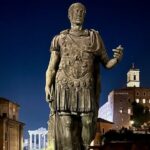
Next is Piazza del Campidoglio, associated with Michelangelo’s design. You’ll also see the town hall area and a statue of Marcus Aurelius.
This is a smart stop because it bridges eras: Renaissance planning placed its stamp on a space that still points you toward the Roman forums. And the view is a big part of why this place matters. From here, the Roman power center becomes easier to picture.
You’re there for about 30 minutes, which gives you time to stand, orient yourself, and take in the forum perspective. That makes the next stops easier, because you’re not starting from zero.
Mercati di Traiano – Museo dei Fori Imperiali: when Rome built upward
Then you move to Mercati di Traiano – Museo dei Fori Imperiali, linked with Trajan’s ambitious forum complex. This stop is only about 15 minutes, but it gives you the core idea: Trajan didn’t just build a monument; he engineered an area.
The “markets” aspect is important. Roman city projects often combined public spaces, commercial life, and political messaging. Seeing this zone on foot helps you understand that Rome’s empire wasn’t isolated in one building. It spread across districts and routines.
Colonna Traiana: propaganda with scrolling storytelling
At Colonna Traiana, you’ll spend around 10 minutes. This monument is famous for its relief scenes showing Trajan’s war campaigns—with panels that feel almost like a visual narrative.
The best way to enjoy this stop is to treat the column like a comic strip in stone. The reliefs show repeated figures, action sequences, and scenes that are meant to communicate outcomes and legitimacy. That’s a different way of looking at war—less strategy talk, more message and spectacle.
Tip: don’t rush the column. Even if you can’t read every detail, try to follow the overall flow of images. That’s usually what the guide will help you do.
Foro Romano: the center of Rome’s legal and civic heartbeat
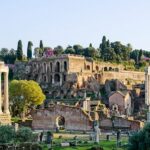
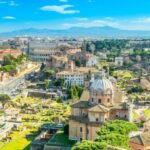
Next comes the Foro Romano, where you’ll spend about 30 minutes. This is the center of Rome’s public life: the political and civic “main street” of the Roman Empire, tied to key courts, trade, and temples.
This stop is why the tour feels worth it. The Colosseum is a star attraction, but the forums are the engine behind the empire’s daily power. If you leave Foro Romano with a clear mental map of courts, commerce, and sacred spaces, the Colosseum section lands harder.
What you’ll gain: a clearer sense of how Romans experienced authority—through institutions you can still identify in the ruins.
Possible drawback: nighttime visibility can make it feel busy to the eye. The guide’s job is to pick out the key elements so you don’t feel lost.
Colosseum (outside view): gladiators and public spectacle
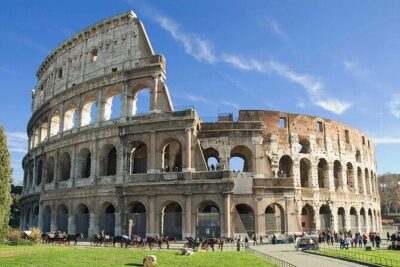
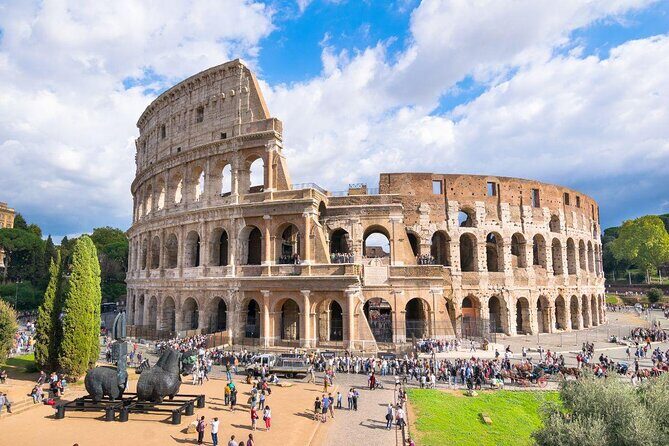
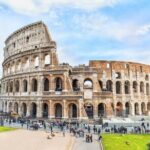
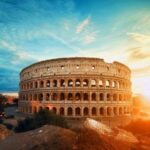
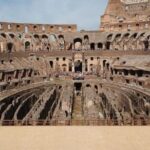
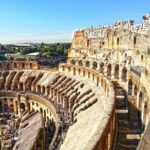
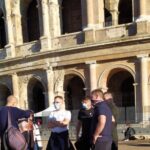
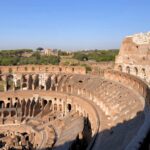
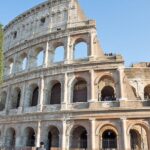
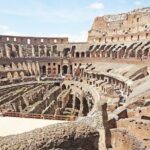
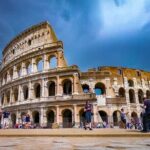
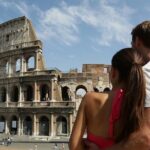
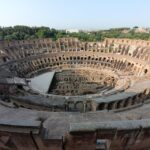
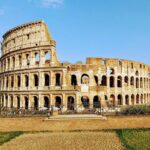
Then you reach the Colosseum for about 30 minutes. You’ll see it from the outside and learn about gladiators and shows.
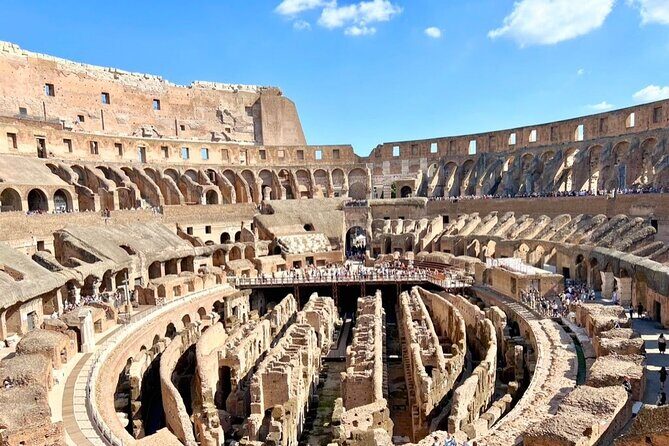
Because the tour is all outside, this isn’t about walking inside the arena or chasing ticket lines. It’s about understanding the Colosseum as a symbol of Roman entertainment and control—why the crowds mattered and what the events meant politically.
My advice for the Colosseum moment: treat it like a stage. Imagine where people stood, how sound carried, and why the structure was designed for crowd impact. Even if you’ve seen photos before, the guided context helps you read the building correctly.
Arch of Constantine: the triumph template
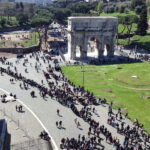
The last major stop is Arco di Costantino (Arch of Constantine), with about 20 minutes here. You’ll learn that it’s one of the best-preserved ancient triumphal arches and that it influenced later arch designs, including the Arch of Triumph in Paris and other major memorial arches.
This stop is a good closer because it gives you a “Rome legacy” perspective. When you understand triumph arches as an idea, you’ll start noticing them across Europe after this trip.
What to watch for: focus on the arch as a message device—how monuments turn victories into public identity. That’s the kind of interpretation that makes the last minutes feel rewarding, not rushed.
Guides who keep Rome readable at night
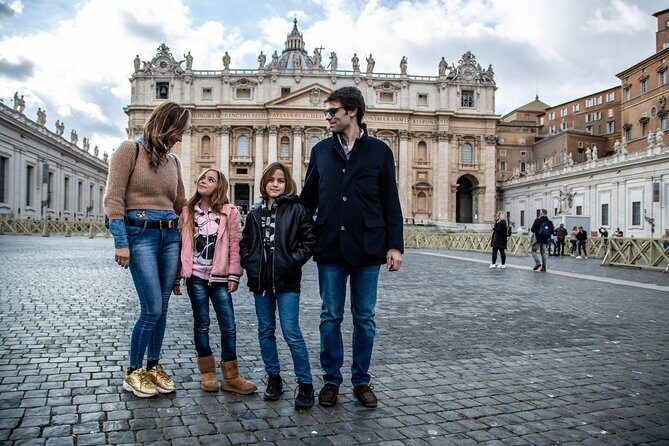
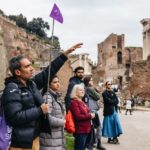
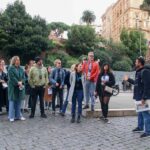
The guides are a major part of the value here. In the feedback I’ve seen, people highlight that the guide was very good at explaining the story behind what you see and moving the group through crowded areas with patience.
You may encounter guides like Max (praised for thorough historical context) or Tommaso (associated with a smoothly run experience and helpful answers). Regardless of the specific guide in your group, the pattern is clear: you’re getting more than facts—you’re getting guidance that keeps you from getting frustrated trying to navigate on your own.
At night, Rome can feel like a maze. Street corners can blend together. The guide’s job isn’t just to speak—it’s to keep your attention anchored on the right details in the right order.
What to wear, what to bring, and who this fits best
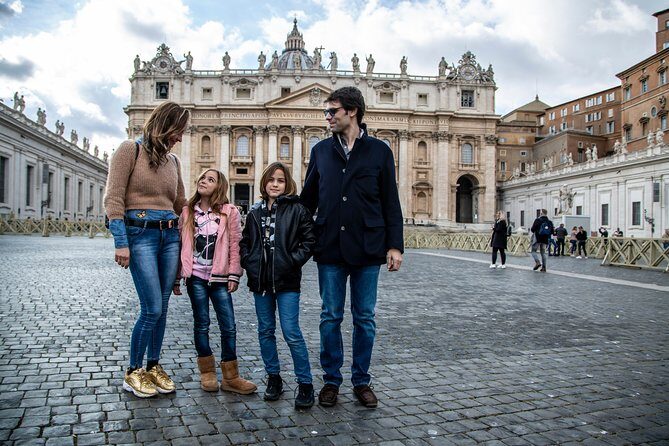
This tour is designed to be easy to join: most people can participate, and it’s near public transportation. But your success will depend on comfort and timing.
- Wear comfortable shoes. You’ll be outside for the full route.
- Bring layers. Nights can cool down quickly even when daytime feels warm.
- If you’re bringing a camera, remember that some details may be harder to see after dark. A good guide can help you aim your attention where it counts.
Who it fits best:
- You want a clear Ancient Rome orientation without entering museums.
- You like guided interpretation and better pacing.
- You’re traveling as a group and can use the private format.
If you want purely relaxed sit-down time, this might feel more active than you expect. The route is short per stop, but it still adds up to a walking night.
The booking reality: weather, outside-only timing, and skip-the-bottleneck comfort
This experience depends on good weather. If it gets canceled due to poor conditions, you should expect either a different date or a full refund. The tour being all outside also means you’re going to feel the elements more than you would on an indoor-heavy program.
On the “skip” side, the tour’s highlights emphasize avoiding the worst time-wasters at a popular site. Even though you’re not entering monuments, the guide-led flow still matters because the main friction in Rome is often crowds, confusion, and the time lost finding the right vantage point.
Also note the tour is marked as private, so your group only. That can be a big quality boost at night when you don’t want to get swept along by strangers.
Should you book Night at the Colosseum guided walk?
I think you should book if you want a smart, guided Ancient Rome experience without museum tickets and without trying to decode ruins at midnight. The combination of major landmarks, short timed stops, and an art and historian guide is exactly what you want when you have limited time but still want more meaning than a photo tour.
You might skip it if you already know Roman architecture well and you prefer to self-guide with zero structured stops. Also consider alternatives if you know you’ll struggle with the all-outdoor format and a 2.5-hour walking night.
If you’re deciding between “wander and hope” versus “get the story in the right order,” this tour leans clearly toward the second option.
FAQ
How long is the tour?
It runs for about 2 hours 30 minutes.
Where does the tour start?
The meeting point is Chiesa di Santa Maria in Portico in Campitelli, Piazza di Campitelli, 9, 00186 Roma RM, Italy.
Where does the tour end?
It ends at Piazza del Colosseo, 00184 Roma RM, and you can then use the metro or taxi.
Is the tour private?
Yes. It’s a private tour/activity where only your group participates.
Is admission included?
No. Admission tickets are not included because the tour is entirely outside. The listed stops are marked as free admission.
What’s included in the price?
You get an official art and historian tour guide.
Is it all outdoors?
Yes. The tour is all outside, and you won’t enter any monument.
Do I need a mobile ticket?
Yes, it uses a mobile ticket.
Is it weather dependent?
Yes. It requires good weather. If canceled due to poor weather, you’ll be offered a different date or a full refund.
What should I wear?
Wear comfortable shoes, since the tour is a guided walking experience at night. Service animals are allowed.