REVIEW · ROME
Colosseum, Forum & Palatine Hill Guided Walking tour
Book on GetYourGuide →Operated by Tourismotion · Bookable on GetYourGuide
One of the fastest ways to get your bearings in ancient Rome is walking its ruins with a real guide. This Colosseum, Roman Forum & Palatine Hill tour strings together three of the big-ticket sights in one smooth loop, with skip-the-line access and clear English commentary through provided earphones. I especially like how the stops are planned to connect the story of Rome’s power, entertainment, and mythology without you getting lost in random photos.
Two things I like a lot: the guide time at each site is long enough to make the scenes click, and you’re not left to wander alone between fragmented ruins. The Colosseum alone gets a full 1.5 hours with guided focus, then you move on to the Forum and Palatine Hill rather than stopping and starting on your own. One drawback to keep in mind: the total time is about 2.5 hours, and it’s not labeled as wheelchair-friendly—plus the sites are outdoors, so hot sun or rain can make the walk feel longer.
In This Review
- Key things to know before you go
- Meet at the Colosseo Metro area and start on the right foot
- Entering the Colosseum: built for spectacle, explained like a story
- The Roman Forum stop: politics, monuments, and everyday power
- Palatine Hill: imperial residences and the myth of Romulus and Remus
- Timing, pace, and what you’ll feel in your legs
- Price and value: what $72.49 buys you in real-world time
- Who this tour suits best—and who should consider alternatives
- Should you book this Colosseum, Forum & Palatine Hill tour?
- FAQ
- How long is the tour?
- Where do I meet the guide?
- Does this tour skip the ticket line?
- What sites are included?
- Is the arena entrance included?
- Are earphones provided?
- What language is the tour guide?
- What documents do I need to enter?
- What should I bring and wear?
- What can’t I bring?
- Is it wheelchair accessible?
Key things to know before you go
- Skip-the-ticket-line entry covers the Colosseum, Roman Forum, and Palatine Hill (but not the arena entrance)
- Earphones included so you can hear the guide clearly at noisy, crowded checkpoints
- Smaller-group feel with better attention to names and keeping everyone together
- A guide-led storyline that moves from spectacle to politics to imperial legends
- Strict document rules at the Colosseum: bring the original ID/passport, not a photo
Meet at the Colosseo Metro area and start on the right foot
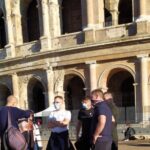
This tour starts in the Via dei Fori Imperiali area, outside Colosseo Metro Station (Line B). Your meeting point is described as opposite Colosseum Square, between the green kiosk and the wall-mounted fountain, with your guide holding a Tourismmotion flag. You’ll want to arrive 15 minutes early so you’re not stuck trying to spot the right group in a busy corner.
You also might notice the tour lists a nearby start point at Casa dell’Acqua ACEA. In practice, that fits the same neighborhood—think “close to the Colosseum cluster,” not a distant pickup. The point is simple: you’re starting right where you need to be, so you can get through the entry process faster and spend your energy actually seeing things.
What I like about this kind of meeting setup is that it reduces the usual Rome stress. The key details are clear: you meet outside the station area, you’re looking for a specific flag, and there’s on-site help via a check-in team and helpline. Still, one practical tip: bring your ID ready early. The tour is explicit that the Colosseum does not accept photos or copies—you must present the original personal document, and if you can’t, you may be denied entry to the archaeological area.
A second practical note: no luggage or large bags, and no backpacks. If you’re traveling with more than a day bag, plan ahead so you don’t end up stuck at the gate figuring out where to put things.
More Colosseum, Forum & Palatine combos for the Colosseum & Ancient Rome
Entering the Colosseum: built for spectacle, explained like a story
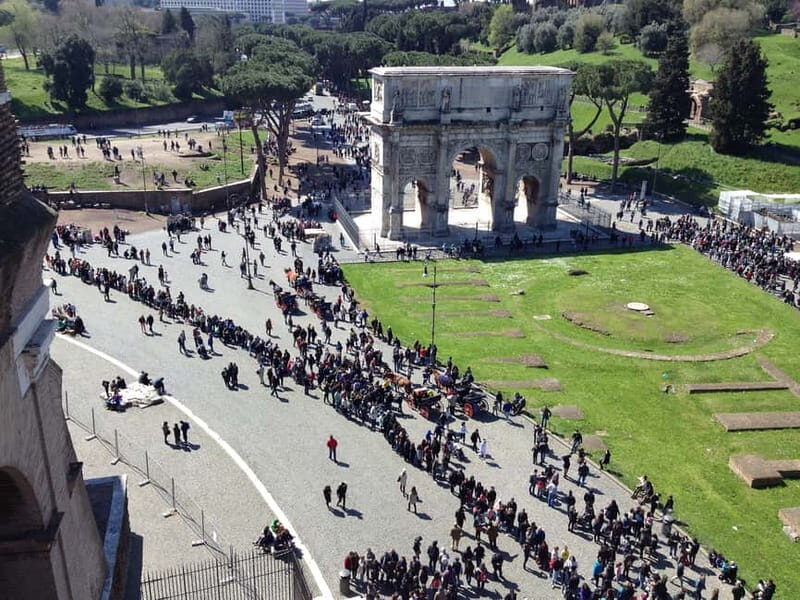
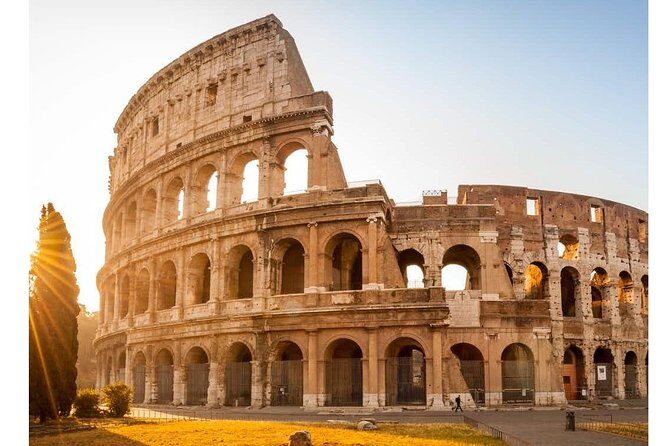
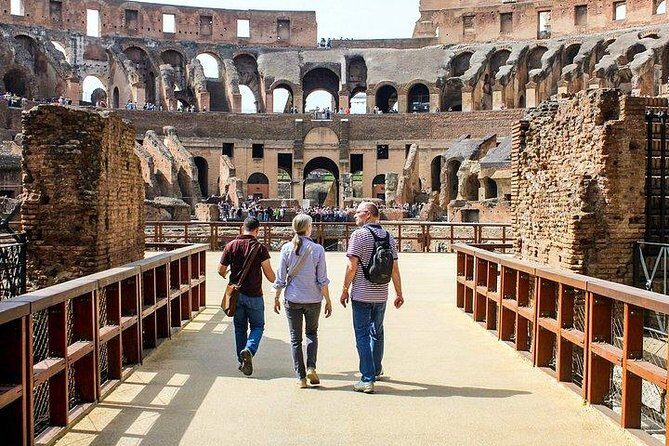
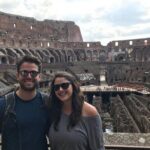
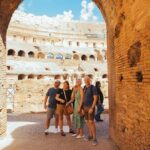
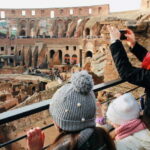
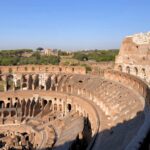
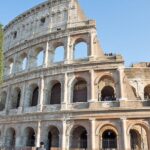
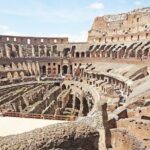
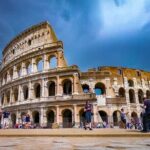
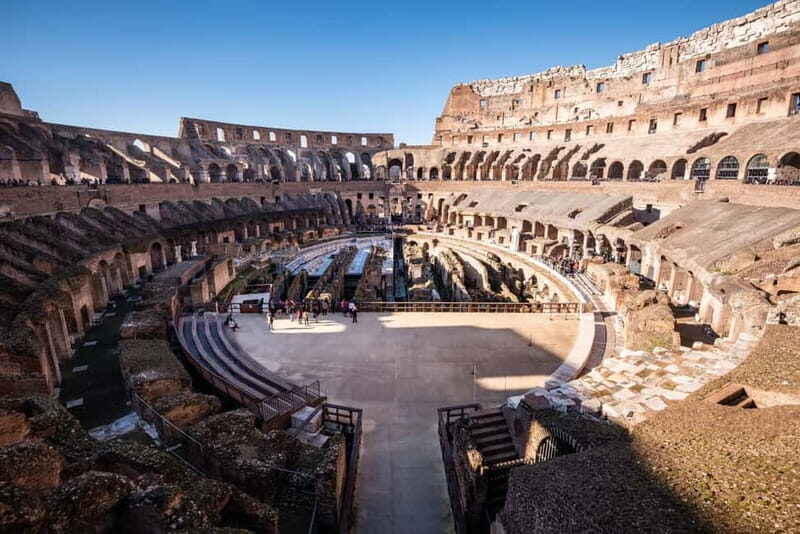
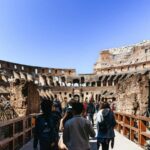
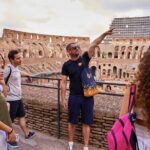
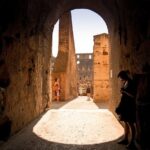
The first real stop is the Colosseum with about 1.5 hours of guided time. This is the part of Rome that can feel overwhelming if you arrive cold: the scale is huge, and the spaces you’re standing in once held crowd energy. A good guide helps you translate the architecture into human behavior—who sat where, what the show was like, and why the building mattered beyond entertainment.
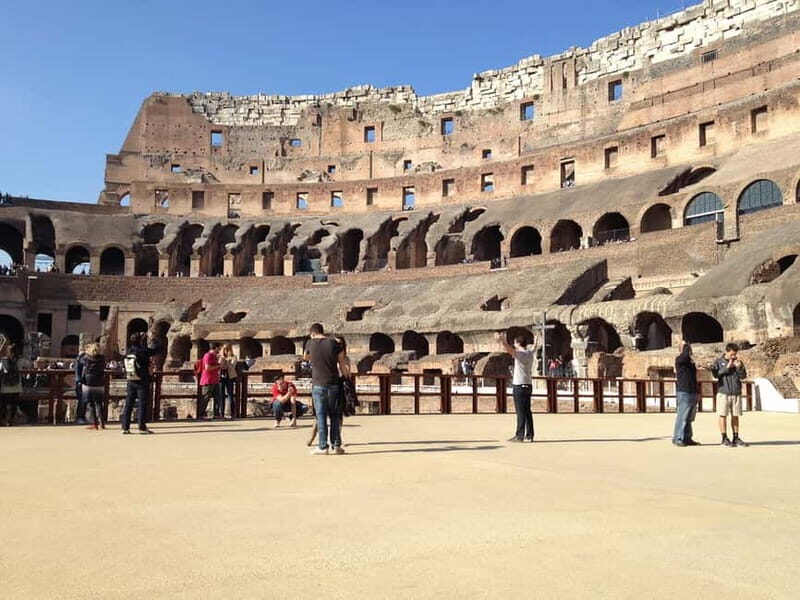
From what’s provided, your guided coverage includes the Colosseum’s construction background and the types of events that took place there. That’s important because the Colosseum isn’t just stone to admire. It was Roman public life in built form—part engineering achievement, part propaganda, part mass entertainment. When the guide points out how the system worked, you stop seeing it as one big wall and start seeing it as a machine designed to move people and deliver a spectacle.
One detail worth knowing: arena entrance isn’t included. So if your dream is walking into the main arena floor, this tour may not match that specific goal. What you will get instead is more time understanding the site around you—enough that, afterward, you’re not just thinking, Wow, it’s big. You’re thinking, Now I get how it functioned.
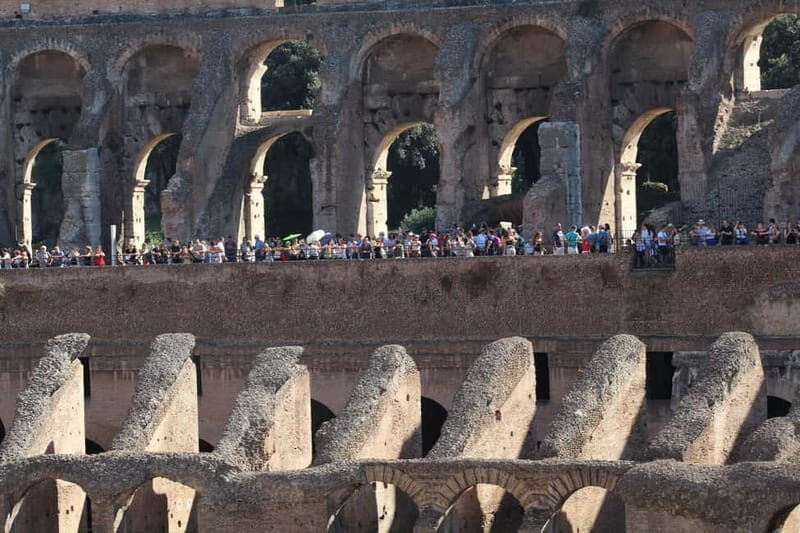
The other big value layer here is the skip-the-line access. The Colosseum area is famous for lines, and the whole point of this tour style is to buy time back. You’ll still need to handle security and document checks, but you avoid the worst waiting and keep your day moving.
The Roman Forum stop: politics, monuments, and everyday power
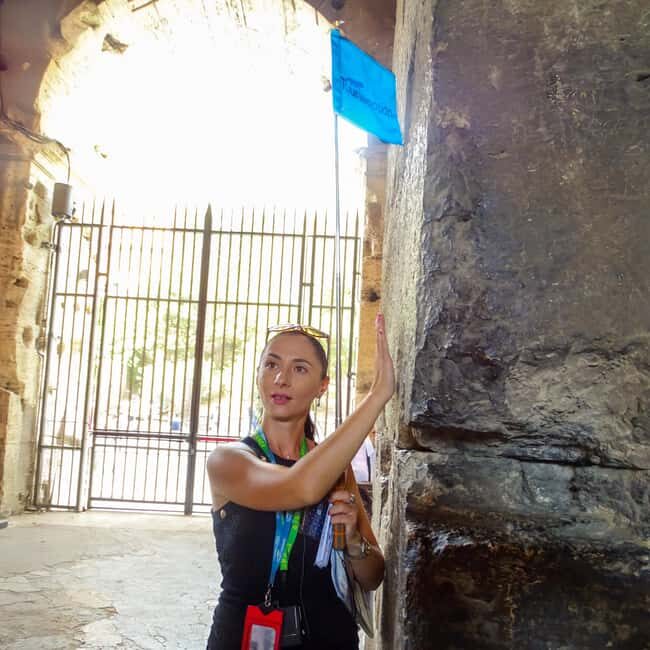
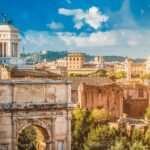
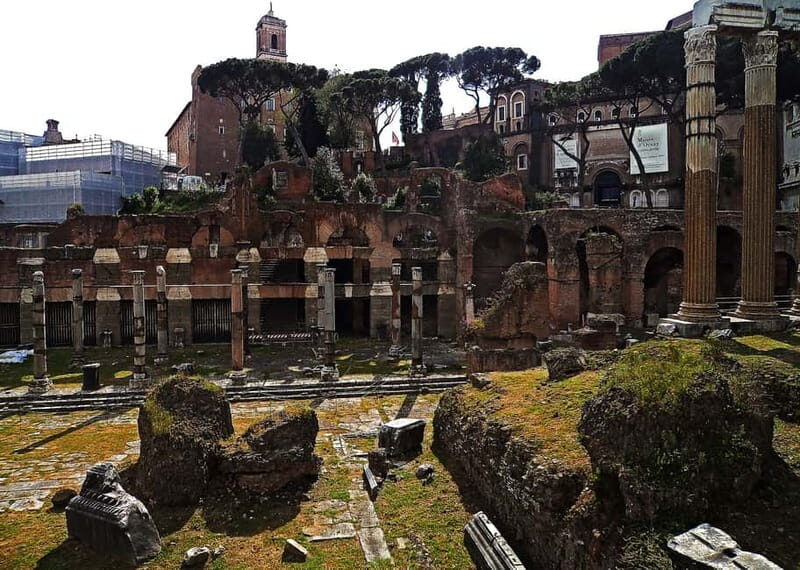
After the Colosseum, you’ll head into the Roman Forum for about 1 hour of guided walking. This is the part of the city that feels like walking through a puzzle: scattered ruins that only make sense when someone connects them to how Rome ran itself.
Your guide focuses on the Forum as the political, social, and commercial center of ancient Rome. That framing matters because it changes how you read the ground under your feet. Instead of treating each arch or temple fragment as a postcard, you start understanding the Forum as a daily stage where speeches, decisions, and ceremonies happened.
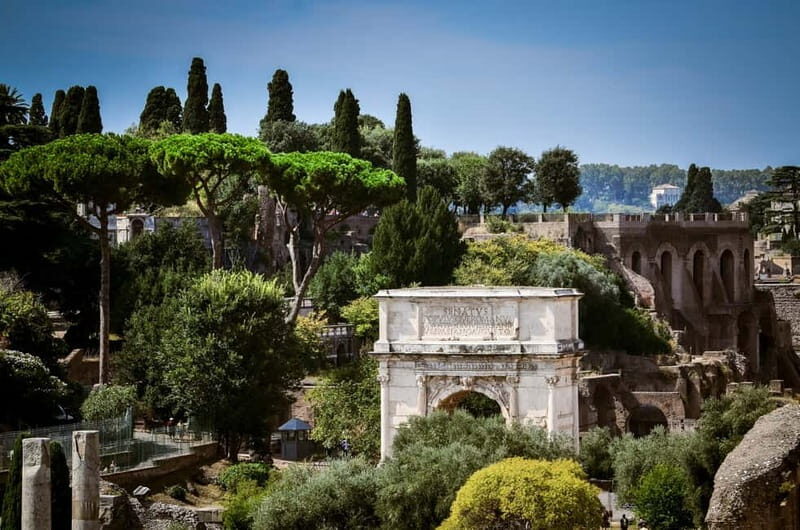
The listed highlights include specific landmarks you can expect to hear about, such as the Temple of Saturn and the Arch of Titus. Those names are useful because they give you mental anchors while you walk. The Temple of Saturn signals a religious and financial link to Roman authority, while the Arch of Titus connects to imperial messaging—how victories were turned into public meaning.
One more practical point: the Forum can get crowded and loud, which is exactly why this tour includes earphones. You’ll often be standing near groups, noise, and moving foot traffic. Earphones don’t remove crowd stress, but they make the guide’s explanation actually work.
If you’re short on time in Rome, this stop is also a strong “value per minute” moment. You’re not paying to be taken to three random ruins. You’re being taught what this space was for—so you leave with a clearer mental map of Rome’s priorities.
Palatine Hill: imperial residences and the myth of Romulus and Remus
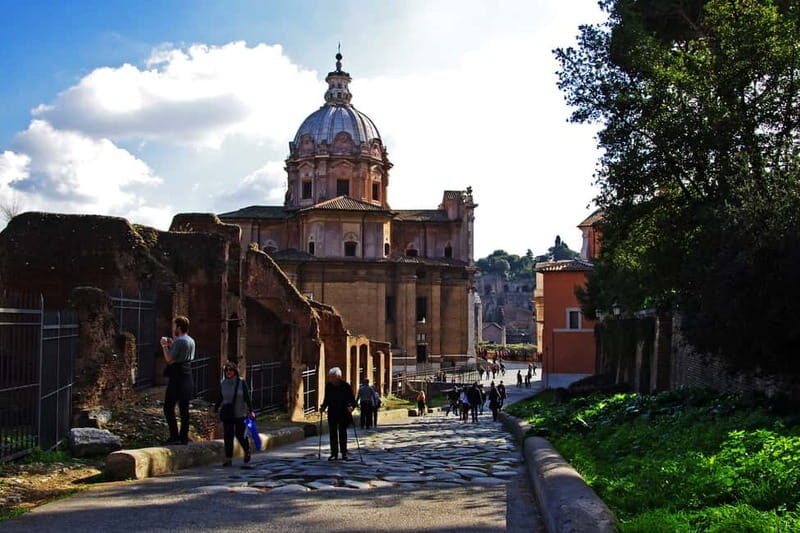
Next comes Palatine Hill, with a shorter guided portion at about 30 minutes. That might sound brief compared with the Colosseum and Forum, but Palatine works in a different way. You’re here for a blend of myth, elite residence, and viewpoints. Even with less time, it can land hard because the hill’s story is so recognizable.
Your guide weaves together legend and archaeology, including the idea that Palatine was connected to Rome’s origins—Romulus and Remus and the she-wolf story. Then the tour shifts into history: over time, Palatine became a favored residential area for Roman emperors and aristocrats, with elaborate palaces built there.
The provided details mention remnants such as the Domus Flavia and Domus Augustana. Those names are helpful because they point to the “imperial layer” of the hill rather than leaving you with generic ruins. You’re meant to understand that this wasn’t just a wealthy neighborhood; it was a statement of power, where rulers lived and displayed authority.
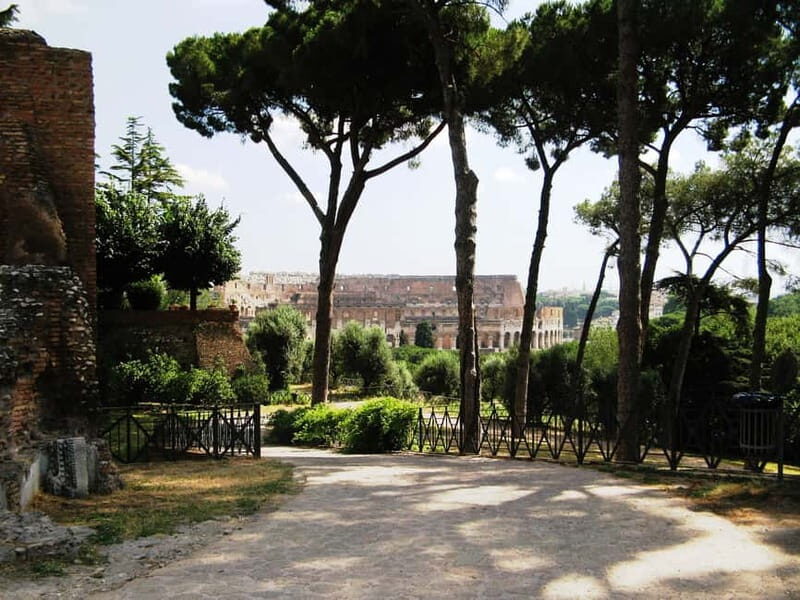
You can also expect panoramic views toward the Roman Forum and the Circus Maximus area. This is where the tour’s pacing makes sense. After hours of walking and explanation, a view break helps your brain stitch the big picture together: hill above city, palaces above public spaces, power above spectacle.
A consideration: because Palatine Hill is outdoors and involves walking up and through uneven ground, bring comfortable shoes. This is one of those “Rome is not made for soft sneakers” moments.
Timing, pace, and what you’ll feel in your legs
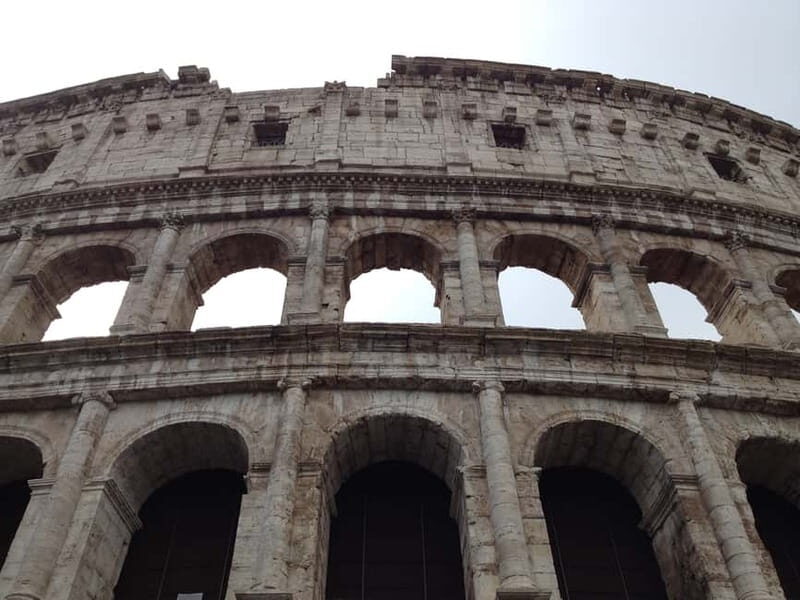
The tour runs about 2.5 hours, so it’s not a half-day stroll, but it also isn’t one of those micro-tours where you sprint between photo angles. The itinerary balances time between the three sights: 1.5 hours Colosseum, 1 hour Forum, 30 minutes Palatine.
That balance is a practical win for most people. The Colosseum is heavy on explanation because it’s complex and visually big. The Forum needs time too, but it’s also a place where the story can be told efficiently once someone points you to the right structures. Palatine Hill is shorter because it’s more about context, selective highlights, and viewpoints.
Based on the style of feedback built into this experience (and what guides often do in this area), you’ll likely be dealing with real-world crowd flow and checkpoints. Earphones help, and smaller-group handling helps too—this is the kind of tour where your guide needs to keep everyone together so nobody falls behind.
Weather matters. The Colosseum and Forum are exposed in many spots, so if it’s hot you’ll feel it. If it rains, you’ll still be walking. I’d treat this as an active sightseeing block, not a sit-down museum outing.
More Palatine Hill tours for the Colosseum & Ancient Rome

Price and value: what $72.49 buys you in real-world time
At $72.49 per person for roughly 2.5 hours, the value comes from three things bundled together:
1) Skip-the-line tickets for multiple major sites (Colosseum, Roman Forum, Palatine Hill).
2) An English-speaking guide plus earphones, which you really notice when crowds get loud.
3) Guided coverage that links the sites into one coherent Rome story.
The price also makes sense because you’re not just buying entry. You’re buying interpretation—someone translating what you’re seeing into why it mattered. That’s what turns “I took pictures” into “I understand what I saw.”
Where it might not be the best fit is if your main goal is specifically the arena floor. Since arena entrance isn’t included, you may have to look for a different option if that’s a must-have for your trip.
Another value angle: the tour uses a small-group format. That typically means fewer people blocking the guide at each stop and a better chance your questions get answered. It also helps the guide keep track of everyone, which matters when you’re moving between sites quickly.
Who this tour suits best—and who should consider alternatives
This tour fits you if you want the big Roman highlights in one guided sweep and you don’t want to spend your limited time building your own route. It’s especially good for first-timers who need structure: how the Colosseum relates to Roman entertainment, how the Forum relates to Roman power, and how Palatine relates to Roman mythology and rule.
It’s also a good pick if you like asking questions and listening longer than “photo stop, next stop.” Many guides in this program are described as friendly, funny, and able to answer questions on the spot—names you might encounter include Alexandra, Matteo, Christina, Simona, Andrea, Federica, Robert, and Stephanie.
It may not be ideal if:
- You need wheelchair access (this tour is not suitable for wheelchair users).
- You want a route that includes arena entrance.
- You’re traveling with large bags or a backpack and don’t have a way to manage that.
Should you book this Colosseum, Forum & Palatine Hill tour?
If your priority is time-saving plus clear guidance across the three headline sites, I think this is a solid booking. The mix of skip-the-line access, earphones, and guided time at each location is built for people who want a strong Rome foundation without spending half the day decoding logistics.
Book it if you’re happy with a tour that focuses on the Colosseum and the broader grounds (not the arena floor), you can walk comfortably for about 2.5 hours, and you’re ready to show your original ID/passport—no copies, no photos.
Don’t book it if you specifically need wheelchair accessibility or arena entrance, or if your schedule can’t handle a 2.5-hour outdoor walking block near major crowds.
FAQ
How long is the tour?
The tour lasts about 2.5 hours.
Where do I meet the guide?
Meet outside Colosseo Metro Station (Line B) on Via dei Fori Imperiali, opposite Colosseum Square, between the green kiosk and the wall-mounted fountain. The guide holds a Tourismmotion flag.
Does this tour skip the ticket line?
Yes. It includes organized access with tickets and is described as skip the ticket line.
What sites are included?
You’ll visit the Colosseum, the Roman Forum, and Palatine Hill.
Is the arena entrance included?
No. Arena entrance is not included.
Are earphones provided?
Yes. Earphones are included for clear guide commentary.
What language is the tour guide?
The live tour guide provides English commentary.
What documents do I need to enter?
You must present the original personal document (passport or ID card). The Colosseum does not accept photos or copies.
What should I bring and wear?
Bring a passport or ID card and wear comfortable shoes.
What can’t I bring?
Luggage or large bags are not allowed, and backpacks are not allowed.
Is it wheelchair accessible?
No, it is not suitable for wheelchair users.