REVIEW · ROME
Small Group Tour of Colosseum and Ancient Rome
Book on Viator →Operated by Roman Vacations · Bookable on Viator
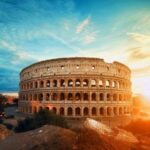
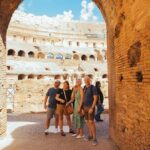
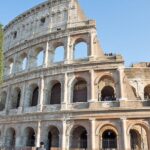
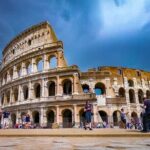
The Colosseum turns stories into real places. This 2.5-hour small-group tour strings together the biggest Ancient Rome sites in one efficient loop, with entry handled for you and a guide who makes gladiators, emperors, and senators make sense. I love the small group (max 15) because you can actually ask questions, not just listen while you’re squeezed. I also love that you get photo-point guidance so your pictures look like you knew where to stand. One possible drawback: the schedule keeps moving, so if you want to pause and wander slowly in every nook, you’ll need patience.
You’ll spend about an hour inside the Colosseum, then head to the Roman Forum for the politics-and-temples section of the story, and finish up on Palatine Hill where elite Romans lived like the world was their private courtyard. It’s offered in English, and headsets are used when appropriate, which helps when groups get spread out on busy days.
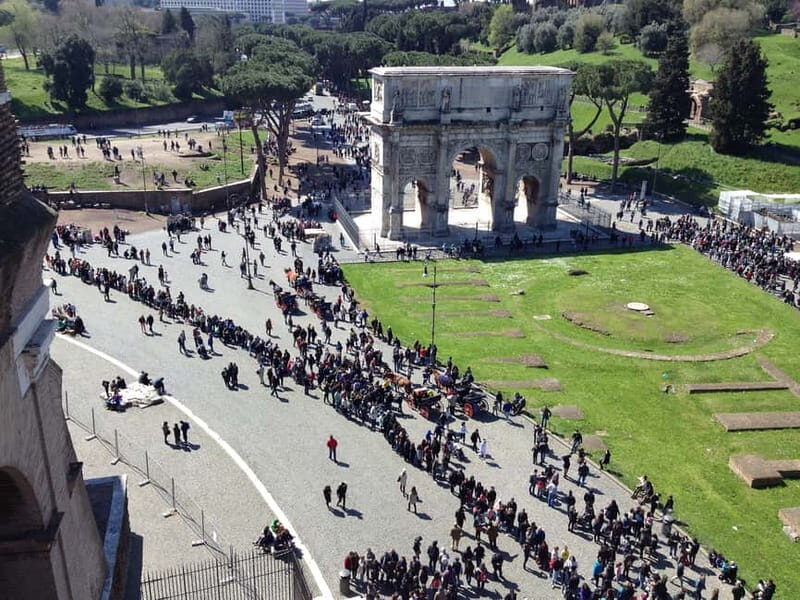
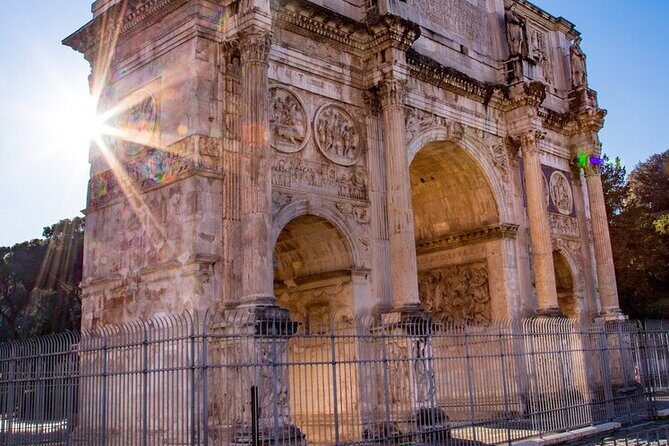
The tour meets at Via dei SS. Quattro, 81, and ends near the Arch of Constantine at Piazza del Colosseo. That end point is handy if you want to keep walking afterward instead of crisscrossing the city to get your bearings.
In This Review
- Key highlights you’ll care about
- How this small-group Colosseum loop makes sense
- Entering the Colosseum the right way: names, IDs, and check-in flow
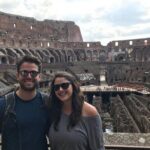
- Inside the Colosseum: gladiators, architecture, and smart photo viewpoints
- The Roman Forum: where senators ran the show
- Palatine Hill: imperial luxury, villas, and Domitian’s hippodrome
- Pace and walking reality: how to keep it from feeling tiring
- Price and value: what $36.28 buys you in Rome
- Best fit: who should book this tour
- Final take: should you book this Colosseum, Forum, and Palatine Hill tour?
- FAQ
- What’s included in the tour price?
- How long is the tour, and what stops are included?
- How large is the group?
- What do I need to bring for entry to the Colosseum and Roman Forum?
- Where do I meet the tour, and where does it end?
- Can I cancel for a refund?
Key highlights you’ll care about
- Small group size that feels human: up to 15 people, so you’re not lost in the crowd.
- Reserved entry includes the right pieces: Colosseum admission ticket plus the reservation fee are included.
- Arena photo tips, not generic advice: you’ll get guidance on the best viewpoints inside the Colosseum.
- Forum focus on the power centers: you’ll pass major sites tied to politics, law, and religion.
- Palatine Hill ends with scale and views: you’ll connect luxury villas to the imperial complex and Domitian’s hippodrome.
- A guide who answers questions while you walk: multiple reviews call out the Q-and-A friendly vibe.
How this small-group Colosseum loop makes sense
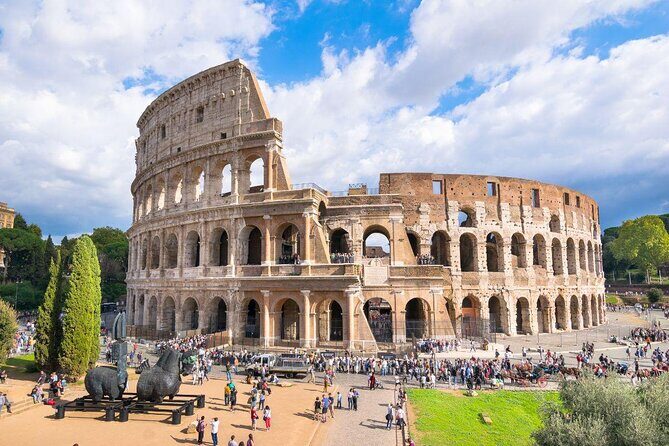
Rome’s Ancient Rome landmarks are close on the map, but they’re not close in time. Between lines, ticket logistics, and the fact that everyone wants the same photo angles, a self-guided plan can turn into a lot of waiting and backtracking.
This tour solves that with a tight route: Colosseum first, then the Roman Forum, then Palatine Hill. The timing matters because these places are set by timed entry and site flow. Instead of you trying to guess what to prioritize, you follow a plan that covers the essentials without leaving you feeling like you missed the main story.
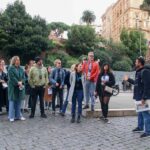
You’re also not stuck in a massive herd. With a maximum of 15 people, you get that rare thing on sightseeing days: enough space to hear the guide and enough control over your own movement to stop for a photo without turning it into a debate.
More Ancient Rome tours for the Colosseum & Ancient Rome
Entering the Colosseum the right way: names, IDs, and check-in flow
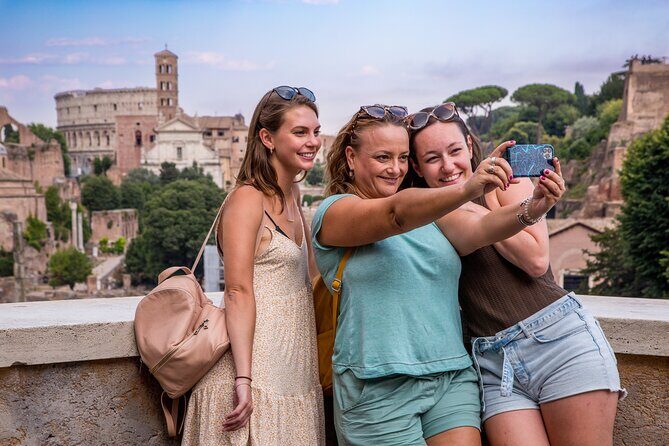
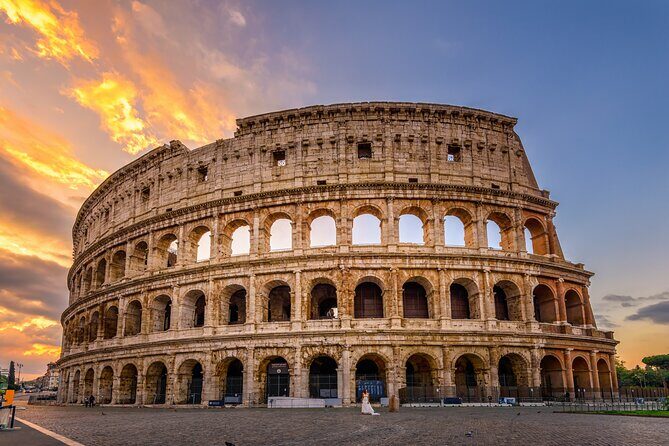
The Colosseum can be strict. Your entry depends on matching details. When you book, you’ll need to provide the full names of all travelers, and those names must match the passport or ID you bring. If the voucher doesn’t match what the ticket office expects, entry can be denied.
So here’s the practical move: double-check spellings when you book. Use the exact way they appear on your passport/ID document. It’s the kind of boring step that prevents a very un-boring travel disaster.
This tour includes your Colosseum reservation and admission, which helps with timing once you’re checked in. You’ll also get headsets when appropriate, which is especially useful when the group stretches out for photos or to keep walking smoothly through the entrances and open areas.
Inside the Colosseum: gladiators, architecture, and smart photo viewpoints
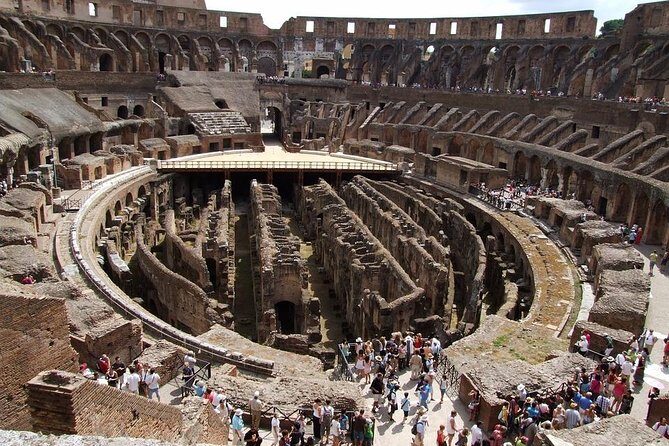
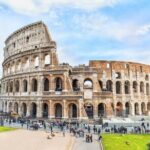
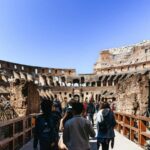
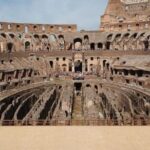
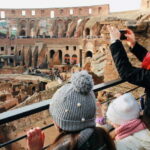
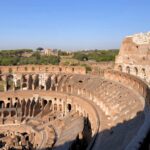
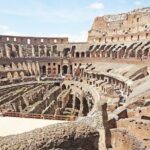
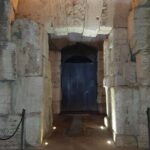
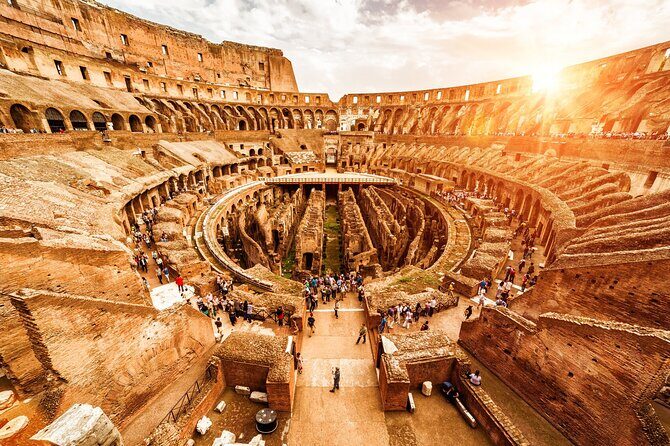
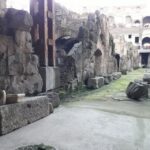
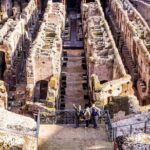
Inside the Colosseum, you’re not just looking at old stone. You’re looking at a machine built for crowd noise and spectacle. The guide walks you through the structure, then brings the arena to life with stories about gladiators, emperors, and what people were actually doing there—cheering, gambling, and watching exotic animals from across the Roman world.
The focus is on more than “who fought.” You learn how the arena worked as a public stage: how events were organized, what made certain fighters and weapons stand out, and why the whole design supported drama. It’s the difference between seeing a monument and understanding why it was built the way it was.
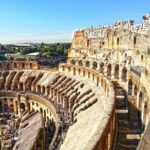
One part I really like for practical travelers: you’ll get photo-point tips. Instead of taking random shots from wherever you happen to be standing, you’ll be guided to impressive angles inside the arena where the views make sense. That’s a huge time saver, because it can take hours to figure that out on your own while other groups sprint past.
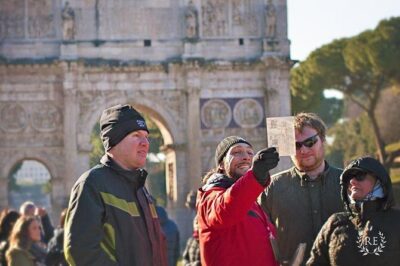
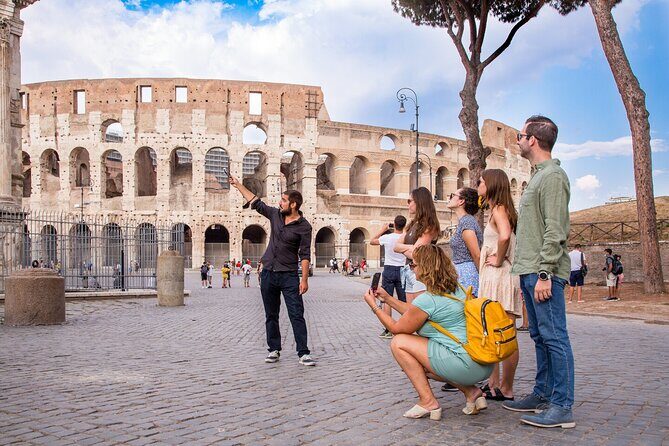
Guides in this tour range from high-energy storytellers to calm explainers. Some groups have been led by people like Mircea, Marcello, Dimitri, Arturo, Rich, Antonello, and Mike, and a recurring theme in that style is that you’re encouraged to ask questions while you’re there—so if you’re curious about one detail, you can usually get a straight answer on the spot.
The Roman Forum: where senators ran the show
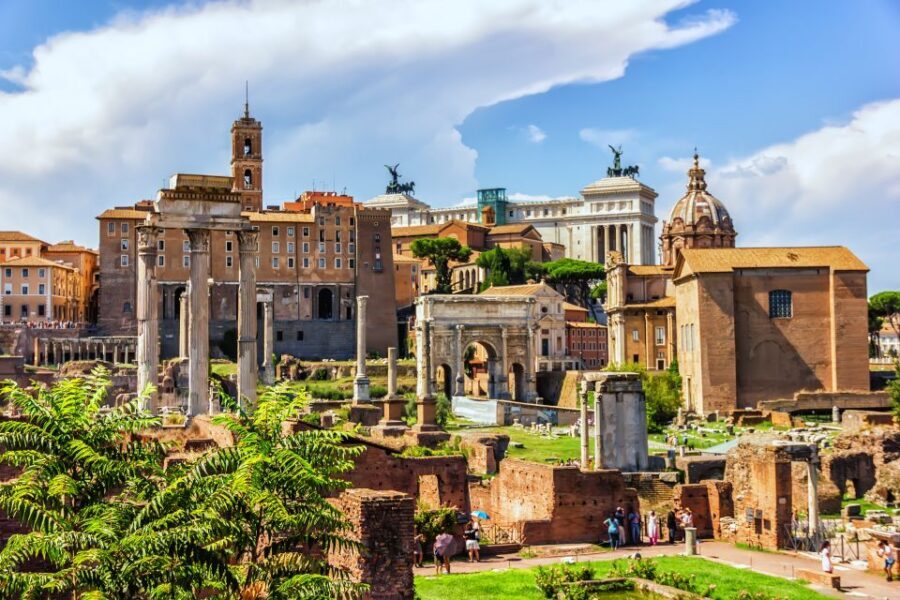
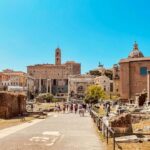
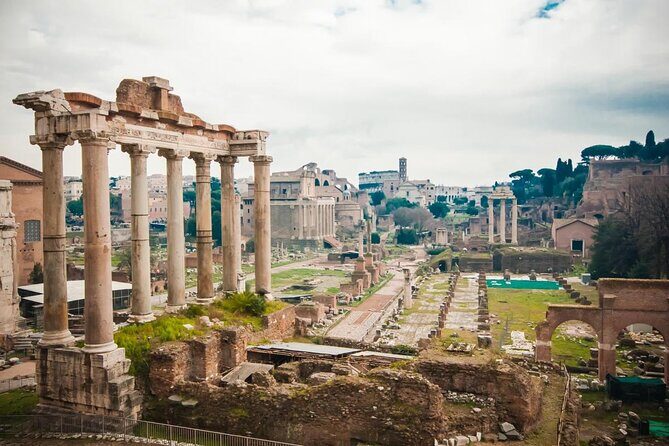
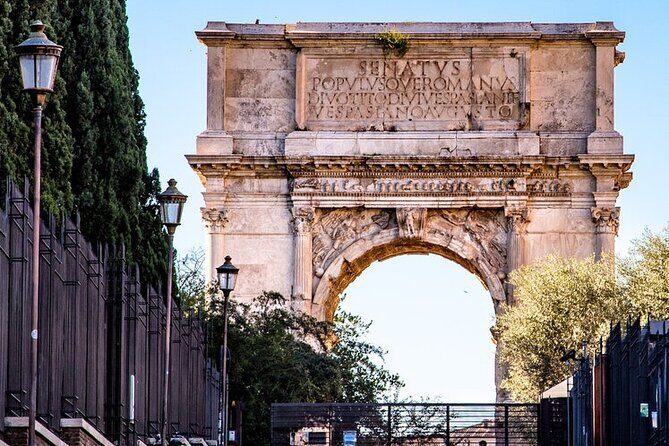
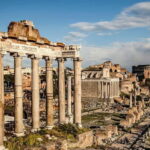
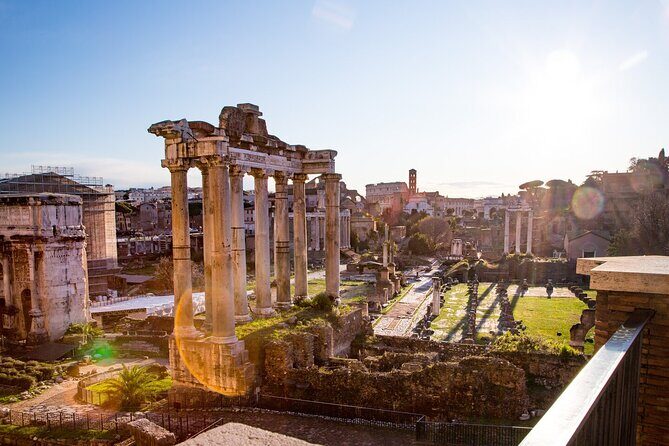
After the Colosseum, the tour shifts from spectacle to power. The Roman Forum is where the ancient city’s decision-making happened—religion, law, government, and public life all tangled together in one place.
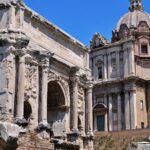
You’ll walk through key sections with stops that are visually impressive even in ruins. The guide helps you connect what you’re seeing to what it meant. That includes entering near the Senate House area and moving past sites like the law courts and triumphal arches, then toward the famed Temple of Julius Caesar, tied to where his ashes were laid to rest.
Here’s the key value of a guided loop in the Forum: the ruins are everywhere, but context is what turns ruins into understanding. With a good guide, you stop seeing scattered columns and start seeing a map of political life—who mattered, what rituals reinforced authority, and how public spaces helped Rome control the story of itself.
This section also has that “slow down” feeling, because there are many angles worth looking at. Still, the tour doesn’t crawl. It’s short—about 45 minutes—so you’ll want to listen closely and choose your photo moments instead of trying to photograph every fragment.
Palatine Hill: imperial luxury, villas, and Domitian’s hippodrome
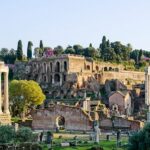
Palatine Hill is where Rome flexes. The slopes are gentle enough for most people, but you’ll still be walking. This is the zone where rich Romans built villas and where elite life was less about comfort and more about display.
The guide takes you to the palace areas of emperors and talks through the everyday luxury that power made possible. Expect stops that explain stately dining rooms and serene garden spaces, plus the idea that the most powerful people in the ancient world often acted like they had unlimited control. (History has a sense of humor about that.)
Then you finish with Domitian’s hippodrome, attached to the imperial palace. This is a great closer because it ties together the imperial complex with the scale of the surrounding views. When you reach the final viewpoints, the hill stops feeling like a “side stop” and starts feeling like the big picture—this is why emperors wanted to live here.
If you’ve ever wondered why Palatine Hill matters beyond being pretty ruins, this is where the answer clicks.
More Small Group tours for the Colosseum & Ancient Rome
Pace and walking reality: how to keep it from feeling tiring
A theme in the feedback for this tour is pace. The experience runs about 2 hours 30 minutes, and it’s structured like a continuous loop. That’s part of the value—you cover three major areas instead of spending half your day commuting between them—but it also means you can’t treat every stop like your personal museum hour.
Some people love this rhythm because it keeps you from freezing up in decision-making. Others find it intense, especially if the guide is speaking quickly or if you’re trying to read and photograph at the same time.
So I’d plan like this:
- Wear good walking shoes. The paths around the Forum and hill areas can feel old and uneven.
- Bring a water bottle. There may be pauses, but you’ll appreciate having your own supply.
- If you’re the type who likes long rests, choose one moment per stop to linger. Otherwise you’ll feel like you’re always catching up.
If you have mobility concerns, look for a guide who manages the group with care. There have been examples of guides adjusting with mobility issues in mind, but this is still an active walking route.
Price and value: what $36.28 buys you in Rome
At around $36.28 per person, the big value story is that admissions are handled and bundled into the experience. Colosseum ticket value is listed as €18 per person, plus a €2 per person reservation fee. That means you’re not just paying for a guide’s time—you’re also paying for the mechanics that get you into the sites efficiently.
The remaining cost covers the guide, organization, and the “don’t waste your day” planning. On a day when you’re paying to access major sites anyway, a well-run small-group format usually makes sense, especially if you want history explained while you’re standing where it happened.
Could you do it alone? Sure. But you’d need to plan timed entry, decide what to prioritize in the Colosseum and Forum, and spend extra time building context from signs and audio guides. For many people, that ends up being slower and more stressful than they expected.
This tour fits best when you want a clear structure and you trust the guide to choose what to focus on—like the arena’s best viewpoints and the Forum’s power centers.
Best fit: who should book this tour
You’ll likely enjoy this tour if:
- You want a guided explanation across all three sites (Colosseum, Roman Forum, Palatine Hill) without gaps.
- You’re traveling with teens or family and want the stories connected to the places, not delivered as a lecture.
- You care about photo angles and would rather get pointed to good spots than hunt them down.
You might want to think twice if:
- You want a slow pace with lots of independent wandering.
- You’re hoping for a “sit and read” style experience. This one is built for moving and listening while you walk.
Also, it’s popular. The tour is often booked well in advance (around 75 days), so if your dates are fixed, don’t wait for the last minute.
Final take: should you book this Colosseum, Forum, and Palatine Hill tour?
I’d book it if you want the smartest way to hit the main Ancient Rome highlights in a single morning-to-early-afternoon rhythm, with tickets included and a guide who helps you make sense of what you’re seeing.
I’d hesitate if you’re the type who gets more value from lingering, reading, and taking your time with details. In that case, you might prefer a slower plan where you can control every pause without feeling like you’re behind schedule.
If you do book, the best way to set yourself up for a smooth day is simple: bring the right ID, make sure names match, wear solid shoes, and accept the walking pace as part of the deal. Then you’ll get what this tour is built for: a clear story from arena spectacle to the political heart of Rome to the imperial hilltop world above it.
FAQ
What’s included in the tour price?
Entry to the Colosseum, Roman Forum, and Palatine Hill is included, along with an expert certified guide and headsets when appropriate. The Colosseum entrance ticket and Colosseum reservation fee are included as well.
How long is the tour, and what stops are included?
The tour runs about 2 hours 30 minutes and covers three stops: the Colosseum (about 1 hour), the Roman Forum (about 45 minutes), and Palatine Hill (about 45 minutes).
How large is the group?
This experience has a maximum of 15 travelers.
What do I need to bring for entry to the Colosseum and Roman Forum?
You must present a valid passport or ID document that matches the full names provided at booking. If names don’t match the voucher, entry may be denied.
Where do I meet the tour, and where does it end?
The start is Via dei SS. Quattro, 81, 00184 Roma RM, Italy. The tour ends at the Arch of Constantine, Piazza del Colosseo, 00184 Roma RM, Italy.
Can I cancel for a refund?
You can cancel up to 7 days in advance for a full refund. If you cancel less than 7 days before the start time, the amount paid is not refunded.