REVIEW · ROME
Rome Colosseum Ancient Rome Exclusive Private Guided Tour
Book on Viator →Operated by Tour In Rome by Tour in the City · Bookable on Viator
Rome’s ruins make more sense with a guide.
This private walking tour pairs reserved Colosseum entry with a licensed English Blue Badge guide who can explain what you’re seeing as you walk—especially across the Colosseum’s first and second tiers. I especially like the private pace (it’s just your group) and the way the stops link together, from the earliest Rome stories on Palatine Hill to the political power scene of the Roman Forum.
One thing to plan around: you’ll cover a lot of ground on uneven ancient surfaces, and the day can shift if the Colosseum has closures or if the sites run tight due to security and crowd capacity. Bring a realistic attitude—good shoes, a phone battery, and extra water in the warmer months help a lot.
In This Review
- Key things you’ll remember from this Colosseum and Forum tour
- Entering The Colosseum: views, tiers, and getting through security
- The Palatine Hill story: from 9th-century settlements to Domitian’s Hippodrome
- Roman Forum essentials: Temple of Julius Caesar to the Sacred Way
- The extra monuments that turn the walk into a full Roman power circuit
- Arch of Constantine: victory propaganda in stone
- Arch of Titus: the triumph after Jerusalem
- Basilica of Maxentius and Constantine: the Forum’s big endgame building
- Temple of Venus and Roma: two deities, one massive statement
- Curia Julia: why one senate house survived so much
- Capitoline Hill: indestructible Rome in one word
- What the licensed English guide brings (and why private matters)
- Price and value: what $337.15 per person really buys
- Practical tips that make the tour feel smooth
- Who should book this private Colosseum, Palatine Hill, and Forum tour?
- Should you book this tour?
Key things you’ll remember from this Colosseum and Forum tour
- First and second tiers at the Colosseum for solid views and better understanding of how the arena worked
- Palatine Hill framing the rise of old Rome, plus the Romulus and Remus legend
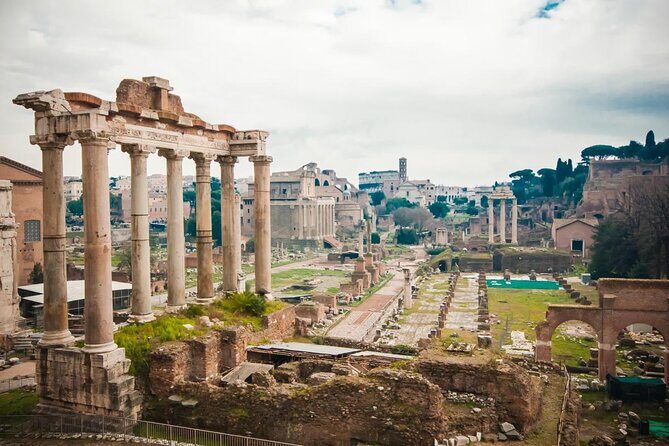
- Roman Forum highlights like Temple of Julius Caesar, Arch of Titus, Senate House, and the House of the Vestal Virgins
- Guide-led context that turns stone into stories, including architecture and Roman culture across centuries
- A route that keeps momentum by stacking multiple major monuments in one walk
Entering The Colosseum: views, tiers, and getting through security
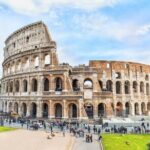
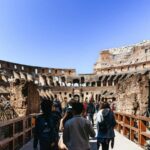
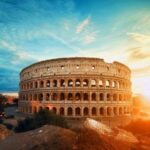
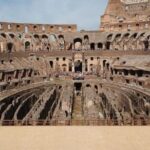
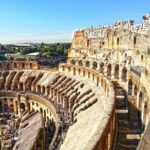
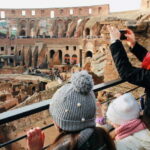
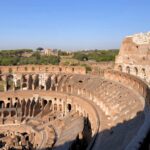
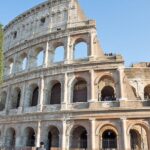
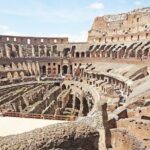
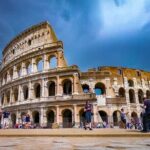
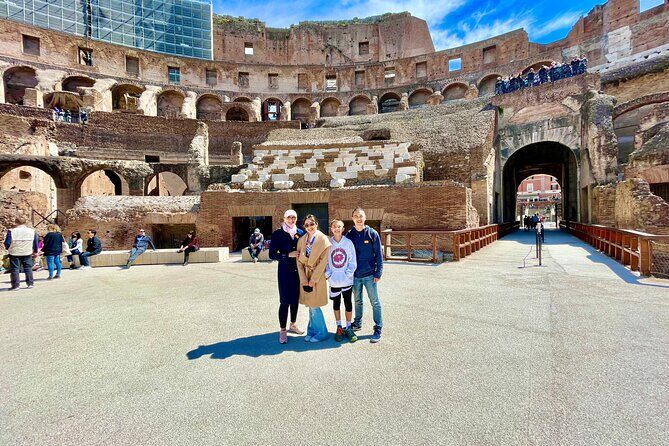
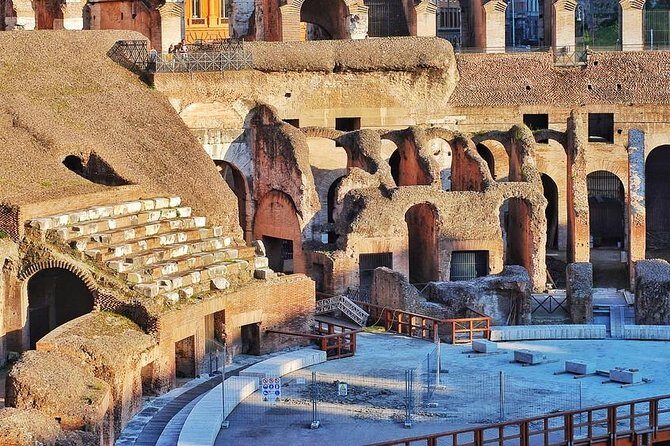
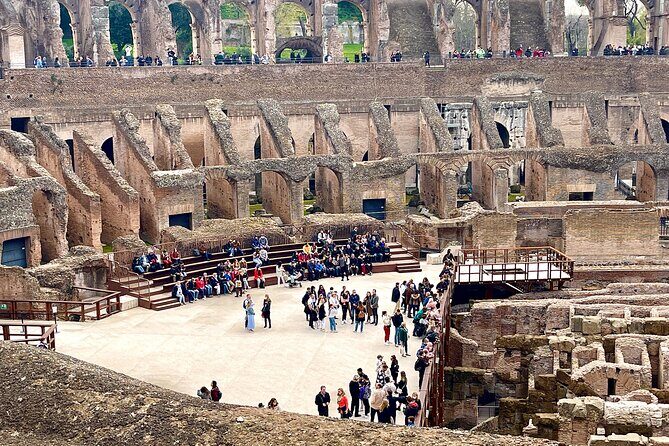
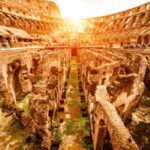
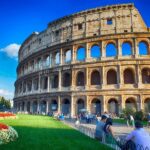
The Colosseum is the one place in Rome where your first minute matters. This tour gets you inside with the included Colosseum entrance ticket and reservation fee, so you’re not stuck staring at lines while the best parts of the day disappear. Once you’re in, the tour focuses on the first and second tiers, which is smart. You get enough height to see the arena layout and the building’s scale, without spending your whole visit stuck moving around only the highest levels.
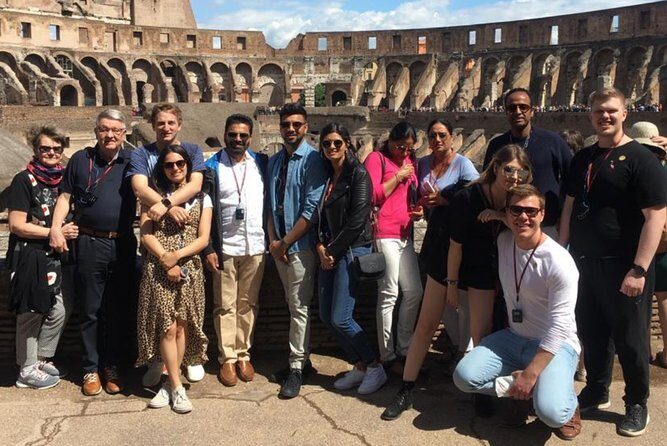
The guide part is where your value really shows. Your licensed Blue Badge guide brings an art-and-archaeology angle, which is exactly what you want here. You’re not just told what the Colosseum is—you learn how it was built, how it functioned, and why details you’d otherwise ignore suddenly matter. On past private tours, guides like Stefani have been praised for patient pacing and helping with great photo moments, while others have used simple visual aids to help you imagine what the Colosseum looked like in its prime.
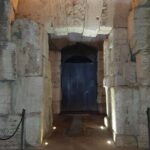
Practical reality check: the Colosseum has strict screening. You’ll go through security, and you should assume bags and liquids are a problem unless they match the allowed categories. Forbidden items include bottles and glasses containers, alcoholic beverages and aerosols, backpacks and bulky bags. Smaller backpacks may be permitted, but you’ll still have to check them and they’ll be opened and visually inspected. If you want the easiest entry, travel light and keep only what you truly need.
More Ancient Rome tours for the Colosseum & Ancient Rome
The Palatine Hill story: from 9th-century settlements to Domitian’s Hippodrome
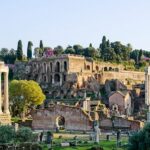
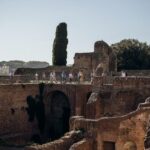
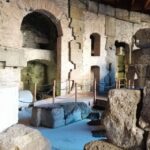
Palatine Hill is where the tour stops feeling like a checklist and starts feeling like a narrative. At this stop, you’re walking over layers of Rome’s past—starting with older settlement history reaching back to the 9th century BC. That timeline context helps a lot. When you see Palatine Hill right after the Colosseum, it stops being random scenery and becomes the “origin story” behind Rome’s power.
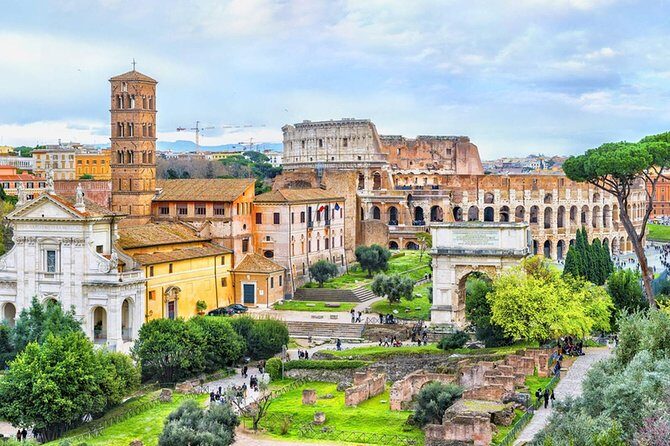
You also get specific viewpoints and features. The tour highlights the first settlements of the city and points out the Hippodrome, described as an elliptical sunken garden associated with the Palace of Domitian. Even if you’re not an architecture nerd, it helps to have those names and functions tied to what you’re physically standing near. Then there are big sight lines: you’ll get an impressive view out toward the Circus Maximus and down into the valley of the Roman Forum.
If you like myth as much as masonry, this stop delivers. You’ll hear the legend of Romulus and Remus—raised by a wolf—then connect it to the power struggle between the brothers. The best part is that the story isn’t treated like a fun aside. It becomes a way to remember that Roman identity was built on meaning-making, not just emperors and dates.
A heads-up for comfort: this is still walking on ancient grounds. The tour isn’t marketed for people with walking problems, so if you’re unsure, you’ll be happier planning something lighter—or confirming what pace you can handle.
Roman Forum essentials: Temple of Julius Caesar to the Sacred Way
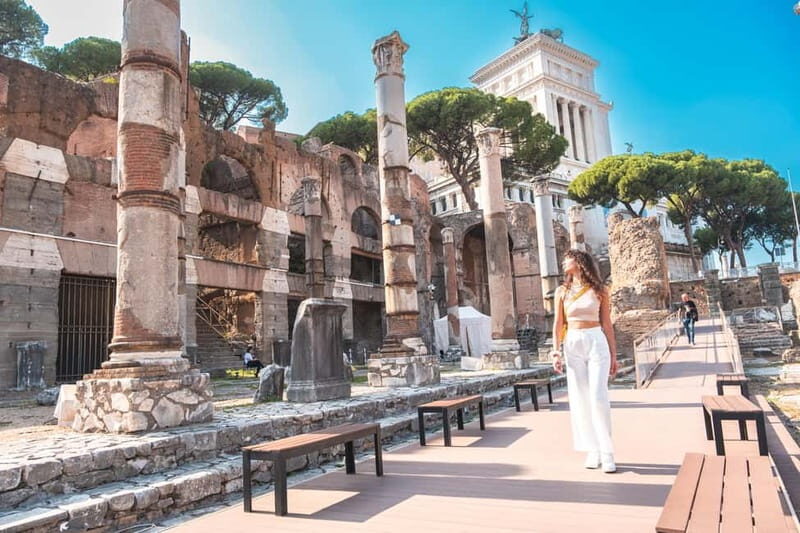
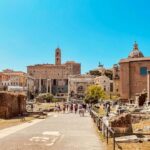
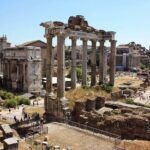
The Roman Forum is where Rome’s political and religious life compressed into stone, and the tour hits the important landmarks you’ll actually want to recognize later. During the Forum portion, you’ll see major sites including:
- Temple of Julius Caesar
- Arch of Titus
- House of the Vestal Virgins
- Senate House
- Basilica of Maxentius
That mix is key. The Forum isn’t only temples and triumphal arches—it’s also government and the everyday symbolism of who had authority. The guide helps connect the pieces, so you’re not staring at a pile of ruins thinking, now what?
One especially useful detail is the stop at (or emphasis on) the Sacred Way, described as the triumphal road where Caesar’s centurions marched after conquests. It’s a small segment in the story, but it makes the whole area click. Suddenly you understand why Romans cared about processions and public movement through space. This is the kind of context that makes a two-dimensional guidebook photo feel three-dimensional in your head.
Time note: the Forum portion is built for about 45 minutes, so you’ll get the major beats without getting stuck in every detour. That’s good for most people. If you want to linger, a private tour is the better format—just ask your guide to slow down at the exact spots that grabbed you.
The extra monuments that turn the walk into a full Roman power circuit
Even though the tour centers on the Colosseum, Palatine Hill, and Roman Forum, you’ll also pause for big-name stops along the way. This is one of the most satisfying parts of the experience because these monuments sit close enough to feel like one continuous storyline.
Arch of Constantine: victory propaganda in stone
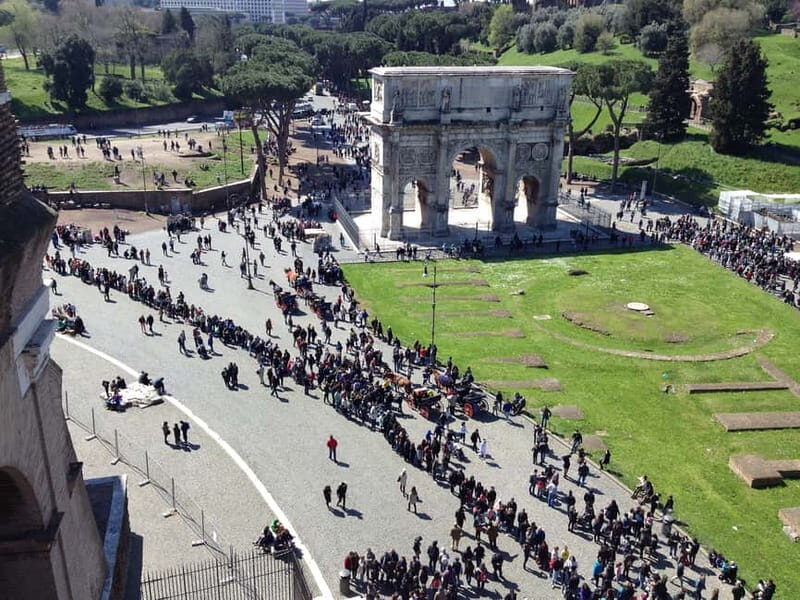
You’ll see the Arch of Constantine, positioned between the Colosseum and Palatine Hill. It was commissioned by the Roman Senate to commemorate Constantine the Great’s victory over Maxentius at the Battle of the Milvian Bridge in AD 312. It was dedicated in 315 and is described as the largest Roman triumphal arch, with dimensions listed as about 21 m high, 25.9 m wide, and 7.4 m deep. It has three bays, with the central bay larger than the side ones.
This is a great “pause and look” moment. Even in a short visit, the scale and layout help you understand the arch as a message machine—Roman victory turned into architecture.
More Exclusive & VIP access tours for the Colosseum & Ancient Rome

Arch of Titus: the triumph after Jerusalem
You’ll also reach the Arch of Titus on the Via Sacra, just southeast of the Roman Forum. This one dates to the 1st century AD and was constructed around 81 AD by Domitian after the death of his brother Titus. The tour context connects it to the victory over the Jewish rebellion in Judaea and the later triumphal procession celebrated in 71 AD after Jerusalem’s fall.
What’s compelling here is that the arch includes sculpted panels that depict that triumph, along with references described as some of the few contemporary depictions of artefacts of Herod’s Temple. The arch also carries a long afterlife as a symbol of the Jewish diaspora, and the menorah shown on it is described as a model for the emblem of the state of Israel.
Basilica of Maxentius and Constantine: the Forum’s big endgame building
In the Roman Forum, you’ll see the Basilica of Maxentius and Constantine (also known as the Basilica Nova). It’s described as the largest building in the Forum and the last Roman basilica built there. When you’re already moving through places tied to government and public life, seeing the “big civic building” completes the picture.
Temple of Venus and Roma: two deities, one massive statement
Another highlight is the Temple of Venus and Roma, thought to be the largest temple in Ancient Rome. It’s on the Velian Hill, between the eastern edge of the Forum and the Colosseum. This matters because it physically bridges two areas you’re visiting anyway, making the walk feel like Rome was planned as a system—not a bunch of separate ruins.
The tour context includes who it was dedicated to: Venus Felix and Roma Aeterna. You’ll also learn about Hadrian’s role in creating it, with construction beginning in 121, inaugurated in 135, and finished in 141 (and later damaged by fire in 307, then restored with alterations by Maxentius).
Curia Julia: why one senate house survived so much
You’ll also see the Curia Julia, built in 44 BC when Julius Caesar replaced an earlier reconstructed senate house. It’s one of the few Roman structures that survive mostly intact, and the key detail is why: it was converted into a church (the basilica of Sant’Adriano al Foro) in the 7th century. That kind of reuse is a reason these places still exist in a readable way today. The tour also notes that while it survives, some parts like the roof and upper sidewalls are modern from a 1930s remodelling.
Capitoline Hill: indestructible Rome in one word
Finally, you’ll encounter the Capitoline Hill (the Capitols/Campidoglio area), one of the Seven Hills of Rome. It was earlier known as Mons Saturnius, linked to Saturn, and the name Capitolium ties to the temple of Jupiter Optimus Maximus that later stood there. The tour frames it as a symbol of eternity—Rome’s idea that its authority could outlast everything.
This “bonus stops” approach is one reason I like this tour for first-timers: you leave with a mental map, not just a set of photos.
What the licensed English guide brings (and why private matters)
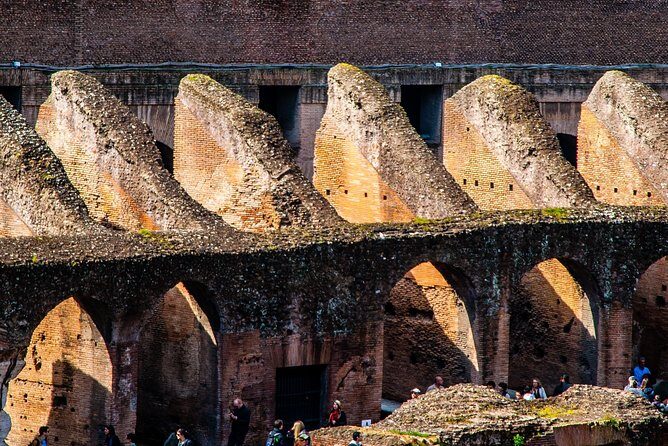
The difference between a fast walk and a great tour is simple: someone explains what you’re seeing at the exact moments you notice it.
On this private format, you get more personalized attention, so you can ask questions without feeling like you’re slowing a big group. That’s a big deal at the Colosseum and Forum, where people often stand in the wrong spot and miss the point. A good guide helps you correct that instantly—by pointing out the detail your eye skipped and then telling you what it meant.
It also helps that guides have been praised for English that stays clear, plus patience when questions pop up. Simone, for example, has been described as using visual aids to help you imagine structures in their original glory, tracing how buildings rose and fell across centuries. That style is how you stop feeling overwhelmed and start feeling oriented.
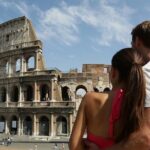
Even for couples or small groups who like photos, private can be a win. When your guide understands where your camera angle will work, you waste less time and get better results without rushing.
The main drawback possibility is pacing. Any private tour can feel too fast if you don’t speak up. If you want longer at one place—say the Arch of Titus carvings or a view from Palatine—ask early.
Price and value: what $337.15 per person really buys
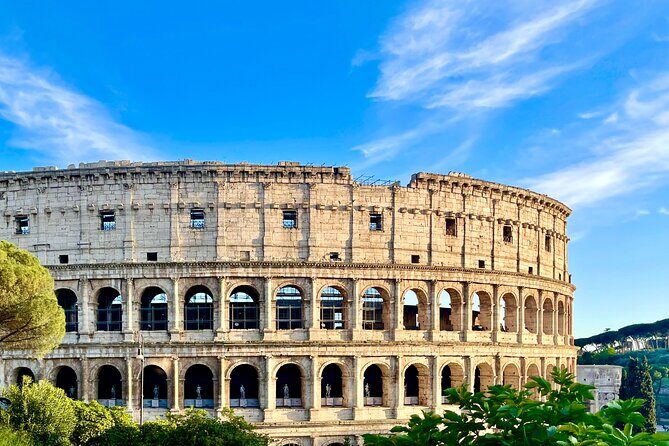
At $337.15 per person, this tour isn’t the cheapest way to do the Colosseum. But it’s also not “just pay more for a private name tag.” You’re paying for:
- A licensed local Blue Badge guide in English
- A private experience for your group
- Reserved Colosseum access, with the Colosseum entrance ticket and reservation fee included
- On-site assistance from the provider
The listed ticket portion is valued at €18 plus a €2 reservation fee. The remaining cost covers the guide time, the reservation management effort, and the on-site help that keeps things from turning into a stressful scramble.
For me, the value case is strongest if you fit one of these:
- You want explanations at the right moments, not just site photos
- You’re traveling as a couple or small group and don’t want to wait on a crowd pace
- You care about architecture and symbolism, where context makes the ruins feel alive
If you’re the type who just wants to walk around independently with a guidebook, you might not feel the need for a private guide. But if you want the Forum’s politics and the Colosseum’s function to click, the pricing starts to make sense fast.
Practical tips that make the tour feel smooth
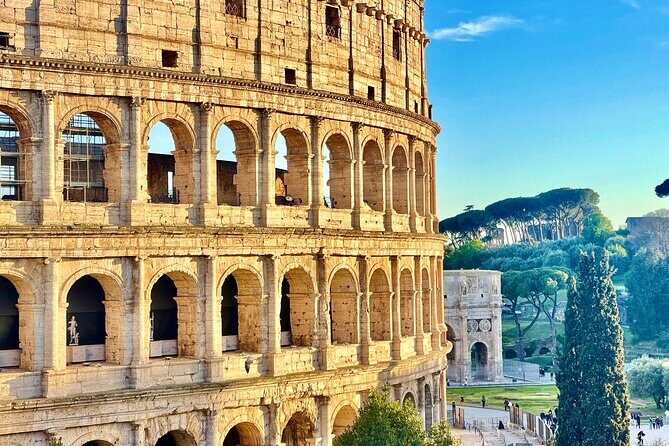
A few details from the experience setup matter more than they sound.
Arrive early, even if you hate lines. You must meet 15 minutes before the scheduled start time due to organization and entry management. If you roll in late, you can lose your entry window.
Bring the right ID, matching your booking. You’ll need a valid photo ID for entry to the Colosseum, and the information must match what’s provided at booking. The tour also notes you’ll be asked for name, last name, and date of birth at the beginning of the tour if it wasn’t provided ahead of time. Security can deny entry if details don’t match.
Plan for bag rules. Forbidden items include bottles/glasses containers, alcoholic beverages, aerosols, and backpacks/bulky bags. Smaller backpacks may be allowed but must be checked and screened.
Expect timing shifts. The itinerary order can vary depending on admission availability, and the experience can run with a 20/30 minute variation. Weather can also change things (ice, rain, or high temperatures). On top of that, the Colosseum can accommodate up to 3,000 people at once, and that can still lead to access delays even when you booked in advance. In rare cases of closures for events or heavy rain, the operator will offer an alternative itinerary and a partial refund.
Don’t plan dinner with no buffer. The tour ends at the Roman Forum area, but your exact schedule can flex. Build a little slack into your day so the tour doesn’t steal your whole evening.
Who should book this private Colosseum, Palatine Hill, and Forum tour?
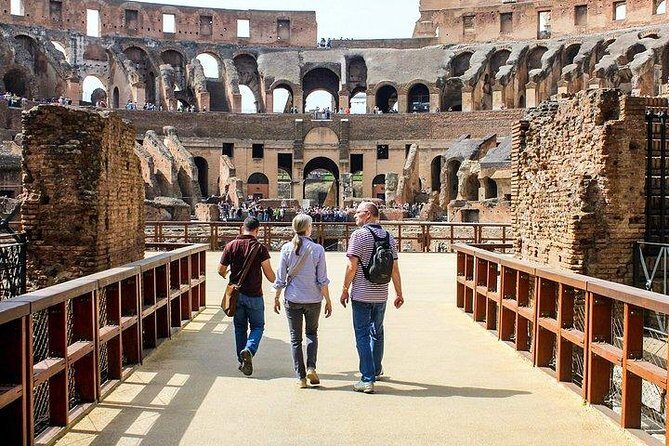
This is a good fit if you want:
- A private, English guide who can explain what you’re looking at
- Major stops in one tight walk, without losing the story
- More time for questions and better pacing for photos
- First-time visitors who want a mental map fast
It may not be your best match if:
- You have walking limitations (the tour isn’t recommended for walking problems)
- You’re hoping to bring prohibited items into the Colosseum (security rules are strict)
- You want a totally self-guided experience with zero guidance
Should you book this tour?
I’d book it if you care about understanding what you’re seeing. The mix of Colosseum tiers + Palatine origins + Roman Forum power centers, plus a licensed guide who connects the dots, is exactly how this part of Rome stops feeling like random ruins.
I’d reconsider if you’re truly short on walking ability or if you hate structured tours and want to freestyle entirely. For most people, though, the private format and included reserved entry make the day feel far less stressful—and far more meaningful.