REVIEW · ROME
Colosseum Underground All Access Tour with Ancient Rome
Book on GetYourGuide →Operated by T&T Empire · Bookable on GetYourGuide
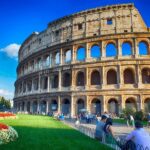
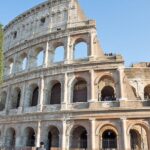
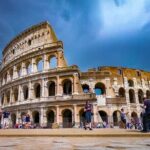
The Colosseum gets a second life underground. This tour takes you into restricted Colosseum areas and onto the arena floor, then keeps the story going with Palatine Hill views and a guided walk through the Roman Forum. I love how the underground sections make gladiator-and-animal logistics feel real, not just theatrical, and I also love the way the guide ties each stop to what was happening politically and daily in Rome. One catch: the tour title can be confusing, so make sure you booked the option that includes the underground—some versions are arena + Forum + Palatine Hill only.
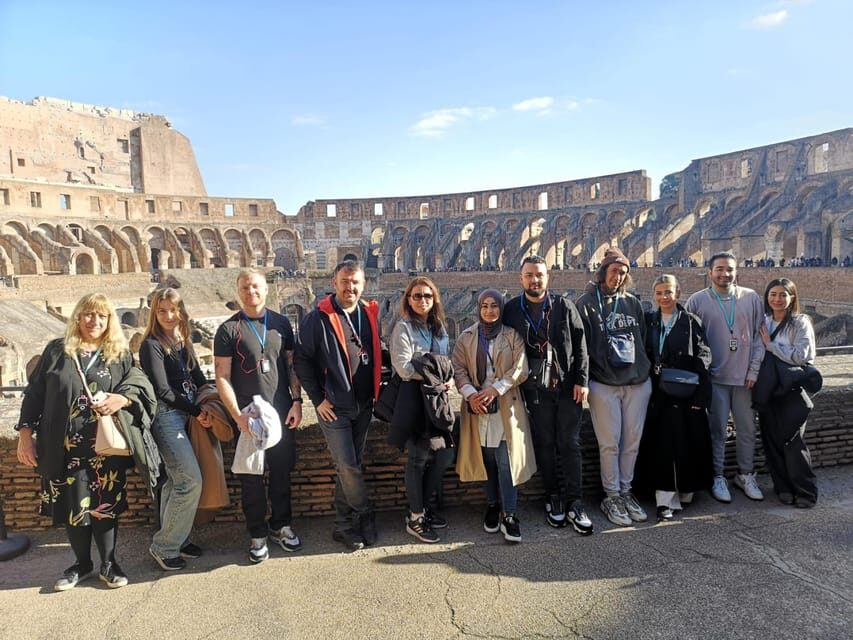
You’ll be with a small-to-mid group (up to about 14). You get professional English guidance with headsets/radios, which matters at the Colosseum where the noise can otherwise swallow every detail. In a good run, guides like Mandela, Manuela, and Georgia steer you to great vantage points and keep the pacing smooth, so the sites feel manageable instead of a sprint.
In This Review
- Key things you’ll notice on this tour
- Colosseum Underground: Pick the right option or you’ll miss the point
- Meeting at Largo Gaetana Agnesi: easy if you follow the yellow-flag rule
- Step into the Colosseum: arena floor first, then the upper levels story
- The restricted underground sections: the Colosseum’s working belly
- Palatine Hill: panoramas plus the story of Rome’s elite
- Roman Forum on foot: Via Sacra, arches, and the politics of daily life
- Pace, groups, and the staff that make it work
- What you’ll get for $93.57: value comes from access + a trained guide
- Who should book this Colosseum Underground + Forum + Palatine tour
- Quick checklist: what to bring and what to skip
- Should you book it?
- FAQ
- Is the Colosseum Underground included in every option?
- How long is the tour?
- Where do I meet the tour?
- Does the tour include skip-the-line entry?
- Which areas are included during the Colosseum portion?
- Are there audio headsets during the tour?
- What are the key sights covered besides the Colosseum?
- Is this tour wheelchair accessible?
Key things you’ll notice on this tour
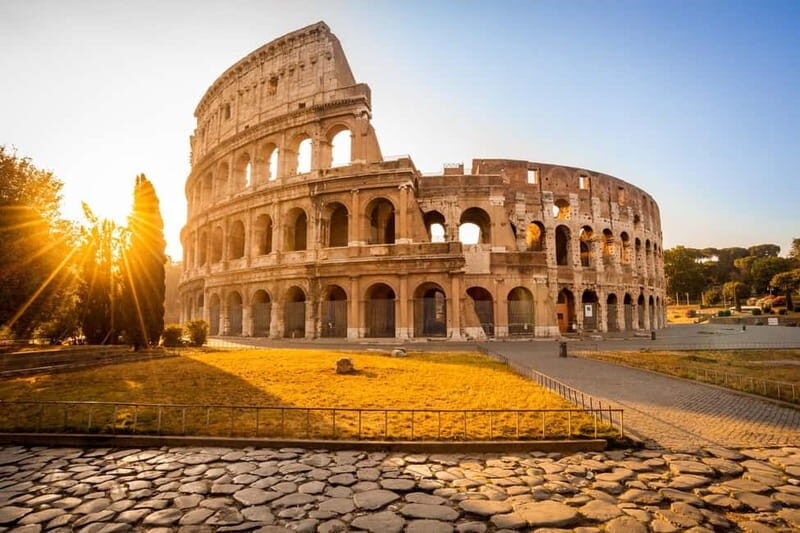
- Underground access is option-dependent: pick the version that explicitly includes it, or you’ll miss it.
- Arena-floor time is short but meaningful: you stand where the fighting happened and connect it to how the place operated.
- Palatine Hill delivers big views: you’ll look out over the Forum area from one of Rome’s power centers.
- Roman Forum walking beats photo stops: you move along the Via Sacra and hit major landmarks with context.
- Small-to-mid group control: the guides do a good job keeping everyone together in busy crowds.
- Practical touring gear: headsets/radios help you actually hear the story.
Colosseum Underground: Pick the right option or you’ll miss the point
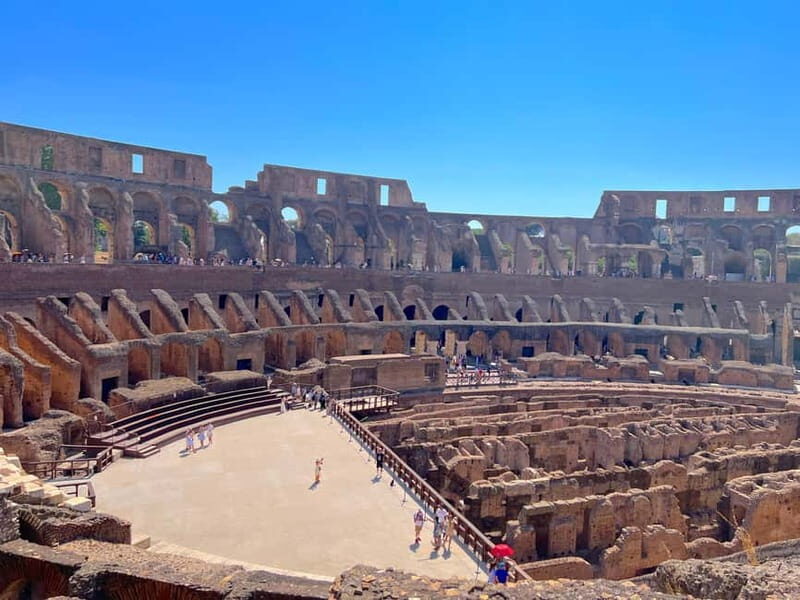
This is marketed as an all-access experience, but the fine print matters here. The underground parts—tunnels, dungeons, and chambers—are not automatically included in every option that mentions the Colosseum. One version is essentially an arena + Roman Forum + Palatine Hill tour only. If you want the underground (the reason many people book in the first place), confirm the selection you’re buying includes it.
Why this matters: the Colosseum underground is the machine room of the empire’s spectacle. From there, you understand how animals and gladiators were staged, routed, and prepared. Without it, you still get great sights above ground, but you lose the working context that makes the Colosseum feel alive rather than just impressive.
So, treat this like two tours inside one company listing:
- Underground-included = the restricted areas plus the arena floor, then Palatine Hill and the Forum.
- Arena-only = Colosseum access focused on the arena experience, plus Palatine Hill and the Forum, but no underground chambers/tunnels.
If you’re unsure, check that your confirmation specifically mentions underground access. It’s the difference between seeing the building and understanding the building.
More Colosseum Underground tours for the Colosseum & Ancient Rome
Meeting at Largo Gaetana Agnesi: easy if you follow the yellow-flag rule
Your tour starts at Largo Gaetana Agnesi. The meeting point is on the terrace above the Colosseum Metro Station. Staff hold a yellow flag with a black “T” at the center of that raised terrace area.
Here’s the practical trick: if you come up at street level and see yourself facing the Metro station entrances, look for the upstairs terrace. Some people get turned around because there’s a nearby terrace across the road, and it can look similar from ground view.
Plan to arrive early. Not because you’ll be early to history, but because Rome can be a maze when you’re trying to find one flag in a crowd. If you’re lost, asking at the Metro station area for directions to the terrace with the yellow flag typically gets you back on track fast.
Duration is about 2.5 to 3 hours, and the tour ends back at the meeting point. Your drop-offs are also listed for Roman Forum and Palatine Hill, so you may finish the morning with a natural path to continue exploring on your own.
Step into the Colosseum: arena floor first, then the upper levels story
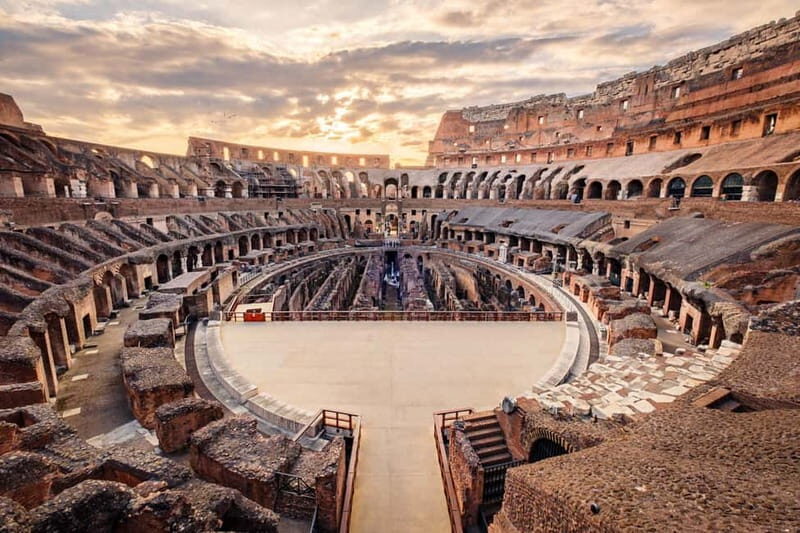
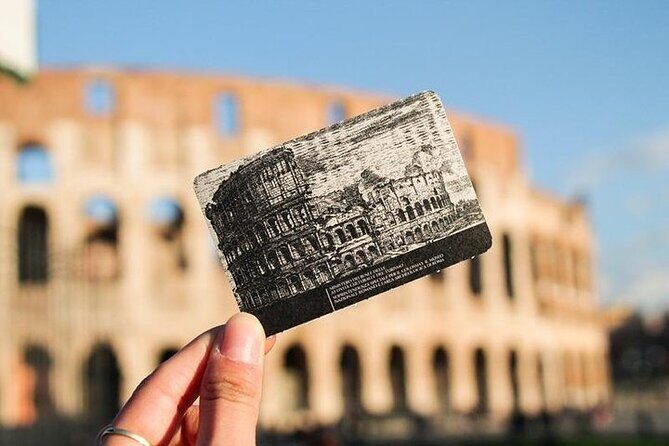
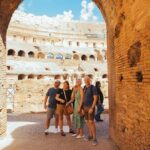
Once you’re inside, you’re guided through the Colosseum with skip-the-line access via a separate entrance. This is a real quality-of-life upgrade. The Colosseum lines can be brutal, and a time-saving ticket only pays off if you still get thoughtful pacing once you’re in.
The Colosseum stops you can expect include:
- Colosseum underground (only on the underground-included option)
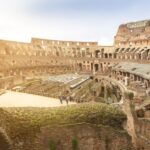
- Arena floor experience (standing in the fighting space)
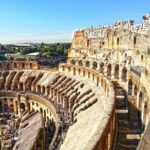
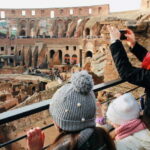
- 1st and 2nd level exploration with panoramic views (part of the guided underground-inclusive flow)
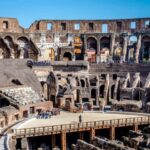
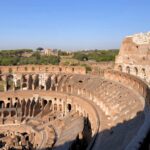
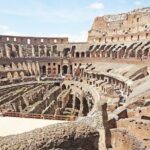
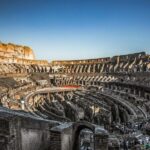
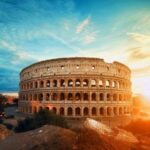
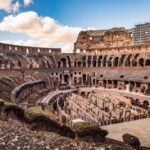
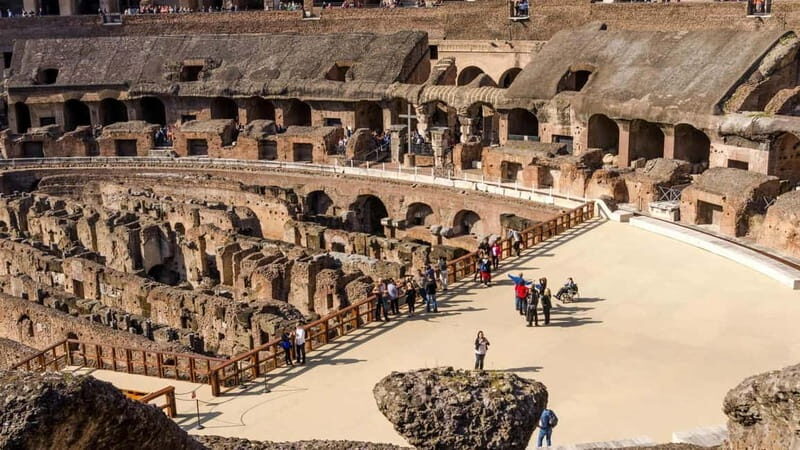
The arena floor portion is short (about 20 minutes on the schedule), but it changes how you see the whole structure. Up close, you stop thinking of the Colosseum as one big photo wall and start thinking of it as a designed stage—where movement, sightlines, and timing all mattered.
Some people get nervous about the amount of walking and steps. That’s fair. The route inside these ancient sites includes uneven ground, and the pace can include stairs. Bring comfortable shoes and plan to take it slow when you need to.
The restricted underground sections: the Colosseum’s working belly
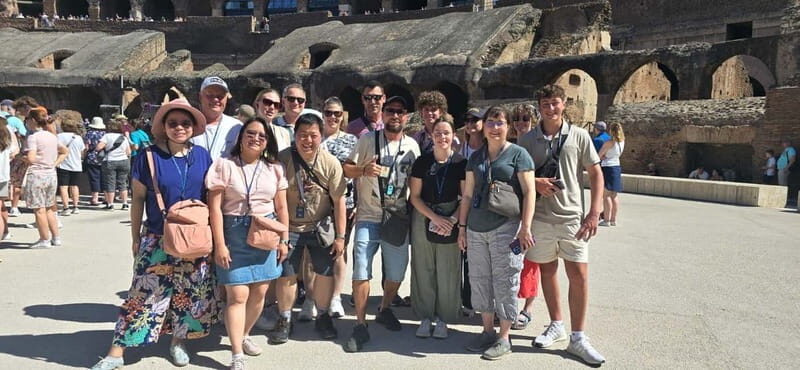
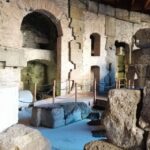
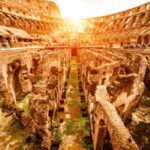
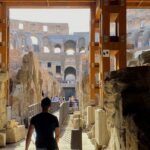
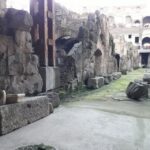
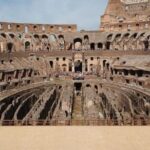
If you bought the underground option, this is the part that tends to feel jaw-dropping in the best way. You’ll explore restricted tunnels, dungeons, and chambers—the backstage world where gladiators and animals awaited what came next.
This section is guided and scheduled for about 30 minutes. That might sound brief, but underground access usually isn’t designed for long lingering. Instead, you get the most important idea: the Colosseum was not just an arena. It was a logistics system.
The underground visit helps you connect architectural features you’d otherwise walk past. With the guide’s explanations, you start seeing the circulation routes and the sense of control—how performers, animals, and staff could be moved, managed, and staged before the crowd ever looked up.
Many guides also use visual aids during the walk—picture books or reference materials—to help you imagine what you’re looking at in ancient use. On runs led by guides such as Manuela, that kind of support can make a huge difference because the underground spaces can feel dark and hard to interpret without context.
Practical tip: underground spaces can also mean cooler air than the sun outside, so the comfort level can change. Dress smartly for shifting temperatures, and keep water in your bag when allowed.
Palatine Hill: panoramas plus the story of Rome’s elite
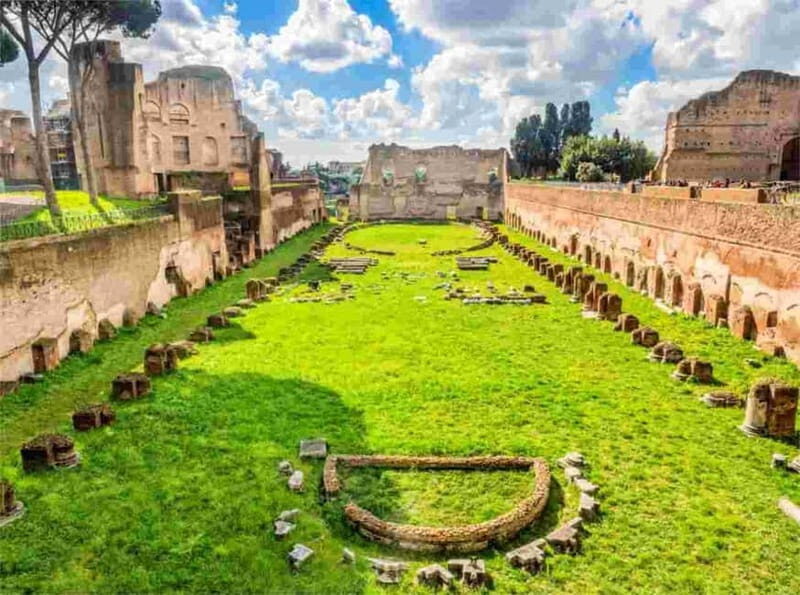
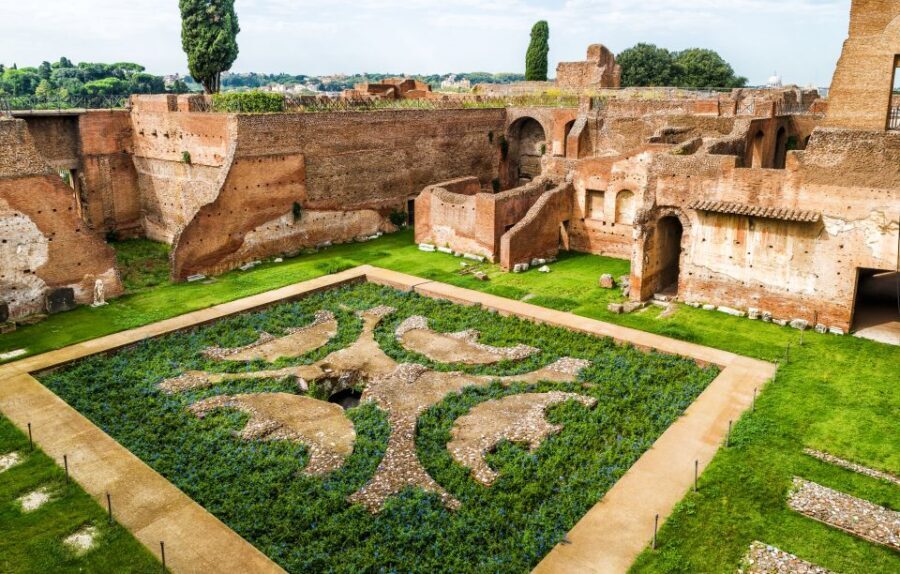
After the Colosseum, the tour climbs to Palatine Hill, one of Rome’s most important power hubs. Expect a guided walk through the remains of elite residences—palaces, gardens, and the kinds of spaces where emperors and aristocrats built their status in stone.
You’ll also get the Rome-founding myth lesson built in, including the legend of Romulus and Remus. That myth works better when it’s tied to where Rome’s early stories were said to take root, and Palatine is one of the best places in the city to connect legend to geography.
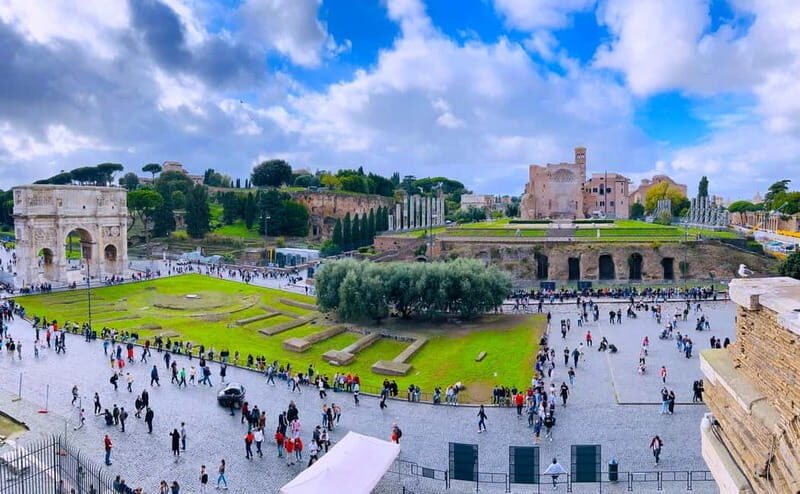
The standout benefit here is the view. From Palatine, you get sweeping sightlines toward the Roman Forum and Circus Maximus. It’s one thing to see ruins from street level. It’s another to stand above them and understand why this hill became the headquarters of the empire’s top tier.
The Palatine stop is about 45 minutes. You’re not just looking; you’re walking with historical interpretation that explains why certain spots mattered.
More Ancient Rome tours for the Colosseum & Ancient Rome
Roman Forum on foot: Via Sacra, arches, and the politics of daily life
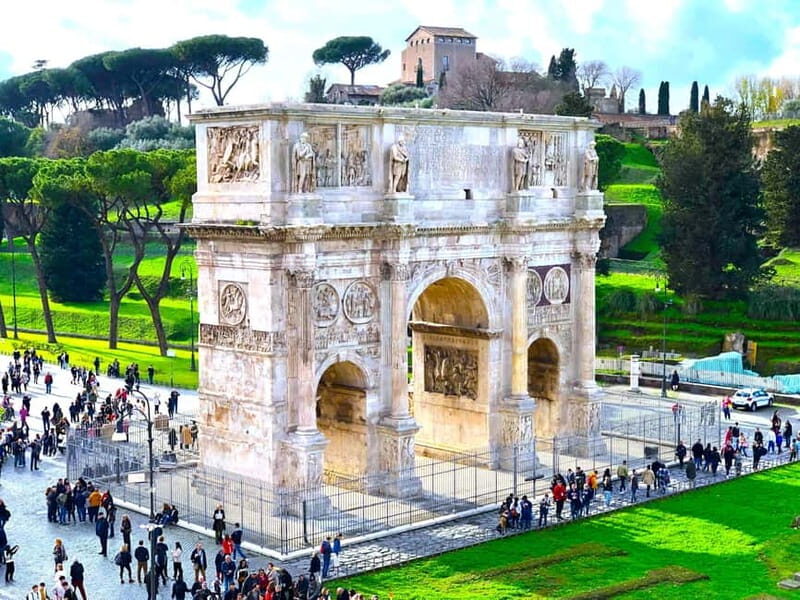
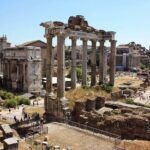
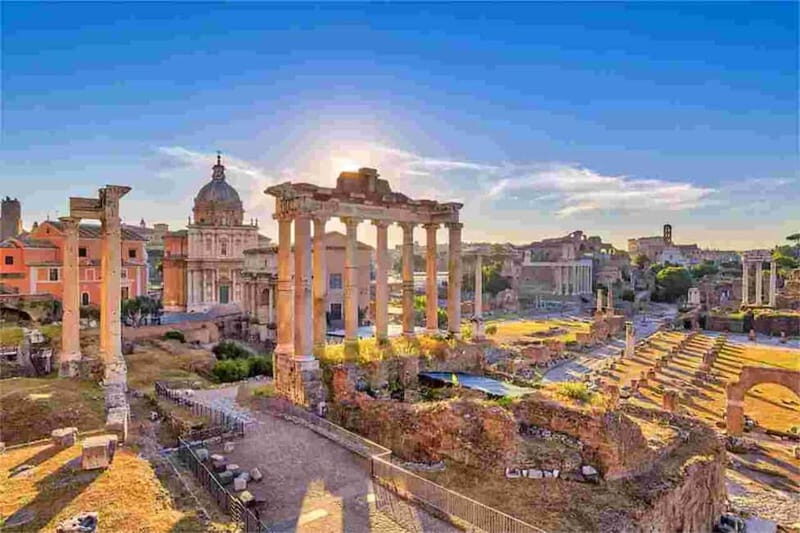
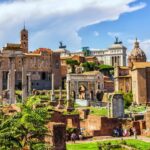
Next comes the Roman Forum, scheduled for around 30 minutes of guided time. This is where the tour becomes more than a highlights reel. The Forum is Rome’s old political, social, and religious center, and the guide helps you read it like a layout, not just scattered stones.
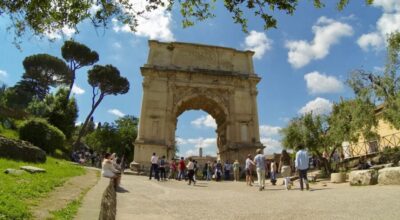
You’ll walk along the Via Sacra, the main street of ancient Rome where victorious generals paraded. That walk matters because it gives you a sense of movement and ceremony—what a crowd might have felt like as they followed a processional route.
You’ll also hit notable landmarks during the Forum visit, including:
- Temple of Saturn
- Arch of Titus
- Curia (Senate House)
The goal isn’t to memorize everything. It’s to understand why these places existed side-by-side: debate, governance, and big public moments all happened in the same general zone. A strong guide—like Georgia, Mandela, or Marianna-style storytelling—makes the Forum feel less like a ruin yard and more like the engine room of Roman power.
Photo tip: the Forum is popular, so don’t expect silence. Bring your patience, take your photos quickly, and listen while the guide points out what you’d otherwise miss.
Pace, groups, and the staff that make it work
A lot of this tour’s quality comes from execution. The group size is set small-to-mid (up to around 14), and headsets/radios help you keep up without needing to stand on your toes for every sentence.
In better-led tours, you also see active group management. Guides such as Mandela and Manuela are described as careful about keeping everyone together and using landmarks to create easy meeting points. One of the small but important wins: when the guide checks that the whole group is accounted for, you lose less energy to crowd confusion and spend more energy on the sites.
You should still expect a lot of steps and walking. One reason people rate these tours highly is that they treat the experience like a guided walk-through, not a rushing ticket grab. But it’s still ancient ground. If you’re carrying too much, it will show.
What you’ll get for $93.57: value comes from access + a trained guide
At $93.57 per person, you’re paying for three things that are hard to assemble on your own:
- Skip-the-line entry to speed up the parts that usually waste the most time
- Access to restricted Colosseum areas when you choose the underground-included option
- A guide who connects architecture, staging, and power dynamics across the Colosseum, Palatine Hill, and the Roman Forum
If you only buy general tickets, you still get a lot. But you don’t get the same “why this matters” layer. The guide gives you the context that turns the Colosseum from a big Roman photo into a working stage with a real system underneath.
Also, the inclusion of arena-floor time and Palatine + Forum guiding helps you avoid bouncing between sites with no connecting thread. That saves mental energy. In Rome, mental energy is real currency.
This isn’t a bargain tour. It is a practical one if your goal is maximum meaning per hour.
Who should book this Colosseum Underground + Forum + Palatine tour
Book it if:
- You want the restricted underground experience and you’re willing to verify you chose the underground-included option
- You like walking with a guide who explains what you’re seeing in plain terms
- You value skip-the-line convenience at major sites
- You want a single guided thread through the Colosseum, the elite power base on Palatine, and the political center of the empire in the Forum
You might reconsider if:
- You want a mostly seated, low-step experience. This tour is not suitable for wheelchair users and involves steps and uneven ground.
- You hate being in busy, high-foot-traffic sites for a few hours. Rome’s most famous ruins are crowded for a reason.
- You’re allergic to option confusion. Again: double-check your selection before you pay.
Quick checklist: what to bring and what to skip
Bring:
- Passport or ID card
- Comfortable shoes
- Hat, sunscreen, and water
Skip:
- Luggage or large bags
- Drones (not allowed)
And remember the tour is English live guided.
Should you book it?
If you want the Colosseum to feel more like a real machine than a landmark, this is a strong choice—especially because the underground-included option is the feature that most people don’t get elsewhere. Just don’t trust the headline alone. Confirm you’re selecting the version that includes the underground, or you’ll end up with a less complete experience than the title suggests.
If you’re set on the underground and you’re okay with walking and steps, the guide-led flow through Palatine Hill and the Roman Forum is exactly the kind of high-impact Rome morning that makes the city click.
FAQ
Is the Colosseum Underground included in every option?
No. The underground access is not automatically included in every Colosseum option. Some versions focus on the Colosseum arena plus the Roman Forum and Palatine Hill only, so you should confirm the underground-included selection before booking.
How long is the tour?
The tour runs about 2.5 to 3 hours, depending on the starting time.
Where do I meet the tour?
You meet at Largo Gaetana Agnesi at the square located on the terrace above the Colosseum Metro Station. Staff hold a yellow flag with a black T in the center of the terrace.
Does the tour include skip-the-line entry?
Yes. The tour includes skip-the-line access through a separate entrance.
Which areas are included during the Colosseum portion?
With the underground-included option, you can access the underground chambers/tunnels, the arena floor, and the 1st and 2nd levels. The arena-only option does not include the underground.
Are there audio headsets during the tour?
Yes. The tour provides headsets and radios, which helps you hear the guide in crowded areas.
What are the key sights covered besides the Colosseum?
The tour also includes guided visits to Palatine Hill and the Roman Forum, with highlights like the Via Sacra walk and major landmarks such as the Temple of Saturn, the Arch of Titus, and the Curia.
Is this tour wheelchair accessible?
No. It is not suitable for wheelchair users.