REVIEW · ROME
Colosseum, Palatine and Forum tour with virtual guide
Book on GetYourGuide →Operated by Touring Fixer · Bookable on GetYourGuide
Rome’s loudest ruins are also the most flexible. A virtual phone guide lets you set your own rhythm inside the Colosseum and around the Palatine and Forum.
I like two things right away: the skip-the-line express security approach (so you waste less time getting in), and the fact that the narration is available on your phone in multiple languages, letting you listen or read as you walk. You’re not stuck waiting for a group to move at your speed.
One thing to consider: the virtual guide experience is hit-or-miss. Some people found it unnecessary compared with a normal guidebook, and there have been reports of app or audio-link issues—so you’ll want a backup plan in case your phone doesn’t cooperate.
In This Review
- Key Things to Know Before You Go
- Entering the Colosseum Without the Usual Headache
- Getting the Virtual Guide to Work on Your Phone
- Colosseum Walkthrough: Arches, Gladiators, and the Big Construction Questions
- Palatine Hill: Rome’s Founding Story on Foot
- The Roman Forum: Finding Meaning Beyond the Stones
- Price and Logistics: Is $58 a Good Deal Here?
- What I’d Expect From This Tour in 90 Minutes
- Who This Tour Fits Best (and Who Should Think Twice)
- Practical Tips to Make This Experience Feel Effortless
- Should You Book This Colosseum, Palatine, and Forum Virtual Tour?
- FAQ
- How long is the Colosseum, Palatine and Forum tour with virtual guide?
- How much does it cost?
- Do I get an entrance ticket included?
- Is there skip-the-line access?
- Can I explore at my own pace?
- Where do I meet the group?
- What languages are available for the virtual guide?
- How do I access the virtual guide on-site?
- Is the tour wheelchair accessible?
- Is free cancellation available?
Key Things to Know Before You Go

- Skip-the-line entry is a big part of the value, especially during peak hours.
- Self-paced touring means you can linger at the spots that grab you.
- Phone-based guide works for both listening and reading, and it’s offered in many languages.
- Colosseum stories focus on the gladiators and how the monument was built.
- Palatine and Forum add context, with the Palatine tied to Rome’s founding and the Forum tied to imperial life.
- The guide can disappoint if you prefer a traditional in-person or printed explanation.
Entering the Colosseum Without the Usual Headache

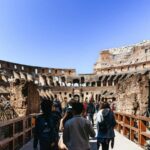
The Colosseum is one of those places where your time gets eaten alive by crowds and queues. What I like about this experience is that the ticket package is designed to get you through security faster, so you can spend your energy where it matters: walking the arches and looking at the scale of the structure.
You also don’t have to coordinate with a group schedule in the moment. Your “tour” is essentially a guided storyline you control—stop when something catches your eye, move on when you’re satisfied, and come back for another look if you have the patience. For a site as visually complex as the Colosseum and the Roman Forum, that freedom matters.
The one caveat is the same reason self-guided tours can feel great or frustrating: it depends on how well your phone and your patience work together. If you’re the type who hates troubleshooting, bring a backup plan (more on that later).
More Colosseum, Forum & Palatine combos for the Colosseum & Ancient Rome



Getting the Virtual Guide to Work on Your Phone

This is a virtual guided tour where you access the guide from your phone by opening the link. The experience is offered in a lot of languages—Italian, English, Spanish, French, Portuguese, German, Japanese, Chinese, Turkish, Russian, and Polish—so you’re not limited to just one option.
What “virtual guide” means in practical terms is this: you’ll use your phone to listen to or read the stories as you walk. That’s a nice setup if you want to control the pace. For example, if you’re the type who needs five minutes to stare at construction details, you can pause the narration and come back. Or if your preferred learning style is reading, you can switch modes and keep moving.
Here’s the realism check: one issue that comes up is that the audio link may not always function as expected. So before you leave the hotel or apartment, make sure your phone is charged and your internet situation is clear. Also, have something ready to support you if the guide misbehaves, because the Colosseum is big enough that you don’t want to feel lost.
Colosseum Walkthrough: Arches, Gladiators, and the Big Construction Questions

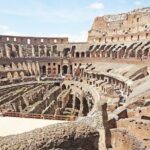
The Colosseum is the headline, and the guide’s focus is on the history of the Colosseum and the Roman Empire as you move through the arches. If you enjoy monuments with a story you can follow visually, this format can work well: the structure becomes the “map,” and the guide gives you context as you pass key sections.
The highlights you should expect revolve around three themes:
1) Gladiators and spectacle
You’ll get narratives tied to gladiators, which is an obvious hook for many visitors. The benefit of having it in a self-paced format is that you can spend more time on the parts that connect to your interest—combat, crowd experience, or just the general scale.
2) Secrets of construction
The tour specifically calls out the secrets of the Colosseum’s construction. That’s where the phone guide can be helpful because it’s hard to understand building methods just by staring at stone. A narration cue can prompt you to look for the right things: how sections connect, how design features relate to function, and what makes the monument look the way it does.
3) The central arena and hidden corners
The guide also aims to pull you beyond the obvious. It points you toward the arena’s grandeur and to less “front-and-center” areas. This is valuable because the Colosseum isn’t just one view—it’s dozens of little perspectives, and the more you explore, the more the building starts to make sense.
Time-wise, the whole experience is 1.5 hours, which is not long. The trick is to decide in advance what you want most: the narration-driven storyline or maximum roaming. If you try to do everything at once, the tour can feel rushed. If you pick a priority—construction details or gladiator-related stories—you’ll feel like you got your money’s worth.
Palatine Hill: Rome’s Founding Story on Foot

After the Colosseum, the Palatine is part of the experience. The key context given for the Palatine is simple and powerful: it’s where the city of Rome was founded.
That short fact can change how you experience the walking portions. Instead of treating the Palatine like an extra stop, you start thinking about it as the origin point—Rome’s “beginning” on a hill that later became important to the empire’s story. Even with a virtual guide, this helps you connect what you’re seeing to what came next.
Because you’re self-paced, you can spend more time on the viewpoint moments or the interpretive stops that best connect to the founding narrative. The drawback is also the same as before: you’ll need your phone guide to provide structure, or you’ll be relying on your own curiosity and whatever on-site signage you can find.
The Roman Forum: Finding Meaning Beyond the Stones

The Roman Forum is known for being central—political, social, and administrative life all happened here. In this experience, the tour’s angle is less about checking off monuments and more about helping you notice the “hidden corners” as you explore.
That matters because the Forum can feel like a blur if you only glance at the largest ruins. The advantage of a guided storyline is that it nudges you into understanding that the “in-between” spaces—alleys, lower sections, and less obvious viewpoints—often tell you as much as the big names.
You should expect the virtual guide to frame what you’re looking at as part of the Roman Empire’s broader story. In other words: it’s not just “here’s a ruin,” it’s “here’s what the space meant.” If you like monuments that come with interpretation, the Forum segment is likely to feel more satisfying than you’d expect.
And again, the time limit means you’ll get the best experience if you don’t treat Forum stops like a full-day archaeology lecture. Choose a few priorities—one theme, one viewpoint, one set of ruins—and then let the rest be background texture.
More Palatine Hill tours for the Colosseum & Ancient Rome




Price and Logistics: Is $58 a Good Deal Here?

At $58 per person, you’re paying for three main things bundled together:
- Entrance ticket access
- Skip-the-line express security
- A virtual guide you can use on your phone
If you’ve ever spent time queued just to reach the first ruin, you understand why skip-the-line can be worth a surprising amount. Even if you’re the most patient person on earth, the Colosseum punishes delays. Getting in faster buys you back actual moments inside.
What could challenge the value is the virtual guide itself. With a self-paced experience, you’re not just paying for entry—you’re also paying for the narration that turns ruins into a story. And while that can be excellent when it works for your style, at least one person felt the guide didn’t add much beyond what you could read in a traditional guidebook.
So here’s the realistic value equation: this is a good buy if you’ll use the virtual guide and appreciate flexibility. It’s a weaker buy if you prefer an in-person guide, or if you already know you’ll ignore the app and just want a printed guide plus your own wandering.
What I’d Expect From This Tour in 90 Minutes

Ninety minutes is short for Rome’s biggest archaeological zones, but it can still work if you approach it like a sprint with intention.
I’d treat it like this:
- Use the guide for direction instead of trying to absorb everything.
- Pick two or three moments you want to linger on: one Colosseum focus (gladiators or construction details), one arena or central view, and then one Palatine and one Forum stop tied to the founding/imperial story.
- Don’t overthink it while walking. The Colosseum is designed to pull your eye around. Let that happen, then use the guide to explain what you notice.
If the phone guide fails, you’ll still be in the Colosseum, and that’s never wasted time. But your experience may shift from “guided storyline” to “independent exploration,” which is fine—just know that’s the plan B.
Who This Tour Fits Best (and Who Should Think Twice)

This setup is a strong match for:
- You like self-paced travel and don’t want to rush with a group.
- You want phone-based storytelling and you’re comfortable using your device in public.
- You prefer multiple language options, especially if you’re traveling with someone whose language differs from yours.
It may not be ideal if:
- You hate relying on apps or worry about a broken audio link.
- You’d rather have an expert explaining things face-to-face.
- You’re the type who learns best from printed context, not from on-screen prompts.
One more angle: the reviews point out that having tickets sorted in advance can reduce stress. In practice, that’s a big deal. When you’re standing in a major site area, feeling organized beats feeling hopeful.
Also, the experience is wheelchair accessible, which is a meaningful plus if mobility needs affect your sightseeing options. Just remember that accessibility still depends on your ability to move through ancient site areas, which can have uneven surfaces.
Practical Tips to Make This Experience Feel Effortless

A few small moves can stop the whole day from turning into “why isn’t my phone cooperating?”
- Download any guide content or ensure a stable connection if the experience relies on a link.
- Fully charge your phone before you arrive.
- Bring a backup method: a paper guidebook, notes on what you want to see, or even offline references.
- Wear shoes you trust. You’ll be walking in multiple zones, and 1.5 hours can still feel like a workout.
- If you’re traveling in a language mix, confirm which language you’ll use before you start, so you’re not switching mid-walk.
If you do those things, you’ll get the best of both worlds: fast entry plus flexible storytelling.
Should You Book This Colosseum, Palatine, and Forum Virtual Tour?
I’d book it if your top priorities are skip-the-line entry and self-paced learning with phone audio or text. At $58, the value makes sense because the entry ticket and faster security access are doing real work for you, and the guide can add useful context—especially around gladiators and the Colosseum’s construction.
I’d pause before booking if you strongly prefer traditional guides, or if you know you’ll be upset if the audio link doesn’t behave. In that case, you might still enjoy the sites—just plan to treat the virtual guide as a bonus, not the backbone of your day.
If you want a flexible, phone-guided way to hit the Colosseum plus Palatine and the Forum in a tight window, this is a practical choice. Just go in with a backup mind-set, and you’ll be in control of the experience rather than waiting for your app to save the day.
FAQ
How long is the Colosseum, Palatine and Forum tour with virtual guide?
The experience lasts 1.5 hours.
How much does it cost?
It costs $58 per person.
Do I get an entrance ticket included?
Yes. The entrance ticket is included.
Is there skip-the-line access?
Yes. There’s skip the line through an express security check.
Can I explore at my own pace?
Yes. The virtual guide lets you explore and personalize your visit based on your time and interests.
Where do I meet the group?
You enter directly to the Colosseum using nominative tickets sent previously.
What languages are available for the virtual guide?
Italian, English, Spanish, French, Portuguese, German, Japanese, Chinese, Turkish, Russian, and Polish.
How do I access the virtual guide on-site?
You access it from your phone by opening the link from your mobile device to listen to or read the stories.
Is the tour wheelchair accessible?
Yes, it is wheelchair accessible.
Is free cancellation available?
Yes. You can cancel up to 3 days in advance for a full refund.