REVIEW · ROME
Best Colosseum, Palatine Hill and Roman Forum Guided Tour
Book on Viator →Operated by Vatican Guided Tours · Bookable on Viator
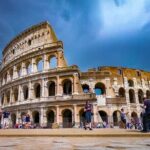
Rome’s ruins pack a lot fast. This Colosseum, Palatine Hill, and Roman Forum guided tour is an efficient way to see the most famous power spots in Ancient Rome without spending your whole day in line. I love getting views from the first and second tiers of the Colosseum, and I also like that you walk away with real context for how everyday Romans lived, not just dates on a sign. The only real drawback is that you cover a lot of ground in about 2.5 hours, so you’ll want decent walking stamina.
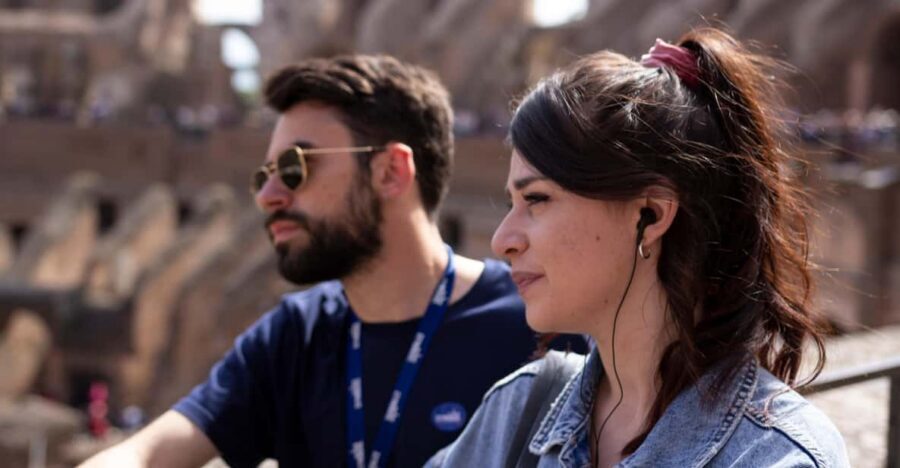
You’ll also appreciate the way the tour stays connected as crowds shift. With audio radios and earphones (for larger groups too), you don’t have to play phone-tag with your guide. And if your group includes stories from guides like Katerina or Catarina, you’ll probably feel the whole site come alive, even on a rainy, cold day.
In This Review
- Key Highlights You’ll Care About
- Value Check: What $30.85 Buys You in Rome
- Where to Meet at Via delle Terme di Tito (and Why 20 Minutes Matters)
- Entering the Colosseum: Views, Arena Details, and Real Roman Tech
- Security and What to Leave Behind at the Colosseum
- Palatine Hill After the Colosseum: From Rome’s Earliest Settlement to Domitian’s Views
- Roman Forum Finish: Caesar, Titus, the Senate, and the Sacred Way
- Pace, Crowds, and the Small-Group Advantage
- What the Tour Style Means for You
- Who This Tour Fits Best (and Who Should Rethink)
- Should You Book This Colosseum–Palatine Hill–Roman Forum Express Tour?
- FAQ
- How long is the Best Colosseum, Palatine Hill and Roman Forum guided tour?
- Is the Colosseum admission ticket included?
- Do you get audio headsets on this tour?
- Where do we meet, and when should we arrive?
- What ID do I need for entry?
- Are backpacks allowed inside the Colosseum?
- How big is the group?
Key Highlights You’ll Care About
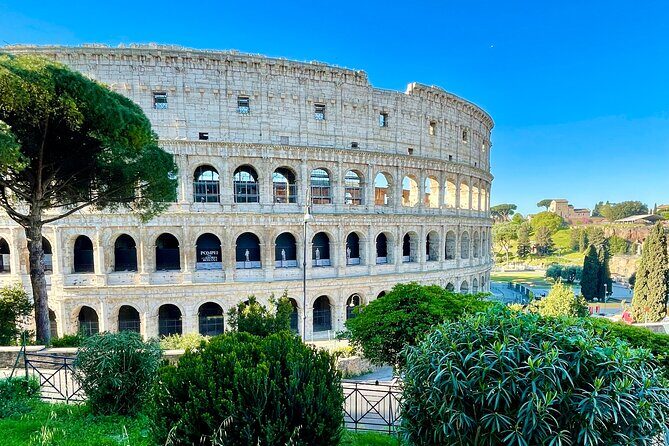
- First- and second-tier Colosseum views so you see more than just the ground-level chaos
- Official art history and archaeology guide who connects the mechanics of games to Roman engineering
- Audio headsets/radios so you keep up even when foot traffic squeezes in
- Palatine Hill viewpoints over the Circus Maximus valley toward the Forum
- Forum monuments in a tight walk that traces major stops like the Temple of Julius Caesar and the Arch of Titus
- Small group feel (not a mega-tour), which helps the pace stay human
Value Check: What $30.85 Buys You in Rome

At $30.85 per person, this is priced like an express tour—and that matters, because Rome can eat time. The big value point is that your Colosseum entrance ticket and reservation fee are included (with ticket value listed at €18 and reservation at €2). That means a chunk of what you pay goes straight to the hardest part of your day: getting admitted to the Colosseum in a structured way.
The rest of the cost is for the guide, the timed experience, and the gear that helps you follow along. With the Colosseum, Palatine Hill, and the Roman Forum crammed into roughly 2 hours 30 minutes, you’re paying to save time and reduce guesswork.
Just keep expectations realistic: this is not a slow, museum-style day. It’s a smart sprint through three heavyweight ruins, with the guide steering what you notice.
More Colosseum, Forum & Palatine combos for the Colosseum & Ancient Rome
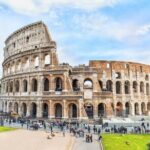
Where to Meet at Via delle Terme di Tito (and Why 20 Minutes Matters)
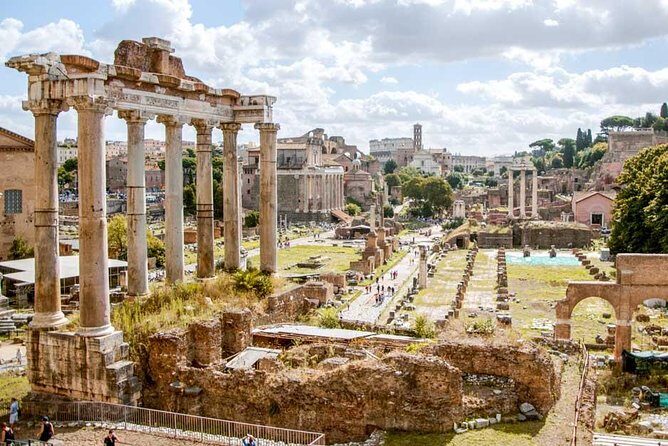
Your meeting point is Via delle Terme di Tito, 72, 00184 Roma RM. The tour requires a mandatory meeting time set at 20 minutes before the scheduled departure. In Rome, that’s not being picky—that’s how you avoid missing the group, especially with security checks and crowd flow.
This start matters because the Colosseum area is where delays pile up fast. Even with pre-booking, the site can be affected by crowd capacity (the Colosseum can handle up to 3,000 people at once, and that can cause access delays). Showing up early gives your day the buffer it needs.
Also bring a practical mindset: you’ll be standing, walking, and navigating uneven ancient surfaces.
Entering the Colosseum: Views, Arena Details, and Real Roman Tech
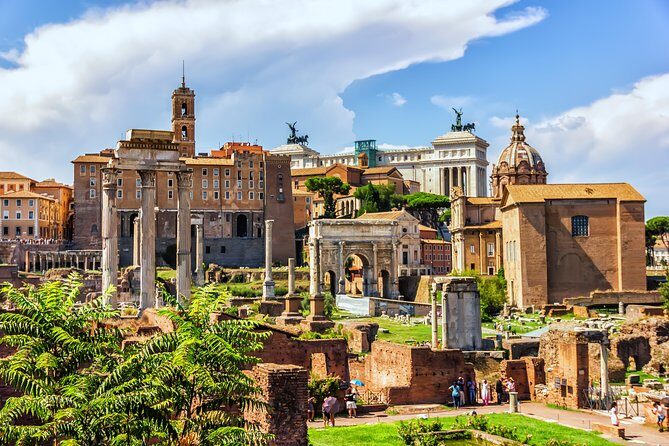
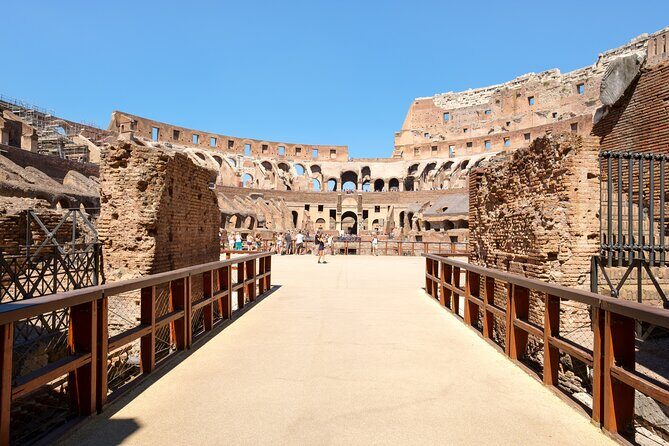
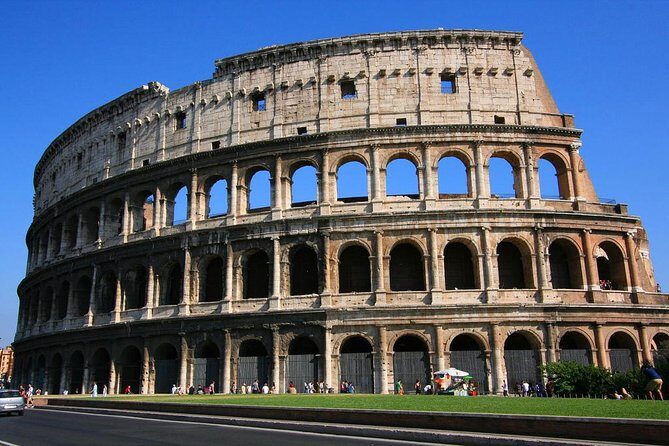
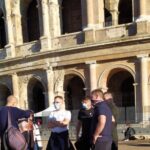
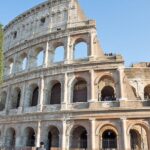
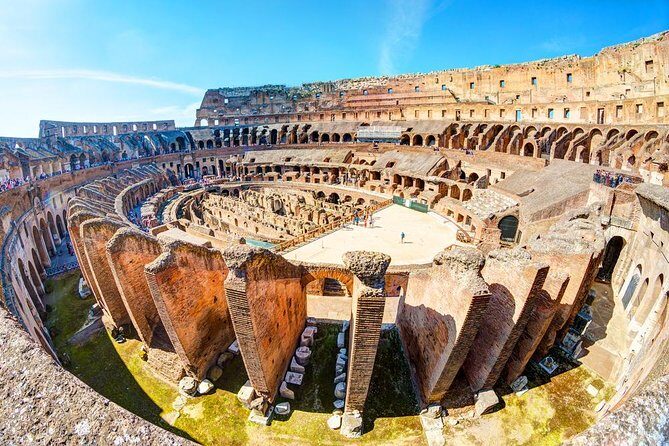
The tour begins at the Colosseum, where you get about 1 hour. You’ll enter with an official guide who has training in art history and archaeology. That combination matters here: the Colosseum isn’t just a giant wall of stone. It’s a machine designed for spectacle, and your guide focuses on how it worked.
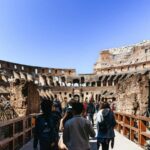
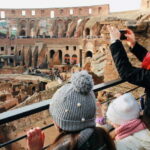
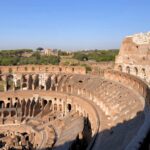
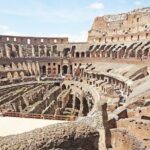
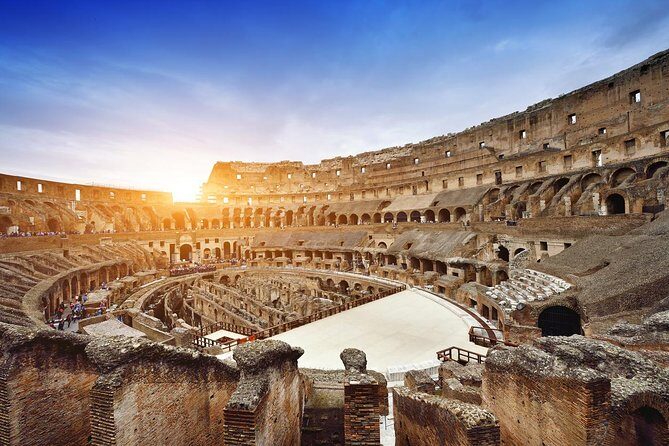
One of the strongest parts of this experience is that you’re not stuck only at the ground level. You walk through areas connected to the first tiers and second tiers, which helps you understand the scale and sightlines. If you’ve ever wondered how spectators actually saw what was happening, higher positioning clarifies it.
Then you get the arena explanation. Expect discussion of the mechanisms and trapdoors tied to staging events, plus stories that make the place feel less like a ruin and more like a live venue. You’ll hear about the rooms where gladiators waited, the cages where lions were kept before games started, and how executions were handled in the broader spectacle.
And yes, the tour talks about Roman engineering: how Romans built a structure capable of hosting massive productions, including the kind of violence and animal conflict that Rome became famous for. This is the part where you see the Colosseum as advanced infrastructure, not just a medieval-to-modern landmark.
Practical note: the Colosseum entrance uses group ticketing, not individual tickets. So you’ll want the names on your voucher to match the names you provide at booking. If names don’t line up, entry can be denied.
Security and What to Leave Behind at the Colosseum
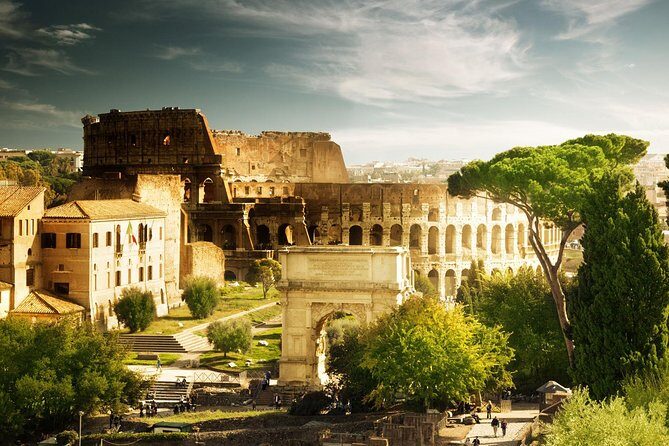
The Colosseum has strict security screening, so plan for it. For forbidden items, bottles and glass containers, alcoholic beverages and aerosols, backpacks, camping items, bulky bags, and trolley/luggage are listed as prohibited. That means you should pack light before you arrive.
There’s also a key nuance: medium and small shoulder backpacks may be allowed, but they still go through screening and must be checked with metal detectors and inspected. If you bring something questionable, expect delay and frustration.
If you want your day to run smoothly, aim for a small day bag (or crossbody) and keep liquids in your plan for later.
Palatine Hill After the Colosseum: From Rome’s Earliest Settlement to Domitian’s Views
Next comes Palatine Hill, with 45 minutes here. This stop is a great counterbalance to the Colosseum because it shifts you from the imperial spectacle of Rome to the older roots of the city.
You’ll explore the idea that the hill holds an older settlement site dating back to the 9th century BC. That alone helps you feel the timeline: you’re standing somewhere Rome started forming, then later you’re back in the “how they lived during empire” story.
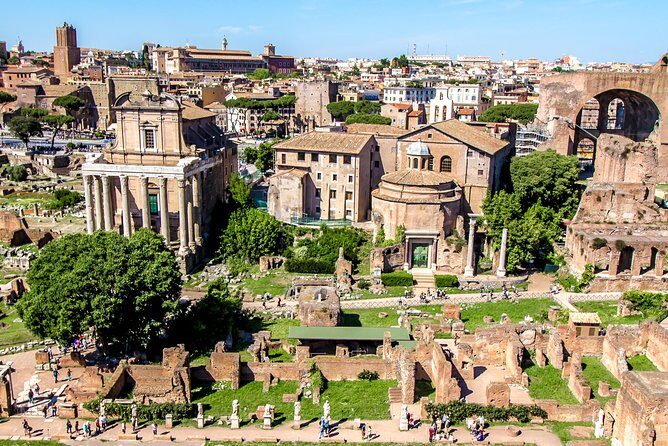
A standout detail is the Hippodrome, described as an elliptical sunken garden associated with the Palace of Domitian. You’ll also get a view toward the Circus Maximus and the valley of the Roman Forum. That visual link is important because it connects three areas that are often described separately.
And your guide ties it to myth. You’ll hear the legend of Romulus and Remus, the brothers raised by a she-wolf, and the rivalry that shaped early Rome’s power story. It’s not just a bedtime tale here—it’s part of how Romans made meaning out of their origins.
The only drawback: Palatine Hill has more walking and can feel exposed depending on weather. Wear shoes that handle uneven footing, and be ready for wind or sun.
More Roman Forum tours for the Colosseum & Ancient Rome

Roman Forum Finish: Caesar, Titus, the Senate, and the Sacred Way
Your last stop is the Roman Forum, again 45 minutes. If Palatine Hill is where the origin story starts, the Forum is where Roman power shows up in full size.
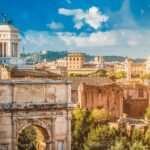
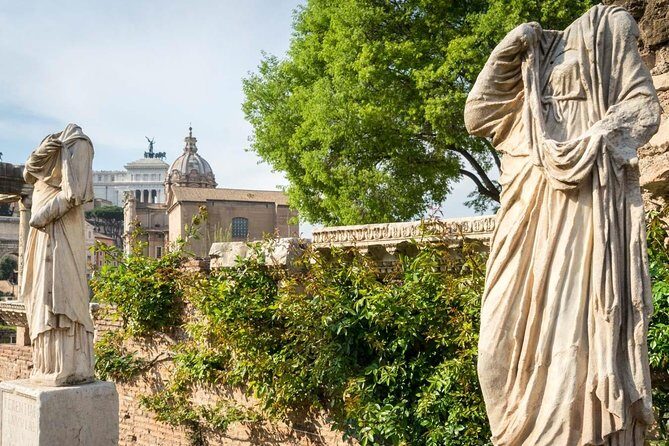
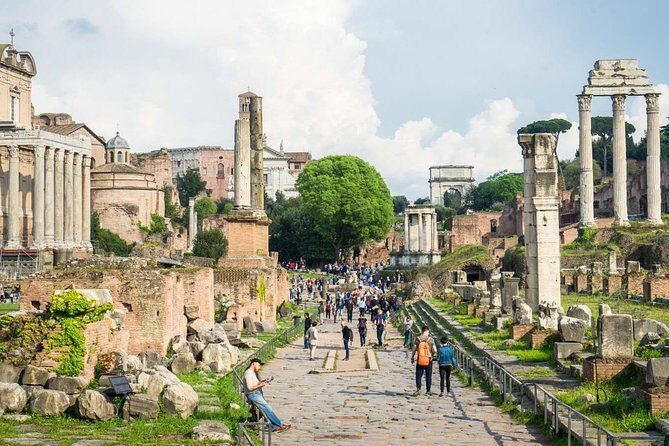
You’ll visit major ruins and landmarks, including the Temple of Julius Caesar, the Arch of Titus, the House of the Vestal Virgins, the Senate House, and the Basilica of Maxentius. The guide also points out the Sacred Way, which is a key idea behind the Forum as a ceremonial and political “spine.”
You’ll also hear about the triumphal road, tied to the centurions returning from battles and conquests. That detail is more than trivia. It helps you picture movement through the city and why people cared about public routes—because processions weren’t just performances. They were political branding.
One good thing about the express format: by the time you reach the Forum, you already understand the Colosseum as imperial theater and Palatine Hill as a power-and-myth setting. The Forum ties those themes together fast, without dragging you into a half-day of indecision.
Pace, Crowds, and the Small-Group Advantage
This tour is built for speed, roughly 2 hours 30 minutes, and it can vary by about 20–30 minutes due to organizational reasons. The order of sites can shift depending on entry availability, which is normal for Rome’s ticketed sites.
The group size is kept small in the way that helps a guide work. The package details list max 19, while another limit notes max 25. Either way, it’s not a giant bus-and-swarm format, and that helps when crowds compress.
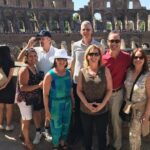
In the best-case scenario, you get that feeling of moving with purpose—enough time to hear the important things, but not enough time to get bored. Several people highlight that the pace is “just right,” and that skipping long lines at the Colosseum can make a huge difference.
If you’re sensitive to noise, one thing to watch: audio can vary in effectiveness depending on how you hold the headset. Most people report it helps a lot, but still, keep the earpiece positioned well.
Also bring water planning. One practical tip from a guide experience: fill your water bottle whenever the guide advises. With this much walking in a short window, you’ll thank yourself later.
What the Tour Style Means for You
This is an expert-led express tour, so the biggest benefit is not just seeing three sites. It’s learning how to see them.
- At the Colosseum, you learn the “how” behind the spectacle: trapdoors, mechanisms, staged spaces, and the engineering that made it possible.
- At Palatine Hill, you learn the “why” behind the setting: origins of Rome, myth made physical, and elite palatial space.
- At the Forum, you learn the “who and what”: the institutions—Senate, temples, major arches—that show power in action.
That’s why people often call it a strong introduction. It gives you mental hooks, so later, if you return on your own, you’ll recognize what you’re looking at instead of feeling like you’re just walking among stones.
Who This Tour Fits Best (and Who Should Rethink)
I’d recommend this tour if you want a high-impact Rome day without overcommitting time. It’s especially good for first-timers who need orientation: the Colosseum, the mythic roots at Palatine Hill, and the political core in the Roman Forum.
It’s also a strong choice if you like stories. Guides named Katerina and Catarina are mentioned as making the tour feel fun and easy to follow, and that tone helps when you’re surrounded by crowds.
You should take a second look if you know you struggle with extended standing and walking. The tour asks for moderate physical fitness, and it is also not recommended for people with motor lag (so if that applies to you, choose a different approach).
Also, if you’re the type who wants to linger and read every sign, this might feel too fast. This is for “see it, understand it, move on” days.
Should You Book This Colosseum–Palatine Hill–Roman Forum Express Tour?
Yes, if you’re trying to get serious value out of a limited window in Rome. You’re paying a fair price for included Colosseum admission, plus an expert guide and audio support that helps you actually process what you’re seeing in about 2.5 hours.
No, if you want a slow, personal pace with lots of downtime. The tour is efficient by design, so you’ll be walking continuously and listening to keep the storyline intact.
If you book, do it with a simple plan: arrive early at the meeting point, pack light for security, bring valid ID matching the names you provide, and wear shoes that can handle uneven ruins. Do that, and you’ll leave with a clear sense of how Rome entertained, ruled, and mythologized itself—at speed, and with meaning.
FAQ
How long is the Best Colosseum, Palatine Hill and Roman Forum guided tour?
The tour lasts about 2 hours 30 minutes.
Is the Colosseum admission ticket included?
Yes. The tour includes the Colosseum entrance ticket plus the Colosseum reservation fee.
Do you get audio headsets on this tour?
Yes. Radios and earphones are included to amplify the guide’s voice.
Where do we meet, and when should we arrive?
You meet at Via delle Terme di Tito, 72, 00184 Roma RM, Italy. You must be there 20 minutes before the scheduled departure time.
What ID do I need for entry?
You must present a valid passport or ID document that matches the name provided at booking.
Are backpacks allowed inside the Colosseum?
Backpacks are listed as forbidden. Medium and small shoulder backpacks may be allowed but must be checked and screened.
How big is the group?
The package states a maximum of 19 people, and the activity info lists a maximum of 25 travelers. Either way, it is kept to a small group.