REVIEW · ROME
Colosseum & Ancient Rome by Night Guided Walking Tour
Book on Viator →Operated by Tours of the Colosseum · Bookable on Viator
Night Rome turns monuments into a story.
This tour is interesting because it shows major landmarks with night lighting and explains what you’re seeing in plain language, not just stone-and-columns guessing. I especially like the stop-by-stop focus, from Teatro di Marcello to the Roman Forum area, with an archaeologist guiding the details.
Second big win: you get the energy of central Rome after dark, including wide viewpoints over the forums, while staying fully outside. The only real drawback is that you will not enter monuments, so if you’re hoping for interior access (Colosseum floors, galleries, etc.), you’ll need separate tickets.
In This Review
- Key highlights I’d bookmark
- Why this night walk feels different than daytime Rome
- Teatro di Marcello: the theatre you can still read
- Piazza del Campidoglio: Michelangelo’s square plus forum views
- Mercati di Traiano and the forums’ “big idea”
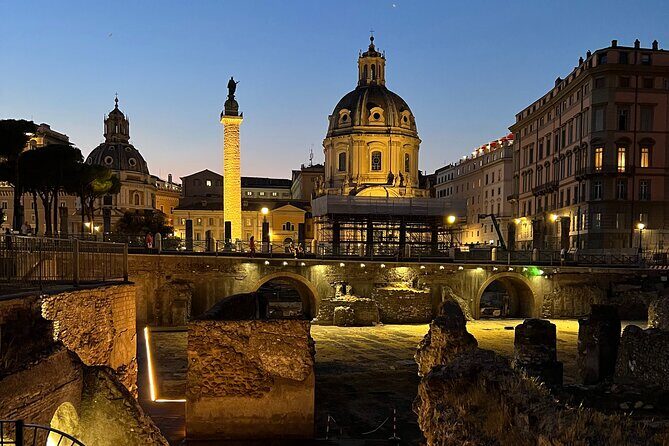
- Colonna Traiana: reliefs explained like a story
- Roman Forum viewpoints: power, courts, trade, and temples
- Colosseum from the outside: gladiator context without the ticket line
- Arch of Constantine: one of Rome’s best preserved statements
- The guide makes the difference: Roman archaeologist storytelling in action
- Price and value for a 2.5-hour private Rome night
- Logistics that actually matter: meeting point, route, and ending by the Colosseum
- Who should book this Colosseum & Ancient Rome by Night walk
- Should you book this tour?
- FAQ
- Is this tour inside any monuments?
- Are admission tickets included?
- How long is the experience?
- Is this a private tour?
- What are the start and end points?
- What happens if the weather is bad?
Key highlights I’d bookmark
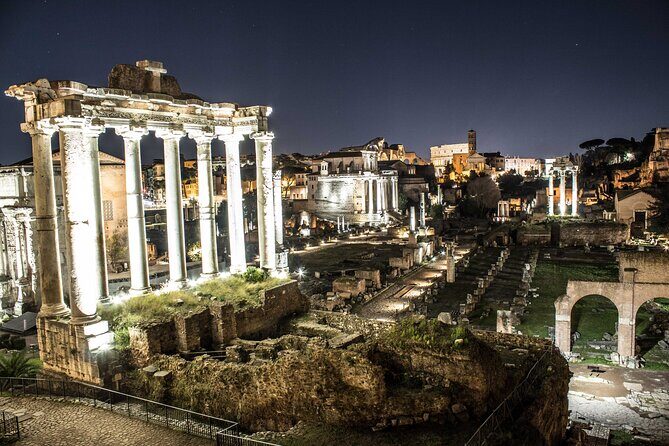
- Night views of major Roman monuments with a more dramatic feel after dark
- Professional archaeologist-led storytelling that connects the sites to everyday Roman life
- All-exterior route means no monument-entry time, just focused walking stops
- Campidoglio views over the forums for perspective you can’t get from a quick selfie
- Colonna Traiana’s reliefs explained so the artwork makes sense, not just looks ancient
- Private small-group experience for a faster Q&A flow and less waiting around
Why this night walk feels different than daytime Rome
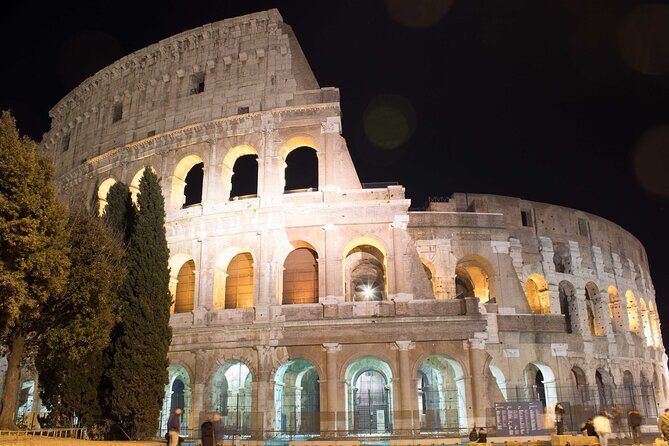
Rome is famous by day. At night, it feels personal. Street noise softens, the air changes, and buildings look larger because the shadows do the work.
What makes this tour work is that it stays practical: you’re not stuck inside museums or behind ticket lines. You’re out there where the monuments actually sit in the modern city.
I also like how the guide’s background matters. An archaeologist won’t just name things. They explain why these places were built, how they were used, and what people would have noticed first. That turns a list of landmarks into a real mental map.
One more plus: the pace is built for absorbing views. It’s about 2 hours 30 minutes, with short stop times that keep the walk moving without turning it into a sprint.
More Ancient Rome tours for the Colosseum & Ancient Rome
Teatro di Marcello: the theatre you can still read
You start at the Chiesa di Santa Maria in Portico in Campitelli, then head toward the Teatro di Marcello. Even though you’re just looking from outside, this is one of those structures where the shape tells you a lot.
This is billed as Rome’s best preserved ancient theatre, and you can see why. The seating form and layered facade give you a clear sense of how the Romans designed for crowd visibility and sound.
The guide’s angle here is the human one. You learn what Roman shows were like, and why theatres mattered in the rhythm of Roman life. If you know the basics of the Empire, the stories feel sharper once you connect them to a real venue.
Practical note: this is the first stop, so it’s also a good moment to get your bearings. Once you see Teatro di Marcello, the rest of the route starts to feel like one connected story rather than separate attractions.
Piazza del Campidoglio: Michelangelo’s square plus forum views
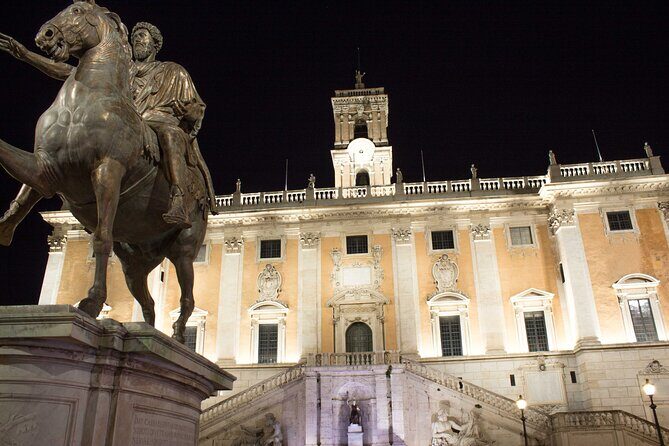
Next is Piazza del Campidoglio, designed by Michelangelo. That detail matters because it reminds you Rome doesn’t freeze at the ancient layer. It keeps getting rebuilt, re-shaped, and reinterpreted.
You’ll see the square layout, the town hall area, and the statue of Marcus Aurelius. Then comes the payoff: a great view of the forums. It’s one of those moments where your brain goes, oh, so this is why the locations mattered.
The guide helps you link the architecture to purpose. From this viewpoint, you can understand how the forums worked as the Empire’s public stage—judicial business, commerce, temples, and political theatre all mixed together.
If you’re sensitive to walking a bit uphill or standing for views, keep in mind you may pause for several minutes. It’s not a long stand, but it’s worth planning for a comfortable jacket and steady shoes.
Mercati di Traiano and the forums’ “big idea”
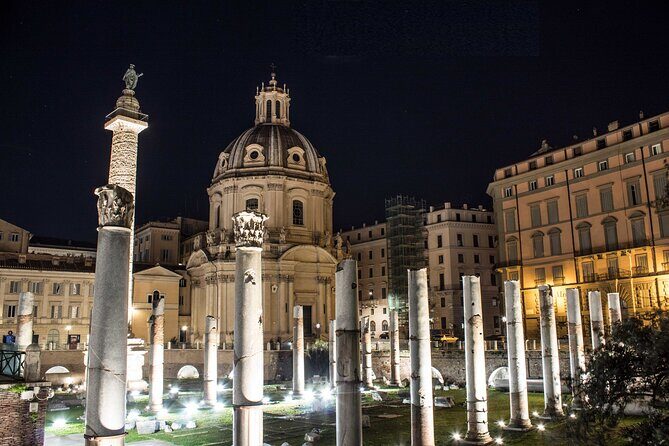
Then you move to Mercati di Traiano and the Museo dei Fori Imperiali area. Even without entering, you’re in the right zone to feel the scale of Trajan’s ambition.
You’ll learn about the grandest forum of Ancient Rome built by Trajan. That concept can sound abstract until you’re near the complex itself. The point isn’t just that it’s large; it’s that it was designed to project power and organize city life.
This is a smart stop for anyone who wants context, not trivia. Trajan’s forum is a case study in how emperors used public spaces as messaging tools.
Because the tour is all outside, you’re not slowed down by entry procedures. It’s more about using the surroundings as reference points for what’s underneath and around you.
If you’re a photo person, this stop can be useful too. It gives you angles and structure cues that make later ruins look clearer.
Colonna Traiana: reliefs explained like a story
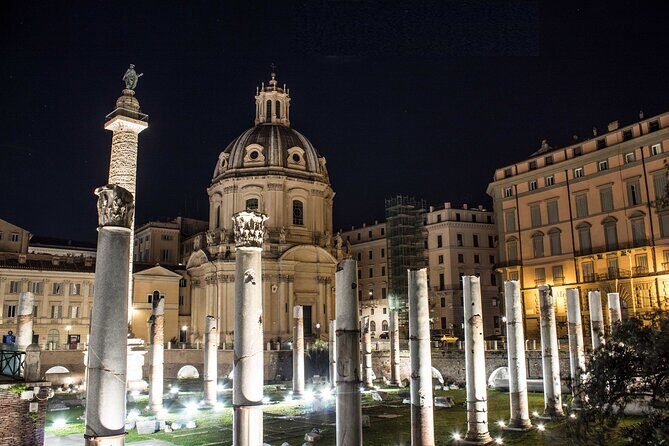
Colonna Traiana is next, and this stop is built for visual learning. You’ll see a masterpiece of Roman art featuring the campaign of war of Trajan, shown through dramatic reliefs.
The guide frames it in a way that clicks quickly: it’s described as reliefs that feel like a comic book. That’s a great metaphor for helping you follow the sequence of events instead of staring at carvings and hoping they make sense.
What I like here is the “why it worked” lesson. Roman leaders didn’t just win wars. They made sure the public understood the campaign narrative and the emperor’s image.
Even from the outside, the column shape gives you the right context for why the artwork was meant to be seen by crowds. And if you’ve ever felt lost at monuments that are basically decoration, this stop is a good antidote.
Wear your patience for a short viewing window. The column isn’t huge, but the explanation makes it feel larger than its footprint.
More Night & Evening tours for the Colosseum & Ancient Rome
Roman Forum viewpoints: power, courts, trade, and temples
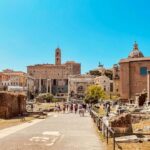
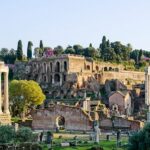
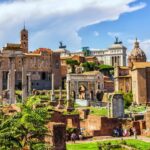
After that you head into the Roman Forum area. This part of the route is all about the center of Rome and the Roman Empire, not the “pretty ruins only” version.
You’ll learn that this was the place for the most important judicial courts, trade activity, and temples. Hearing those categories while you stand in the space they occupied makes the forum feel less like “an archaeological site” and more like a functioning city center.
One key reason the night timing helps: the light makes outlines clearer and crowds easier to manage. You still need to pay attention, but you can actually focus on the structure and layout rather than being swept along.
Admission tickets aren’t included for this portion. The good news is that the tour is designed as an outside walk, so you’re not losing time to ticket lines you don’t need.
If you want interior access later, you’ll need separate plans. But as a night education walk, this stop is built for understanding what you see from the street level.
Colosseum from the outside: gladiator context without the ticket line
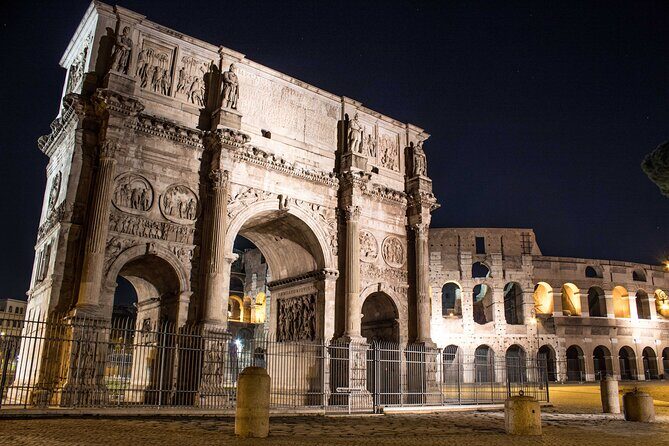
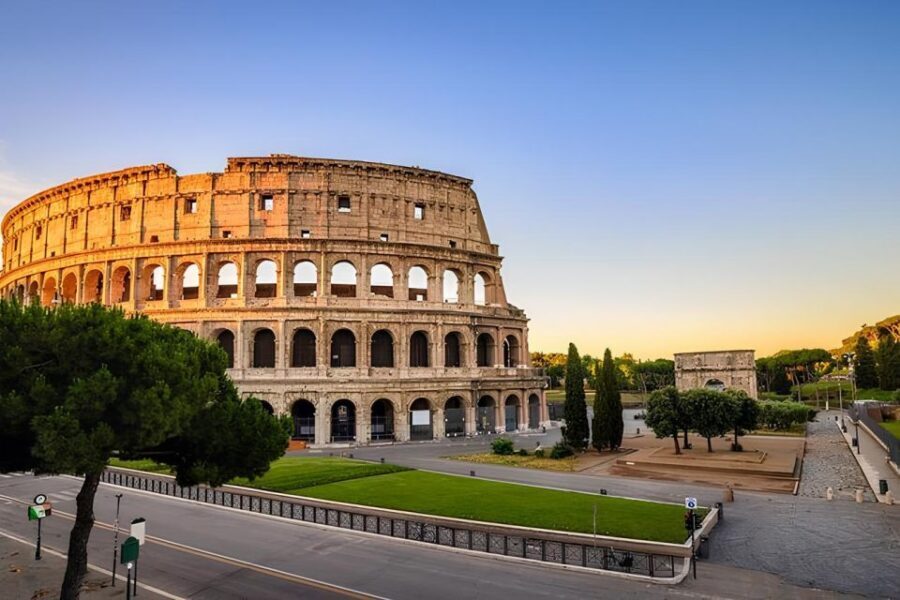
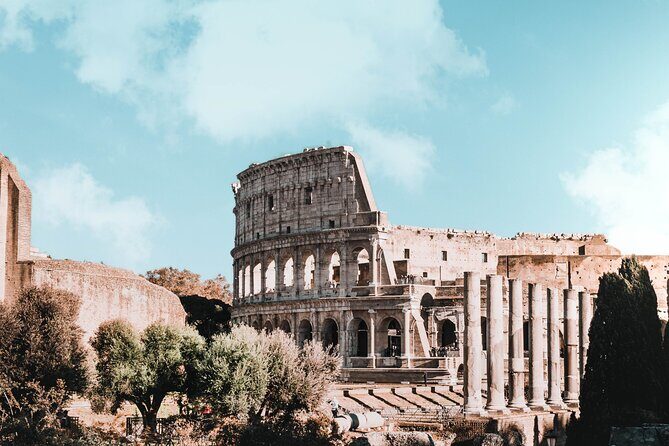
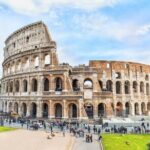
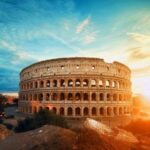
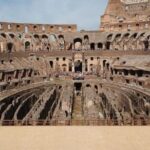
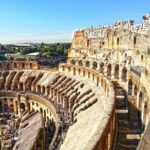
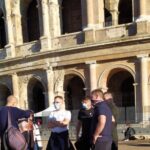
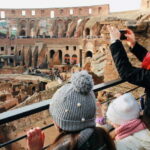
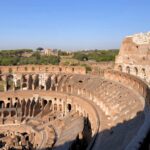
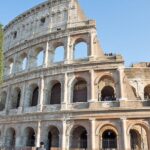
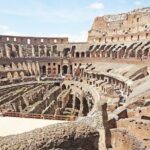
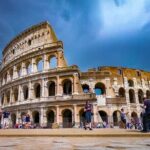
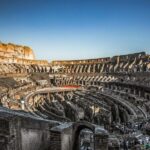
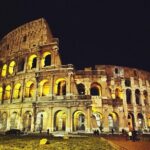
Then it’s time for the Colosseum. The tour gives you views from outside and uses the setting to teach about gladiators and Roman shows.
That sounds simple, but it’s exactly the strength of this format. You get the atmosphere of the Colosseum—massive, grounded, real—while the guide fills in what gladiator events were, how people experienced them, and why the Colosseum became a symbol.
The “outside only” approach is also practical. You can spend your time learning and seeing rather than waiting in line or trying to make the timing work with a bunch of monument entrances.
Admission tickets aren’t included here. If you’re trying to tour the interior or restricted areas, you’ll have to add that separately. Still, as a night orientation to the Colosseum’s meaning, this route does a solid job.
One more reason this stop lands well: at night, the Colosseum often feels less like a daytime landmark and more like a dramatic stage set. Even without entering, you get that cinematic effect.
Arch of Constantine: one of Rome’s best preserved statements
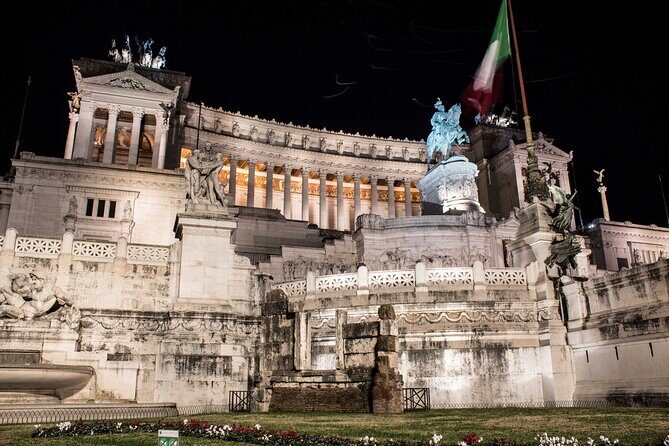
Finally, you visit the Arch of Constantine. You’ll see it described as the best preserved ancient arch in Rome, and it’s easy to agree once you’re there.
This is also a stop about influence. The guide explains how it served as a model for later arches, including references to the Arch of Triumph in Paris and Marble Arch in London.
That perspective is useful because it stops you from treating Roman design as isolated. You start noticing how European city planners kept borrowing Rome’s visual language: scale, symmetry, and the idea that public monuments communicate authority.
This is a good closing stop because it connects the ancient world to the modern one without adding another long walking segment. You’re not just ending at the Colosseum area; you’re finishing with a lesson about how Roman symbols traveled forward.
The guide makes the difference: Roman archaeologist storytelling in action
The most highly praised part of this experience is the guide. In the reviews, Thomas stands out for excellent English and a deep, in-depth background in Roman history.
What you’re really buying here is interpretive power. Instead of pointing and naming, the guide explains what you’re seeing and why it matters. That means when you look at ruins, you know what they were and what role they played.
Thomas also comes across as quick to answer questions, which matters on a private tour. You’re not stuck with a script. You can ask the stuff you’re genuinely curious about—like how theatres and forums shaped daily life, or what a war story carved into stone was meant to do.
If you’re the type of traveler who gets impatient with generic explanations, this tour should suit you. The tone described in the reviews is detailed and vivid, with connections to current history and everyday understanding.
One practical tip: if you have questions, jot them down before you meet. With a private group, that’s the fastest way to get a custom feel.
Price and value for a 2.5-hour private Rome night
At $272.83 per person for about 2 hours 30 minutes, this isn’t a cheap “walk and hope” deal. But it’s priced like a guided night education experience with an archaeologist-level perspective and no monument-entry tickets needed.
So where does the value come from?
- You get a structured route with stops designed for learning, not just sightseeing
- The guide time is focused and you’re not paying for entrances you won’t use
- You’re doing it at night, when the lighting and mood add a lot to the experience
- It’s a private tour, which reduces waiting and makes the Q&A feel worth it
If you’re traveling in a group and can access the group discount, the math usually improves. Private tours get expensive fast in Rome, so discounts can make the difference between “good idea” and “painful idea.”
Also keep expectations aligned: this is outside-only. You’re paying for guided interpretation and nighttime atmosphere, not for a ticketed monument circuit.
Logistics that actually matter: meeting point, route, and ending by the Colosseum
The meeting point is Chiesa di Santa Maria in Portico in Campitelli, Piazza di Campitelli, 9, 00186 Roma. The tour ends at Piazza del Colosseo, 00184 Roma, right by the Colosseum.
Ending there is handy. You can take the Metro or grab a taxi after the tour. You also won’t feel like you have to backtrack across the city just to get back to your hotel.
It’s near public transportation, so you’re less likely to burn time getting there. And because it’s outside, you don’t lose time to indoor crowds or timed-entry rules during the walk itself.
The tour also requires good weather. If the weather turns poor, the provider will offer a different date or a full refund. Plan for that, especially if you’re booking close to your departure day.
Who should book this Colosseum & Ancient Rome by Night walk
This is a strong pick if you want:
- A guided introduction to central Rome’s ancient layers
- Night views and a calmer feel than midday sightseeing
- A guide who explains rather than just points
- A private experience so your questions get answered in real time
It’s also a good match if you’re not trying to do a heavy ticket-and-entry schedule. Since it’s all outside, you can keep the rest of your trip flexible.
If you’re someone who must go inside monuments to feel satisfied, you might feel short-changed. The Colosseum is shown from outside, and the route stays exterior throughout.
If you’re traveling as a couple, small group, or family with older teens who can handle a 2.5-hour walk, you’ll likely enjoy the pace. The tour notes that most travelers can participate, so it’s generally built for typical visitors rather than extreme conditions.
Should you book this tour?
Yes, if your goal is an expert-guided night walkthrough that helps you understand Rome’s ancient core without getting bogged down by monument entry.
I’d book it when:
- you want night lighting and dramatic views
- you care about the story behind the stones
- you want a private guide like Thomas with strong English and real depth
I’d skip or add a separate day/ticket if:
- you specifically want to enter the Colosseum or other monuments inside
- you’re booking only for nighttime photos and don’t care about context
Overall, this tour feels like a smart use of an evening. It takes the main hits of ancient Rome—forums, Trajan’s world, Trajan’s column story, and the Colosseum zone—and turns them into something you can actually remember.
FAQ
Is this tour inside any monuments?
No. It’s an all-outside walking tour, so you won’t enter monuments.
Are admission tickets included?
Admission tickets are not included. The tour is designed around exterior viewing of the sites.
How long is the experience?
It runs about 2 hours 30 minutes.
Is this a private tour?
Yes. It’s private, and only your group participates.
What are the start and end points?
It starts at Chiesa di Santa Maria in Portico in Campitelli, Piazza di Campitelli, 9, and ends at Piazza del Colosseo.
What happens if the weather is bad?
This experience requires good weather. If it’s canceled due to poor weather, you’ll be offered a different date or a full refund.