REVIEW · ROME
Rome: Caracalla, Colosseum, Circus Maximus Private Tour
Book on GetYourGuide →Operated by Tour in the City - Travel Agency Rome - · Bookable on GetYourGuide
The Colosseum is loud in your head.
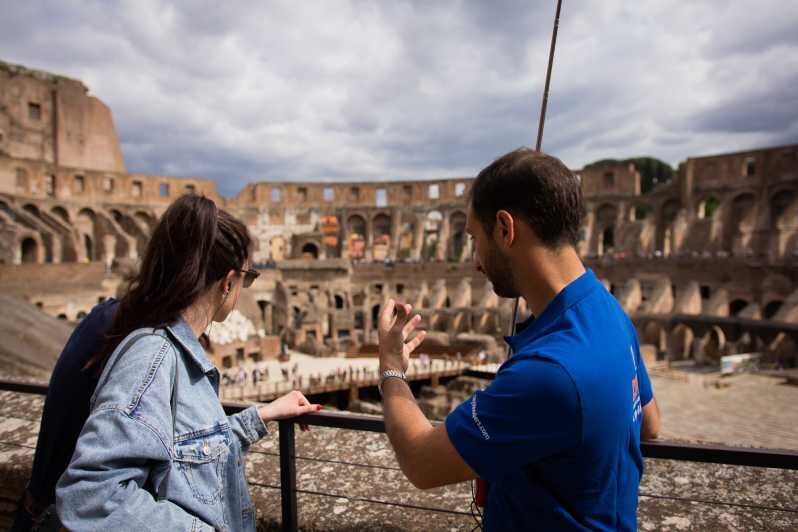
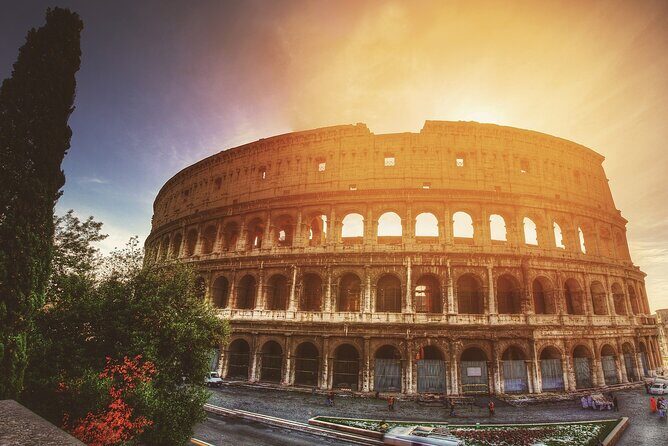
This private 3-hour Rome route pulls together three heavyweight archaeological stops, with a professional art historian guide walking you through what you’re actually seeing, not just what you’re supposed to guess. I love the format: you start in the Colosseum for a guided visit (inside), then you move to Circus Maximus for the scale of Roman racing, and finish with the Baths of Caracalla, one of the best-preserved bath complexes in Rome. One heads-up: the Colosseum security checkpoint runs airport-style, and in high season you can wait up to 30 minutes.
The payoff is how quickly you go from stone to story. You’ll hear construction details, gladiator-era context, and the practical “how this place worked” explanations that make the ruins feel less random. And because it’s private, the guide can keep things moving at your pace while still covering all three major sites.
In This Review
- Key moments you’ll actually care about
- Entering The Colosseum Without Getting Stuck in the Wrong Line
- From Gladiators to Chariots: Circus Maximus in Real Scale
- Baths of Caracalla: Where Roman Life Worked on Schedule
- A Private 3-Hour Plan That Maximizes Your Rome Time
- What You Pay (and Why It Can Feel Worth It)
- Who This Tour Is Best For
- Practical Tips So You Don’t Waste Any Guided Time
- Should You Book This Private Colosseum–Circus–Caracalla Tour?
- FAQ
- What sites are included on this private Rome tour?
- How long does the tour last?
- Are entrance fees included?
- Does this tour skip the ticket line?
- What languages is the live guide available in?
- Is the tour wheelchair accessible?
Key moments you’ll actually care about
- Skip-the-line entry (after security) so your time stays focused on seeing, not queuing
- Headsets included for groups over 8, so the guide’s voice stays clear at close range
- Inside Colosseum guided visit with guidance on construction and gladiator entertainment
- Circus Maximus scale explained with its massive spectator capacity in mind
- Caracalla’s baths in standout condition, built AD 212 to 217 and designed for thousands
- Multi-language live guide options, including English, Spanish, French, German, Italian, Portuguese, Russian
Entering The Colosseum Without Getting Stuck in the Wrong Line
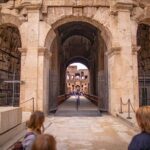
Start at the Colosseum area, and plan to arrive early enough to get oriented. The meeting point is the tour supplier’s office at Via della Polveriera 11, above and behind the Colosseum Metro Station. You cross a small pedestrian bridge just up from and to the side of the 2nd level of the metro, then walk about 100 meters straight ahead.
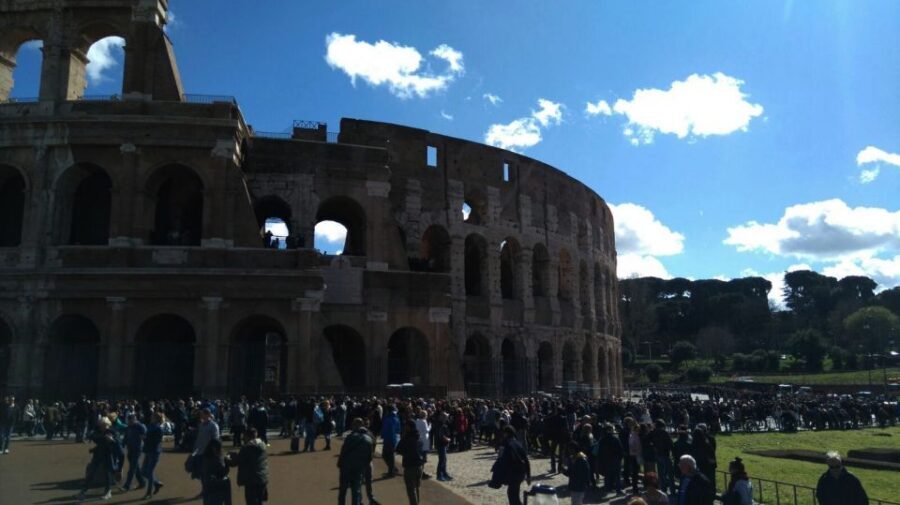
The biggest practical win here is that the tour is set up to skip the ticket line, but you still do the mandatory airport-style security. The operator notes that in peak season, waiting at security may reach up to 30 minutes. That’s not something a tour can remove, but a good guide helps you keep your timing tight and avoids the common mistake of arriving late and losing your guided time.
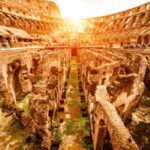
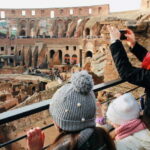
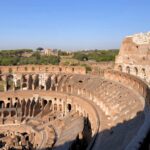
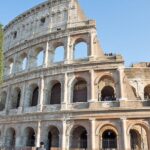
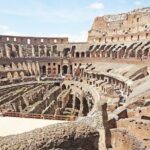
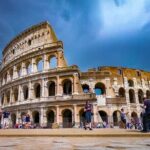
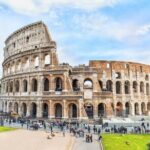
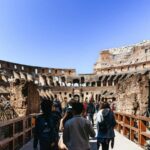
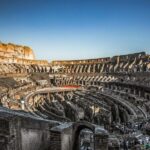
Inside the Colosseum, you’re not just looking at arches and rows of seats. Your guide connects three things: how the structure was built, what kinds of events it hosted, and the human stories that made gladiator spectacles a Roman obsession. You’ll hear about construction methods and get context for the incredible abilities and role of the gladiators. Standing in the same spaces where crowds once roared, it’s easy to see why this monument still feels like the center of Roman pop culture.
A couple of smart “don’t let this ruin your day” notes:
- Go light. You can’t bring large bags or suitcases, and there’s no cloakroom service for large items. If you have a bigger bag, don’t assume you can stash it.
- Bring photographic ID for the security check into the Colosseum.
- Selfie sticks are not allowed inside the Colosseum for security reasons.
- Sunglasses are listed as not allowed, so if you rely on them to be comfortable, consider keeping them minimal and following the rules on the day.
Other private tours in Rome
From Gladiators to Chariots: Circus Maximus in Real Scale
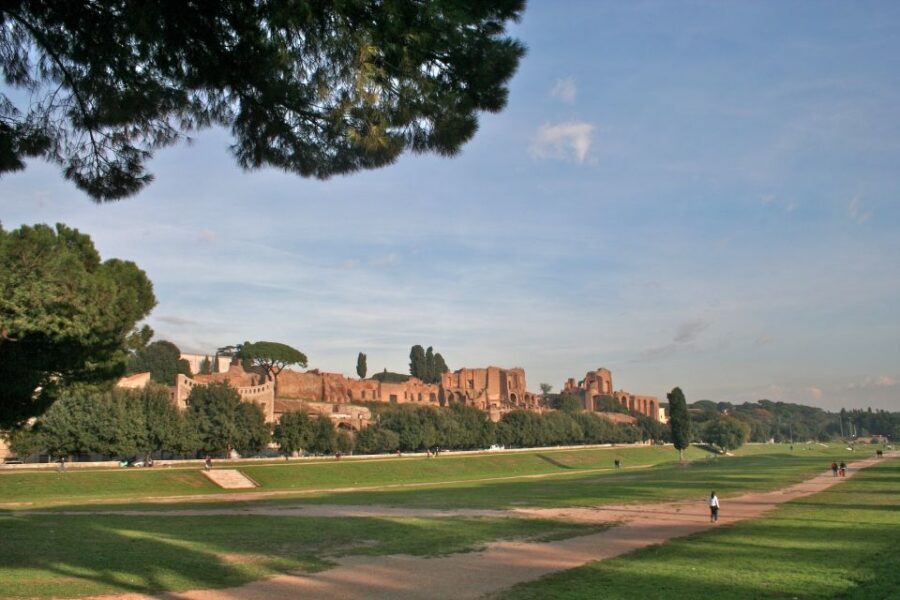
After the Colosseum, the tour moves you to Circus Maximus, Rome’s grand chariot-racing venue. This is the spot where you stop thinking only about battles and start seeing Roman entertainment as a full-on system—massive crowds, set routes, and a stadium made to funnel energy toward the track.
The operator highlights the stadium’s original scale: it was the first and largest stadium in ancient Rome, with a capacity of more than 250,000 spectators. That number is so big it almost feels abstract until you stand in the surrounding space and realize what kind of crowd infrastructure the Romans built for regular spectacle.
Your guide’s job here is to turn the emptiness of the ruins into a mental map. You’ll get an explanation of how Roman chariot races worked and why this location mattered. Even if you’re not a hardcore Roman sports fan, you’ll start recognizing the logic of the design: where spectators would pack, how sightlines shaped the crowd, and why this place was an emotional pressure cooker for the city.
The main drawback at Circus Maximus is simple: it’s not “intact building” Rome in the way some other sites feel. It’s a setting where your understanding comes from the guide’s framing. If you like guided interpretation (and you do—this is a private tour), that’s a plus, not a problem.
Baths of Caracalla: Where Roman Life Worked on Schedule
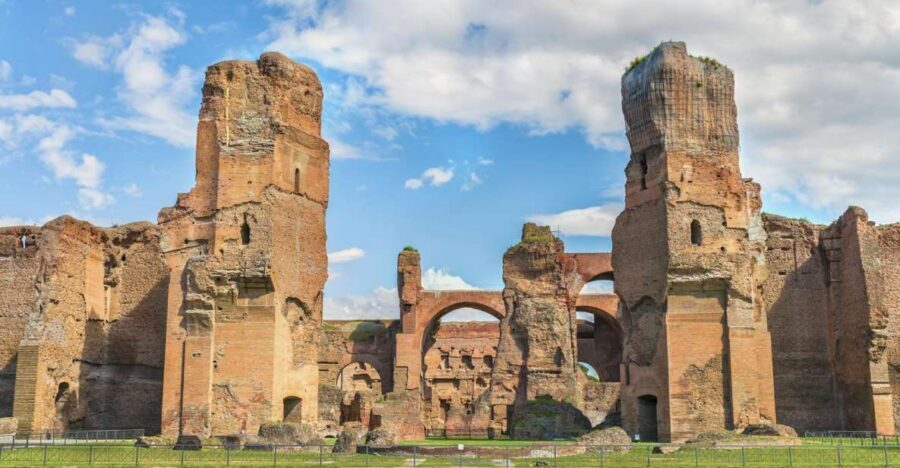
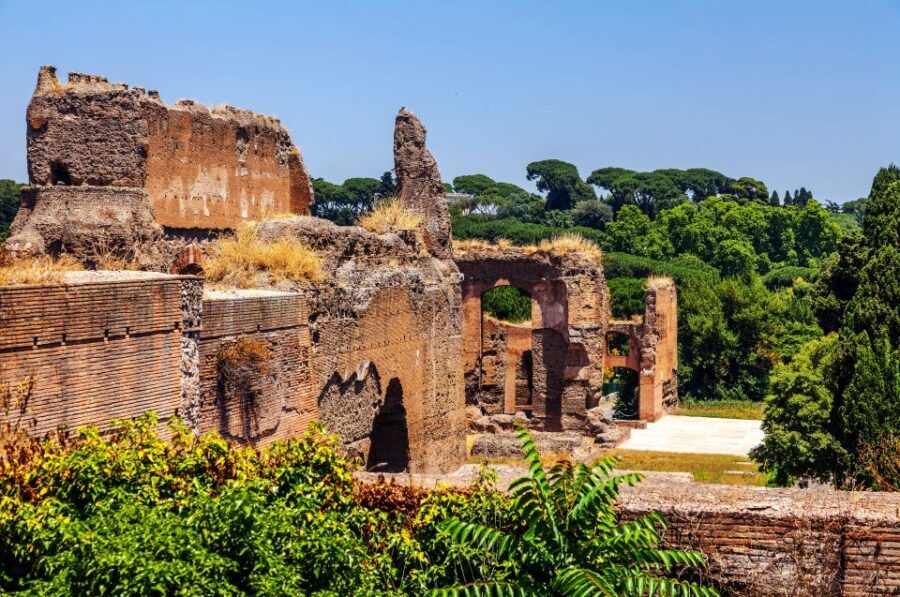
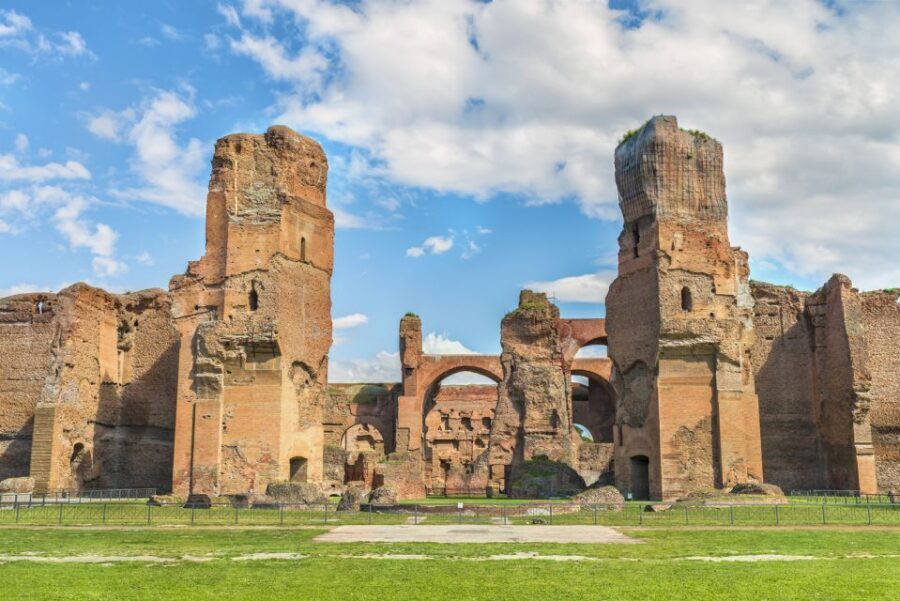
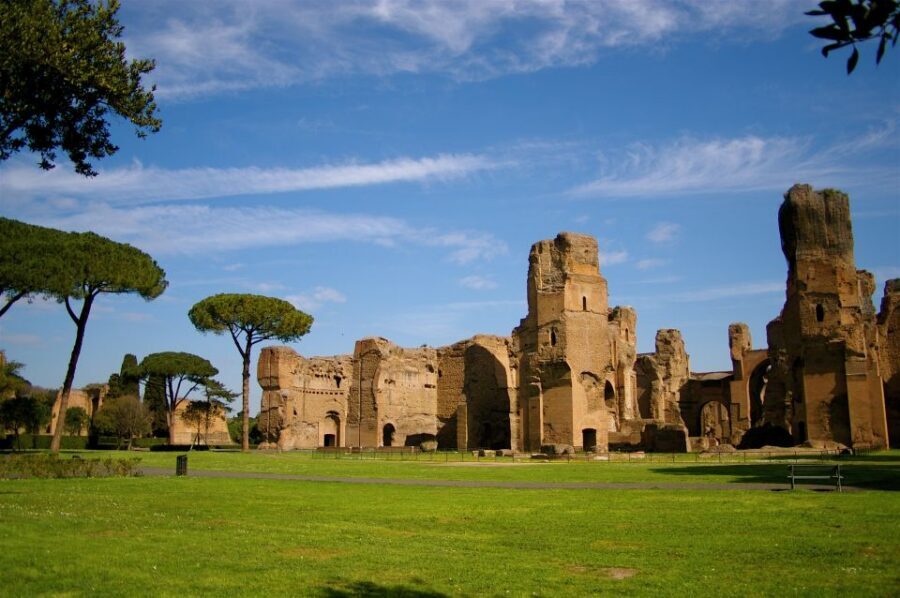
Finish at the Baths of Caracalla, where Roman daily life survives in far better condition than you’d expect from a ruin. The tour notes these baths were built in Rome between AD 212 and 217, during the reigns of Septimius Severus and Caracalla. They’re also described as Rome’s second-largest public baths and capable of hosting more than 1,500 bathers.
The real reason this stop is worth your time isn’t just that it’s large. It’s that the Baths of Caracalla give you a feel for routine. Roman public baths weren’t only about hygiene. They were a social hub, a place to talk, and a place where architecture supported movement: hot, warm, and cool spaces laid out so people could circulate.
The tour emphasizes that these are the best preserved baths in Rome and a masterpiece of Roman architecture. With a guided visit, you’ll get the “why” behind the plan—how the complex functioned as a system and how the scale supported a steady flow of bathers rather than a one-time event.
By the time you reach this final stop, your earlier lessons at the Colosseum and Circus Maximus make more sense. Those places were about spectacle. Here, you see a parallel Roman talent: building environments where thousands could experience daily life in an organized, public way.
A Private 3-Hour Plan That Maximizes Your Rome Time
This is a 3-hour tour designed as a compact route through three of Rome’s most recognizable ancient sites. That timing matters if you’re juggling Rome logistics: you get the highlights without committing the whole day to one monument.
You’ll also walk a moderate amount. That’s normal for these sites, but it’s worth respecting. Wear comfortable shoes and go in ready to move. The dress code is smart casual, so avoid anything that makes walking painful or restricts movement.
One more detail that affects comfort: because the tour includes a headset to hear the guide better for groups over 8 people, your guide’s explanations should stay clear even when the group is larger than “just your family.” Even though it’s a private group experience, the sound setup is there to keep the tour experience smooth.
If you’re deciding whether this tour fits your pace, think of it like this:
- If you want three major ancient sites with expert storytelling in a tight window, this works well.
- If you want to linger for long stretches on your own without guided context, you may feel the schedule is too efficient.
What You Pay (and Why It Can Feel Worth It)
The price is $215.23 per person. On paper, that’s not “cheap.” But when you compare it to what you get—entrance fees included, a professional art historian guide, a private guided route, and skip-the-ticket-line access—this starts to look like a time-and-effort trade you might actually like.
Here’s the value logic I use:
- Your time in Rome is limited, especially if you’re sightseeing near the Colosseum area.
- You’re buying interpretation. The difference between walking through ruins with no guide and having a guide explain construction methods, event context, and how spaces worked is huge.
- Entrance fees are part of the package, so you avoid the “nickel-and-dime” feeling that can happen when planning a self-guided day.
What’s not included is also important. Entrance fees are included in the tour price, but food and drinks aren’t. Hotel pickup/drop-off isn’t included, and you handle transportation to and from the sites yourself.

Who This Tour Is Best For
I’d aim this private route at travelers who want ancient Rome to make sense fast.
It’s especially a good match if you:
- Like guided explanations and want someone to connect the dots across multiple sites
- Prefer a structured plan over navigating ticket lines and routes on your own
- Appreciate art history and architecture context, not only big-name landmarks
It may feel less ideal if you:
- Need wheelchair-accessible options (the tour is not wheelchair accessible)
- Travel with large luggage or rely on having a place to store it (there’s no cloakroom for large items)
- Want a long, slow day at each site rather than a tight 3-hour circuit
Also note the minimum: a booking requires at least 2 people. If you’re traveling solo, you’ll need to check whether you can join with others or if the operator can accommodate your situation.
Practical Tips So You Don’t Waste Any Guided Time
Security and entry rules can make or break your experience, so here’s what I’d keep top of mind:
- Bring your passport or ID card. A photographic ID is needed for the security check into the Colosseum.
- Expect moderate walking and bring comfortable shoes.
- Smart casual is requested.
- Follow the carry rules: no large bags or suitcases, and no cloakroom for large items.
- Don’t bring prohibited items: pets, weapons or sharp objects, smoking, selfie sticks, walking frames, and sprays or aerosols.
- On security day, plan buffer time. Even with a skipped ticket line, the airport-style checkpoint can take up to 30 minutes in high season.
For the meeting point, give yourself slack. The office is above/behind the Colosseum Metro Station, and you walk the small bridge and then go straight for about 100 meters.
Should You Book This Private Colosseum–Circus–Caracalla Tour?
Book it if you want the highest-impact Roman ruins route in a short 3-hour block, with a guide who can explain how these spaces worked—especially the Colosseum’s construction and gladiator-era entertainment, Circus Maximus’ chariot-racing context, and the Baths of Caracalla as a functioning public complex from AD 212–217.
Skip it (or at least think twice) if you’re not comfortable with security lines, moderate walking, and the strict rules on bags and items. And if accessibility is a priority for you, this tour isn’t wheelchair accessible.
If you’re looking for a private, guided way to see three Rome giants without turning your day into logistics, this one is a strong choice.
FAQ
What sites are included on this private Rome tour?
The tour includes guided visits at the Colosseum, Circus Maximus, and the Baths of Caracalla (also referred to as Terme di Caracalla).
How long does the tour last?
The duration is 3 hours. Starting times depend on availability.
Are entrance fees included?
Yes. Entrance fees are included as part of the tour price.
Does this tour skip the ticket line?
Yes. It notes skip the ticket line (while still requiring you to pass through airport-style security).
What languages is the live guide available in?
The live guide is available in Spanish, English, French, German, Italian, Portuguese, Russian.
Is the tour wheelchair accessible?
No. The tour is not wheelchair accessible.