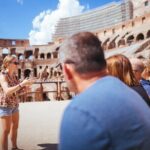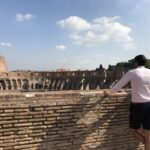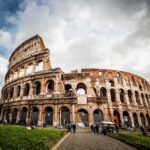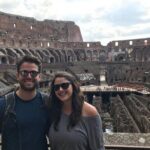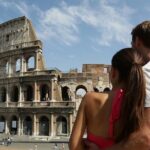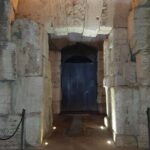
Rome makes you earn your history. This timed-entry Colosseum + Forum + Palatine tour feels like moving through a real Roman day, not just ticking off sights. I especially like the small-group feel and the headset option, which makes it easier to follow your guide without craning your neck. The main drawback is the obvious one: you’ll do a lot of walking and stairs on uneven ground, and it’s all outdoors.
What you’re really buying here is momentum. You start at the Arch of Constantine, get ticketed for the big venues, then walk a smart circuit through the Forum streets, imperial avenues, triumphal arches, and up to Palatine Hill views. Along the way, your guide can turn stones into stories fast, and the stop order keeps the big landmarks in sight.
If you choose the optional arena floor access, the tour becomes even more impressive because you’re not only looking at the Colosseum—you’re stepping into the space gladiators would have known. It’s also the sort of booking where choosing your time slot matters, especially in hot or crowded conditions.
In This Review
- Key things that make this tour worth your time
- Timed-Entry Rhythm: How You Avoid the Worst Crowd Bottleneck
- Arch of Constantine: The Quick Scene-Setter Before the Main Show
- Colosseum Walkthrough and Optional Arena Floor Access
- Roman Forum and Via Sacra: The Power Center on Foot
- Piazza del Colosseo, Imperial Avenues, and the Rostra
- Temples and Triumph Arches: Venus, Titus, and Antoninus
- Palatine Hill Views and the Circus Maximus Look-Down
- Guide Quality, Headsets, and Group Size Choices
- Price and Value: What You’re Actually Paying For
- Who Should Book This Tour (and who might prefer to go slower)
- Should you book this Colosseum, Forum and Palatine timed-entry tour?
- FAQ
- What does the timed-entry include?
- How long is the tour?
- Is there an English option?
- Where does the tour start and end?
- Will I be able to hear the guide clearly?
- Is arena floor access included automatically?
- How much walking and standing should I expect?
- Can I bring luggage or large bags?
- If I choose the audioguide option, when do I get the app?
- What if the Colosseum closes due to weather?
Key things that make this tour worth your time
- Timed entry to the Colosseum, Roman Forum, and Palatine Hill keeps your day from turning into a line marathon
- Headsets for guided tours help you hear your guide clearly even in a loud crowd
- Optional arena floor access gives you a stronger sense of scale
- A focused route takes you past Via Sacra, the Rostra, and major triumphal arches without backtracking
- Palatine Hill viewpoints add payoff at the end, including a Circus Maximus look-down
Timed-Entry Rhythm: How You Avoid the Worst Crowd Bottleneck
This tour is built around timed entry to the Colosseum plus the Forum & Palatine. That matters because Rome’s top sites tend to come with the same problem: waiting. With a scheduled entry, you spend your energy looking, not queueing.
The tour runs about 3 hours total, and the walking stretches across multiple zones of the ancient city. That’s a good length for people who want the highlights without dedicating the whole day. It’s also why your start time choice is worth thinking about.
One more detail that affects your experience: this tour caps at 25 travelers. It’s not a tiny private visit, but it’s small enough that you’re usually not completely swallowed by the crowd movement.
More Arena Floor & Gladiator tours for the Colosseum & Ancient Rome
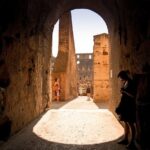
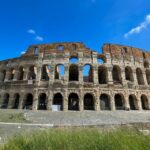
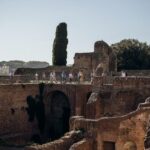
Arch of Constantine: The Quick Scene-Setter Before the Main Show
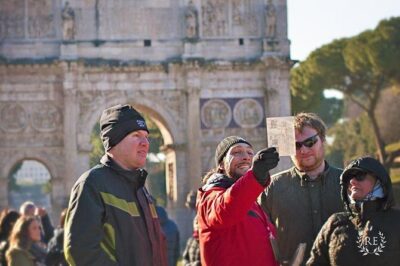
You start at the Arch of Constantine, the large triumphal arch positioned between the Colosseum and the Palatine Hill. It’s a great opening stop because it gives you a theme right away: Roman power expressed through monumental stone.
You get about 10 minutes here, and that’s the right amount. Enough time to orient yourself and learn what kind of victory this arch celebrates, without turning the beginning into a history lecture.
Why I like this stop: it sets up what you’ll see next. The Colosseum isn’t random. It’s part of a wider network of imperial messaging across Rome, and this arch is one of the clearest examples near your route.
Colosseum Walkthrough and Optional Arena Floor Access
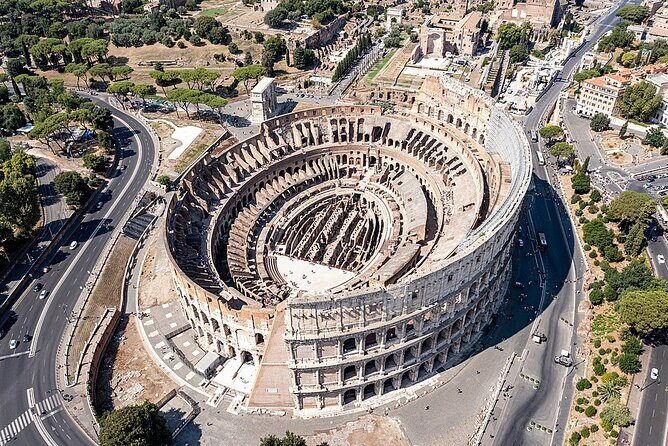
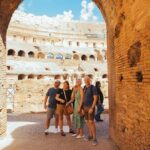
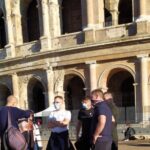
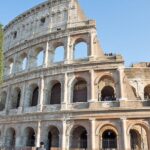
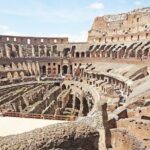
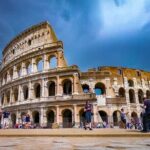
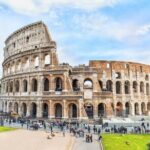
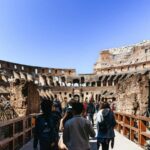
The Colosseum is the obvious draw, but what makes this tour feel practical is the way it’s paired with clear guidance while you’re inside. You’ll spend about 30 minutes at the Colosseum, using your guide’s explanations to connect the structure you see with how the space functioned.
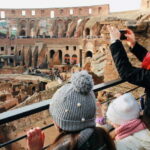
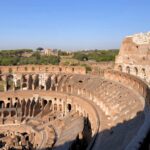
If you booked the optional arena floor access, you also get a ticketed moment that changes everything: you can walk the arena level rather than only viewing it from above. That typically turns the Colosseum from a photo spot into a spatial experience, because you finally understand how high the surrounding seating rises and how the field area would have felt.
A note to keep your expectations aligned: the Colosseum is active, open-air, and busy. One of the most valuable things a good guide can do here is keep the group moving efficiently while still helping you notice the details that are easy to miss when you’re distracted by crowds.
Roman Forum and Via Sacra: The Power Center on Foot
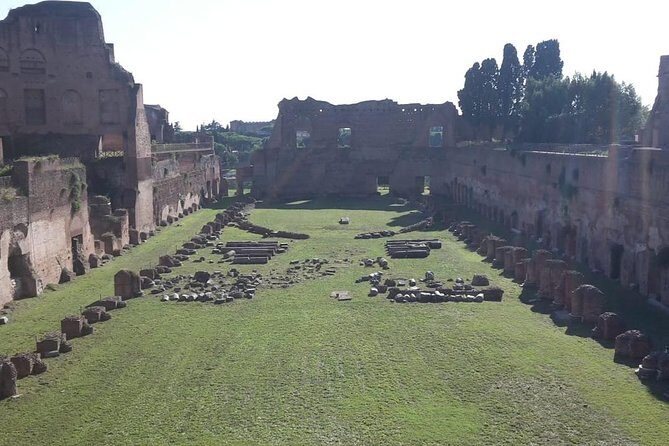
Next comes the Roman Forum, where the feeling shifts from spectacle to governance. Expect about 20 minutes here. The Forum ruins aren’t just scenery—they’re the remains of key civic buildings that shaped daily political life in ancient Rome.
This is where the guided format pays off. Your guide can point out how the Forum connects to Via Sacra, the main street of the city, and that connection helps you stop seeing the site as disconnected blocks of stone.
Then you move along Via Sacra, with another short stop of about 10 minutes. Via Sacra is the route of Roman Triumph processions, and it’s lined with religious sites. Even in a small time window, it’s a strong “walk the route” moment because you’re moving in the direction those ceremonies traveled.
Drawback to consider: this section is a lot more “ruins underfoot” than “single big wow view.” If you’re expecting only iconic monuments, you’ll want a guide who can narrate what you’re seeing so it clicks.
Piazza del Colosseo, Imperial Avenues, and the Rostra
At Piazza del Colosseo, you get another short 10-minute stop. This square sits between Via dei Fori Imperiali and Via Claudia and is named for the Colosseum at its center. It’s also the area associated with the Meta Sudans and the Colossal statue of Nero, both useful anchors for understanding what the neighborhood looked like in Roman times.
Then comes a string of street-level connections. Via dei Fori Imperiali is a key boulevard connecting Piazza Venezia to the Colosseum, and it’s lined with the monumental ruins of the forums of Caesar, Augustus, Nerva, and Trajan. You get about 10 minutes here, and it’s time well spent if your guide focuses on the big picture of how Roman emperors built legitimacy through architecture.
You also stop at the Rostra (I Rostri), remnants of a large platform used for public orations. This is one of those stops where you can almost hear civic noise if you’re paying attention. You’ll spend about 10 minutes, which is enough to understand what it was used for without getting stuck in one spot too long.
My practical advice: if you’re someone who likes to take photos, plan for a quick burst at each stop. The route is moving, and the best moments usually pass fast.
More Colosseum, Forum & Palatine combos for the Colosseum & Ancient Rome
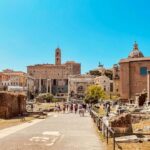
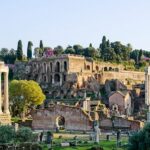

Temples and Triumph Arches: Venus, Titus, and Antoninus
The tour keeps weaving across the Velian Hill and Palatine-adjacent areas, so you get a mix of religious sites and imperial monuments rather than repeating the same type of view.
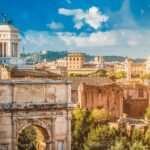
One of the most striking is the Temple of Venus and Roma (Tempio di Venere di Roma). You’ll spend about 10 minutes here. It was dedicated to Venus Felix and Roma Aeterna, and it’s often described as the largest temple in Ancient Rome. Even if you don’t know the exact measurements, you can feel the ambition of a site like this when it’s placed near the Colosseum zone.
Next you stop at the Arch of Titus (Arci di Tito), about 10 minutes. It’s a triumphal arch with a single archway and celebrates Emperor Titus, including the Siege of Jerusalem. Like the Arch of Constantine, it’s a reminder that triumph monuments weren’t just decorative. They were messaging tools.
After that, you visit Tempio di Antonino e Faustina, which was later turned into the church of San Lorenzo in Miranda. It’s another 10-minute stop, and it’s a helpful example of how Roman structures often got repurposed as the city’s religious landscape changed.
If you like seeing how layers of time overlap, this cluster of temples and arches is one of the best parts of the route.
Palatine Hill Views and the Circus Maximus Look-Down
Palatine Hill is where the tour really “pays off,” because it shifts from dense ruins to perspective. You’ll spend about 20 minutes on Palatine Hill, which is traditionally tied to the city’s foundation stories and also the former palatial homes of emperors.
That’s a lot of meaning in a small time window, but the view is part of the explanation. When you look out from Palatine, the city stops feeling like disconnected piles and starts feeling like a connected stage.
Near the end, you also get a look at Circus Maximus from the hill. The time here is about 2 minutes, and the key detail is that it’s a view from Palatine Hill, not a separate ticketed visit. It’s a fast moment, but it’s one of those “oh, that’s how big it was” sensations.
Guide Quality, Headsets, and Group Size Choices
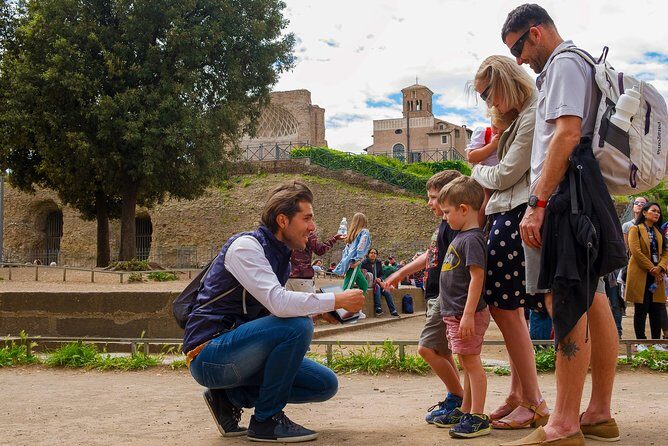
This is a guided experience in the way that matters on busy days: you’re not left to wander with only a vague map. Your guide’s job is to connect what you’re seeing to what it meant, and this tour includes headsets for guided tours so you can hear clearly.
The human factor is huge here. The reviews attached to this experience repeatedly highlight guides by name—Laura, Patrizia, Alberto, Viola, Donatella, Riccardo/Ricardo, Ahmet, Sylvia, and Eddy show up often. Across those comments, the common thread is that the guide helped people understand what the sites were and made time for questions.
There’s also a realistic angle to keep in mind. In one less-great experience, the pacing felt too static for a portion of the Colosseum visit. And in another, the guide’s English was described as harder to follow due to a strong accent. Those are not “tour-killer” issues, but they are the kind of things worth knowing if you are sensitive to audio clarity and pacing.
Price and Value: What You’re Actually Paying For
The price is listed at $59.28 per person, and the experience includes timed entry to the Colosseum plus the Forum & Palatine. The value is stated as €18 per person, or €24 per person if you add arena access. On top of that, there’s a reservation fee listed as valued at €2 per person.
That’s the useful way to think about value: your money isn’t only going to the ruins. Some of it goes to timed-entry tickets and reserved access, and the rest covers the service layer—organization, guide time, and how the route is handled.
Because this is a set route for a set duration, it can be a good match for first-timers. You save the mental work of planning which entrance to use, which stops matter most, and how to sequence them in a reasonable walking loop.
Who Should Book This Tour (and who might prefer to go slower)
Book this if you want:
- the Colosseum, Forum, and Palatine in one efficient sweep
- a guided story that helps ruins feel coherent
- a plan that keeps you moving without full-day commitment
You should also book with realism if:
- you’re comfortable with extended walking and staircases
- you can handle uneven ground
- you’re okay with short stops where you take photos fast and move on
One review perspective that matters: even when the weather is only warm rather than scorching, the combination of sun, crowds, and stairs can leave you tired by the end. If you have limited stamina, consider splitting the experience into smaller pieces rather than trying to cram everything into one session.
Should you book this Colosseum, Forum and Palatine timed-entry tour?
Yes, if you want the most efficient way to do the big three. The timed entry is the practical win, and the guided audio through headsets is what turns the ruins into a clear narrative instead of scattered sightseeing.
Skip it or consider a different format if you hate stairs, dislike heat exposure, or you prefer long lingering time in one place. Also, if you’re booking the audioguide/app option instead of a live guide, make sure you’re comfortable downloading the app and using your own smartphone and earphones.
If you can choose a morning time slot, do it. You’ll usually get a calmer start and a better chance to enjoy the Colosseum before the crowds feel thick.
FAQ
What does the timed-entry include?
Timed entry is included for the Colosseum, plus the Roman Forum & Palatine. Arena floor access is only included when you select that option at booking.
How long is the tour?
The tour runs about 3 hours (approximately).
Is there an English option?
Yes, the experience is offered in English.
Where does the tour start and end?
The tour starts at Arch of Constantine (meeting point listed near Piazza del Colosseo, 00184 Roma). It ends at Palatine Hill (Via di S. Gregorio, 30, 00186 Roma), with the tour ending around Palatine Hill.
Will I be able to hear the guide clearly?
If you book the guided tour option, headsets are included for clear audio guidance.
Is arena floor access included automatically?
No. Arena floor access is only included if you select the option during booking.
How much walking and standing should I expect?
Expect extended periods of walking and standing on varied terrain, including several staircases. The tour is recommended for individuals comfortable with this activity level.
Can I bring luggage or large bags?
No. It is not possible to enter the venues on this tour with luggage or large bags.
If I choose the audioguide option, when do I get the app?
If you choose an audioguide app option, a link is provided one day prior to your entry ticket date to download the app. If you chose an option with access code sent 24 hours before start time, you will receive that code 24 hours before. The app requires a smartphone and earphones.
What if the Colosseum closes due to weather?
If the Colosseum closes unexpectedly due to inclement weather, you’ll be offered a change of date or a full refund.