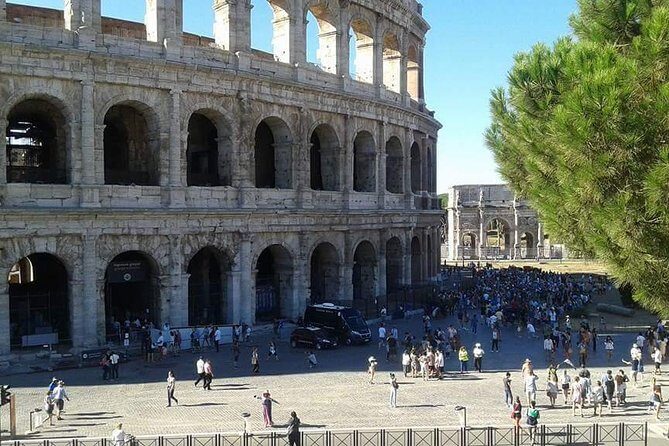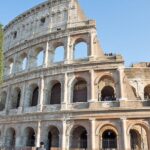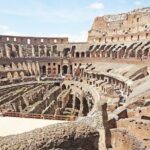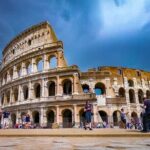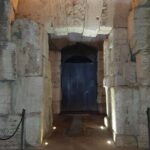
Your first look at the Colosseum changes everything. This guided tour adds the Hypogeum underground tunnels and the arena floor area most people never see. Then you keep moving into the Roman Forum and up to Palatine Hill.
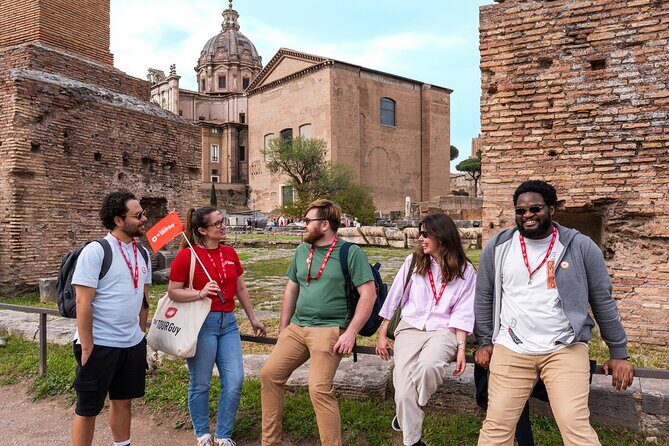
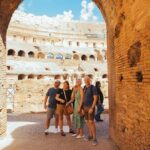
What I really like is the pacing and the setup: with a max of 7 people and headsets, it stays conversational instead of chaotic. And the local guide storytelling can turn ruins into scenes, like the way guides such as Ginny, Claudia, or Silvia bring the gladiator-era details into focus.
One thing to consider: the ticket is non-refundable, and the route calls for moderate physical fitness, with time spent walking through corridors and uneven historic ground.
In This Review
- Key highlights you’ll care about
- Entering the Colosseum from the right angle
- The start point: easy meeting, clear direction
- Going underground: the Hypogeum tunnels and waiting rooms
- What to expect physically
- Photo note
- Arena floor access: the sand platform and the Gate of Death
- A practical tip for better photos
- The Roman Forum: politics, ceremonies, and everyday Rome
- Watch for walking time
- Palatine Hill: where founders, emperors, and legends overlap
- Why the small group (max 7) matters in real life
- Time management: what 2h30 feels like
- Price and value: is $98.90 a good deal?
- Who this tour suits best
- Quick practical advice before you go
- Should you book this Colosseum Underground + Arena Floor tour?
- FAQ
- How long is the Colosseum Underground and Arena Floor guided tour?
- What is included in the price?
- How many people are in the group?
- Do I get a mobile ticket?
- Where do I meet the guide?
- What parts of the Colosseum will I see?
- What kind of fitness level is required?
- Can I get a refund if I cancel?
Key highlights you’ll care about
- Hypogeum access: narrow corridors, travertine blocks, and the Colosseum’s behind-the-scenes spaces
- Arena floor moment: sand-covered central platform where fights took place, plus major photo angles
- Gate of Death photo opportunity: a dramatic entrance that makes your pictures feel like a movie still
- Roman Forum + Palatine Hill included: political power center and legendary birthplace area in one guided run
- Small group comfort: max 7, so you can actually hear the guide through the headsets
- Flexible viewing time after: the tour is structured so you can continue exploring afterward if you want
Entering the Colosseum from the right angle
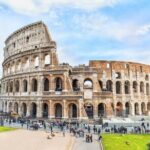
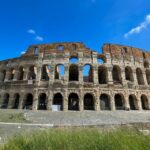
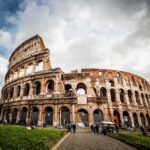
This is not the typical Colosseum stroll where you mostly stay at one viewing level and scan for the next big photo. The big idea here is access: you get into the underground Hypogeum and then you step onto the arena floor. That changes how the building feels, because you see the staging areas and movement spaces that made the show work.
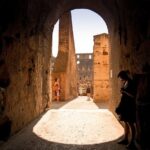
The vibe is part history, part atmosphere. The underground level is all narrow passages and stone blocks, the kind of space where it’s easy to imagine how people moved quietly before a spectacle erupted above. If you like your Rome visits to feel practical and grounded in real building function, this tour does that.
More Colosseum Underground tours for the Colosseum & Ancient Rome
The start point: easy meeting, clear direction
You meet at Largo della Salara Vecchia (near the Colosseum area). This is a helpful choice because you’re already in the neighborhood where the Forum and Palatine Hill are reachable without a complicated transit shuffle.
The tour ends at Piazza del Colosseo, 1. That’s handy if you want to keep wandering after the guided portion ends, since you’ll be near the center of the action.
Going underground: the Hypogeum tunnels and waiting rooms
The first main Colosseum segment is the Hypogeum, the underground level that served as the behind-the-scenes staging area for the Flavian Amphitheatre. This is the part of the Colosseum that most first-time visitors never reach, mostly because standard visiting routes don’t include it.
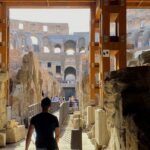
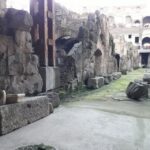
Here’s what makes it special: you move through corridors that feel tight and enclosed, then pause in spaces where you can see key physical features of the complex. You’ll notice large blocks of travertine, plus evidence of the ancient drainage system that helped manage the arena environment. That kind of detail matters because it explains how a huge event could run with water and performance logistics under control.
You also spend time in the areas described as waiting spaces—rooms where gladiators and the show’s supporting elements would be positioned before appearing above. The guide narration is what stitches it together. Even when the underground light is dim, you’ll better understand why the building was designed like a machine, not just a monument.
What to expect physically
This isn’t a sit-down museum tour. Plan for a moderate amount of walking and standing, with time in passages and stair sections that can feel tight. If you’re someone who gets uncomfortable in narrow indoor spaces, it helps to know that the underground is exactly that kind of environment.
Photo note
Underground photo lighting can be tricky, especially if you’re hoping for bright, crisp shots. I’d plan on using your camera for compositions that work with the darker setting, not for flash-heavy shots.
More Arena Floor & Gladiator tours for the Colosseum & Ancient Rome
Arena floor access: the sand platform and the Gate of Death
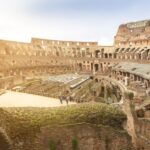
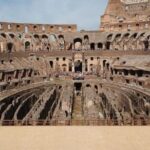
After the underground, you move to the arena floor, the central sand-covered wooden platform where fights took place. Seeing the arena at ground level is a different experience than looking down from above. The Colosseum becomes an arena again, not just a big oval-shaped building.
One of the strongest moments is the access through the Gate of Death. Even if you’ve seen photos of this spot, having your feet on the same level makes it feel more immediate. Get your camera ready here—this is one of the best chances to frame dramatic shots that make sense without heavy imagination.
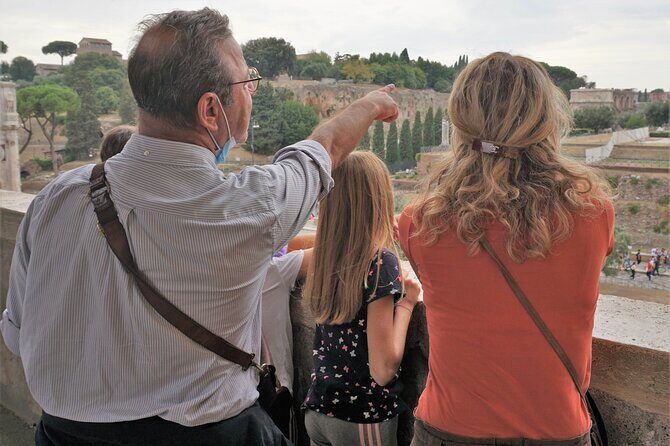
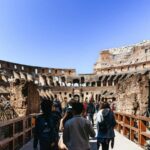
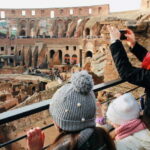
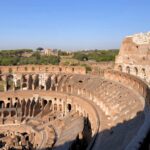
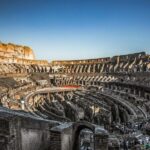
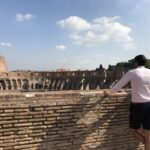
Then you’ll also have a standout panoramic viewing chance from the terrace areas. The views are excellent because you’re positioned to match how spectators once experienced the venue: wide sightlines, the full sense of scale, and that classic Colosseum look that people travel for in the first place.
A practical tip for better photos
Keep your phone/camera organized between stops. You’ll be moving from underground to open-air spaces and then into terrace angles. If you’re fiddling with gear every time you change levels, you’ll lose prime photo seconds.
The Roman Forum: politics, ceremonies, and everyday Rome
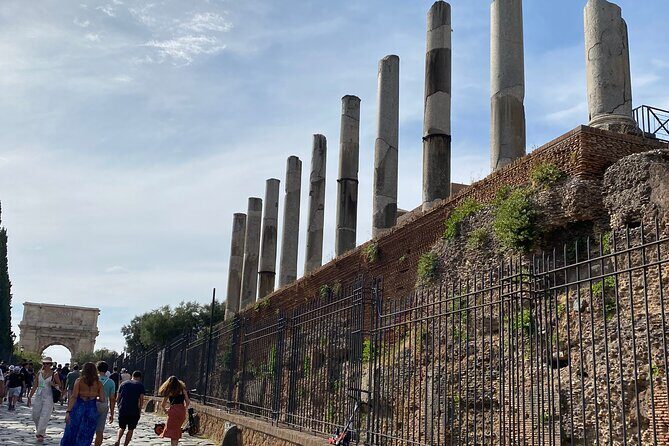
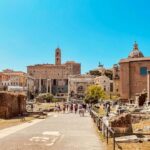
The tour doesn’t stop at the Colosseum. It continues into Roman Forum territory and focuses on what that space meant. The Forum wasn’t just decorative ruins—it was the political, administrative, and social center of Rome. Today it reads like a patchwork of archaeology, but the guide framing helps you see the logic of daily life and power.
You’ll cover public spaces, sacred temples, and market areas—plus the feel of how Romans moved through religion, politics, and commerce in the same zone. You’ll also spend time around areas tied to major trials and oratory—spaces associated with public speeches and high-stakes civic debate.
There’s also a religious procession angle through the Sacred Way, where you can picture the ceremonial movement that shaped public rituals. The big win here is that you’re not just staring at columns and arches—you’re learning what kind of city this was, and how people used it.
Watch for walking time
The Forum area has plenty of uneven ground. It’s manageable, but if you’re wearing shoes meant for a city dinner instead of stone paths, you’ll feel it by the end.
Palatine Hill: where founders, emperors, and legends overlap
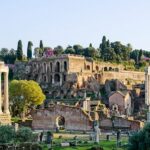
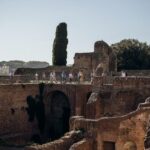
Your final history segment is Palatine Hill. This is where the story of Rome’s founding is tied to Romulus in the traditional timeline. It’s also tied to the lives of major figures—Mark Antony, Cleopatra, Julius Caesar—and to the reality that emperors built luxurious residences here.
What I appreciate about finishing on Palatine Hill is the shift from public civic space to lived power. On the Forum side, you focus on collective life. On the hill side, you start to feel the contrast of status, residence, and the daily rhythms of rulers.
The ruins can feel scattered, but your guide’s navigation keeps the big picture intact. You’re not left with random walls—you get a sense of what the space was for, and why it matters in the broader story of Rome.
Why the small group (max 7) matters in real life
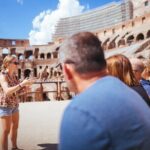
A group capped at 7 changes the experience more than you might think. In big crowds, you spend time waiting and squeezing. Here, you get a calmer flow through rooms and corridors, with fewer obstacles for your guide to keep everyone together.
The headsets also make a measurable difference. Colosseum spaces aren’t quiet, and outdoor wind or crowd noise can swallow conversation. With the audio support, you can focus on what you’re seeing instead of constantly trying to catch the guide’s voice.
And because the pacing is planned for these specific access points, the tour stays long enough to hit essentials without turning into a marathon. At around 2 hours 30 minutes, it’s a strong “Rome core” experience that still leaves you enough energy to continue exploring on your own after.
Time management: what 2h30 feels like
This is a tour with multiple distinct zones: underground Colosseum, arena floor, then Forum and Palatine Hill. That might sound like you’ll be rushed, but the structure is built to keep each segment from overstaying.
- The underground portion gives you time to see key spaces, not just walk through them.
- The arena floor visit gives you that crucial ground-level moment plus photo time.
- The Forum and Palatine Hill sections focus on meaning and major sites instead of exhausting every corner.
If your plan in Rome is also packed with other big stops, this one fits well because it covers the two “must-do” ancient anchors plus the Colosseum’s most important layers.
Price and value: is $98.90 a good deal?
At $98.90 per person, this isn’t the cheapest way to see Rome’s top landmarks. But you’re paying for access that’s harder to replicate on your own.
The value comes from three things the price covers:
- Underground Hypogeum entrance (rare compared to standard routes)
- Arena floor entrance (the ground-level perspective is hard to get elsewhere)
- Roman Forum and Palatine Hill entrance plus a guided local official
The guide time and the headset setup also count. For many people, the cost makes sense because you’re buying fewer tickets to manage and fewer decisions mid-day. You’re also buying clarity: the storytelling helps you understand what you’re looking at instead of guessing.
One more value angle: availability. This is the kind of tour that’s often booked ahead—on average, about 93 days in advance—so being late can mean losing your shot at these exact access points.
Who this tour suits best
This tour is a great fit if you want more than a standard Colosseum visit. If you love the idea of seeing the building as a working stage—tunnels, staging areas, and the arena platform—this format really delivers.
It also suits people who prefer a guided day without dragging a group through too many separate locations. The max group size keeps it friendly, and the audio support helps the guide keep momentum.
If you’re someone who hates crowds and wants a calmer pace, this is one of the better ways to do it in the area. If you’re planning to do only one big ancient-history guided experience, this is strong because it ties together Colosseum, Forum, and Palatine Hill.
Quick practical advice before you go
A few small things will make your day easier:
- Wear comfortable shoes with good grip on stone and uneven surfaces.
- Expect tight spaces underground and plan for slow, careful footing.
- Bring a charged phone/camera for terrace photo angles and the Gate of Death moment.
- If you’re sensitive to heat, plan your day so you’re not stacking too much sun exposure at midday.
Also, check your timing. The tour runs about 2h30, so it’s worth building your schedule around it instead of trying to cram a second major timed stop right after.
Should you book this Colosseum Underground + Arena Floor tour?
If you’re serious about getting the most out of the Colosseum, I think you should book it—especially because Hypogeum + arena floor access is the core difference. The Roman Forum and Palatine Hill additions make it feel like a complete ancient Rome day, not just a single stop.
But if you’re budget-first or you’re worried about underground corridors and moderate walking, you might decide to do the standard Colosseum visit instead. Either way, know what you’re paying for: this ticket is really about getting into the building’s performance spaces, then linking that to the civic heart of Rome.
FAQ
How long is the Colosseum Underground and Arena Floor guided tour?
The tour runs about 2 hours 30 minutes.
What is included in the price?
The price includes headsets, Colosseum Underground entrance, Roman Forum and Palatine Hill entrance, the guided tour with a local official guide, and arena floor entrance fees.
How many people are in the group?
This experience has a maximum of 7 travelers.
Do I get a mobile ticket?
Yes, the tour uses a mobile ticket.
Where do I meet the guide?
The meeting point is Largo della Salara Vecchia, 00186 Roma RM, Italy.
What parts of the Colosseum will I see?
You’ll access the Hypogeum underground level, the arena floor, and you’ll also visit the first and second tiers with panoramic terrace photo opportunities.
What kind of fitness level is required?
The tour calls for a moderate physical fitness level.
Can I get a refund if I cancel?
No. This experience is non-refundable and cannot be changed for any reason.