REVIEW · ROME
3-Hour Colosseum Gladiator’s Arena and Ancient Rome Tour
Book on Viator →Operated by Smart Ways Tours · Bookable on Viator
If you want Rome’s biggest ruins with real access, this is the kind of tour that pays off fast. You get guided time inside the Colosseum, including the arena floor, plus two more power stops: the Roman Forum and Palatine Hill. It’s built for people who want more than top-of-the-wall sightseeing.
I especially like that you don’t just read about the Colosseum—you stand where the action happened. Walking on the arena and seeing the upper level with a guide makes the whole place click. I also like the time efficiency: three historic sites in about 3 hours without feeling totally rushed.
One possible drawback: the experience depends on how well the guide’s explanations land for you. One earlier review flagged organization and keeping focus, even though the guide knew the material, so if you need highly structured narration, come ready to ask questions.
In This Review
- Key highlights to know before you go
- Entering the Colosseum With Real Arena Access (Not Just the Outside)
- Meeting point and first 15 minutes: how to avoid the stress
- Colosseum tour flow: upper level, lower level, then the arena
- The gladiator walk: how to make the most of your one-floor moment
- Roman Forum in 40 minutes: the city’s center, explained fast
- Palatine Hill and Caesar’s Palace: why this stop matters
- Price and value: what you’re really paying for
- Guide style can make or break the experience
- Logistics that affect timing: security and fast entry
- Who should book this tour, and who might prefer something else?
- Should you book the 3-Hour Colosseum Gladiator’s Arena and Ancient Rome Tour?
- FAQ
- How long is the tour?
- Where does the tour start and end?
- Is the Colosseum ticket included?
- Do I need a passport?
- What items can’t I bring into the Colosseum?
- Will the tour always follow the same order?
- Is food included?
- What group size should I expect?
- What happens if the tour is canceled due to weather?
Key highlights to know before you go
- Arena access: you’ll walk on the Colosseum floor in a gladiator-style moment
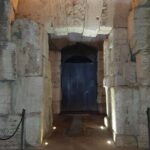
- Usually off-limits areas: upper and lower level guided access goes beyond the basics
- Three sites, one flow: Colosseum + Roman Forum + Palatine Hill in one tour block
- Small group: maximum 24 travelers, so you’re not lost in a crowd
- Ticket value built in: arena-access admission and reservation fees are included
- Bring your documents: a passport copy is mandatory, and your name must match your ID
Entering the Colosseum With Real Arena Access (Not Just the Outside)
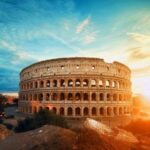
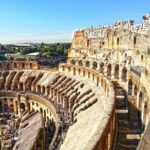
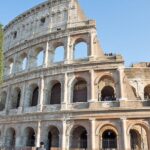
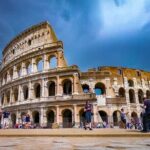
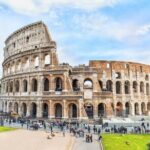
The Colosseum is one of those places where the outside view can fool you. It looks like a monumental shell, then you step inside and realize it was built for spectacle—tight sightlines, dramatic entrances, and a whole system for moving people and noise. This tour aims to change your understanding in a single visit.
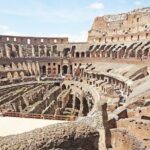
You’ll start with a guided Colosseum visit lasting about 1 hour 35 minutes, with admission tied to arena access. That matters, because most self-guided visits don’t get you onto the floor, and they often skim what’s happening at different levels. Here, you’re guided through the upper level and the lower levels, so you’re seeing the site in layers rather than snapshots.
Also, the experience is designed to help you “read” the building. A good guide can point out where the crowd would face, where certain views align, and how different tiers created the theater effect. Even if you’ve studied Roman history before, this kind of spatial explanation is what makes the Colosseum feel real.
More Ancient Rome tours for the Colosseum & Ancient Rome
Meeting point and first 15 minutes: how to avoid the stress
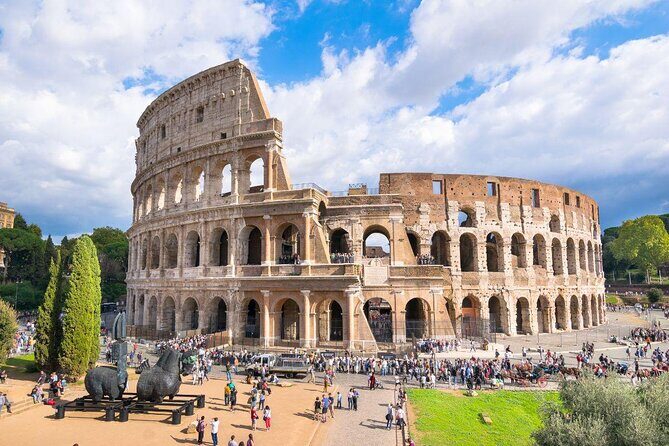
This tour meets at P.za del Colosseo, 23, 00184 Roma RM, Italy. Your guide waits holding a sign that says SMART WAYS TOURS, and the instructions are clear: arrive 15 minutes early. That buffer matters because Roman site entrances can be chaotic, and you don’t want to lose time fighting crowds before the tour even begins.
You’ll also want your paperwork ready. A passport copy is mandatory, and your tour ticket has to match your full name exactly. The rules are strict enough that if your names don’t match what’s on the voucher, entry to both the Colosseum and Roman Forum can be denied—so double-check spelling before you ever leave home.
Finally, pack smart for security rules. Big backpacks and luggage aren’t allowed inside the Colosseum, and there are bans on items like selfie sticks, knives, guns or cutters, and flammable sprays. Even if your plan is just to carry a small daypack, it helps to keep it light so security goes smoothly.
Colosseum tour flow: upper level, lower level, then the arena
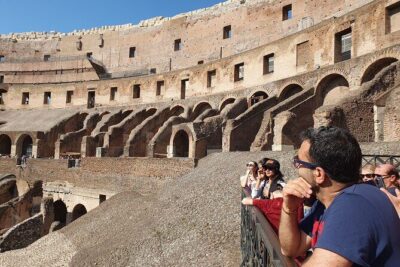
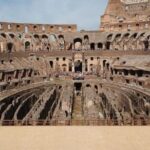
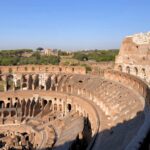
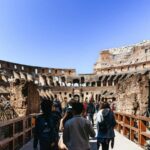
Inside the Colosseum, you’ll move through two different “reads” of the building: height and ground. The tour includes the upper level, which is where you get context for how the arena was framed and how different seating areas related to one another.
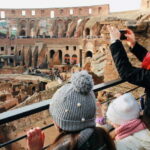
Then you get the part that most people came for: the arena floor. Walking onto the arena changes your mental picture immediately. From the outside, the building looks like stone. From the floor, it looks like infrastructure—messy, practical, and built for movement, sound, and drama.
This is also where a guide helps you avoid the most common Colosseum mistake: treating the whole ruin like one flat exhibit. Instead, you’ll learn to connect levels to views. You’ll see how the space channels attention toward the center, and you’ll understand why certain architectural choices made the spectacle feel closer.
The gladiator walk: how to make the most of your one-floor moment
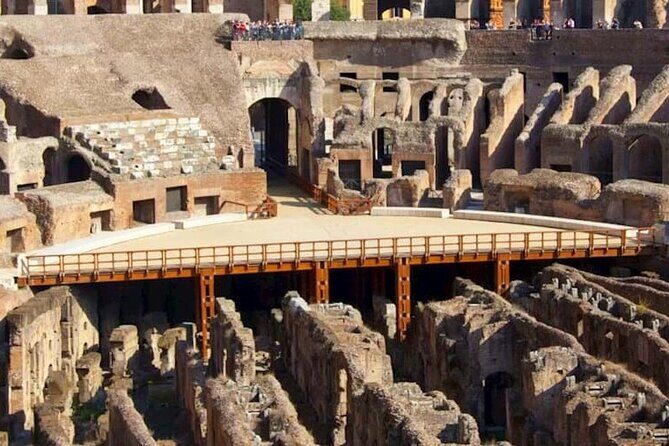
The arena access is the headline, but your payoff comes from what you do in that short window. When you’re on the floor, take a few minutes to look back up and notice how the seating tiers shape the “stage.” That perspective is what makes the gladiator theme more than a photo prop.
The tour is built to deliver a real experience, not just a walk-through. You’ll be guided to key parts and likely get the kind of commentary that turns generic facts into mental images—how the space would function during events and what visitors would experience from different angles.
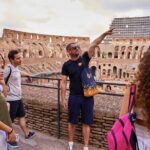
If you’re traveling with teens or kids, this is also one of the easier “buy-in” moments. The arena floor is a natural attention magnet, and the guide style can make a huge difference. One guide named Mido was specifically praised for being professional, enthusiastic, and funny, and that kind of delivery is exactly what keeps a short tour from feeling like a lecture.
Roman Forum in 40 minutes: the city’s center, explained fast
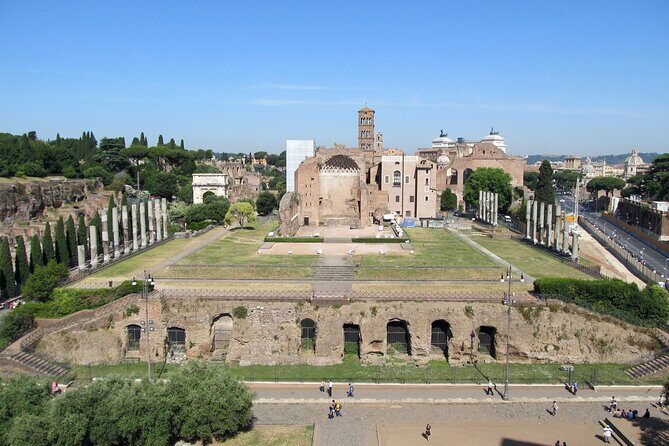
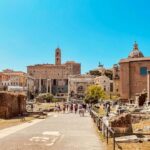
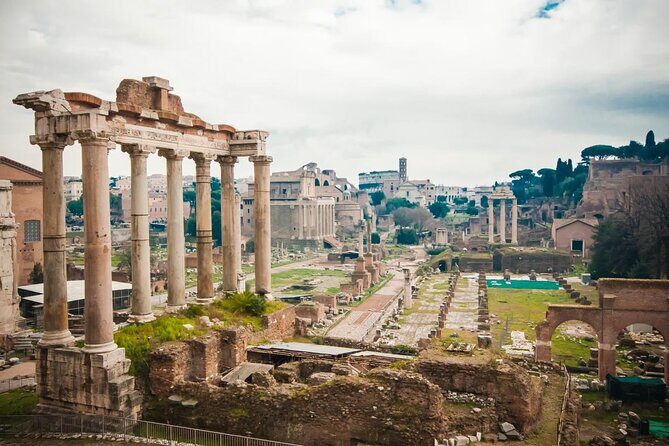
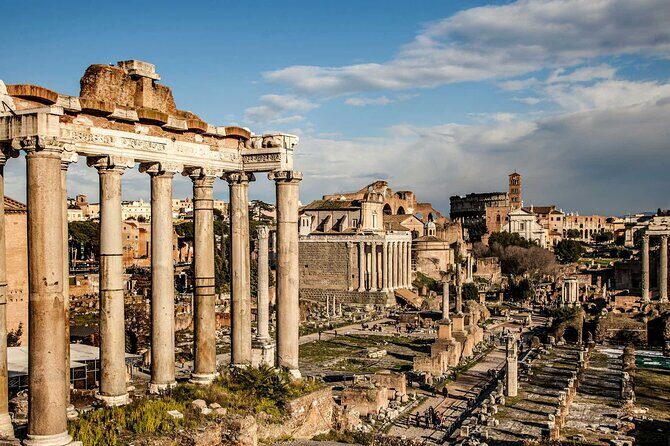
After the Colosseum, you head to the Roman Forum for about 40 minutes. Think of this as the political and social hub of Ancient Rome—a cluster of ruins where you can still feel how public life would have worked: speeches, laws, ceremonies, daily power, and status.
In a self-guided visit, the Forum can feel like scattered stone. In a guided format, you get structure. Your guide helps connect the dots between buildings and functions so you understand what you’re looking at instead of just trying to guess.
Forty minutes is not a lot, so the tour’s strength here is its focus. You won’t have time to wander aimlessly, but you will leave with a clearer sense of how the Forum served as Rome’s central meeting point. If you’ve ever felt overwhelmed by the number of ruins, this time-boxed stop is a relief.


Palatine Hill and Caesar’s Palace: why this stop matters
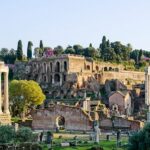
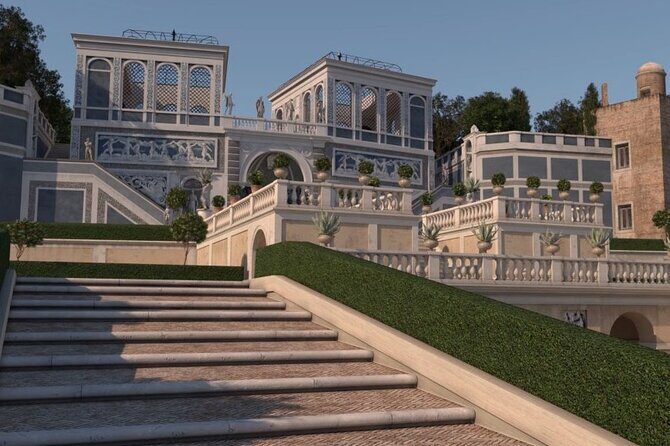
Next up is Palatine Hill for about 40 minutes, including seeing Caesar’s Palace. Palatine Hill is famous for status and power—this is where Rome’s elite connections and authority were concentrated. Seeing it right after the Forum helps you connect the dots: politics and public life down below, prestige and dominance up high.
This stop is also great for perspective. From Palatine, you can better imagine the vertical logic of power—who had access, who controlled space, and why certain views would matter. A lot of Rome’s “meaning” comes from the way different areas relate to each other, and this tour stacks those relationships in the right order.
Again, time is short, so focus on getting your bearings and learning what to notice. If you leave Palatine Hill with even a basic understanding of who lived where and why, you’ll feel like the whole day made sense.
Price and value: what you’re really paying for
At $90.31 per person for about 3 hours, the headline price can look steep if you only compare it to the cost of entry tickets. The value kicks in when you break down what’s actually included.
You get an arena-access Colosseum ticket (valued at €24 per person) plus a Colosseum reservation fee (valued at €2 per person). That covers only part of what you’re buying. The rest of the cost goes toward guides, timed entry handling, and the guided stops at the Roman Forum and Palatine Hill.
In practice, this means you’re paying for two things that Rome can be unforgiving about:
1) Time and organization at major entrances
2) Guided interpretation that makes the ruins easier to understand fast
If you’re the type of visitor who likes to read a plaque and walk around on your own, you might feel this is extra. If you want the Colosseum experience to feel “alive” instead of like a pile of rocks, this tour format usually makes more sense—especially with arena access.
Guide style can make or break the experience
The guide is a big variable here, and the pattern is clear from feedback: when the guide has energy and good delivery, the tour feels like it flies by.
One guide named Christina was praised for being enthusiastic and for doing an excellent job—people felt they saw everything they wanted and more. Another positive review highlighted guide Mido again, with an emphasis on professionalism, humor, and how the time passed quickly.
But there was also one lower-rating experience where organization and clarity seemed to struggle, even though the guide knew the history. That’s the one drawback to keep in mind: your enjoyment can depend on pacing and communication.
My practical advice: if you’re the type who learns best by asking questions, come ready with one or two things you want answered (like what the upper level was used for, or how the arena functioned). A good guide will meet you there.
Logistics that affect timing: security and fast entry
This tour is often described as having quicker entry, but Rome still runs on real-world security. Police control and metal detector checks can slow the fast-track entrance, so don’t build a strict schedule that assumes instant entry.
You’ll also want a working phone, since the guidance recommends having an on-the-road cell phone. If you need help finding the group, texting platforms like iMessage, WhatsApp, or Viber can be useful for quick communication. Even if you don’t plan to use it, it’s a sensible habit for crowded meeting points.
One more planning note: the order can switch. The itinerary can run Roman Forum then Colosseum, or vice versa, and it may change if local authorities impose restrictions. That flexibility is normal for Rome’s big-ticket sites, and it’s one more reason arriving early helps you adapt.
Who should book this tour, and who might prefer something else?
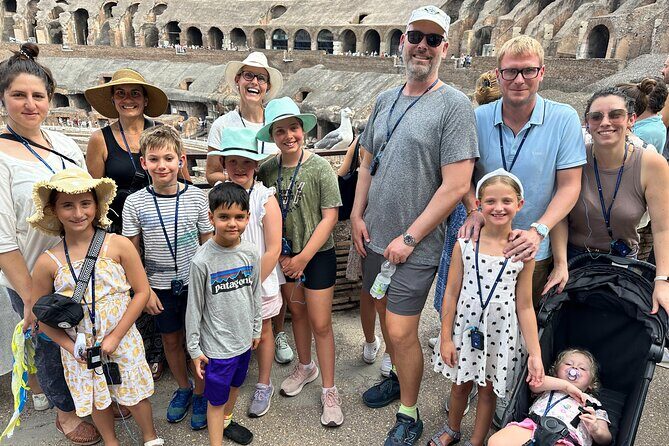
This is a strong fit for people who want the Colosseum in a short time block, with arena access and clear guided context. It’s also a good choice for families, especially when you want kids to stay engaged through a mix of action (arena) and story (Forum and Palatine).
It’s less ideal if you need maximum freedom to linger in silence at every corner. You only get about 40 minutes at each of the Forum and Palatine Hill stops, so you’ll move. That’s the tradeoff for seeing three big sites in one go.
Should you book the 3-Hour Colosseum Gladiator’s Arena and Ancient Rome Tour?
If you want the Colosseum with arena access and don’t want to spend your precious time figuring out how to connect the ruins into one story, I think this booking makes sense. The included ticket value plus guided time at the Forum and Palatine Hill is where the money should feel justified.
Before you commit, check your readiness for the rules: keep your bag small, plan around security, and make sure your passport name matches your booking. If you’re sensitive to pacing or you prefer a very structured lecture style, you might want to choose your expectations carefully and bring a couple of questions.
Bottom line: book it if you want a high-impact Rome morning that turns the Colosseum into a real place you can picture.
FAQ
How long is the tour?
The tour runs about 3 hours (approx.), with 1 hour 35 minutes at the Colosseum, then about 40 minutes at the Roman Forum, and about 40 minutes at Palatine Hill.
Where does the tour start and end?
It starts at P.za del Colosseo, 23, 00184 Roma RM, Italy and ends back at the same meeting point.
Is the Colosseum ticket included?
Yes. Your Colosseum entrance ticket with arena access is included, along with the Colosseum reservation fee.
Do I need a passport?
A passport copy is mandatory, and you must present a valid passport or ID document that matches the name provided at booking for entry to the Colosseum and Roman Forum.
What items can’t I bring into the Colosseum?
Big luggage and backpacks are not allowed. The tour also notes restrictions on items such as flammable sprays, selfie sticks, knives or any kind of guns or cutters, even with a license.
Will the tour always follow the same order?
Not necessarily. The tour may start with the Roman Forum and then move to the Colosseum, or vice versa, and the order can change due to local authority restrictions.
Is food included?
No. Food and drinks are not included.
What group size should I expect?
This tour has a maximum of 24 travelers.
What happens if the tour is canceled due to weather?
This experience requires good weather. If canceled due to poor weather, you’ll be offered a different date or a full refund.