REVIEW · ROME
Rome: Colosseum, Forum and Palatine Hill
Book on GetYourGuide →Operated by BIBBO TOURS · Bookable on GetYourGuide
Three sites, one smart time-saver. With a licensed guide, this skip-the-line circuit through the Colosseum, Roman Forum, and Palatine Hill turns scattered ruins into one clear story; I love the headsets and the separate entrance that gets you moving faster.
The only real drawback is time: this is a tight 2.5-hour route, so you won’t have endless minutes to linger where you’d want most.
In This Review
- Key highlights to look for
- Why this Colosseum–Forum–Palatine route is a smart use of your day
- Meeting point reality: Fontana del Colosseo or Caffè Roma
- Entering the Colosseum: first floor views and arena-level context
- A small caution about crowds
- Roman Forum: where politics, commerce, and religion overlap
- Palatine Hill: imperial palaces, legends, and city views
- The guides make the difference: Marcello, Ricardo, Laura, and Claudia
- What you really get for the price ($126.88 per person)
- Pace and group size: why the “2.5 hours” feels manageable
- Practical stuff before you go: ID, rules, and what to pack
- Who should book this guided tour?
- Should you book this tour?
- FAQ
- How long is the Colosseum, Forum, and Palatine Hill tour?
- What’s included in the ticket price?
- Do I skip the line at the Colosseum?
- Where do I meet the guide?
- What time should I arrive?
- What languages are offered?
- What documents and items do I need to bring or avoid?
Key highlights to look for
- Skip-the-line entry so the Colosseum experience starts sooner
- First and second levels of the arena, including where wealthier spectators sat
- Roman Forum and Palatine Hill guided in smaller, story-based chunks
- Clear audio with headsets, helpful in crowded, echoing spaces
- Guides who use visuals to help you picture what you’re seeing
Why this Colosseum–Forum–Palatine route is a smart use of your day
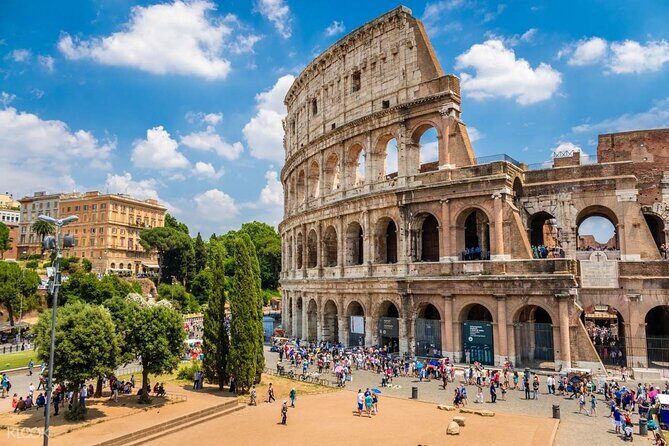
If you only have a limited amount of time in Rome, the Colosseum area can feel like a lot to process. Too many arches, too many viewpoints, and not enough context. What makes this tour work is that it strings the Colosseum, the Roman Forum, and Palatine Hill into one walking story—so the places don’t feel random.
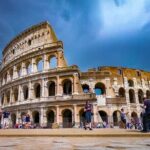
You’re not just looking at stone. You’re hearing how each section connects: the arena where spectacles drew crowds, the Forum as the daily center of public life, and Palatine Hill as a legendary starting point for Rome’s story and home to imperial palaces. That “where you are and why it mattered” framing is the difference between a photo stop and a real understanding of the site.
I also like the practical design. You get headsets, so you can actually follow the guide through the noise and crush. And the separate entrance matters because the Colosseum area is famous for waiting.
More Colosseum, Forum & Palatine combos for the Colosseum & Ancient Rome
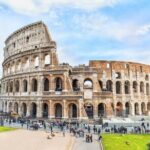
Meeting point reality: Fontana del Colosseo or Caffè Roma
This tour has two possible start points, depending on what you booked: Fontana del Colosseo at Caffè Roma. On paper it sounds straightforward. In real life, it can be a little tricky finding the exact cluster where your group will gather.
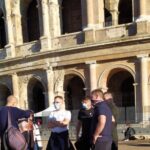
A useful tip: plan to arrive early and give yourself buffer time. You’re expected to be at the meeting point 15 minutes before the start, because arriving after departure can mean you won’t be accommodated. If you’re arriving by taxi, metro, or bus, I’d treat this like an appointment, not a casual meeting.
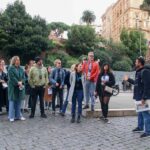
Once you’re there, look for the obvious tour-company signage. Guides and coordinators provide clear pointers in advance (including a flag indicator and location photos), and that helps a lot if the area feels confusing at street level.
Entering the Colosseum: first floor views and arena-level context
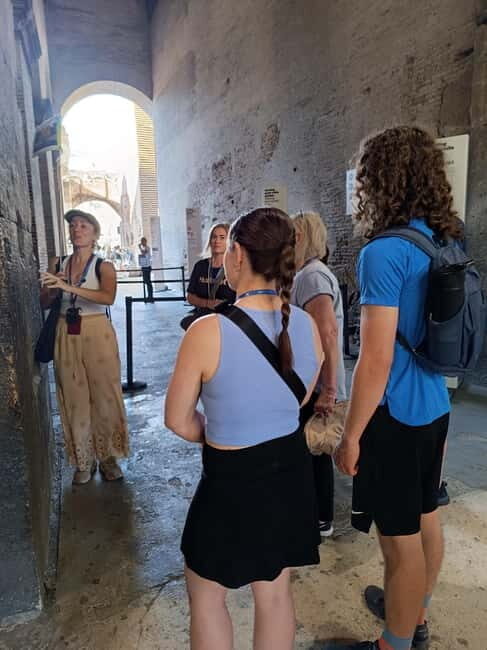
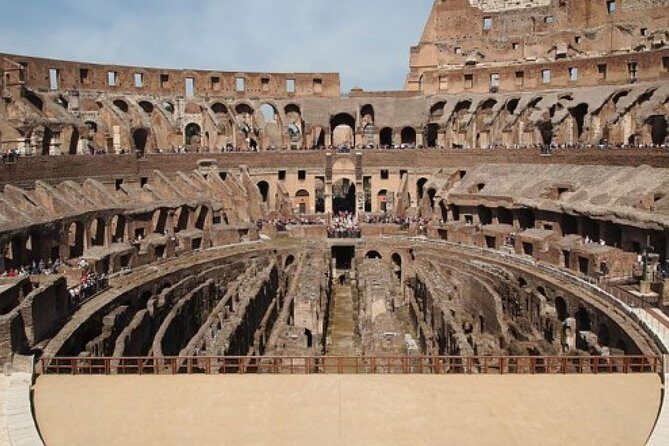
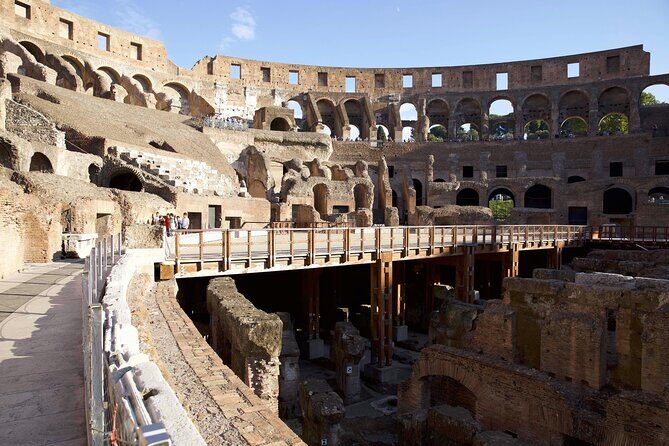
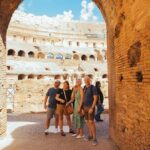
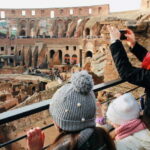
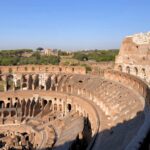
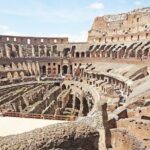
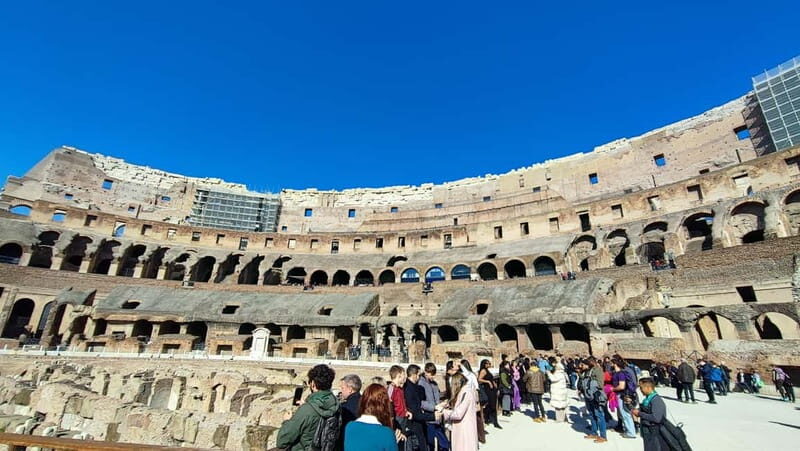
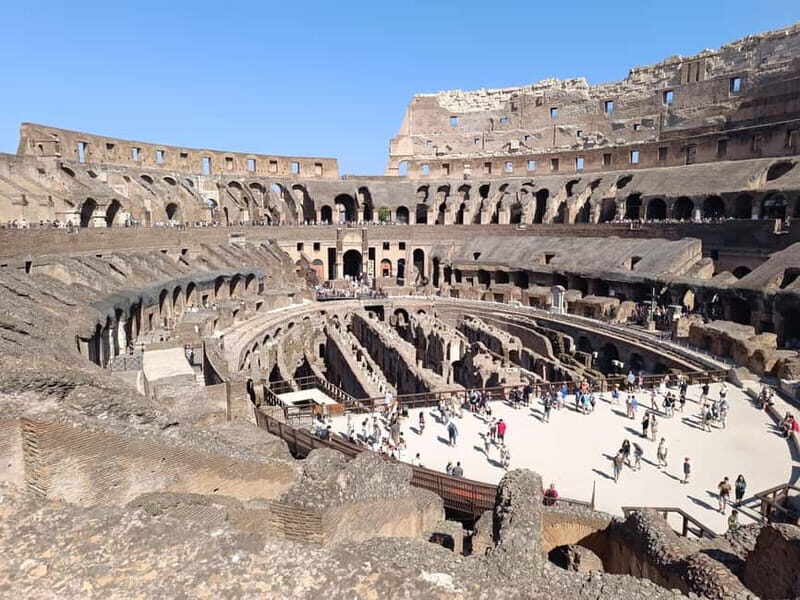
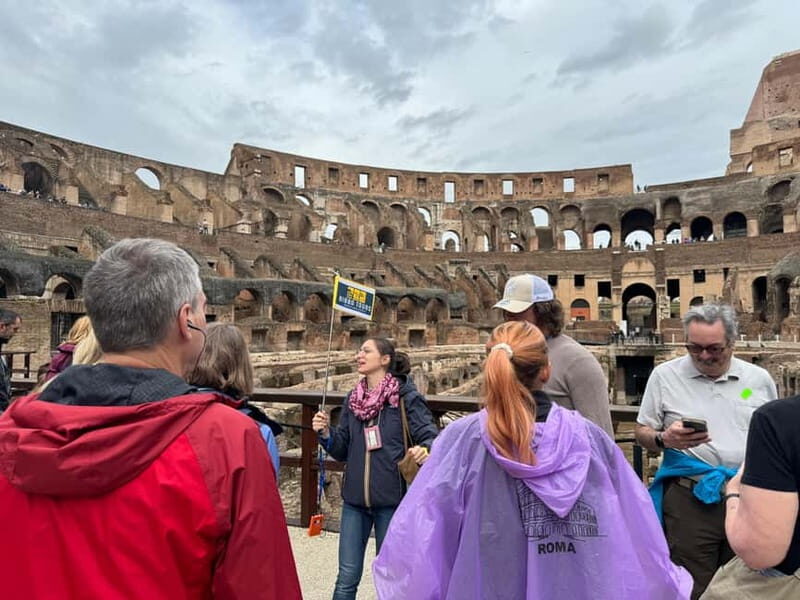
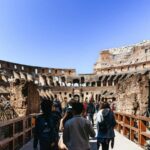
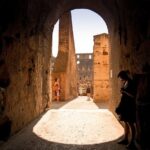
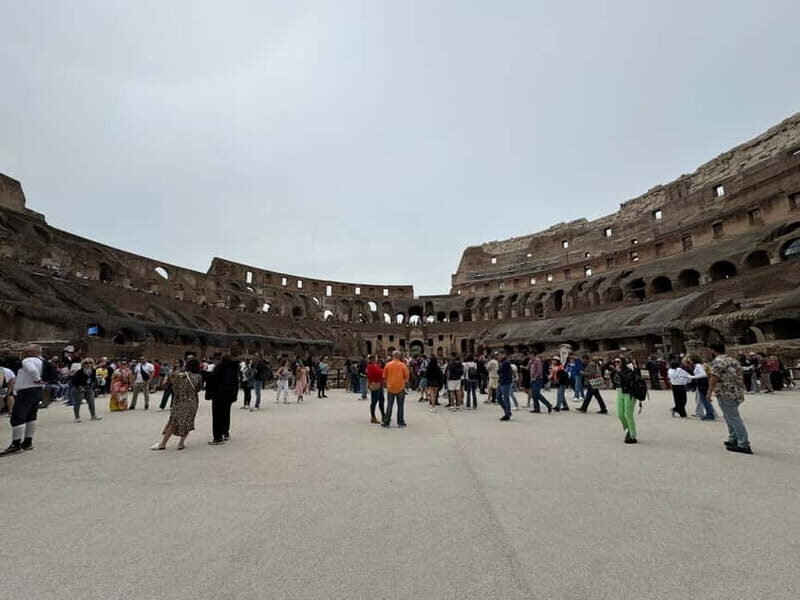
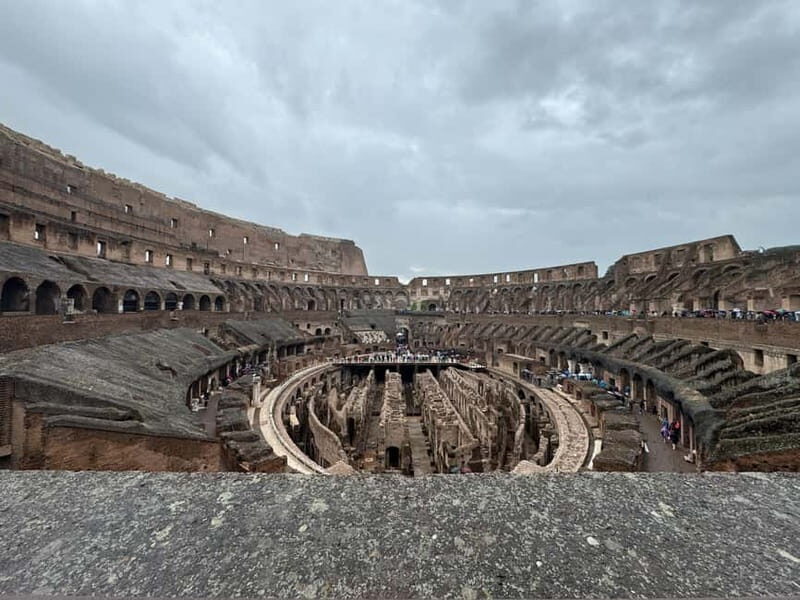
The Colosseum is where this tour starts to earn its keep. You get an organized guided visit through the Colosseum with both first and second levels. That structure is key, because it gives you a sense of how the space was used and how the seating levels relate to the spectacle below.
One of the best parts of this stop is that you’re shown where the wealthiest and most important spectators once sat on the 1st floor. That detail helps you interpret what you’re seeing instead of just staring upward. From there, the tour moves you toward the upper views on the 2nd floor, where the perspective opens up and you can take in the grandeur of the entire area.
The Colosseum can be loud, crowded, and hard to hear over. That’s exactly why the headsets inclusion pays off. With the guide speaking into a microphone system, you can focus on the story rather than straining to understand every sentence.
A small caution about crowds
The Colosseum is busy, period. Even with skip-the-line entry, it’s still a major attraction. The best strategy is to accept that you’ll experience some density and plan to keep moving with your group. Your guide’s pace is designed to keep everyone together and prevent long gaps.
Roman Forum: where politics, commerce, and religion overlap
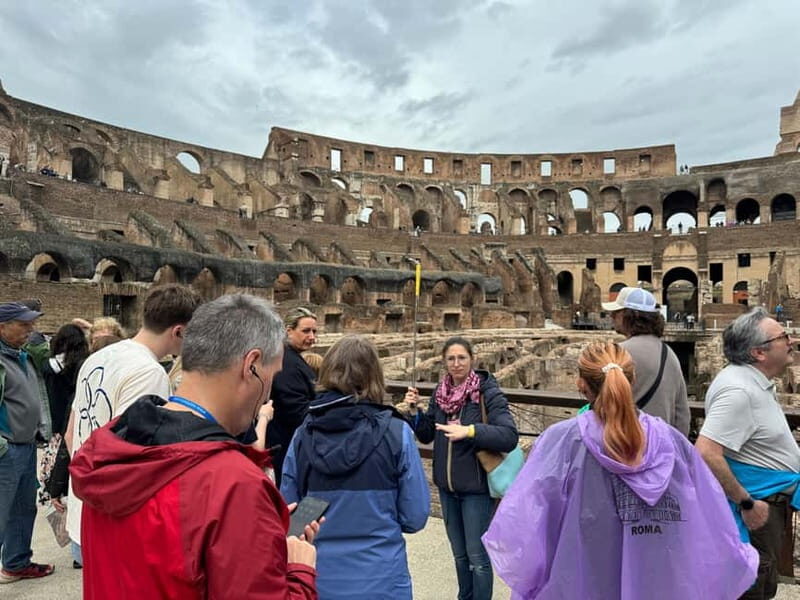
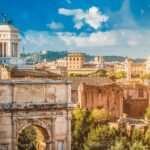
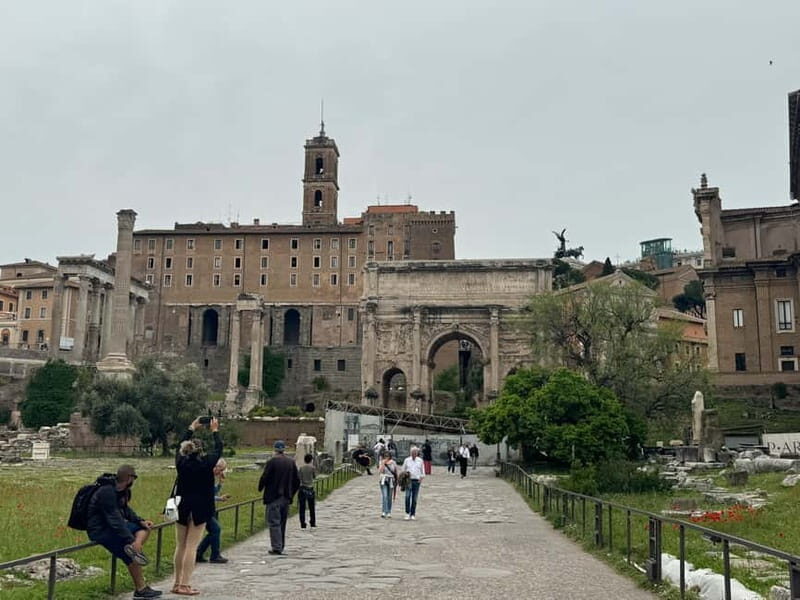
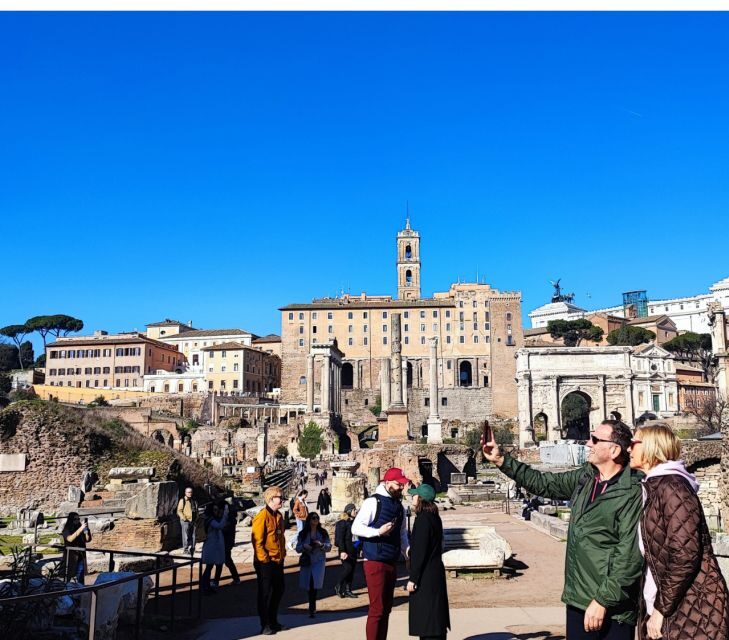
After the amphitheater, the tone changes. The Roman Forum is the “how Rome worked” part of the day. You’re guided through ruins tied to politics, commerce, and religion, which turns the site into more than a set of old temples and monuments.
This stop also tends to reward people who like understanding systems—how public life, power, and everyday routines might have intersected in one central area. Wandering with a guide helps because the Forum is spread out and easy to misunderstand if you’re only working from the ruins’ shapes.
You’ll get a guided tour for about 45 minutes, which is long enough to grasp the big picture without feeling like you’re rushing through it. The trade-off is that if the Forum is your main obsession, you may wish you had extra time. This route prioritizes coverage of all three sites in one outing, which is great for first-timers—and less great if you want a deep, slow day in only the Forum.
More Palatine Hill tours for the Colosseum & Ancient Rome

Palatine Hill: imperial palaces, legends, and city views
Then comes Palatine Hill, the part of the itinerary that feels both dramatic and personal. It’s described as the legendary birthplace of Rome and the home of imperial palaces, so the setting isn’t just archaeological. It carries story.
You’ll tour the archaeological remains and then enjoy breathtaking views of the city from the hill. That viewpoint component matters because it gives you spatial context: you can look out and connect what you’re seeing to the wider city layout.
This stop is shorter—about 30 minutes—which again reflects the overall goal: a balanced sweep of the Colosseum area highlights. It’s enough time to enjoy the mood and the panoramas, but not enough time to fully read every corner at a statue-by-statue level.
If you tend to get “photo tunnel vision,” you’ll want to follow the guide’s rhythm. The best views and the most meaningful viewpoints can happen in quick turns, and skipping one moment can mean missing your best angle.
The guides make the difference: Marcello, Ricardo, Laura, and Claudia
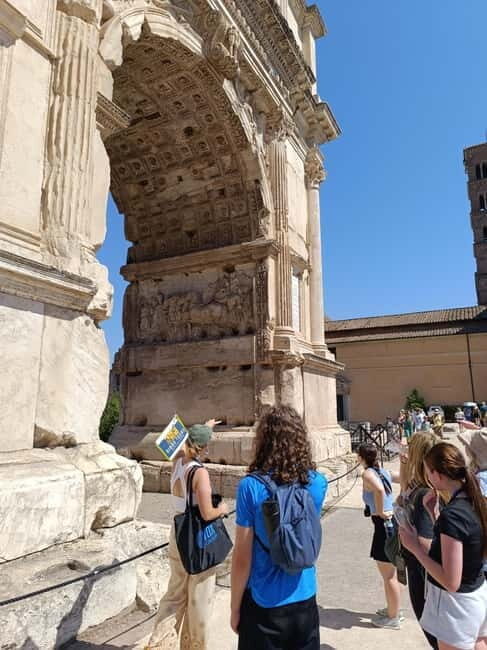
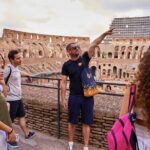
What repeatedly shows up in the experience here is guide quality. Names that come up include Marcello, Ricardo, Laura, and Claudia (as a coordinator). The common theme is style: the tour pace is controlled, questions are welcomed, and the explanations feel built for real people—not just for history buffs.
Marcello, in particular, is described as fun and very well paced, with commentary that makes the sites feel alive. Ricardo stands out for being thorough and caring about the group experience. Laura gets praised for learning names and making the tour feel personal without turning it casual.
One clever technique some guides use is a book of illustrations showing how monuments used to look. That kind of visual aid helps you reconstruct the past quickly—especially at ruins where it’s hard to picture the original scale.
Also, pay attention to how guides handle energy and heat. On at least one busy hot day, the guide worked to keep the group in shade when possible and helped with water planning. That’s not a small detail. In summer Rome, the difference between enjoying the day and getting cranky is often shade, hydration, and a pace that respects real bodies.
What you really get for the price ($126.88 per person)
At $126.88 per person, this isn’t a throwaway add-on. You’re paying for three things at once:
- Licensed guide time across all key stops
- Entry to the Colosseum, Roman Forum, and Palatine Hill
- Headsets, plus a skip-the-line approach with a separate entrance
If you were trying to do this on your own, you’d likely still spend money on tickets and you’d still have to solve the “where do I start and how do I make sense of it?” problem. This tour buys you structure and time savings—especially at the Colosseum, where the wait can eat half a morning.
So for me, the value calculation looks like this: if you want context and smoother flow rather than only walking around, the price feels fair. If you’re the type who enjoys reading guidebooks solo and you have extra time to spare, you might choose DIY. But if you want a guided narrative that covers all three major sites in about 2.5 hours, the package is a good deal.
Pace and group size: why the “2.5 hours” feels manageable
The itinerary is built as a sequence:
- Colosseum guided visit (about 75 minutes)
- Roman Forum guided visit (about 45 minutes)
- Palatine Hill guided visit (about 30 minutes)
That pacing isn’t random. It gives you more time where the most orientation is needed (Colosseum), then shifts to “public life” at the Forum, and ends with Palatine Hill’s views and atmosphere.
Group size can also affect how comfortable the experience feels. In the feedback tied to this tour, groups are sometimes small (like around 5 to 7 people) and sometimes larger (around a dozen). Either way, headsets help, and good guides keep you moving without leaving people behind in bottlenecks.
If you’re traveling with kids, this structure can work nicely. One of the reasons people praise guides here is how they keep the explanations engaging and not dry.
Practical stuff before you go: ID, rules, and what to pack
This is one of those Rome tours where you should read the rules once, then follow them like a pro.
Bring:
- Passport or ID card
- A copy is accepted
Not allowed:
- Baby strollers
- Non-folding wheelchairs
- Bikes
- Alcohol and drugs
- Bags
- Electric wheelchairs
On top of that, this tour is noted as not suitable for wheelchair users. If mobility is a concern, plan for lots of walking and uneven historic surfaces.
What I’d pack is simple: a small item you can carry without violating the bag rules, plus your ID ready to show if needed. If you’re prone to overpacking, Rome will punish that habit here.
One more comfort tip from the kinds of experiences tied to this tour: having water matters. You may find cold water refill stations, and several guides are attentive about hydration during warm weather.
Who should book this guided tour?
You’ll likely enjoy this if you:
- Want to see all three headline sites—Colosseum, Roman Forum, and Palatine Hill—in one coordinated outing
- Prefer a guided narrative over wandering without context
- Like having audio support through headsets in crowded areas
- Are planning a first Rome visit and want the biggest pieces of this zone covered efficiently
You might want to think twice if:
- You’re hoping for a super slow, linger-everywhere experience
- You’re doing this as a solo deep dive on just one of the locations (the 2.5-hour structure spreads time across all three)
Should you book this tour?
Book it if you want a guided, structured introduction to Ancient Rome’s most recognizable ruins, with skip-the-line entry, headsets, and a plan that keeps you moving. This is a strong choice for first-timers and for anyone who doesn’t want to spend their day figuring out what they’re looking at.
Skip it only if your style is slow and solo, or if you’re set on spending most of your time at a single site rather than balancing all three.
FAQ
How long is the Colosseum, Forum, and Palatine Hill tour?
The tour lasts about 2.5 hours (check availability for the starting times).
What’s included in the ticket price?
You get a licensed guide, Colosseum entry, Roman Forum entry, Palatine Hill entry, and headsets.
Do I skip the line at the Colosseum?
Yes. Entry is handled through a separate entrance to help you skip the line.
Where do I meet the guide?
The meeting point can vary depending on the option you booked, with starting locations that include Fontana del Colosseo and Caffè Roma.
What time should I arrive?
Try to arrive about 15 minutes before the starting time. If you arrive after departure, you may not be accommodated.
What languages are offered?
The live guide is available in English, Spanish, French, German, and Italian.
What documents and items do I need to bring or avoid?
Bring a passport or ID card (a copy is accepted). Bags are not allowed, baby strollers are not allowed, and the tour is not suitable for wheelchair users.