REVIEW · ROME
Private Tour of the Colosseum Forums Palatine Hill & Ancient Rome
Book on Viator →Operated by Rome City Tours · Bookable on Viator
Three hours in ancient Rome feels fast. This private tour is built for speed-with-understanding: you’ll see the Colosseum and the Roman Forum up close, then connect the dots with an art historian and multimedia reconstructions. I especially like the way the guide frames what you’re looking at, and I like the practical flow that keeps the experience moving; the only drawback is that 3 hours means you’ll be focused, not lingering forever in every corner.
You start at Via dei Fori Imperiali, walk the imperial core on foot, and finish back near the meeting point after a strong circuit that also points you toward Palatine Hill’s viewpoints and the story’s power center on Capitoline Hill. You’ll get lots of big names and big ideas—politics, religion, and daily social life—without turning it into a lecture marathon. Just be ready for moderate walking on uneven surfaces.
In This Review
- Key highlights you’ll feel the most
- What you’re really buying for $356.23 per person
- Meeting at Via dei Fori Imperiali and getting your bearings fast
- Entering the Colosseum: the first hour sets the tone
- Inside the Colosseum: how multimedia and art history work together
- Walking the Roman Forum on its original streets
- Palatine Hill context: power viewed from the right angle
- Capitoline Hill finish: Michelangelo’s square and Marcus Aurelius
- Who this private tour is best for (and who may want a different pace)
- Practical tips to make the most of your 3-hour circuit
- Should you book this private Colosseum, Forum, and Palatine Hill tour?
- FAQ
- How long is the private tour?
- Is the tour private?
- What language is the tour offered in?
- Where do we meet, and where does the tour end?
- Is the Colosseum entrance ticket included?
- Do we get hotel pickup or drop-off?
- Do I need a mobile ticket?
- What ID should I bring?
- What if the names on my booking don’t match my documents?
- Is the experience refundable?
Key highlights you’ll feel the most
- Art historian guide who interprets what you’re seeing, not just recites dates
- Multimedia visuals and graphic reconstructions to make ruins readable
- Roman Forum landmarks covered in context, from the Senate House to the Altar of Divine Julius Caesar
- Colosseum facts you can place on the site, including its Flavian origin and scale
- Capitoline Hill wrap-up with Michelangelo’s square and the Statue of Marcus Aurelius
- Private format so you can ask questions without crowd noise
What you’re really buying for $356.23 per person
You’re paying for three things at once: a private guide, an art-historian style of storytelling, and admission/reservation handled for the Colosseum. The ticket value is listed at €18 per person, plus a Colosseum reservation fee of €2 per person, so the rest of the price mainly supports the guide expertise and the experience design—where to stand, what to notice, and how to translate stone into a living city.
Is it expensive? It is, but it’s also one of the more time-efficient ways to see Rome’s most crowded ancient sites. Group discounts are available too, which can take the sting out if you’re booking with family or friends.
The main trade-off is pacing. This is about covering the highlights in about 3 hours, not doing a long, slow deep scan of every ruin. If you want to sit and sketch for an hour, you might feel slightly rushed. If you want clarity fast, this format is a strong fit.
More Colosseum, Forum & Palatine combos for the Colosseum & Ancient Rome
Meeting at Via dei Fori Imperiali and getting your bearings fast
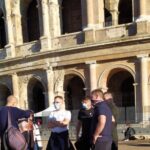
The meeting point is Via dei Fori Imperiali, 21, Roma RM, Italy, and the tour ends back at the same spot. That matters because you avoid the back-and-forth of complicated transfers or wandering across the center trying to regroup.
It’s also described as near public transportation, which helps if you’re already working your way through Rome by tram/metro/bus. There’s no hotel pick-up or drop-off, so you’ll want to arrive a few minutes early and be ready to move.
One practical note that can affect your day: you need to provide full names for everyone when booking, and those names must match your passport or ID. If the voucher doesn’t match what’s on your document, entry can be denied. Build extra time into your morning if you’re juggling last-minute document checks.
Entering the Colosseum: the first hour sets the tone
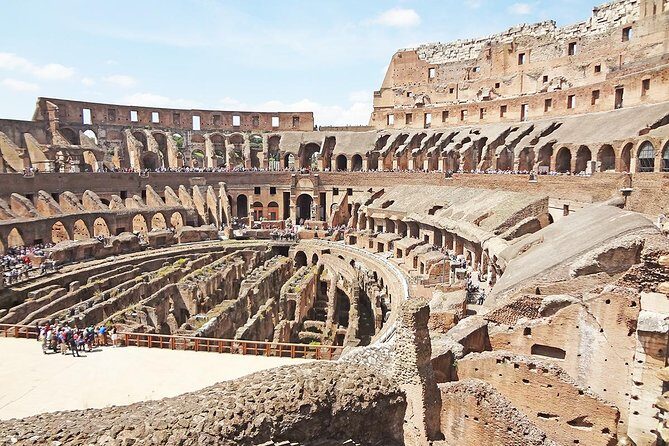
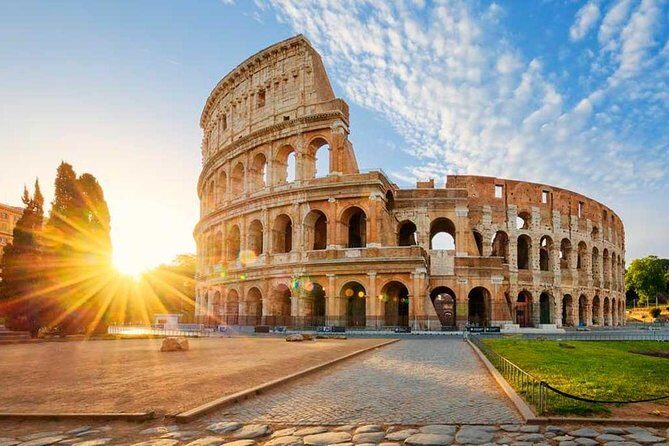
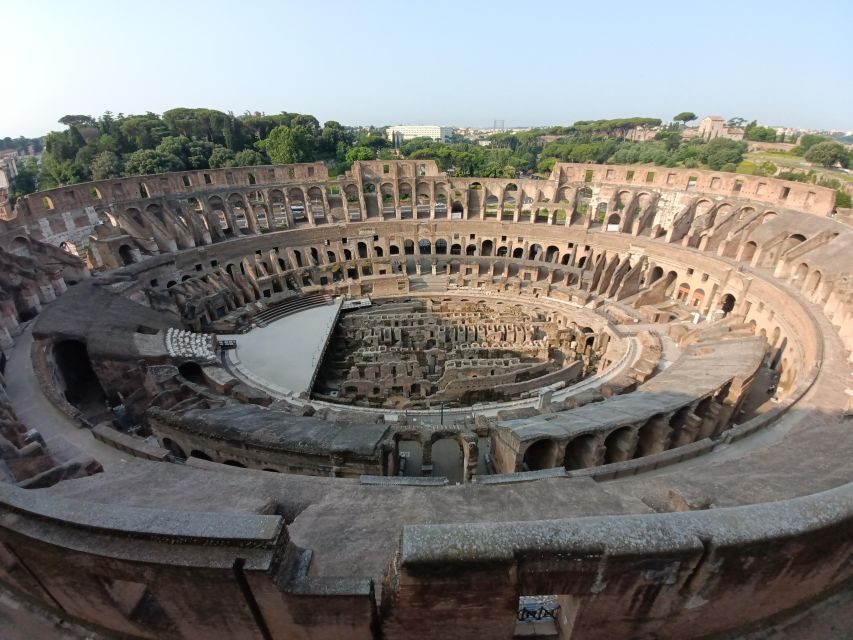
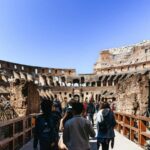
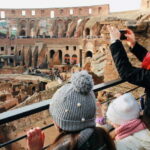
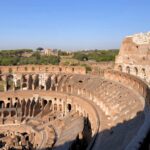
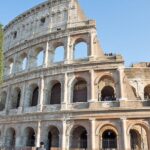
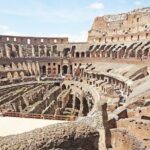
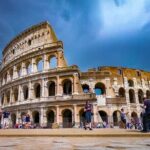
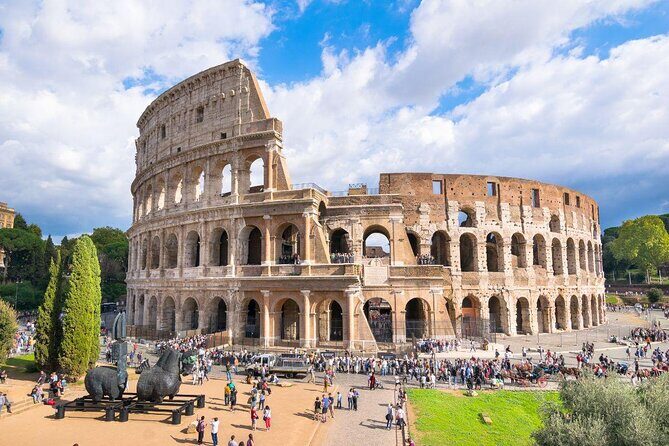
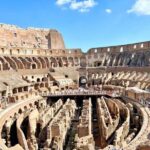
You meet your guide at the Colosseum entrance, where the tour begins by framing the amphitheater as more than a photo stop. The site’s original name was the Flavian Ampitheatre, and it’s credited with impressive scale: 80 entrances and capacity for up to 50,000 spectators. Hearing those numbers while you’re standing there changes how you read the building. It stops being an outline in your head and becomes a real venue with crowd flow and spectacle in mind.
You’ll also get multimedia visual aids that help you visualize what the Colosseum would have looked like during events. That’s the key value here. Ruins can be visually confusing, especially if you don’t know where to look. The guide turns the structure into a story: where people gathered, what performance would have meant, and how Roman “public life” worked in a place like this.
Your benefit: you’ll move through the Colosseum with purpose, not just aimlessly circulating for the best angle.
Your consideration: it’s about one hour at the Colosseum, so you’ll likely need to choose your priorities (views vs. details) and trust the guide to keep you on track.
Inside the Colosseum: how multimedia and art history work together
The tour’s “art historian” approach isn’t just a branding label. Here’s what that style usually does well in a place like the Colosseum: it helps you connect form to function. You aren’t only learning what happened. You’re learning why the site was built the way it was, and what that said about status, politics, and public display.
Expect a mix of:
- On-site explanations tied to specific sections and architectural choices
- Visual reconstruction aids that clarify missing pieces
- A running theme about Rome’s imperial culture—how spectacle, authority, and religion overlapped
This is where private touring shines. When you pause and ask a question, you don’t lose your spot in the group shuffle. The experience is structured so you can get your answers without feeling like you’re holding everyone back.
If you’re visiting with different generations, this kind of guided translation is a win. The Colosseum is famous, but that doesn’t automatically make it understandable. A good guide makes it click for kids, teens, and adults alike—just at different speeds.
Walking the Roman Forum on its original streets
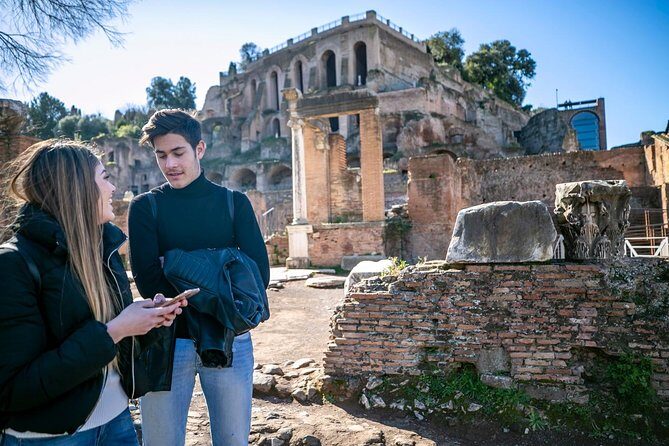
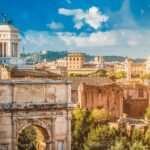
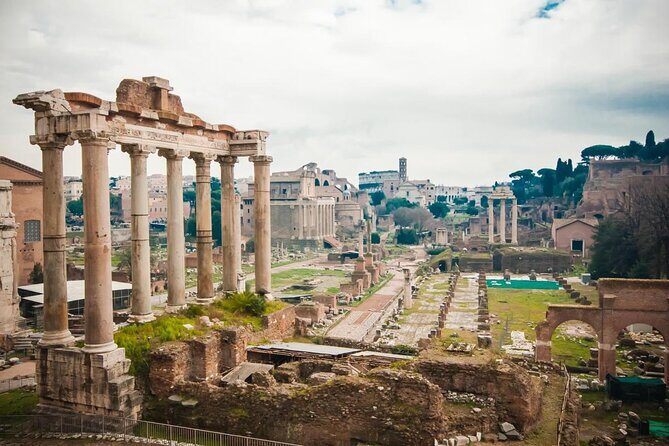
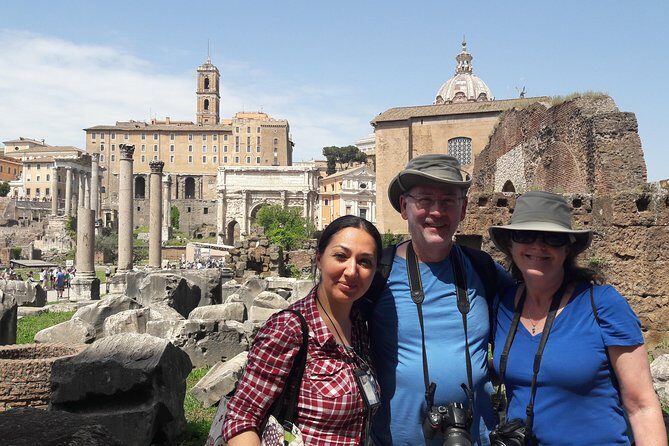
After the Colosseum, you move to the Roman Forum—still on foot—so the story stays grounded. This part is powerful because you’re not just viewing ruins from the edge. You’re walking the ancient paths toward the main squares and building precincts, with the guide pointing out what each landmark represented.
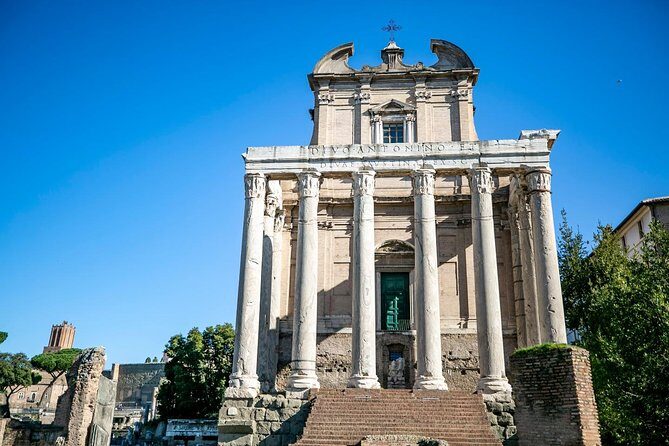
The Forum portion is about one hour, and the emphasis is on political and religious centrality. You’ll see major named sites such as:
- the Senate House
- the Temple of Vesta
- the Temple of Saturn
- the Altar of the Divine Julius Caesar
- the Temple of Gemini
- the Basilica Emilia
- the Arch of Septimius Severus
There’s also explicit mention of graphic reconstruction to help you picture the Forum as it once appeared. That’s huge. Many people stand in the Forum and feel like they’re staring at disconnected walls. Reconstruction visuals solve the “where is everything?” problem and let you grasp how the plaza and temples fit into daily ceremonial life.
What you’ll learn to notice: the Forum wasn’t only about government. It was also about religion and social standing—places where public identity was performed and reinforced.
The possible drawback: because time is limited, you’ll be scanning key structures rather than taking every detour. If you’re the type who wants to read every stone inscription, you’ll still enjoy it, but you may want more time later for self-exploration.
More Roman Forum tours for the Colosseum & Ancient Rome

Palatine Hill context: power viewed from the right angle
Even when your stops are centered on the Colosseum and Forum, this kind of tour is built around Rome’s imperial “power map.” Palatine Hill sits in that background story for a reason: it’s where rulers and elite status connect visually and historically to everything happening in the Forum.
So what should you expect in practice? You’ll get explanations that tie what you’re seeing to the broader layout of ancient Rome’s elite center—how the imperial capital functioned as one system. The guide’s job is to help you stop thinking of Palatine Hill as a separate attraction and instead treat it as part of the same narrative: authority, spectacle, ceremony, and civic life in one compact urban core.
If you’re curious about how Rome’s leaders shaped public spaces, this context is exactly what makes the Forum feel like more than ruins. You’ll walk away with a clearer mental model: where influence lived, how it was displayed, and why these buildings mattered.
Capitoline Hill finish: Michelangelo’s square and Marcus Aurelius
The tour ends at Capitol Hill (Colle Capitolino), where temples connected to major Roman gods stood in earlier times. This last stretch gives you contrast. The Roman world you’ve been decoding sits next to later masterpieces, and that blend is part of Rome’s charm.
You’ll also see:
- Michelangelo’s square
- the Statue of Marcus Aurelius
This ending works well because it slows your brain down just a bit. After parsing the ancient political and religious spaces in the Forum, you get a finishing vantage that’s easier to “read” visually. Michelangelo’s layout helps the eye catch symmetry and scale, and Marcus Aurelius anchors the place with a recognizable, human-centered figure.
If you like tours that end with something memorable and photogenic (without losing the educational thread), this is a strong finish.
Who this private tour is best for (and who may want a different pace)
This experience is ideal if you:
- want one-on-one time with a guide who can handle questions
- like seeing Rome’s biggest sites with context, not just a checklist
- want multimedia support to understand ruins faster
- visit with family members who learn in different ways
It’s less ideal if you:
- need long, quiet time at monuments with no schedule pressure
- plan to stop constantly for extra photos and would resent a steady pace
- prefer deep specialization on only one site (this one balances several)
Physical note: the tour calls for moderate physical fitness. You’re walking through uneven ancient areas, so comfortable shoes matter more than fashion.
Practical tips to make the most of your 3-hour circuit
Here’s how to set yourself up for the smoothest experience.
Bring:
- Your passport or ID (matching the names you booked with)
- Comfortable shoes for walking on ancient surfaces
Plan your day:
- Arrive a little early at Via dei Fori Imperiali, 21
- Keep your expectations realistic: this is a highlights route, so think of it as your “fast education” before you wander on your own afterward
Ask smart questions:
- If you care about politics or religion, ask how the Forum buildings relate to civic life
- If you care about architecture, ask what the Colosseum’s design says about crowd control and spectacle
Also, check language expectations. The tour is offered in English, so you’ll want to be comfortable asking questions in that language.
Should you book this private Colosseum, Forum, and Palatine Hill tour?
I’d recommend booking if you want to get real understanding fast, without fighting Rome’s biggest crowds without a plan. The art-historian guide plus multimedia reconstructions are exactly what help the Colosseum and Forum make sense, and the private format keeps it from feeling like a rushed conveyor belt.
You might skip it (or add extra self-guided time) if you prefer slow wandering, or if you’re only interested in one single site. But for most people—first-time Rome visitors, couples, and multi-generational groups—this is a strong value because it compresses the essential story into about three hours and gives you a clearer map of imperial Rome when you leave.
FAQ
How long is the private tour?
The tour lasts about 3 hours.
Is the tour private?
Yes. Only your group participates.
What language is the tour offered in?
It is offered in English.
Where do we meet, and where does the tour end?
Meet at Via dei Fori Imperiali, 21, Roma RM, Italy. The tour ends back at the meeting point.
Is the Colosseum entrance ticket included?
Yes. Colosseum entrance ticket and the Colosseum reservation fee are included.
Do we get hotel pickup or drop-off?
No. Private transportation and hotel pickup/drop-off are not included.
Do I need a mobile ticket?
Yes. A mobile ticket is included with the experience.
What ID should I bring?
You must present a valid passport or ID document that matches the name provided at booking.
What if the names on my booking don’t match my documents?
You may be denied entry at the Colosseum and Roman Forum if the voucher doesn’t include the full names of all travelers or doesn’t match your ID.
Is the experience refundable?
No. It is non-refundable and cannot be changed for any reason.