REVIEW · ROME
Discover Rome: Colosseum, Forum & Palatine Hill with Arena Option
Book on Viator →Operated by Chao Rome Tour · Bookable on Viator
Three hours, and Rome hits hard. This half-day tour is built to save time at the biggest ancient sites, starting with the Colosseum and then moving through the political heart of Rome at the Roman Forum and up onto Palatine Hill. You get a live guide who turns ruined stone into real daily life.
I love the priority entry setup because it cuts the long wait that can eat up your energy fast. Another plus is the headsets, which make it easier to actually hear the guide when the crowds get loud.
I also like how the stops connect like a story instead of three separate checkboxes. The Colosseum section centers on how the arena worked and includes gladiator tales, and the Forum and Via Sacra area help you see how politics, ceremony, and business overlapped in one place.
One thing to consider: if you choose the arena floor option, weather can affect access. The tour runs rain or shine, and the arena floor may close without warning, with no refunds for that situation.
In This Review
- Key things to know before you go
- Why priority entry changes everything at the Colosseum
- Entering the Colosseum without the waste
- The Roman Forum: not just ruins, but the operating system
- Palatine Hill: where you look down on Rome’s power center
- Arena floor option: the best extra, with a weather reality check
- How the 3 hours actually feel on the ground
- Getting there and staying comfortable (without fighting the stairs)
- Price and value: is $115 fair for what you get?
- When this tour is the right fit
- Should you book this Colosseum, Forum & Palatine Hill tour?
- FAQ
- What’s included in the tour price?
- How long does the tour last?
- Does the tour run in bad weather?
- Is the underground floor included?
- What should I bring?
- Do I need to bring an ID or passport?
- Is stroller access recommended?
Key things to know before you go
- Priority entry at the Colosseum, Roman Forum, and Palatine Hill helps you beat the worst of the lines.
- Headsets are included, so you can hear your guide even at busy points.
- Optional arena floor access puts you on the Colosseum’s battle level when it’s open.
- A guide-led route keeps your time focused in the most meaningful areas of each site.
- Group size is capped at 20, which helps the pacing stay human.
- Comfort matters: you’ll want water and sturdy shoes, and there are many stairs.
Why priority entry changes everything at the Colosseum
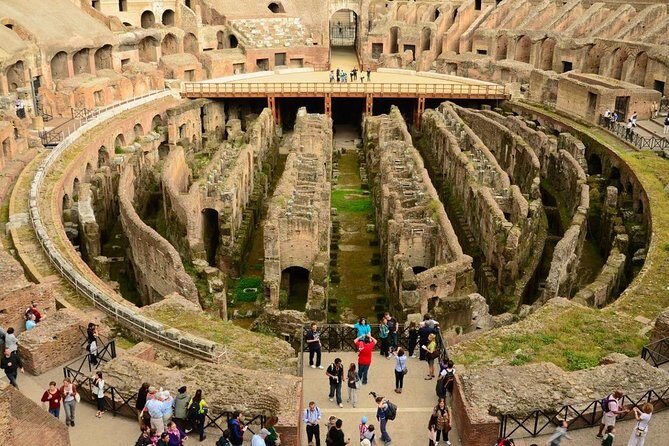
If you only have a short window in Rome, the Colosseum can either be a joy or a slog. The area is famous for lines, and waiting in the hot sun (or drizzle) is a great way to feel like you spent your afternoon on queue management.
This tour is designed around priority entry. That means you spend your time walking inside the historic walkways and learning what you’re seeing, instead of burning time outside. It’s also a good fit if you’re trying to keep your day from turning into a late, tired mess.
There’s another practical win: headsets. When you’re inside and around crowds, it’s easy to miss key details. With headsets, you can keep your eyes on what matters without constantly turning your head to find the guide.
More Colosseum, Forum & Palatine combos for the Colosseum & Ancient Rome
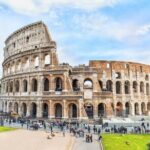
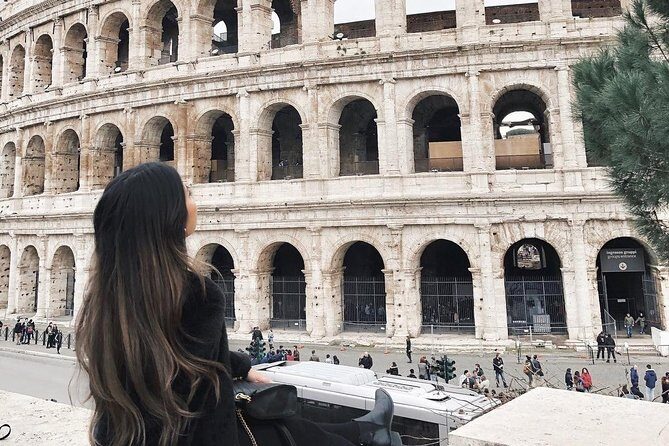
Entering the Colosseum without the waste
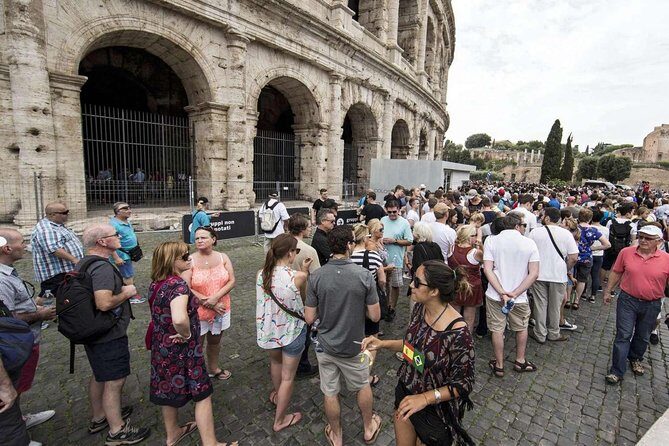
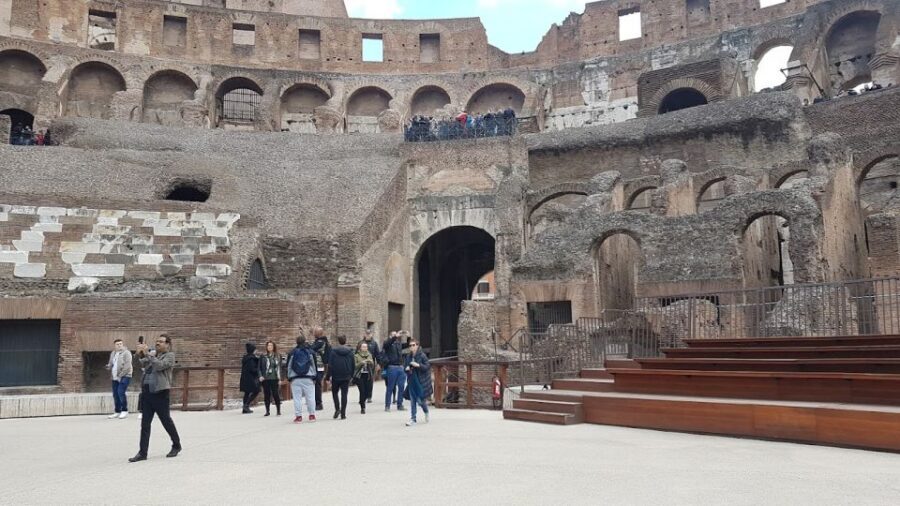
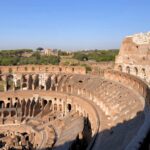
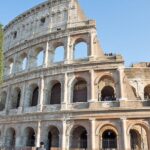
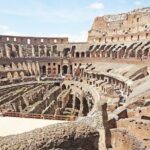
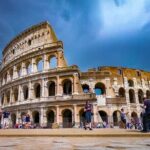
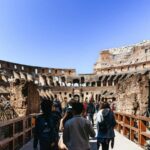
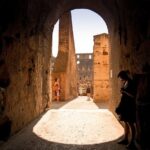
The Colosseum stop is about an hour of guided time with admission included. You’ll stroll through the ancient walkways and learn how this oval amphitheater worked in Roman times. The Colosseum—also called the Flavian Amphitheatre—was built with travertine limestone, tuff, and brick-faced concrete, and it could hold something on the order of 50,000 to 80,000 spectators.
What I like about this format is the way your brain starts to “place” the building in context. Instead of just looking at arches and rows, you start mapping the experience: where people would have been, how the space functioned, and why it mattered socially as well as politically.
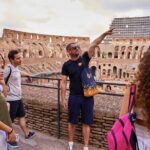
Your guide brings it to life with gladiator stories. Even if you’ve read the basics before, hearing the narrative from a live guide helps you notice patterns—like how crowd movement and viewing lines would have shaped the whole spectacle.
One more thing: the tour does not just rush you through. You’re allowed time to absorb what you’re standing in front of, then move onward while the guide connects the Colosseum to what came before and after it in Roman life.
The Roman Forum: not just ruins, but the operating system
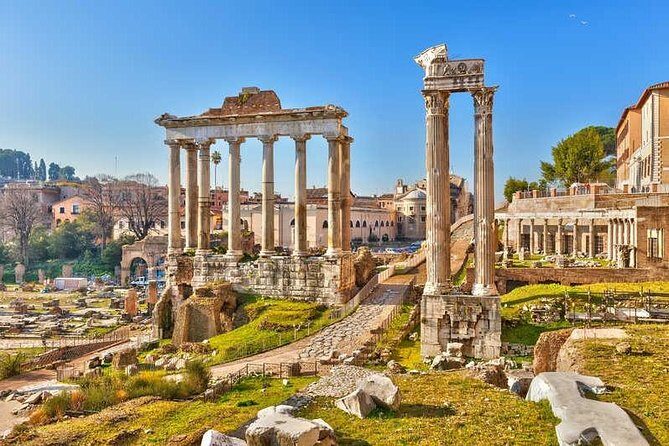
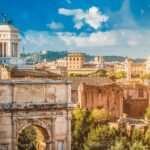
After the Colosseum, you move into the Roman Forum for about an hour, again with admission included. This part is the payoff for anyone who wants more than postcards. The Forum was the day-to-day center of Rome for centuries—where triumphal processions happened, elections took place, speeches were given, and criminal trials were heard. It also served as the setting for major public events, including gladiatorial matches, and it functioned as a commercial hub.
The area you’re walking through is a rectangular complex of ruins around important government buildings. It began as a kind of marketplace space, and citizens called it the Forum Magnum, or simply the Forum. Standing here, it becomes clear why the Forum mattered: the city’s power wasn’t hidden away. It ran through public space.
A helpful detail on this tour is that your guide ties in Via Sacra—the famous processional way. That connection matters because it helps you visualize how people would have moved through the city for ceremonies, announcements, and big moments.
A good caution: the Forum can feel less dramatic than the Colosseum, just because it’s more fragmented. Ruins are beautiful, but you need guidance to understand what each set of stones used to do. That’s where a strong guide helps you keep the scale and purpose straight.
Palatine Hill: where you look down on Rome’s power center
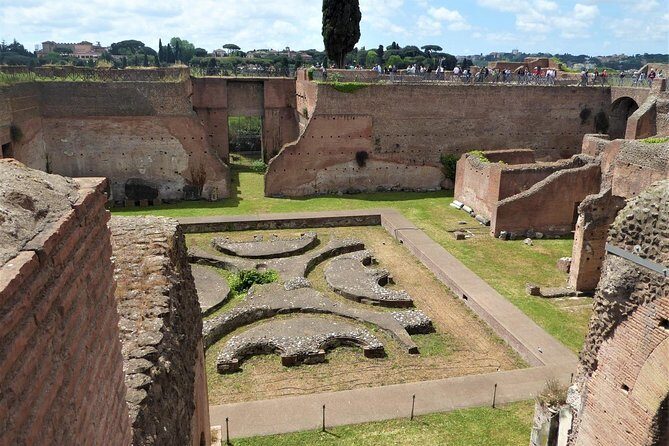
Your third main stop is Palatine Hill (about an hour). Palatine is the central one of Rome’s Seven Hills, and it’s considered one of the most ancient parts of the city—called by many the first nucleus of the Roman Empire. It sits roughly 40 meters above the Roman Forum, giving you a natural viewpoint down onto the action.
This vertical difference is more than a fun perspective trick. It helps you feel the layout of ancient Rome: the Forum below as a public stage, and Palatine above as a place associated with early power and prestige. Your guide’s commentary makes the viewpoints more meaningful than just a camera angle.
You’ll also get a sense of how Palatine relates to the Circus Maximus on the other side. Even if you can’t “see” everything as fully as a reenactment, the geography makes the story click.
Practical note: this is not a leisurely stroll. Expect steps and uneven surfaces. Come with shoes you can trust.
Arena floor option: the best extra, with a weather reality check
The tour offers optional access to the Colosseum Arena Floor—the level where battles took place (when available). This is the add-on many people want because it changes how you experience the Colosseum. It’s one thing to look at the arena from above; it’s another to stand closer to the space where spectacles unfolded.
That said, the tour operates rain or shine, and the arena floor may close without warning in bad weather. In that case, you might still be able to enter through the Gladiators’ Gate, but arena floor access can be restricted. The key point for your decision is simple: plan like it’s a bonus, not a guarantee.
Is it worth it? For many people, yes—because it gives you a different vantage and makes the Colosseum feel more immediate. But because access can be limited, I’d only pick the arena floor if you’re flexible and your schedule can tolerate disappointment without ruining your day.
More Palatine Hill tours for the Colosseum & Ancient Rome

How the 3 hours actually feel on the ground
This is a half-day, around 3 hours tour. The timing works best when you treat it as your “core ancient Rome” block. Instead of bouncing between sites on your own, you get a guided sequence that keeps you from overthinking where to start.
One practical benefit is the headset system, which reduces the stress of staying close. Another is group size: the tour maxes out at 20 travelers, which helps keep movement steady and makes it easier to hear the guide at key stops.
That said, because it’s 3 hours, the pacing won’t be museum-slow. You’ll be moving from stop to stop, and each stop is limited to about an hour. If you love taking endless photos or reading every sign, you might feel slightly rushed. The trade-off is you’ll leave with a coherent understanding instead of a scattered list of sights.
Getting there and staying comfortable (without fighting the stairs)

The tour meets at Via delle Terme di Tito, 93, 00184 Roma RM. It ends back at the same meeting point, so you don’t have to figure out the logistics of where the group disperses.
I strongly recommend you arrive 20 minutes early. The activity provider notes that the meeting time may vary and they reach out by email or WhatsApp (if available). That matters because Rome days can go sideways fast, and you don’t want to miss the start.
You also need to travel ready for site rules:
- Bring comfortable shoes and water
- Plan for weather-appropriate clothing
- Use a baby carrier instead of a stroller, since there are many stairs
- Pets, weapons or sharp objects, luggage or large bags, alcohol, drugs, and glass objects aren’t allowed
One more detail that can make or break your entry: you must provide the full names for all travelers when booking, and you need a valid passport or ID that matches what you submitted. The tour warns that if names don’t match the voucher list, you can be denied entry at the Colosseum and Roman Forum ticket office. In Rome, that’s not a theoretical problem.
Price and value: is $115 fair for what you get?
At $115.19 per person, this isn’t a bargain-basement tour, but it also isn’t pricing itself like a luxury experience. The value comes from what’s included:
- Guide tour through all three sites
- Priority entry to the Colosseum, Roman Forum, and Palatine Hill
- Headsets
- Optional Colosseum Arena Floor access if selected and open
- Admission is included for the Colosseum, Roman Forum, and Palatine Hill
What’s not included is also clear: food and drinks, and transfers. So if you’re planning your day, budget for lunch separately and decide how you’ll get to the meeting point.
To me, this price makes sense if you:
- want to reduce waiting time,
- care about hearing the story behind the stones,
- and are likely to benefit from headsets in crowded spaces.
If you’re traveling super light on time pressure and you’re happy managing lines yourself, you might feel you can do it cheaper. But for most people on a first trip, the “time saved + clarity gained” is the real cost advantage.
When this tour is the right fit
This experience is ideal if you want a guided, high-value Rome core in a short block. It’s a great match for first-timers, families who can handle stairs (with a carrier), and anyone who wants gladiator and politics context without bouncing around for tickets.
It’s also a smart choice if you’re planning to visit multiple major sites that same day. Priority entry helps you keep momentum instead of losing the afternoon to lines and confusion.
If you dislike group pacing or you’re the type who wants to wander slowly and read every plaque, you may find the time limits on each stop a bit tight. In that case, you might prefer a more flexible self-guided plan.
Should you book this Colosseum, Forum & Palatine Hill tour?
I’d book it if you want the Colosseum to feel more than a photo spot and you want the Forum and Palatine Hill to make sense as one storyline. The priority entry and headsets are the big reasons this works, and the guided connection between the arena, the Forum, and the viewpoint from Palatine is what turns ruins into a real understanding.
I would think twice if you’re counting on arena floor access as a must-do, since weather can cause closures without warning. And if your travel party’s names or ID details aren’t perfectly aligned with the booking info, don’t gamble—get that match right before the day arrives.
Bottom line: this is a focused, well-structured way to see Rome’s most important ancient core in about three hours, with enough guide time to make it stick.
FAQ
What’s included in the tour price?
The tour includes a guided tour, priority entry to the Colosseum, Roman Forum, and Palatine Hill, headsets to hear your guide better, and admission for each site. Arena floor access is included only if you selected that option.
How long does the tour last?
The tour runs for about 3 hours.
Does the tour run in bad weather?
Yes, it operates rain or shine. In bad weather, the arena floor may close without warning, and refunds aren’t provided if that happens.
Is the underground floor included?
No. The underground floor is not included.
What should I bring?
Bring comfortable shoes, water, and weather-appropriate clothing.
Do I need to bring an ID or passport?
Yes. Each traveler must present a valid passport or ID document that matches the name provided at booking for entry to the Colosseum and Roman Forum.
Is stroller access recommended?
No. The tour advises using a baby carrier instead of a stroller, since there are many stairs to navigate.