REVIEW · ROME
Colosseum, Roman Forum & Palatine Hill with Audioguide
Book on Viator →Operated by City Wonders Ltd · Bookable on Viator
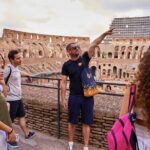
One hour inside the Colosseum changes your whole day. You get reserved entrance and a phone audioguide that lets you set your own rhythm across three of Rome’s big hitters. The best part is that you’re not trapped in a group tempo.
I like how this works like a freewheeling day with guardrails: you start at the Colosseum, then walk to the Roman Forum along Via Sacra, and finish on Palatine Hill. If you’re the type who likes facts but also likes to pause for views, the setup fits. City Wonders staff have been reported as clear and professional, with names like Valentina, Sylvia, and Jocelyn showing up in successful experiences.
The main drawback to plan for is coordination risk, because this is not a full guided tour. A few people have described trouble finding the marked meeting point in crowds or dealing with signal/phone limitations inside the Colosseum, so you’ll want to be organized and punctual.
In This Review
- Key things to know before you go
- What this is: ticket-only entry plus a phone audioguide
- Entering the Colosseum: reserved time and optional arena access
- The Via Sacra walk: a short route with major meaning
- Roman Forum in 45 minutes: prioritize what you can actually see
- Palatine Hill in 30 minutes: views and imperial leftovers
- Audioguide app tips: download first, expect signal gaps
- Price and value: why $59 can be a smart move
- Logistics and trip-day snags to plan around
- Who this suits best
- Should you book it?
- FAQ
- Is this a guided tour?
- What languages is the audioguide available in?
- Can I use the audioguide offline?
- What access is included for the Colosseum?
- What ID do I need for entry?
- How much walking should I expect?
Key things to know before you go
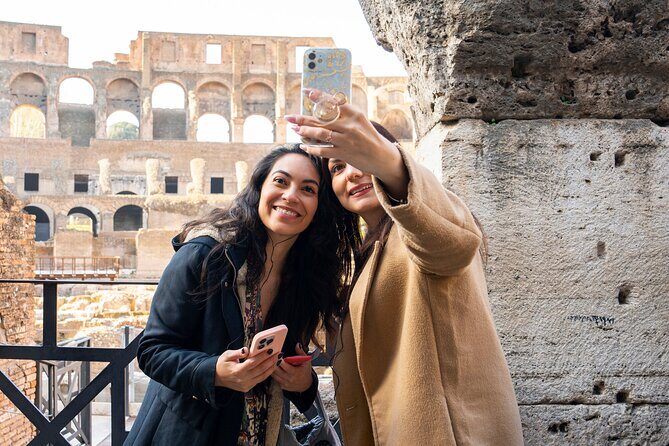
- Ticket-only, with escorted entry: You’ll meet a City Wonders representative for entry help, but you explore on your own after.
- Audioguide app you can download for offline use: Still, parts of the Colosseum can be hit-or-miss for phone connectivity.
- Arena floor is optional: If you select it, you’ll get a different-feeling access and calmer photo opportunities.
- A tight three-site route: Colosseum first, then Via Sacra walk, then the Forum and Palatine Hill.
- ID must match your booking name: No name changes, and you’ll be asked for government ID or passport at the Colosseum.
- You’ll walk a lot: Even with a lift mentioned in feedback for special needs, expect steps and stamina demands.
What this is: ticket-only entry plus a phone audioguide
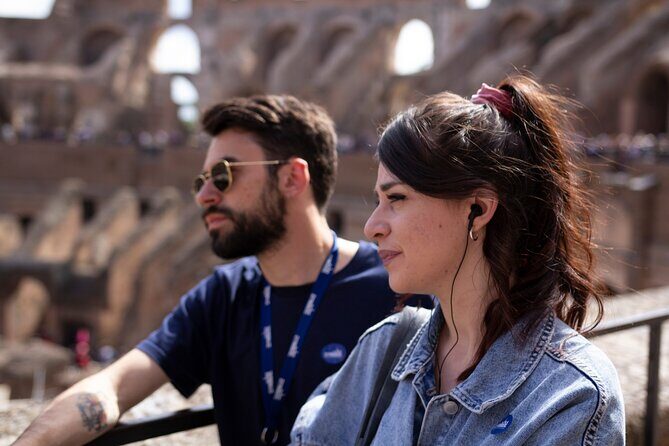
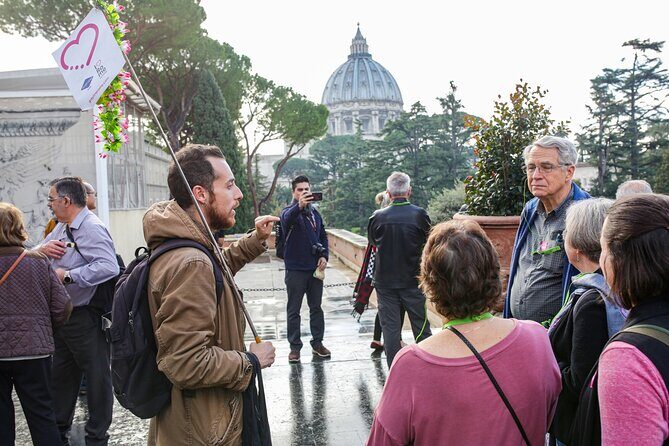
This experience is built for independence. You’re not paying for a classic guide-led tour that stops everywhere and tells you the same story on a loop. Instead, you get a reserved ticket entry into the Colosseum, access to the Roman Forum and Palatine Hill, and an audioguide app on your phone.
The included audioguide is available in English (plus Chinese, German, French, Italian, Polish, Portuguese, and Spanish). You’re also told to download the app before you go, so you can use it offline once you’re on-site. This matters because these sites are big, and you’ll get the best value when you can move at your own pace without hunting for reception.
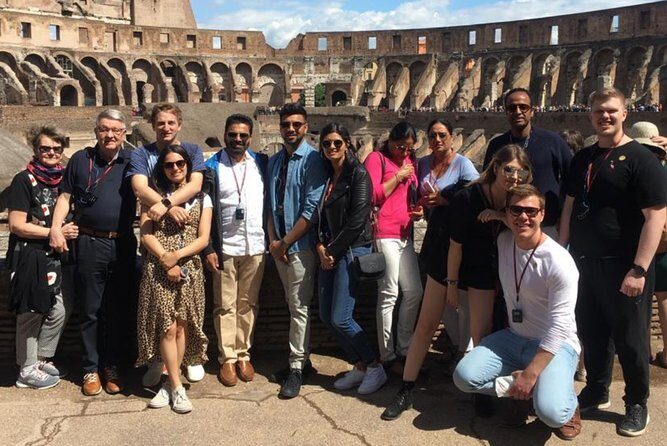
Group size is limited (maximum 25 travelers). That’s a good thing for finding your point of contact, but it doesn’t remove the reality that you may still need to coordinate in crowded entry areas.
More Colosseum, Forum & Palatine combos for the Colosseum & Ancient Rome
Entering the Colosseum: reserved time and optional arena access
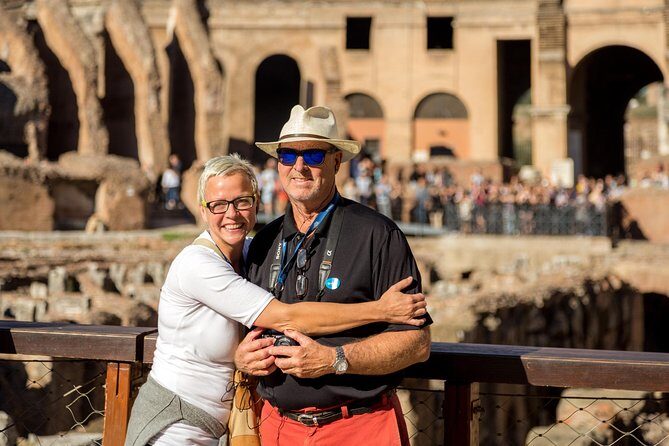
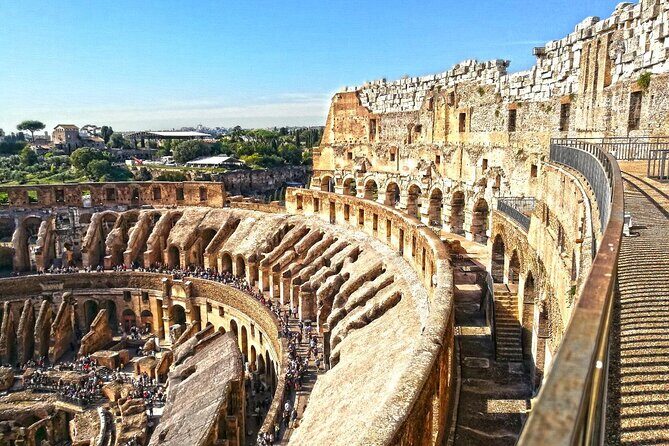
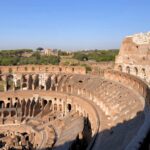
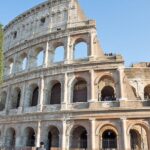
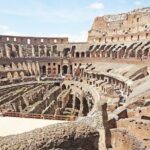
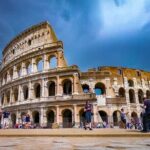
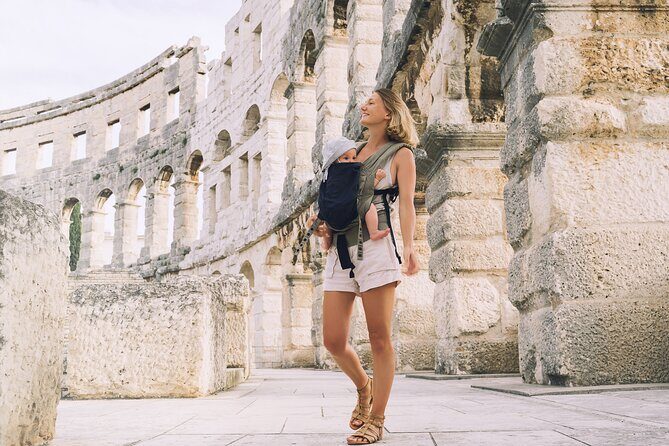
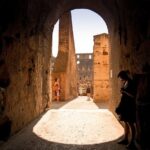
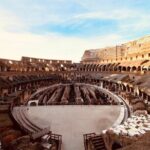
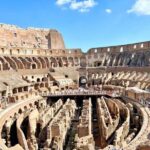
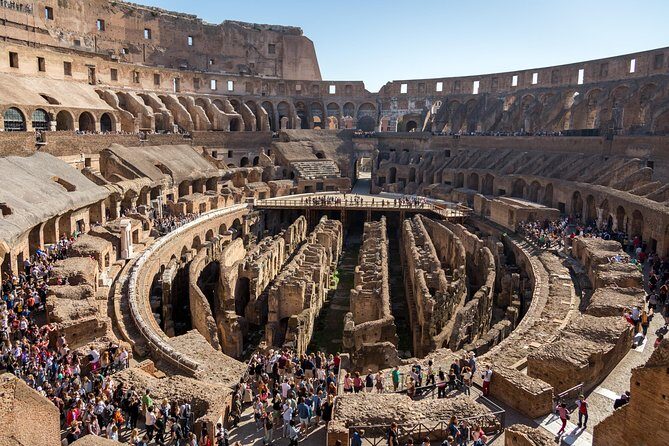
The Colosseum is the one place in Rome where you can feel the scale instantly. It’s the Flavian Amphitheatre, finished around AD 80, and it once held up to about 80,000 spectators. It was used for gladiatorial contests and public spectacles like animal hunts and executions.
You’ll enter with a reserved entrance time and a Colosseum ticket that includes reservation fees. Practically, that means you avoid the longest bottleneck moments of general entry. You’ll be inside long enough to move around and take in the building rather than just walking past it.
If you chose the arena floor option, you’ll get access to that restricted area. In feedback, people loved the feeling of going closer to the action and taking photos away from the densest crowds. One tip that shows up in successful experiences: getting there early often helps, since the heat and crush build quickly.
Two reality checks:
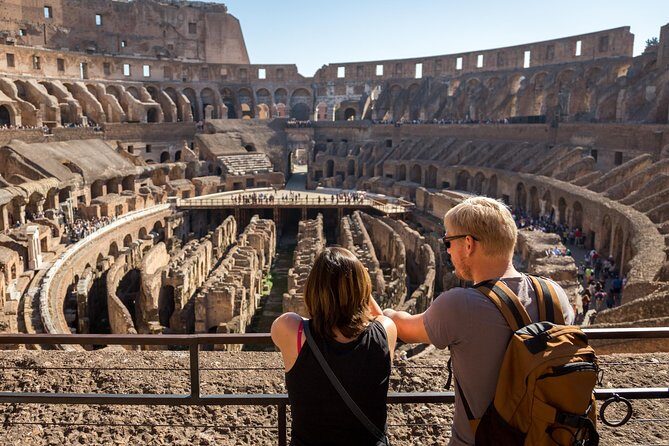
- The Colosseum involves a lot of walking and stairs. One report notes there is a lift for people with special needs, so if you need that, plan your route accordingly once you’re inside.
- Even if you’re ready to go early, gate rules can still force you to wait for your exact ticket time. So I’d treat the ticket time as firm, not a suggestion.
The Via Sacra walk: a short route with major meaning
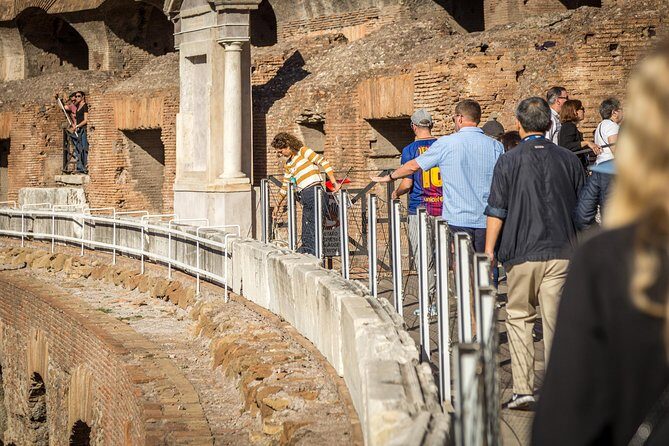
After you’ve seen the Colosseum, you’ll walk to the Roman Forum along Via Sacra, the ancient Sacred Road. In old Rome, this was the main street through the Forum area, used for religious and triumphal processions. Today, you follow the archaeology that still marks where those ceremonies rolled through the city.
This segment is short (about 15 minutes on foot in the plan), but it gives you a helpful bridge. Instead of hopping between far-apart stops, you get a direct travel story: Colosseum first, then the “political and ceremonial heart” of the city area.
If you like details, use the walk time well. As you go, listen for the way the route connects big landmarks like the Arch of Titus and the Temple of Vesta. Even without stopping for photos nonstop, walking Via Sacra helps your brain understand where you are.
Roman Forum in 45 minutes: prioritize what you can actually see
The Roman Forum is where ancient Rome stops being a postcard and starts being a maze of ruins. It was the center of political, religious, and social life. You’ll pass key clusters of remains such as the Temple of Saturn, the Arch of Septimius Severus, and the House of the Vestals.
Forty-five minutes sounds short, but it’s realistic if you’re moving steadily and not stuck reading every single plaque. My advice: pick a small set of sights and build your route around them. For most people, trying to do everything turns into rushing through everything.
This is also where audioguides shine because the physical remains can look similar at first glance. When you know what you’re standing near, the Forum becomes easier to interpret: walls feel less random, arches feel less decorative, and the overall layout starts to click.
One common issue: people sometimes feel the time doesn’t allow for lingering. If you know you’re a slow, photo-friendly explorer, you may want extra buffer—either by arriving earlier at the Colosseum, or by being ready to “choose depth over breadth” once you’re in the Forum.
Palatine Hill in 30 minutes: views and imperial leftovers
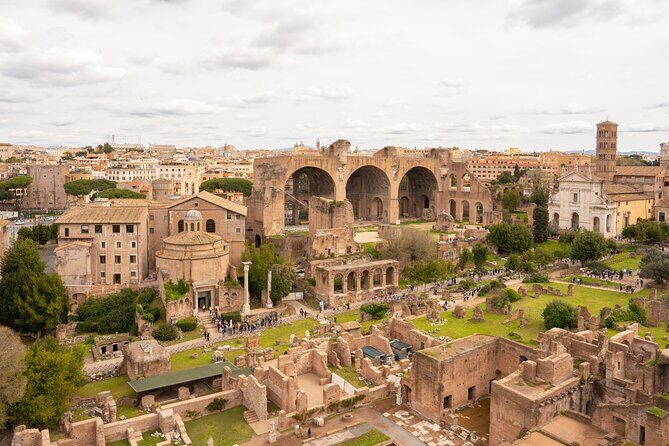
Palatine Hill is one of Rome’s seven hills, and it’s traditionally tied to the birthplace story of Rome—Romulus and the founding myth. It also holds major imperial palaces, including areas associated with Domus Augustana and the House of Livia.
You’ll wrap up here with about 30 minutes in the plan. That’s enough time to get a feel for the scale and find a viewpoint that makes the whole day make sense. Palatine Hill offers elevated views over the Roman Forum area and also toward the Circus Maximus, so it’s a strong closing stop if you enjoy seeing how the pieces fit together.
If you tend to get “ruins fatigue,” Palatine is a good place to slow down because it often feels more atmospheric than the Forum. Also, you’re finishing after the main heat and crowds, so it can feel like a breather even while you’re still walking and climbing.
More Roman Forum tours for the Colosseum & Ancient Rome

Audioguide app tips: download first, expect signal gaps
The core tech promise here is straightforward: download the audioguide app before you go, then use it offline. That’s a huge help in Rome, where cell coverage can be inconsistent.
Still, one recurring issue from real-world experience is that audio can get unreliable inside the Colosseum if the app depends on phone signal in certain zones. So here’s what I’d do in your shoes:
- Download everything beforehand so you’re not chasing coverage.
- Bring a comfortable setup for your phone use (earbuds if you like private audio).
- Assume there may be spots where the sound drops, and be ready to keep exploring visually even for a few minutes.
The best case is you listen as you move: exterior context at the start, then targeted listening for key areas. If the phone audio stutters, you don’t lose the value of the day—you still have the architecture, the scale, and the layout in front of you.
Price and value: why $59 can be a smart move
At $59.03 per person, this is not free, and it’s also not a bargain if you’re expecting a long guided lecture. The value comes from what it bundles.
Here’s the math logic:
- The Colosseum ticket itself is valued in the package at about €18 per person.
- There’s also a reservation fee (about €2 per person).
- The remaining amount covers other services, including the audioguide app and the escorted entrance with a City Wonders representative, plus the fact that you’re getting access to the Forum and Palatine Hill in one combined path.
So when does this beat DIY? When official timed entry options are sold out, when you want reserved entry without dealing with multiple ticket windows, or when you’re traveling with a schedule that needs tight timing.
Also, note that the experience is ticket-only (not a full guided tour). That can either be a plus (more freedom) or a minus (less structure). If you’re the type who loves wandering and learning at your own pace, the price-to-freedom ratio tends to work well.
Logistics and trip-day snags to plan around
This part matters because Rome is not a calm vacuum. Even a well-run operation can face outside problems, and this experience involves meeting points and crowd navigation.
Based on the kinds of problems people have reported, I’d plan for:
- Meeting point hunting: Use the exact pin/location instructions you receive and show up early enough to find the clearly marked staff.
- Crowd pressure: You’ll be in some of the busiest areas in the city. Keep your phone charged, your ID secured, and your group plan simple.
- Route interruptions: Events like marathons can affect walking routes and nearby transport, which can throw off timing.
- ID matching: Your full name on the booking has to match government ID or passport exactly. Name changes aren’t permitted after booking, and entry can be refused if it doesn’t match.
One more practical thing: there are reports about backpack rules being confusing or inconsistent at the entrance. Don’t assume the worst or the best. Assume the rules can change day to day, and travel light if you can.
Who this suits best
This experience is a strong fit if you:
- Want self-paced sightseeing across Colosseum, Forum, and Palatine Hill.
- Like learning through audio rather than following a guide every minute.
- Are comfortable with walking and stairs (moderate physical fitness is recommended).
- Appreciate having a staff member for entry help but don’t need a full narration tour.
It’s less ideal if you:
- Want a detailed, continuous guided talk for the entire visit.
- Get anxious when you have to coordinate a meeting point in a dense crowd.
- Need a perfectly reliable phone audio experience in every zone, since connectivity issues can happen.
Should you book it?
If you want independence with reserved entry, this is a solid booking. The combination of Colosseum access + Forum + Palatine Hill in one path saves time, and the audioguide format lets you linger where you care most. If you choose the arena floor option, it can add a special perspective and a quieter photo window.
Don’t book it if meeting points and group coordination stress you out, or if you’re expecting a fully guided tour with one continuous guide explanation the whole way. Also, double-check your ID details before you go; this is one place where mistakes are not forgiven.
If you go in with a calm plan, you’ll likely love the freedom. And if audio glitches happen, you’ll still have the architecture doing most of the talking.
FAQ
Is this a guided tour?
This is ticket-only. You get escorted entrance with a City Wonders representative, but after you enter, you explore the Colosseum, Roman Forum, and Palatine Hill at your own pace using the audioguide app.
What languages is the audioguide available in?
The phone audioguide is available in Chinese, German, English, French, Italian, Polish, Portuguese, and Spanish.
Can I use the audioguide offline?
Yes. You’re instructed to download the app before the tour, and once downloaded it can be used offline.
What access is included for the Colosseum?
You get a reserved Colosseum entrance ticket included in the package. If you select the arena floor option, arena floor access is included; if not selected, you do not get arena access.
What ID do I need for entry?
You must present a valid government issued ID or passport at the Colosseum, and it must match the name on your reservation. Name changes are not permitted once confirmed, or entry can be refused.
How much walking should I expect?
You should have moderate physical fitness. The sites involve significant walking and stairs inside the Colosseum, and lift access is mentioned in feedback for people with special needs.