REVIEW · ROME
Colosseum, Roman Forum, Palatine Hill access and AudioGuide
Book on GetYourGuide →Operated by TourPoint Tours&More · Bookable on GetYourGuide
Rome feels loud even when you’re quiet. This ticket-and-audio setup lets you see the big sights of Ancient Rome at your own speed, with just enough structure to keep you oriented. I especially like the panoramic views you get while you’re inside the Colosseum and the chance to pair that with a stroll through the Roman Forum and up to Palatine Hill. One thing to consider: the audio guide app needs an internet connection, and headphones are not included, so you’ll want to plan that tech side early.
You’ll get pre-booked access to all three areas, plus on-site help from a host. Then you’ll follow a simple rhythm: a guided introduction in the Colosseum, a guided hop onto Palatine Hill, and guided time in the Forum—then you can use the multilingual audio guide to shape the rest of your pace. The result is a smarter way to do Rome’s most famous ruins without feeling trapped in a long, fixed group march.
In This Review
- Key things to know before you go
- Before you arrive: your audio guide app setup
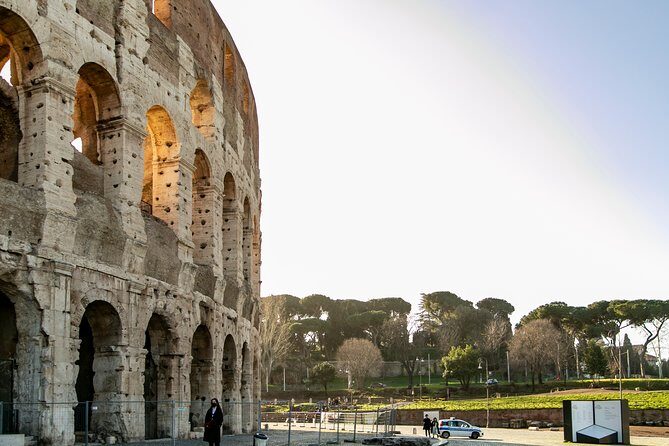
- Meeting at Colosseo/Fori Imperiali and getting in smoothly
- What I think about the flow
- Entering the Colosseum: structure, stories, and big views
- A practical note on timing
- The Roman Forum: the heart of Ancient Rome
- How to make the Forum work for you
- Palatine Hill: photos from the panoramic terrace
- What I like about pairing Palatine with the other sites
- Pacing and group size: why self-paced works better here
- Price and value: is $45 fair for three major sites?
- My honest take
- Practical tips that make or break your visit
- Bring what matters
- Double-check names and ID matching
- Accessibility note (quick but important)
- Should you book this Colosseum–Forum–Palatine combo?
- My quick decision guide
- FAQ
- What does the price include?
- Do I get an actual entry ticket with the voucher?
- What languages is the audio guide available in?
- Do I need headphones?
- Does the audio guide work offline?
- How long is the experience?
- Where is the meeting point?
- Is there a security check?
- What ID do I need?
- Is the tour wheelchair accessible?
Key things to know before you go
- Pre-booked entry to three sites saves time and stress at the main checkpoints
- Multilingual audio guide (8+ languages) lets you slow down or speed up based on your interests
- Headphones not included, and the app needs internet, so bring your own setup
- Security screening is real and can add waiting time during peak hours
- Guided time + self-paced audio helps you understand what you’re looking at without rigid pacing
- Passport/ID name must match exactly or entry can be denied
Before you arrive: your audio guide app setup
This experience is built around an audio guide app, not a live lecturer. That’s great for freedom, but it also means you’re running the show with your phone.
Plan on doing three small things before you even leave your hotel room:
- Download the audio guide instructions via the link you’ll receive, then check that the app works on your phone.
- Make sure you have internet access. The app requires a connection to deliver the content.
- Bring headphones. The tour provides the guide experience, but headphones are not included. (Yes, this is where I wish every phone maker also included a headphone budget—alas.)
You can also watch an introductory multimedia video from a link on your smartphone or PC either before or after the visit. It’s a nice way to get your mental map in place, especially for the Colosseum, where you’ll see layers of history at once.
The audio guide languages include English, Spanish, German, French, Portuguese, Polish, Chinese, and Italian. If you’re traveling with someone who wants a different language, you can both use the same general flow while listening to your own commentary.
More Colosseum, Forum & Palatine combos for the Colosseum & Ancient Rome


Meeting at Colosseo/Fori Imperiali and getting in smoothly
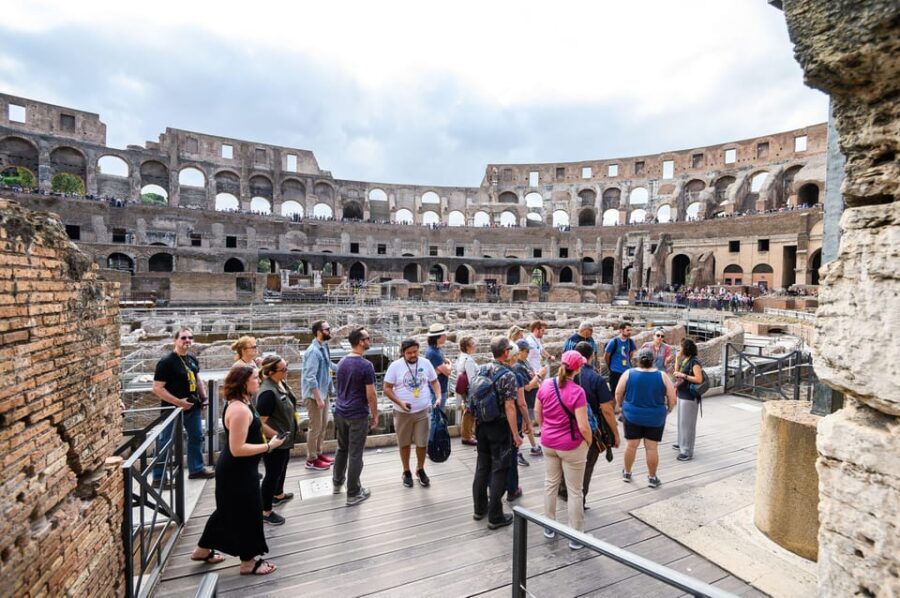
The meeting point is at Colosseo/Fori Imperiali. And here’s the key detail that avoids most first-day confusion: your voucher is not your entry ticket. You’ll get the entry tickets and instructions to download the app.
You’ll also have assistance from a host at the agency. That matters, because it’s one more human helping you match the right people to the right entry process. This is especially useful when you’re dealing with security checks and name verification.
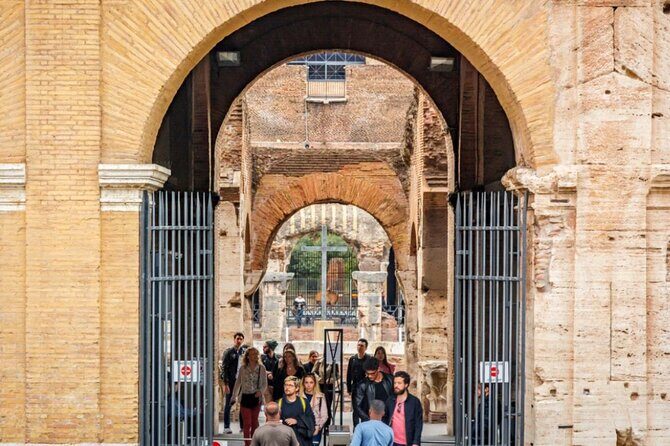
Expect airport-style security screening. During busy times, waiting can reach up to 30 minutes. The good news is that the experience includes a skip-the-ticket-line element, so you’re not stuck in the longest queue patterns—still, give yourself enough time to breathe.
Bring your ID—passport or national ID card—and make sure the name spelling matches what you booked exactly. This includes children. If names don’t match, entry to the Colosseum may be denied and you won’t get a refund. It’s strict, but it’s also normal for major sites. Double-check now, not at the gate.
What I think about the flow
I like this kind of setup because it reduces decision fatigue. You’re not trying to figure out which line is which while your feet are already aching. You arrive, get sorted, and then you can spend your energy actually looking at the place.
Entering the Colosseum: structure, stories, and big views

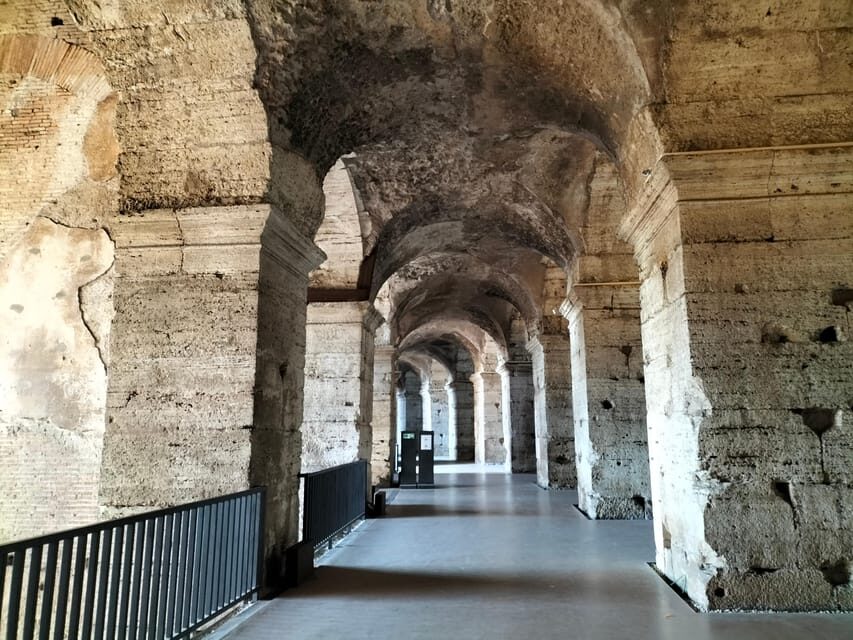
Your Colosseum time starts with guided content (about 75 minutes) that gives you enough context to make the rest of the visit click. Even if you’re just passing through the first corridor, the guided section helps you connect the building’s layout to what you’re seeing.
What to focus on once you’re inside:
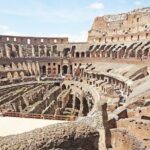
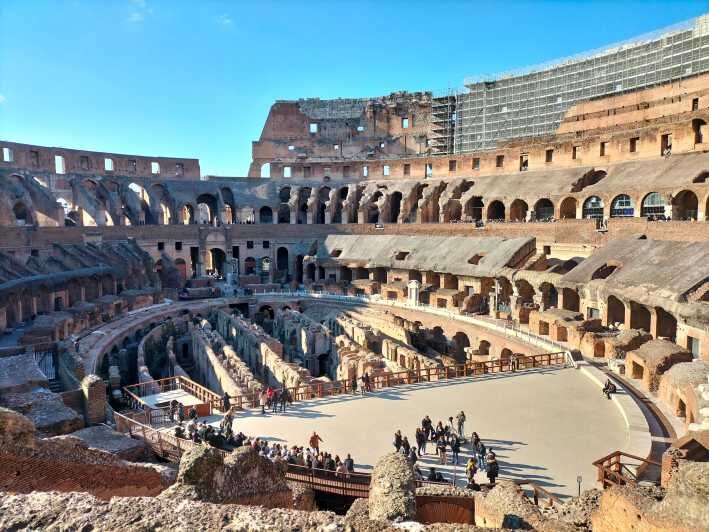
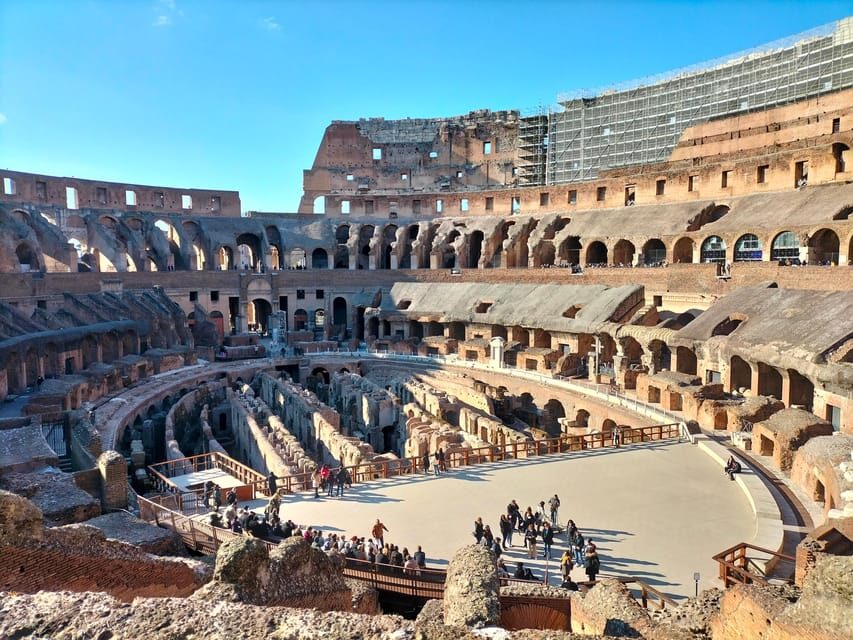
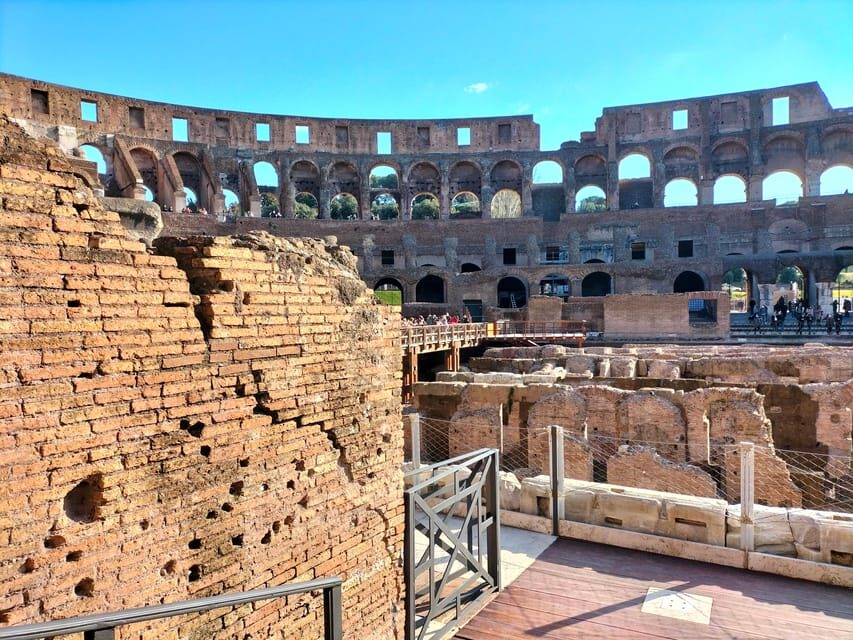
- The scale of the arena and seating areas. It’s one of those places where your brain needs a minute to accept size.
- Viewpoints for panoramas. The experience is set up so you can enjoy the surrounding sightlines and take photos with the right angles.
- The stories built around gladiators and emperors. The audio guide is where those themes become more personal, letting you connect the architecture to the people who moved through it.
Colosseum sightseeing can go two ways. You either speed through for photos, or you get stuck staring at one section with no idea what you’re looking at. This combo—guided time plus audio at your own pace—keeps you from doing either.
A practical note on timing
In three hours total, you want to stay aware of your energy. The Colosseum is visually intense and it’s easy to spend too long in one area. If you feel your momentum dropping, treat the guided portion as your anchor and then use the audio guide like a choose-your-own-adventure.
More Roman Forum tours for the Colosseum & Ancient Rome

The Roman Forum: the heart of Ancient Rome
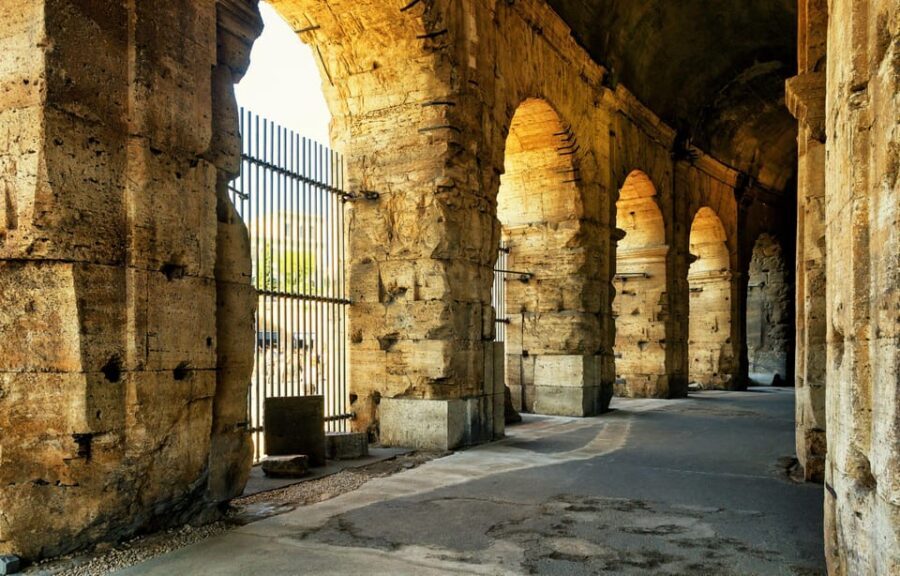
Next comes the Roman Forum (about 45 minutes of guided time). This is where the experience really changes tone. The Colosseum is loud in your eyes—big, dramatic, instantly recognizable. The Forum is quieter, more layered. It’s full of spaces that feel like they used to hold conversations, deals, speeches, and daily power plays.
You’ll wander through what was the core of political and social life in Ancient Rome. The audio guide adds meaning to the ruins by turning them into places where you can imagine behavior: who went where, why certain buildings mattered, and how influence moved through the city.
How to make the Forum work for you
This is an area where your pace really matters. If you move too fast, everything becomes “cool rocks.” If you move too slow, you can feel restless because the Forum doesn’t hit you with the same big single-frame wow as the Colosseum.
My advice: use the audio guide to pick a few anchor themes. For example, listen to one segment about governance and then spend 5–10 minutes looking at the surrounding layout. Then do the same for another theme. That way you’re not collecting random facts—you’re building a picture.
And yes, you’ll want your camera out. The Forum gives you a mix of architecture and perspective lines that look great even without perfect lighting.
Palatine Hill: photos from the panoramic terrace

After the Forum, you head to Palatine Hill (about 45 minutes guided). Palatine Hill is often described as the place where Rome was founded, and you’ll get that sense quickly. It’s a place where the ruins feel like a viewpoint on the city itself, not just a set of walls.
In practical terms, you’ll spend time exploring the hill and using the panoramic terrace for photos. This is one of the best spots to pause, reset, and take in how Rome’s modern streets connect to the ancient layout you’ve been studying.
The guided portion sets the context, and the audio guide helps you understand the “who lived here” angle—emperors once lived on Palatine Hill, and the commentary ties that reality to the spaces you’re seeing.
What I like about pairing Palatine with the other sites
Palatine Hill acts like a bridge between the Colosseum’s spectacle and the Forum’s civic center. You go from entertainment and power in one sense, to leadership and origins in another. If you do just one of the three, you miss that shift.
Pacing and group size: why self-paced works better here
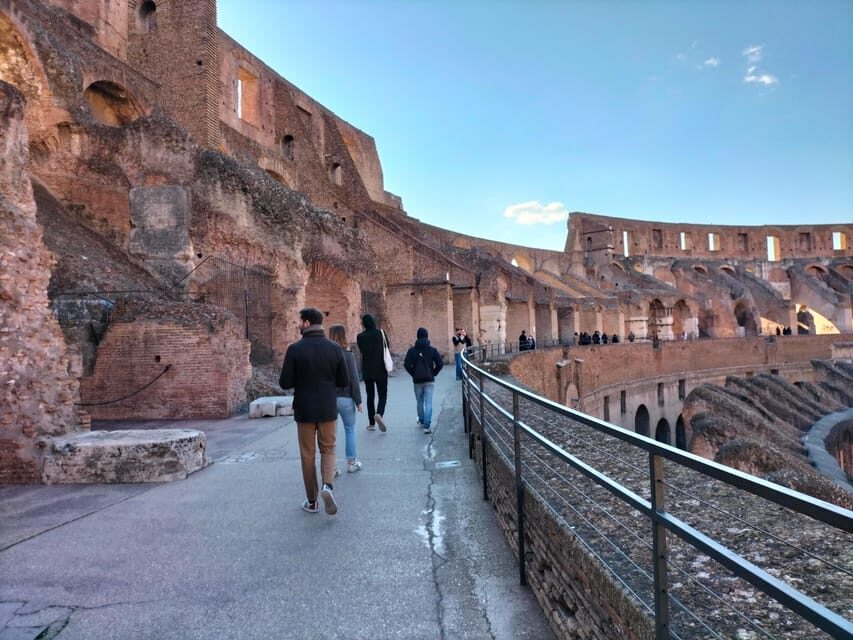
This experience is designed so you can avoid large-group chaos and follow the sites at your own pace with the audio guide. You still get guided sections, but the overall structure is flexible.
That’s valuable because Rome’s top attractions come with two predictable issues:
1) You move too quickly when it’s crowded.
2) You don’t know what to look at when it’s quiet.
Here, the guided parts help you know what matters. Then the audio guide lets you decide how long to linger on your favorite corners—whether that’s a viewpoint, a particular ruin, or a photo angle.
Also, headphones matter to your pacing. If you’re sharing audio, you may end up pausing and rewinding a lot. Plan for one phone per person if possible, or take turns and accept some overlap.
Price and value: is $45 fair for three major sites?

You’ll see a price of about $45 per person for roughly 3 hours, and it includes the entrance ticket. The standard adult ticket value is listed as €18, with children under 18 listed as free.
So what are you really paying for beyond the site entry?
- The Colosseum/Forum/Palatine access packaged together
- The skip-the-ticket-line benefit
- The host assistance on-site
- The audio guide experience with multiple languages
- A guided structure for the Colosseum, Palatine Hill, and the Forum (so you don’t arrive cold)
If you were to buy tickets separately and then try to build an audio plan yourself, you’d likely lose time—or end up paying for something similar anyway. The real win here is the time saved and the confidence that you’re using your visit efficiently.
The main cost you might not be thinking about: your own headphones, plus any phone data needs since the app requires internet.
My honest take
If you like ruins but also like understanding what you’re seeing, this is a strong deal. If you prefer a full live guide explaining everything in real time, you may feel something missing—this experience is designed more for self-paced listening.
Practical tips that make or break your visit
Bring what matters
Bring:
- Your passport or ID card
- Comfortable shoes (you’ll be walking and standing)
- Comfortable clothes
Skip:
- Oversize luggage
- Drones and pets (assistance dogs allowed)
- Selfie sticks
- Alcohol and drugs
- Sprays or aerosols
- Glass objects
- Electric wheelchairs
Security rules like these are usually enforced consistently at major attractions, so it’s best to travel light.
Double-check names and ID matching
This is worth repeating because it’s strict: all names you provide must match exactly what appears on each participant’s ID or passport. Include children’s exact names. If names are incorrect or incomplete, entry can be denied with no refund.
Accessibility note (quick but important)
The information you’re given includes both wheelchair-accessible language and a statement that this tour is not wheelchair accessible. If accessibility is a priority, confirm directly with the provider before booking—especially since electric wheelchairs are listed as not allowed.
Should you book this Colosseum–Forum–Palatine combo?
Book it if:
- You want three major Ancient Rome sites in one visit without spending hours planning routes.
- You like learning at your own pace using a multilingual audio guide.
- You prefer a lighter touch than a full live guide, but still want guided context where it counts.
- You value skip-the-line entry and on-site help from a host.
Skip it if:
- You don’t want to rely on a phone and internet connection during your visit.
- You hate missing a live guide’s real-time explanations.
- You don’t want to handle the headphone requirement.
My quick decision guide
If your goal is to leave the Colosseum, Forum, and Palatine Hill feeling oriented—able to remember what you saw and why—this works well. If you’re the type who only enjoys ruins when someone narrates every step out loud, you may want a live-guided alternative.
FAQ
What does the price include?
The price includes the entrance ticket to the Colosseum, Roman Forum, and Palatine Hill (standard adult ticket is listed as €18, and children under 18 are listed as €0), plus audio guide support and assistance from a host.
Do I get an actual entry ticket with the voucher?
No. The voucher is not your entry ticket. You’ll receive the entry tickets and instructions to download the app.
What languages is the audio guide available in?
The audio guide app is listed in English, Spanish, German, French, Portuguese, Polish, Chinese, and Italian.
Do I need headphones?
Yes. Headphones for the audio guide app are not included, so you’ll need to bring your own.
Does the audio guide work offline?
The app requires an internet connection, so plan for data access during your visit.
How long is the experience?
The total duration is about 3 hours.
Where is the meeting point?
The meeting point is at Colosseo/Fori Imperiali.
Is there a security check?
Yes. All visitors must pass an airport-style security check, and during peak periods waiting times may reach up to 30 minutes.
What ID do I need?
You’ll need a passport or ID card, and the names must match exactly what you provide at booking. Entry is not guaranteed without proper identification.
Is the tour wheelchair accessible?
The information provided includes both wheelchair accessibility language and a statement saying the tour is not wheelchair accessible. If you need wheelchair access, confirm with the provider before booking.