REVIEW · ROME
Explore Colosseum and Roman Forum with an Archaeologist
Book on GetYourGuide →Operated by Askos Tours · Bookable on GetYourGuide
A morning in Rome that feels like a time machine. You get a focused, archaeologist-led walk through the Colosseum and the Roman Forum, with viewpoints and monuments tied together so it all clicks.
I especially liked the skip-the-line entry and the second-ring panoramic view from inside the Colosseum. You also get a clear, guided path through the Forum’s main buildings and the big Caesar-era moment at the Altar of Caesar.
One thing to plan for: you must bring the right documents and match names exactly, or entry can be denied even with a ticket. The tour is also walking-heavy in the sense that you’re on your feet for several stops, even if the activity level is listed as minimal.
In This Review
- Key things I’d pay attention to
- How an archaeologist turns the Colosseum and Forum into one story
- Meeting at Colosseo Metro: finding your guide fast
- Inside the Colosseum: skip the ticket line, then use the views
- A possible drawback to know upfront
- Palatine Hill viewpoint time: getting your bearings in one shot
- Constantine, Septimius Severus, and Titus: arches as political messaging
- The Domus Aurea underground tunnel: a surprising change of perspective
- Roman Forum highlights: Maxentius, the Vestals, Antoninus and Faustina
- My practical take on the Forum
- Price and value for a private archaeologist-led 3-hour tour
- Timing, walking style, and what to bring
- Not allowed items (so you don’t get stuck at the gate)
- Languages and pacing: what you can expect from the guide
- Who this tour suits best
- Should you book this Colosseum and Roman Forum archaeologist tour?
- FAQ
- How long is the tour?
- Where do we meet the guide?
- Is skip-the-line entry included?
- What places are visited during the tour?
- What languages are offered?
- Is the tour wheelchair accessible?
Key things I’d pay attention to
- Skip-the-line Colosseum admission so you spend less time stalled and more time looking closely
- Second-ring views that help you understand the Colosseum’s interior scale
- Palatine Hill viewpoint time for a big picture of what you’re actually standing above
- Underground Domus Aurea tunnel stop that changes how you picture Nero’s Rome
- Forum anchors like the Basilica of Maxentius, House of the Vestals, and the Altar of Caesar
- Private guide pacing that keeps the walk organized instead of rushed
How an archaeologist turns the Colosseum and Forum into one story
The Colosseum and Roman Forum are both famous, but fame can flatten them. What makes this experience work is that the guide connects the dots as you move—how emperors projected power, how public space functioned, and how the ruins you see today relate to buildings that once sat in full view of crowds.
You’re not just ticking off monuments. You’re learning how to read the site: where to stand to understand sightlines, how later structures reused older space, and why certain spots keep getting referenced. It’s the kind of tour where the stone feels less like rubble and more like evidence.
And since it’s a private group with an archaeologist guide, you can follow at a pace that makes sense for your questions. The result is practical: you leave with a mental map you can actually use when you wander on your own afterward.
More Roman Forum tours for the Colosseum & Ancient Rome
Meeting at Colosseo Metro: finding your guide fast
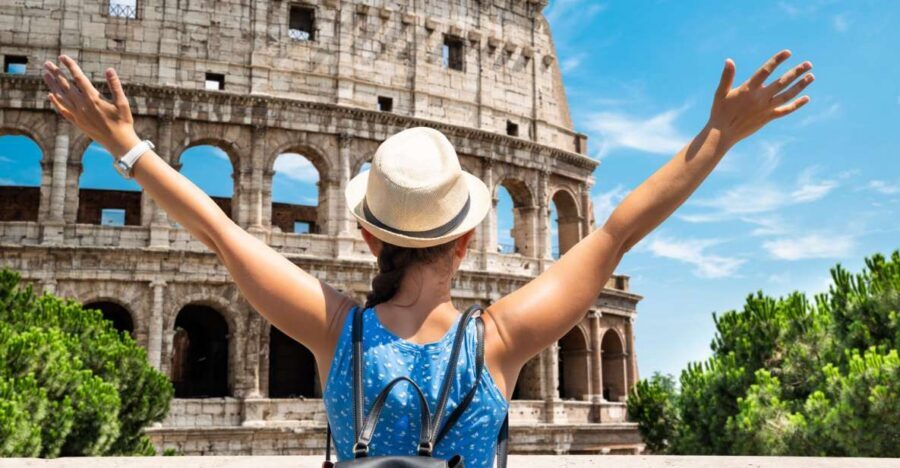
This starts at the green newspaper kiosk outside the exit to the Colosseo Metro station. Your guide will hold a sign with your name on top, so you can spot them quickly rather than playing the Rome version of Where’s Waldo.
Why this matters: the Colosseum area is busy, and meeting late can cut into the most valuable moments—like getting into the Colosseum before the day’s rhythm fully kicks in. Arrive a few minutes early so you don’t stress about finding the kiosk.
The tour ends back at the meeting point. That makes it easy to plan lunch or your next stop without guessing where you’ll wind up.
Inside the Colosseum: skip the ticket line, then use the views
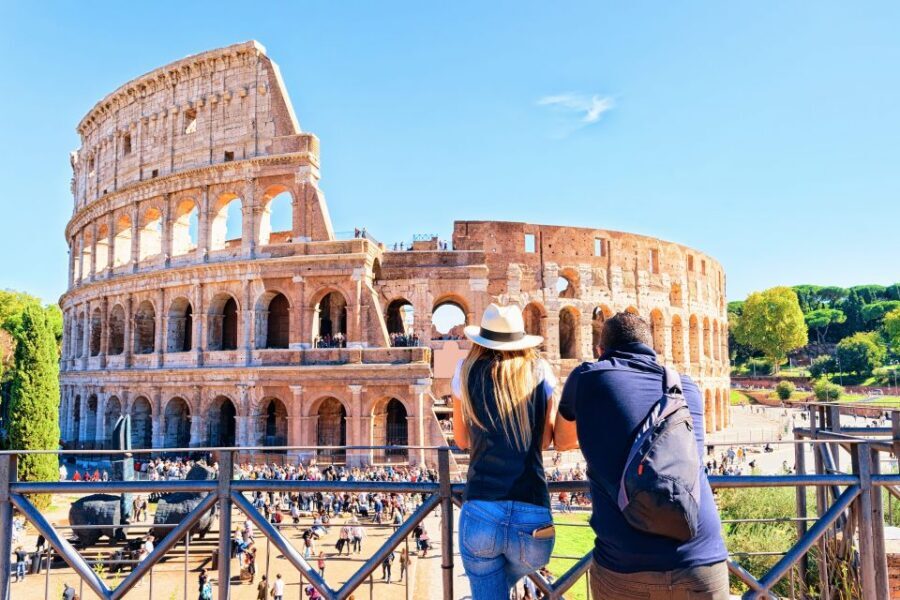
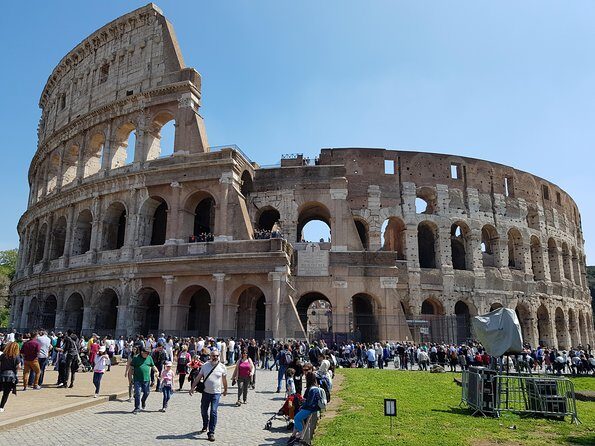
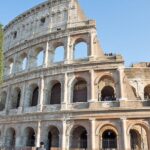
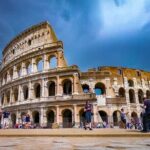
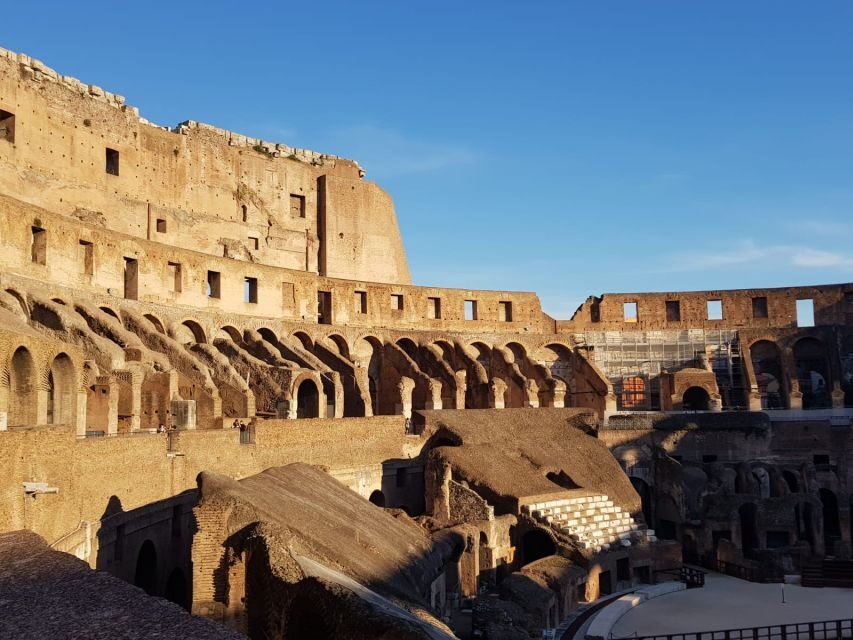
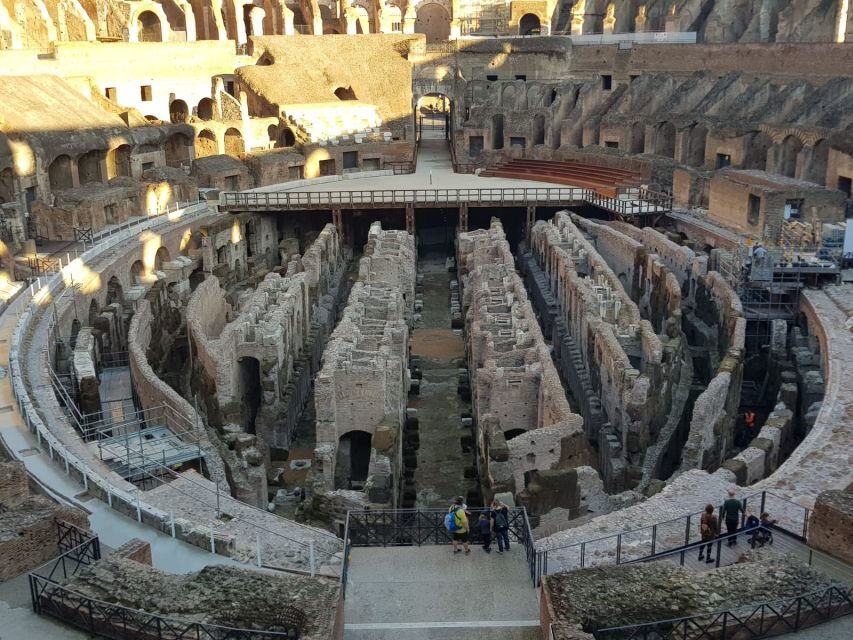
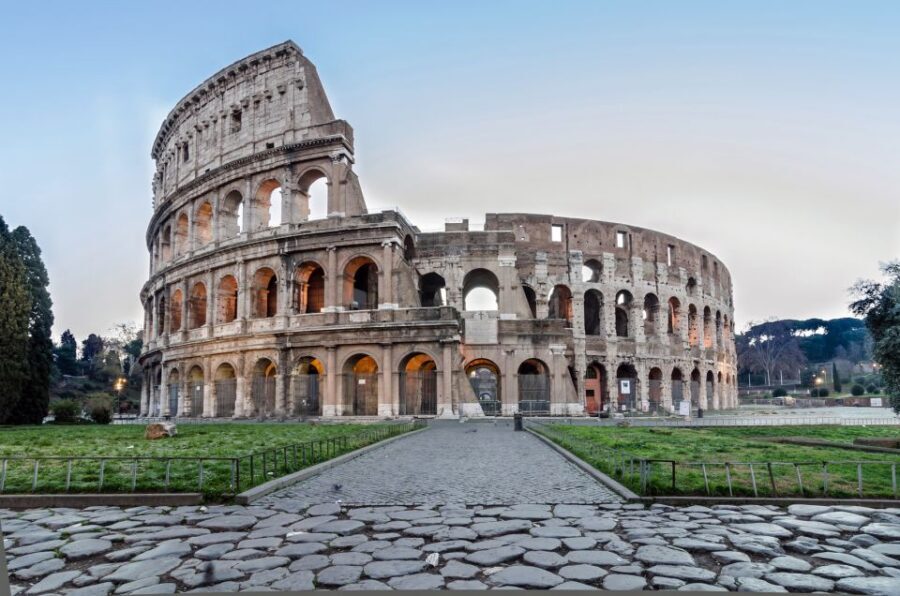
The Colosseum portion is about 75 minutes, and the big advantage here is skip-the-line tickets. You still wait for security and entry procedures, but you avoid the long ticket queue that can eat a big chunk of your time.
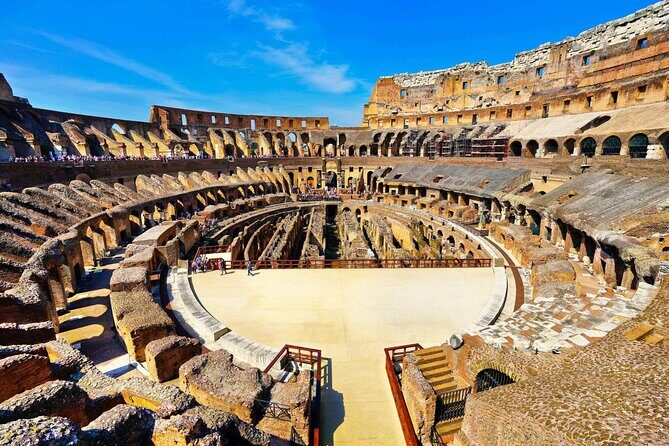
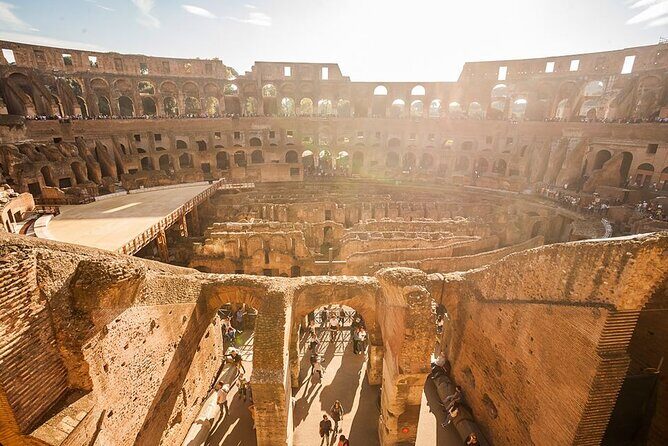
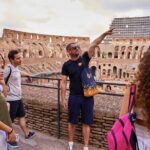
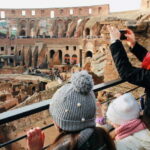
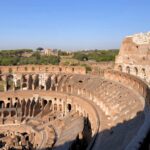
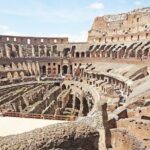
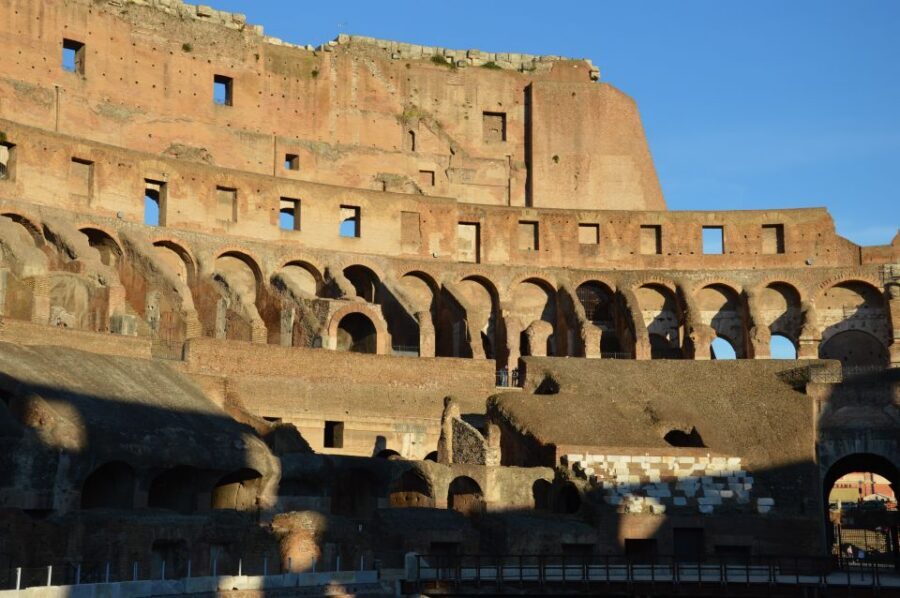
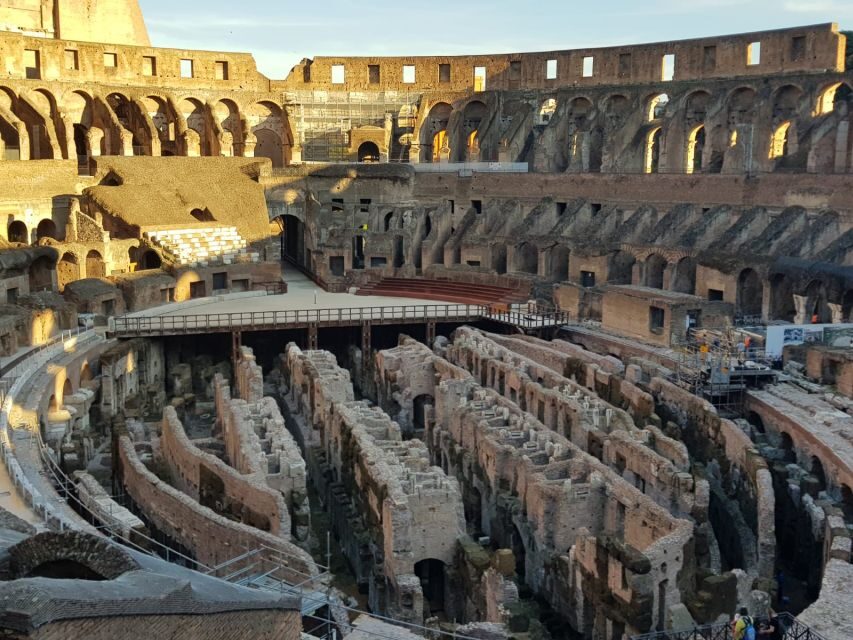
Once inside, you focus on a few high-impact perspectives. You head toward the second ring for a panoramic view of the monument’s interior and the square below. That viewpoint helps you grasp the Colosseum’s geometry—how spectators would have understood the space, and why certain architectural lines feel so dramatic even today.
From there, you look out at details tied to later structures and views, including the Venus and Rome Temple’s colossal base, remnants of the colonnade, and surviving walls. You’ll also see the Imperial Fora street area and the Arch of Constantine in your line of sight.
Practical tip: once you climb into those viewpoints, try to pause and orient yourself. The guide’s direction will make more sense if you take a moment to match what you hear with what you can see from your exact spot.
A possible drawback to know upfront
The Colosseum is closed on December 25th and January 1st. If you’re traveling around those dates, this specific experience won’t run.
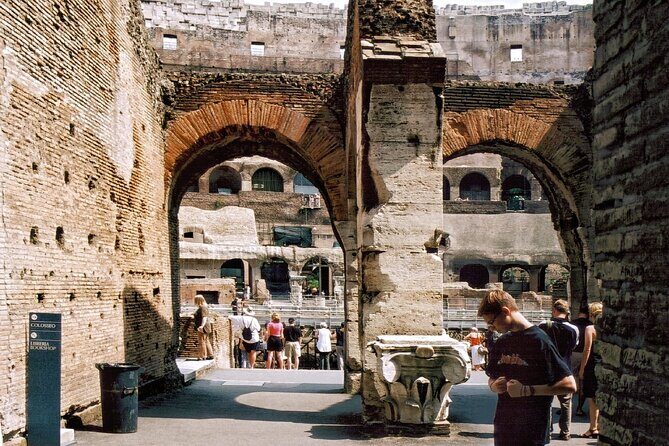
Also, you’ll be walking through a structured route, so comfortable shoes matter. The tour lists activity as minimal, but ruins still have uneven ground and lots of stairs or steps.
Palatine Hill viewpoint time: getting your bearings in one shot
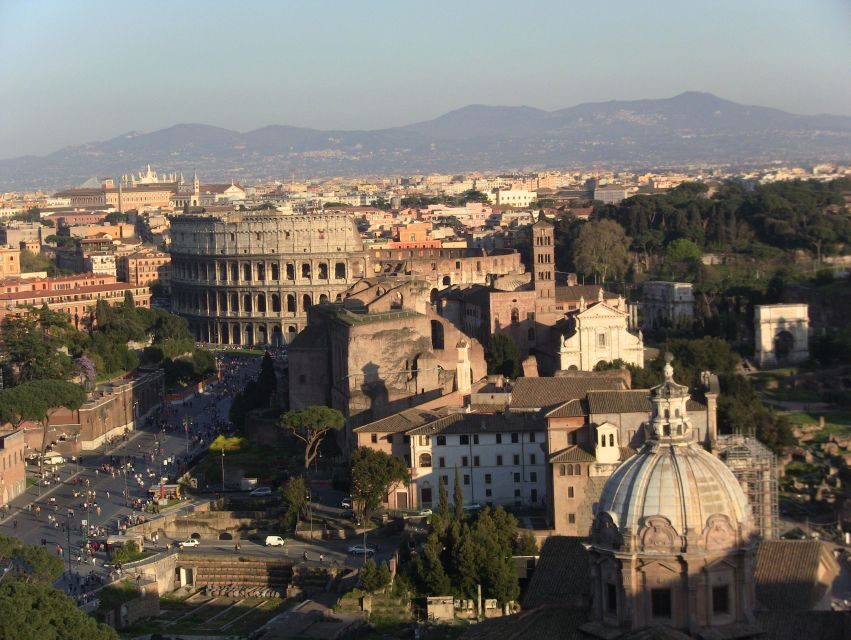
After the first Colosseum time, you move toward a key “big picture” moment: the Palatine Hill view. This is where the tour helps most people—because the Forum and surrounding hills can feel confusing when you’re seeing them for the first time.
From this vantage, you get a better sense of why the Romans built where they did. You start to understand the Forum not as a random collection of ruins, but as the civic center of a much larger landscape shaped by power and movement.
If you’ve ever stood in the Forum and thought, Where am I, really? this viewpoint solves that feeling early. It sets you up for the next phase, where you’ll transition from empire-size monuments to smaller, more intimate spaces.

Constantine, Septimius Severus, and Titus: arches as political messaging
Arches in Rome aren’t just decoration. They’re propaganda built in stone, meant to claim victories and shape how people remember rulers.
This route gives you several stops tied together by theme:
- The Arch of Constantine, where you get guided context before moving on
- A quick look at the Arch of Septimius Severus (about 10 minutes)
- Then the Arch of Titus, another political marker that matters for understanding how Rome presented itself to the public
What I like about this approach is that it prevents the “arch checklist” problem. Instead of seeing arches as isolated photo stops, you get a sense of what they were doing in the city’s visual language.
The Domus Aurea underground tunnel: a surprising change of perspective
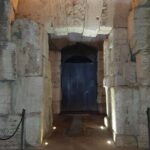
Then comes one of the most memorable parts: you pass through an underground tunnel of the Domus Aurea and emerge near the Forum’s square.
That underground section matters more than it sounds on paper. It shifts your sense of scale and location, because you’re physically moving through space associated with Nero’s reign. Even if you don’t know the full backstory, the guided narration helps you connect the dots to what you’ll see above—especially once you step into the Forum area.
If you’re the type who likes when a tour changes pace or setting, this is the moment. It adds variety without turning the day into a sprint.
Roman Forum highlights: Maxentius, the Vestals, Antoninus and Faustina
The Roman Forum part is about 1.5 hours, and it’s where the tour earns its keep for most visitors. The Forum is huge, and without guidance, you can easily drift from one ruin to the next without understanding what role each place played.
Here’s what you’ll focus on:
- Basilica of Maxentius: a major public building that signals how Romans conducted civic life
- House of the Vestals: tied to the Vestal Virgins and the sacred duties that gave the Forum spiritual weight
- Temple of Antoninus and Faustina: another anchor for understanding religious and imperial presence
- Altar of Caesar: a revered focal point that ties directly into how worship and power blurred in Rome
Then there’s the Forum square moment—the guided views that make the next stops feel more grounded. By the time you reach the Altar of Caesar and the surrounding areas, you’re not just looking at columns and bases. You understand why those particular spaces mattered.
My practical take on the Forum
The Forum rewards attention. If you go too fast, you’ll remember photos but not meaning. With this pacing, you get time to look, listen, and orient yourself—so the Forum becomes a readable map instead of an overwhelming blur.
Price and value for a private archaeologist-led 3-hour tour
At $198.25 per person, this is not a budget stroll. But it can feel like good value if you care about time and interpretation.
Here’s why:
- You get admission included and skip-the-line entry for the Colosseum (the Colosseum ticket cost is listed as 18 euro, and that admission is included).
- You’re paying for a dedicated personal guide with an archaeologist background, not just a general walking script.
- The tour is 3 hours, so you’re concentrating key sites instead of spending your day bouncing between stops with no narrative.
Private tours in Rome often cost more because the guide time is yours. If you’re traveling with family or friends and want the day to move logically, the price starts to make sense. If you’re solo and comfortable navigating alone, you might decide to do a self-guided visit to save money. But if you want the Forum to actually connect in your head, the guide tends to be worth it.
Timing, walking style, and what to bring
The tour lasts 3 hours, and it’s offered at different starting times—so you can choose a slot that fits your day. The activity level is listed as minimal, but you should still expect regular walking across uneven historic surfaces.
You’ll also want to bring identification documentation. Entry to the Colosseum and Roman Forum requires ID, and without it, you risk being denied entry even with a purchased ticket.
Also, when booking you need to provide full names and ages of all travelers. At the ticket office, a voucher containing full names is required; mismatches can lead to denial of access. This is the sort of rule that’s easy to overlook until it becomes a problem—so double-check your booking details.
Not allowed items (so you don’t get stuck at the gate)
Pets, weapons or sharp objects, oversize luggage, baby strollers, mobility scooters, non-folding strollers, unaccompanied minors, and electric wheelchairs are not allowed.
If you’re traveling with kids, large bags, or anything bulky, plan ahead. Rome is walkable, but policies around historic-site entry can be strict.
Languages and pacing: what you can expect from the guide
The guide is available in English, Italian, Spanish, French, and German. You’ll get live guidance with a pacing that aims to keep you from feeling rushed through the biggest moments.
The strongest compliment this tour receives in reviews is the guide itself: personable, with the right pacing. That combo matters in Rome, where the temptation is to speed through because there’s so much to see. Here, the structure helps you stay oriented and actually notice what you’re standing in front of.
And because it’s private, you’re not stuck waiting for a larger group to catch up before moving on.
Who this tour suits best
This fits best if you want:
- A clear, guided route that ties the Colosseum to the Forum’s civic meaning
- Big viewpoints like the second ring and the Palatine Hill perspective
- A guide-led explanation of key landmarks such as the Arch of Titus and the Altar of Caesar
It may not be ideal if you:
- Need wheelchair access. The tour is listed as not suitable for wheelchair users.
- Want a slow, casual wander with no structure. This is planned for momentum and understanding, not drifting.
If you’re the kind of visitor who enjoys learning how ancient sites worked, you’ll likely get a lot from the archaeologist-led context.
Should you book this Colosseum and Roman Forum archaeologist tour?
I’d book it if you want the Colosseum and Forum to feel like more than scenery. The skip-the-line access plus the multi-stop guided flow (including second-ring views and the Domus Aurea tunnel) gives you both time efficiency and meaning.
You should think twice if your travel plans are near the closure dates (December 25th and January 1st), if you’re not ready to follow the ID and name-matching rules, or if mobility constraints make walking around historic sites tough.
Bottom line: if you care about understanding Rome, not just photographing it, this is a strong use of time.
FAQ
How long is the tour?
The tour runs for 3 hours.
Where do we meet the guide?
Meet at the green newspaper kiosk outside the exit to the Colosseo Metro station. The guide will hold a sign with your name.
Is skip-the-line entry included?
Yes. Colosseum admission and skip-the-line tickets are included.
What places are visited during the tour?
You’ll visit the Colosseum, the Arch of Constantine, the Arch of Septimius Severus, the Arch of Titus, and the Roman Forum, including stops such as the House of the Vestals and the Altar of Caesar.
What languages are offered?
The live guide is available in English, Italian, Spanish, French, and German.
Is the tour wheelchair accessible?
No. The activity is not suitable for wheelchair users, and mobility scooters are listed as not allowed.