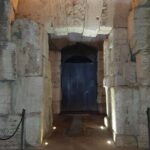
Rome’s amphitheater story starts fast, then slows down. This audio guide ticket combo—Colosseum, Roman Forum, and Palatine Hill—lets you set the pace and connect the arena to the political heart of ancient Rome. I also like that the three stops feel logically linked in one flow, so you’re not bouncing between unrelated sites.
The main catch is also the whole point: there’s no live tour guide, and the audio guide works as a mobile app. Bring your own headset, charge your phone, and don’t plan on doing this with a dead battery.
In This Review
- Key Highlights to Know Before You Go
- Why This Colosseum–Forum–Palatine Hill Combo Works
- Meeting Point at Piazza del Colosseo: Start Near the Action
- Colosseum: See the Arena Without Being Rushed
- Roman Forum: The Political Heart Behind the Stones
- Palatine Hill: Birthplace of Rome and Home of Emperors
- Audio Guide Essentials: App Download and Headset Check
- A Realistic 3–4 Hour Timeline
- Price Value: What $42.86 Really Gets You
- Who This Tour Suits Best
- Trust Factor: What Good Support Looks Like in Rome
- Should You Book This Colosseum–Forum–Palatine Audio Tour?
- FAQ
- How long is the Colosseum, Roman Forum, and Palatine Hill experience?
- How much does it cost?
- What’s included in the price?
- Is a tour guide included?
- Where do I meet for the experience?
- Is the audio guide something I bring or something provided?
- Do I also need to pay for entry tickets separately?
- Is confirmation provided after booking?
- Is it easy to get to the meeting point by transit?
- What happens if I need to cancel or change my booking?
- Should You Book This Colosseum–Forum–Palatine Audio Tour?
Key Highlights to Know Before You Go
- Self-paced timing: you can linger at the big moments and don’t feel locked into a group schedule
- One ticket for three legends: Colosseum plus Roman Forum plus Palatine Hill, all entry-included
- Forum context that clicks: you’ll understand the Forum as the political, social, and religious hub—not just ruins in a field
- Cloaca Maxima fact you’ll remember: the Forum’s valley was drained by Rome’s early sewer system
- Real-world help if plans get messy: an agent named Sam handled delays from road closures tied to a pope funeral and guided guests to the right spot with later tickets
- App-based audio guide: plan for a download and headset, not a printed device
Why This Colosseum–Forum–Palatine Hill Combo Works
If you’re coming to Rome to see the headline ancient sites, this is a smart pairing. The Colosseum is the spectacle. The Roman Forum is where power ran. Palatine Hill is where elite life happened.
The real value here is how you experience the connections. With an audio guide, you can slow down at the Colosseum when you want to stare at the scale, then you can shift to the Forum when you’re ready for the political story, and finally climb up to Palatine Hill when you want the “this is where emperors lived” feeling.
And because you’re not tied to a strict walking tempo, you can match your visit to your energy level. Some people want photos first. Others want explanations first. This format gives you that choice.
More Colosseum, Forum & Palatine combos for the Colosseum & Ancient Rome
Meeting Point at Piazza del Colosseo: Start Near the Action
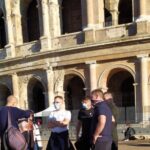
You meet at Piazza del Colosseo, 23 (right by the Colosseum area). That matters more than it sounds. When your start point is close, you spend less time crossing Rome’s streets while trying to keep track of tickets and timing.
It’s also described as being near public transportation, which is a big deal in Rome. You’ll be able to get here without stress, then dive straight into your route.
After booking, you receive confirmation at the time of purchase. You don’t need a long wait to figure out what you’re doing next.
Colosseum: See the Arena Without Being Rushed
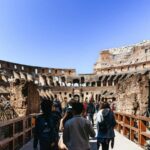
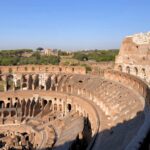
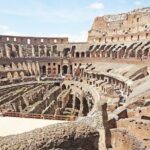
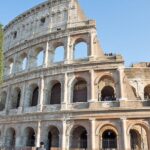
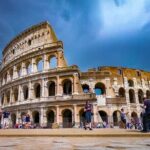
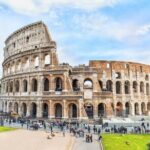
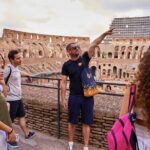
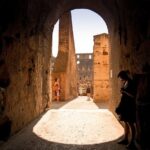
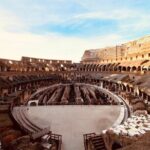
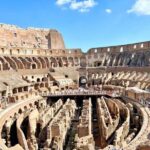
The Colosseum—also called the Flavian Amphitheater—is the big one. It’s an elliptical amphitheater and the largest ancient amphitheater in the world, and it’s one of the strongest symbols of Rome’s greatness.
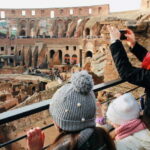
In a self-guided setup, you get to approach the building the way it deserves: slowly. I like the idea of giving yourself a full hour to wander, look up, and understand what you’re seeing rather than rushing through it like a checklist.
One practical tip: even with an audio guide, your eyes do the heavy lifting. Take a minute at the start to decide which parts you want to focus on—upper tiers, the arena floor viewpoints, or the exterior massing—then let the audio explain as you walk.
Possible drawback to plan for: this is popular territory, so you’ll want to stay aware of your surroundings and keep your phone handy for the audio guide instructions.
Roman Forum: The Political Heart Behind the Stones
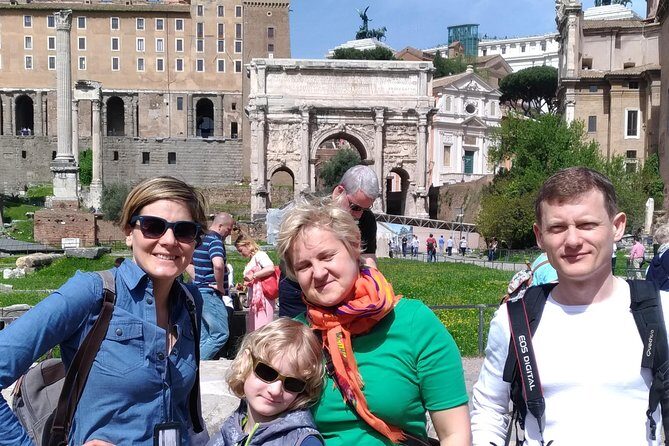
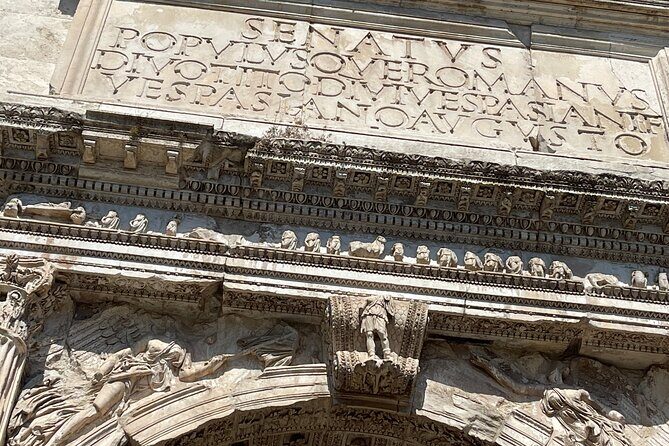
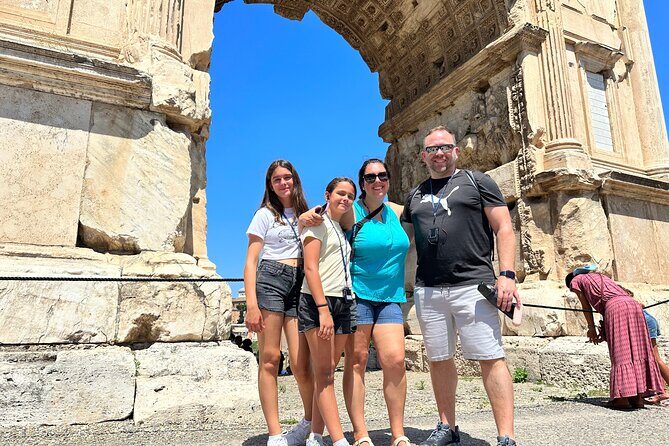
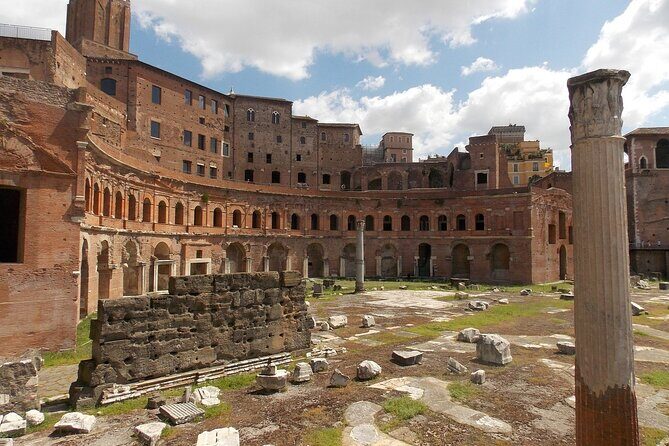
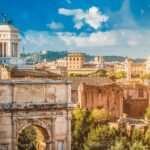
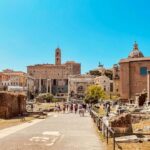
After the Colosseum, the Roman Forum gives you the “how Rome ran” story. The Forum was the center of political, social, and religious life in ancient Rome. It sat in a valley between the Palatine and Capitoline hills, and it wasn’t always dry land.
Here’s a detail that makes the ruins easier to picture: the area was originally a marsh. In the 6th century BCE, it was drained by the Cloaca Maxima—one of the world’s first sewer systems.
That one fact changes how you interpret the space. Instead of viewing the Forum as random fragments, you start thinking like a city planner: water management, movement, power centers, and public life all had to fit into this valley.
You get about an hour here, which feels right. It’s enough time to walk the main zones, read what you can, and absorb the idea of the Forum as a place for public meetings, law courts, elections, and gladiatorial combats.
Palatine Hill: Birthplace of Rome and Home of Emperors
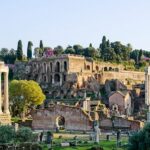
Palatine Hill is the centermost of Rome’s seven hills. It rises about 40 meters above the Roman Forum and around 51 meters above sea level—so yes, you’ll feel the elevation when you move between areas.
It’s also considered the birthplace of Rome. That title sounds mythic, but it pairs well with what Palatine Hill really was during the imperial era: the residential area for emperors and noble families.
I like treating Palatine as the “Rome in private life” stop. The Colosseum gives you public spectacle. The Forum gives you governance. Palatine gives you status—how the elite lived when they weren’t staging dramas for the crowds.
Give yourself space to take in the view and the scale. Even if you’ve seen photos, the hill helps you understand why this area became so valuable. It’s not just a mound of ancient brick—it’s a strategic, high-status location over the center of the city.
More Roman Forum tours for the Colosseum & Ancient Rome

Audio Guide Essentials: App Download and Headset Check
This experience includes an audio guide, but the key word is included in the sense of provided content—not included in the sense of a staff member. You bring your own headset.
One review-based heads-up I’d take seriously: the audio guide is an app you download to your mobile phone. That means you should plan for:
- a little pre-download time before you start, if possible
- enough battery life for 3–4 hours
- comfort using your phone outdoors (brightness, volume, and audio clarity)
You don’t need tech wizard skills, but you do need readiness. If your phone is at 15% and you’re standing in the heat, you’ll feel stressed instead of curious.
The upside of audio (especially self-guided audio) is control. You can pause, replay, or skip ahead when you want to. No awkward waiting for a group. No forced march.
A Realistic 3–4 Hour Timeline
Even though the experience is listed as 3 to 4 hours, you’ll feel the difference in pace depending on how you like to move through sites.
Here’s a sensible rhythm:
- Colosseum: about 1 hour
- Roman Forum: about 1 hour
- Palatine Hill: about 1 hour
That builds in a buffer for walking between stops, photo stops, and audio transitions.
The big advantage is that you’re not stuck with a strict time limit in the way some guided tours are. If you want to extend at one place, you can usually do it without the day falling apart.
If you’re a “photos first” person, I’d still start with the Colosseum. It’s the easiest to lose track of time because it’s so visually intense, and you’ll want your best focus while you’re still fresh.
Price Value: What $42.86 Really Gets You
At $42.86 per person, the value depends on your priorities. If you’re the type who wants to see all three sites in one shot, this pricing structure is efficient.
You get:
- Colosseum entrance ticket
- Roman Forum & Palatine Hill entry tickets
- audio guide (with your headset)
You’re not paying extra for a live guide, since tour guide support isn’t included. That can be a plus if you prefer self-guided pacing. It’s a minus if you want a person to answer questions on the spot.
Also, food and drinks aren’t included. Rome is full of tempting options, but the smartest move is planning snacks nearby or bringing a water bottle when possible—so you can keep the visit flowing without feeling rushed to find a place to sit.
Who This Tour Suits Best
This is a strong fit if:
- you like self-guided travel and want to control pacing
- you’re comfortable learning through audio rather than live narration
- you want the Colosseum plus the Forum plus Palatine Hill as one connected day plan
It’s also described as “most travelers can participate,” which makes it a reasonable choice for a wide range of visitors. Just keep in mind that Palatine Hill involves climbing and uneven ground typical of historic sites.
If you need a constant human guide to manage logistics and keep momentum, you might feel under-supported. But if you’re happy to plan a bit, this format can feel wonderfully free.
Trust Factor: What Good Support Looks Like in Rome
Rome runs on plans and crowds. So I pay attention to how the operator responds when something goes wrong.
One strong example in the available info: an agent named Sam helped with a delay caused by road closures related to a pope funeral. The call ensured guests knew how to reach the right spot, and Sam met them outside with later tickets.
That’s the kind of support that matters when your day hits friction. Self-guided doesn’t have to mean on-your-own. It should still feel like someone is keeping the system running.
You’ll also see that the meeting setup is designed to be easy—so you can get started without hours of confusion.
Should You Book This Colosseum–Forum–Palatine Audio Tour?
Book it if you want flexible pacing and one-ticket convenience for three of Rome’s top ancient sites. The format makes sense: Colosseum for spectacle, Forum for civic life, Palatine for elite origins and power.
Don’t book it if you specifically want a live guide for explanations and on-the-spot questions. This is audio-first, and you’ll want to arrive with a charged phone and your own headset.
If your travel style matches self-guided learning—and you enjoy walking at your own rhythm—this is a practical, high-value way to experience the core of ancient Rome in one compact block of time.
FAQ
How long is the Colosseum, Roman Forum, and Palatine Hill experience?
It lasts about 3 to 4 hours.
How much does it cost?
The price is $42.86 per person.
What’s included in the price?
You get Colosseum entrance, Roman Forum entry, and Palatine Hill entry tickets, plus an audio guide. You’ll need to bring your own headset.
Is a tour guide included?
No. A tour guide is not included.
Where do I meet for the experience?
The ticket redemption point is Piazza del Colosseo, 23, 00184 Roma RM, Italy.
Is the audio guide something I bring or something provided?
The audio guide is included, but you need to bring your own headset. The audio guide is an app on your mobile phone.
Do I also need to pay for entry tickets separately?
No. Entry tickets for the Colosseum, Roman Forum, and Palatine Hill are included.
Is confirmation provided after booking?
Yes. Confirmation is received at the time of booking.
Is it easy to get to the meeting point by transit?
Yes. The meeting point is described as near public transportation.
What happens if I need to cancel or change my booking?
This experience is non-refundable and cannot be changed for any reason.
Should You Book This Colosseum–Forum–Palatine Audio Tour?
If you want a self-guided visit where you can slow down at the Colosseum, then shift to the Forum and Palatine Hill without rushing, this is a solid choice. Just go in prepared for app-based audio and bring your own headset and a charged phone.