REVIEW · ROME
Rome Colosseum, Roman Forum & Palatine Hill Audio Tour
Book on Viator →Bookable on Viator
Rome’s power center is in ruins.
This self-guided audio tour strings together the Colosseum, Roman Forum, and Palatine Hill so you can see the story of ancient Rome in one go. I like that you get timed entry slots, which makes the day feel less chaotic and more like a plan.
What I like most is the way the audio guide points out details you’d normally miss while looking at the big stones. It also keeps you moving at your own pace through three very different spaces: arena, senate-and-temples, and palace-and-viewpoints. One drawback to consider: there’s no personal guide, and some folks have had audio problems if their browser timed out, meaning they had to re-login and hunt their place again.
In This Review
- Key points to know before you go
- Why this Colosseum–Forum–Palatine Hill combo fits in about 3 hours
- Entering the Colosseum: arena views, hypogeum from above, and photo angles
- What to focus on inside the arena area
- Architecture points I’d treat like your checklist
- The views that close the Colosseum segment
- Roman Forum walk: Saturn and Vesta, the Curia, the rostra, and Septimius Severus
- Temples and power symbols
- One stop I’d anchor in your mind: Arch of Septimius Severus
- The Curia and public speaking spaces
- Sacred sites and the spiritual side of the Forum
- Practical drawback to plan for
- Palatine Hill: imperial palaces, legendary founders, and views over the Forum
- Views first: where the photos come from
- Imperial palaces and the feeling of living in power
- Farnese Gardens as a breather
- The audio guide experience: freedom at your pace, plus app/device risks
- Small group self-guided pacing: great for control, tricky for navigation
- Value check: does $47.82 make sense for Colosseum + Forum + Palatine?
- Practical logistics that can make or break your day
- Should you book this audio tour?
- FAQ
- How long is the Rome Colosseum, Roman Forum & Palatine Hill audio tour?
- Which attractions are included?
- Is the audio guide available in English?
- Are entrance tickets included in the price?
- Is there a personal guide during the tour?
- Are headphones provided?
- Where do I meet for the tour?
Key points to know before you go
- Three-sight ticket value: Colosseum, Roman Forum, and Palatine Hill admissions are built into the price.
- Arena-to-underground storytelling: The Colosseum portion includes what you can see about the hypogeum from above.
- Forum highlights in a walk: Temples, the Arch of Septimius Severus, the Curia, and the rostra are part of the audio route.
- Palatine Hill photo payoff: Panoramic views over the Forum and Circus Maximus are a big focus.
- Small group cap: Maximum of 8 travelers means less pressure than larger group tours.
- You need your phone to cooperate: Audio guide access depends on your device working smoothly.
Why this Colosseum–Forum–Palatine Hill combo fits in about 3 hours
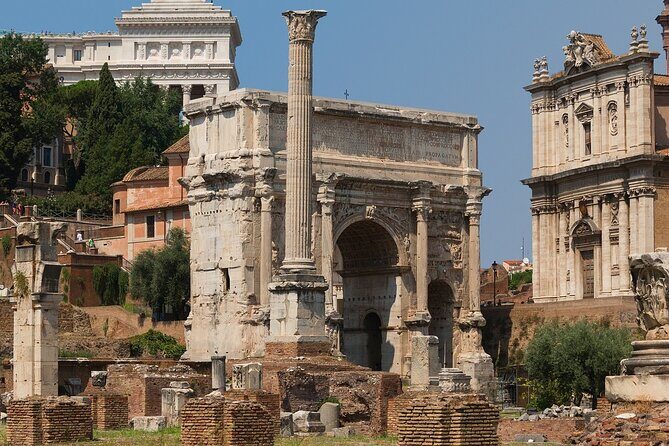
This tour’s whole idea is sensible: hit the Colosseum first, then walk the Forum, then climb up to Palatine Hill for the views. That order matters. The Colosseum gives you the wow-factor fast. The Forum then explains what that crowd-powered spectacle was all about politically and socially. Palatine Hill finishes the arc by showing where emperors lived and where Rome’s founding legends are set.
With a duration of about 3 hours, you’re not doing a slow, museum-style crawl. You’re getting a strong orientation and a guided-feeling route. If you’re the kind of traveler who likes a plan but still wants space to linger, this pacing can work well.
The tour is also listed as having a maximum of 8 travelers. That usually translates into fewer crowds in your immediate orbit and easier crowd flow as you move between monuments. You still face big Rome crowds at the Colosseum and Forum, but your day won’t feel like it’s swallowed by a busload.
More Colosseum, Forum & Palatine combos for the Colosseum & Ancient Rome
Entering the Colosseum: arena views, hypogeum from above, and photo angles
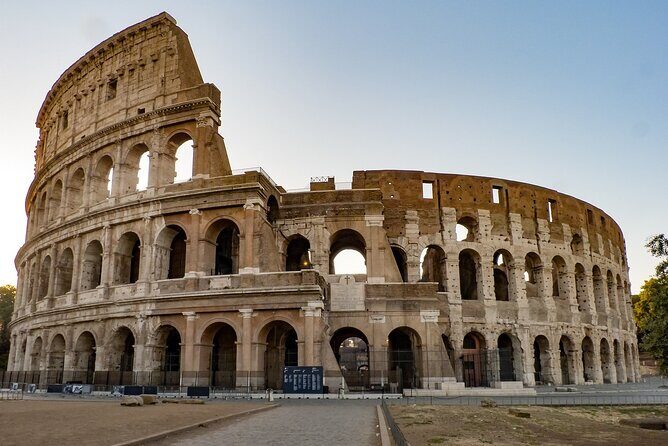
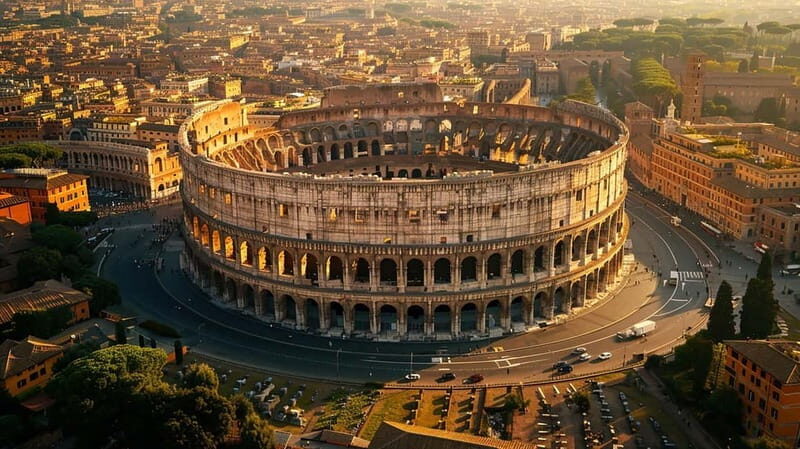
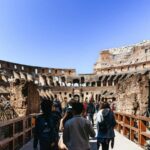
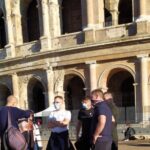
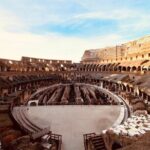
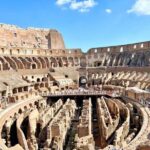
Your start point is at Piazza del Colosseo, 1, 00184 Roma RM. From there, you enter the Colosseum and begin with the arena experience. Even if you’ve seen pictures before, standing in that space changes how you understand the place. It’s not just a stadium. It’s a machine built for spectacle and crowd control.
What to focus on inside the arena area
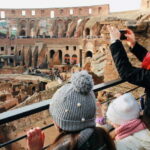
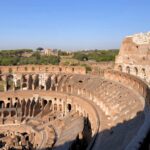
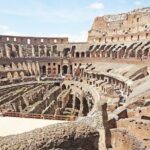
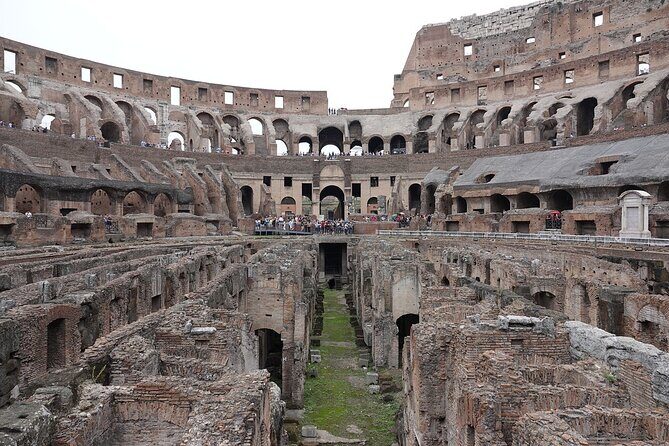
The audio guide pushes you to look where thousands once watched gladiator battles and other shows. The key is to slow down just enough to understand sightlines and scale. When you’re in the arena, think about the two layers of experience: the people on top and the activity below.
The audio also steers you toward the drama behind the stage effects. You’ll learn about the hypogeum—those underground tunnels and waiting areas for fighters and animals—even though you’re viewing it from above rather than descending fully underground. That’s important. You get the concept and the layout in your head, which makes what you see feel more connected.
Architecture points I’d treat like your checklist
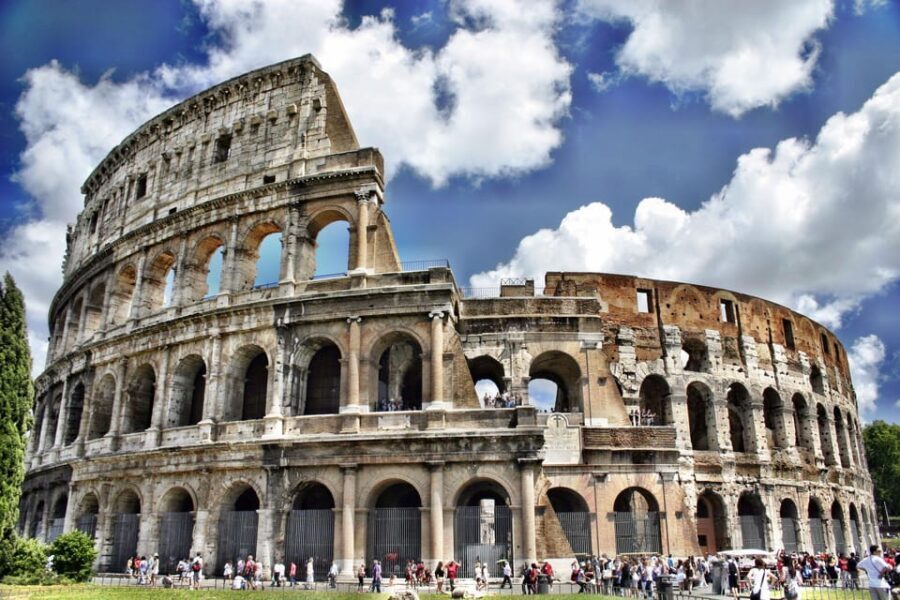
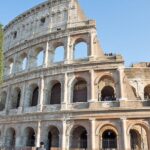
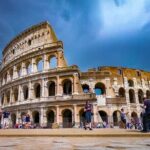
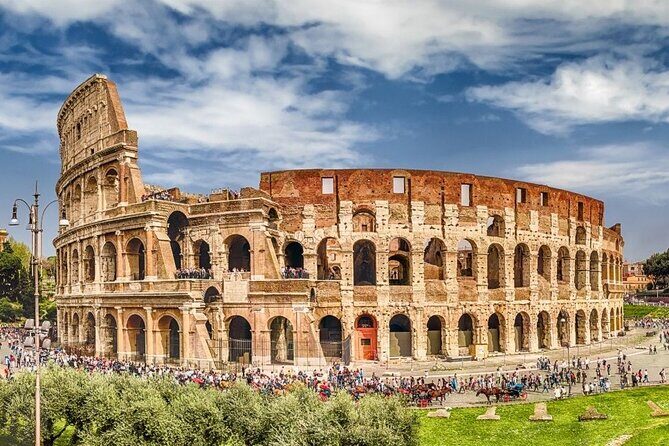
The Colosseum’s architecture is a big part of the payoff. You’ll hear how it was built over 2,000 years ago, and how it evolved over time—from entertainment venue to later uses, including a medieval fortress. That historical shift helps you stop thinking of it as frozen-in-time ruins.
Also, keep an eye out for the grand arches and multiple levels. The audio nudges you toward how those levels shaped crowds and movement. That means you’re not just staring upward. You’re reading the building like a design.
The views that close the Colosseum segment
There’s a city-view angle included from the upper levels, and you can use it to set up your Forum portion. Even a quick glance helps your brain connect the Colosseum to what’s spread out beyond it. And yes—this is part of the reason you’ll want to bring your camera and actually use those moments, not only the arena.
More Roman Forum tours for the Colosseum & Ancient Rome

Roman Forum walk: Saturn and Vesta, the Curia, the rostra, and Septimius Severus
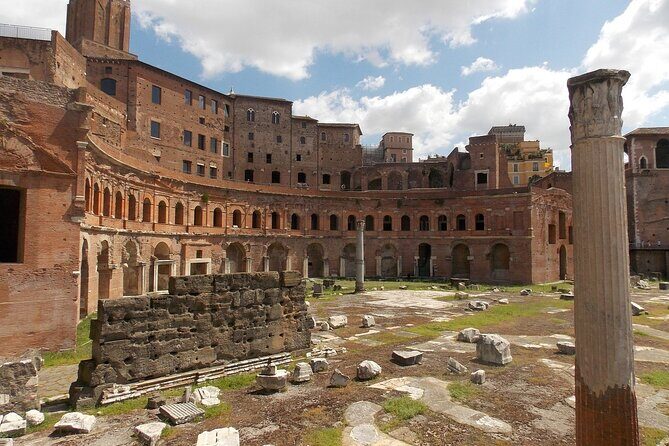
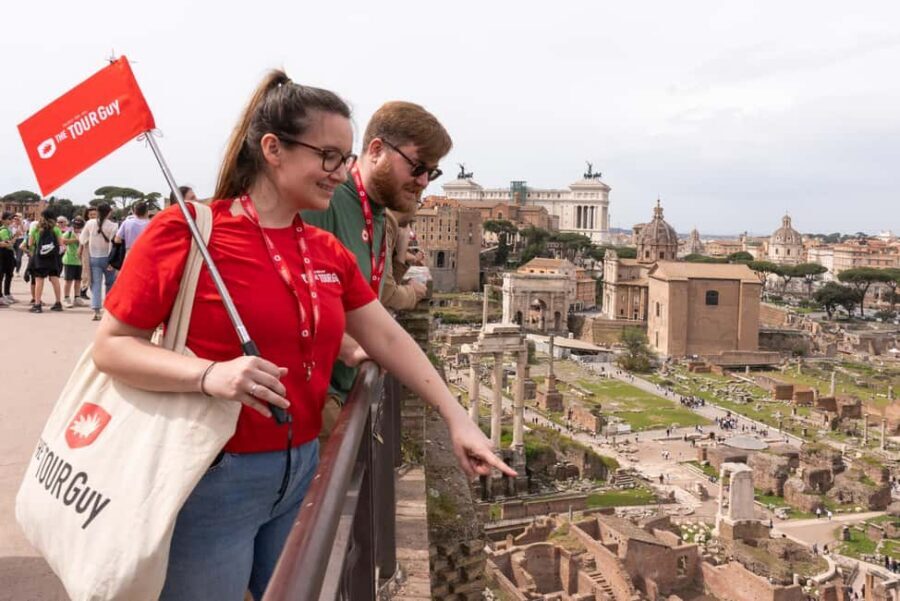
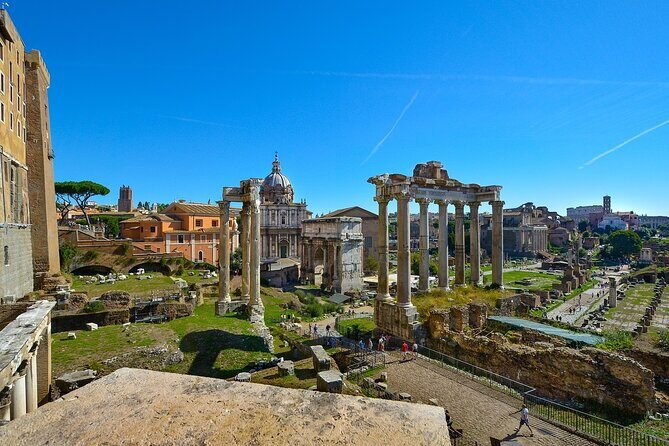
After the Colosseum, the tour pivots into walking the Roman Forum, described as the political, religious, and commercial center of ancient Rome. This is where ruins can start to feel confusing if you’re on your own. The audio guide matters here because it turns scattered remains into a route with meaning.
Temples and power symbols
The audio guide highlights the remains of places like the Temple of Saturn and the Temple of Vesta. These aren’t just name checks. The goal is to help you picture what kind of authority they represented. When you know what people used these sites for, the stones become more than background texture.
One stop I’d anchor in your mind: Arch of Septimius Severus
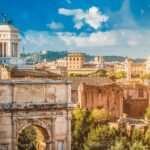
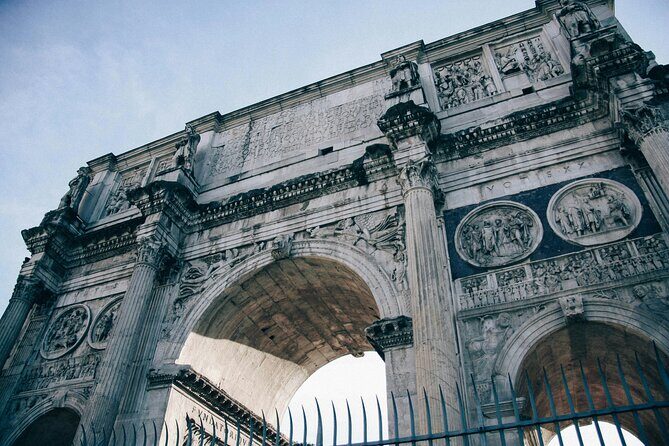
The Arch of Septimius Severus is described as one of the best-preserved monuments in the Forum. Treat this like a landmark. If you’re feeling time pressure, take a minute here to orient yourself. Arches are easy to locate, and in a place this spread out, that orientation helps you move confidently.
The Curia and public speaking spaces
The audio guide also covers the Curia, the senate house where laws were debated and major decisions made in the Roman Republic. Even if you don’t remember every term, the audio frames what the building’s role was—so your eyes know what to connect to.
Then comes the Rostra, where public speakers like Caesar addressed the people. Standing where speeches would have happened is a fast way to understand why the Forum mattered. People weren’t only buying and praying here. They were watching power take shape in public.
Sacred sites and the spiritual side of the Forum
The tour includes the House of the Vestal Virgins and the Regia. It’s easy for a Rome ruin visit to lean too hard on politics and ignore religion, but the audio route aims to keep those threads together. That’s part of what makes the Forum feel like the heart of a functioning city rather than a pile of old buildings.
Practical drawback to plan for
The Forum has uneven surfaces and shifting sightlines. Because this is audio-only and not a live guide walking beside you, you’ll want to keep your attention on navigation moments—especially if crowd flow slows you down. If you drift off your route, you may have to re-orient yourself before you can sync to the next audio segment.
Palatine Hill: imperial palaces, legendary founders, and views over the Forum
After the Forum’s lower, dense streets, Palatine Hill changes the mood. This is the legendary birthplace of Rome and a former home base for emperors. The audio guide turns that into a walk through layers: origins, power, luxury, and then the calmer pause of gardens.
Views first: where the photos come from
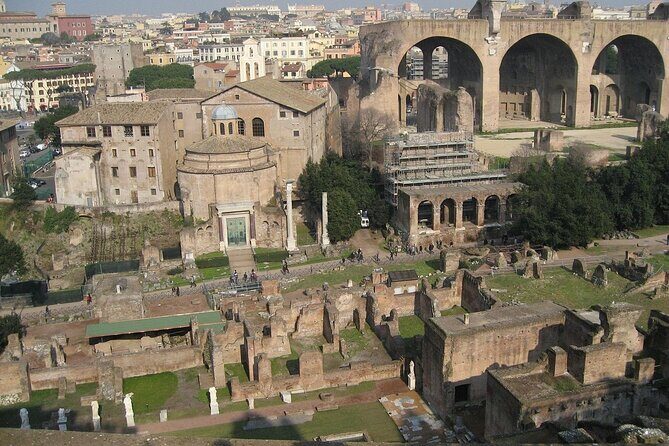
One of the biggest highlights is the photo opportunity. You’re set up with breathtaking panoramic views over the Roman Forum and Circus Maximus. This is one of those moments where your camera roll can end up looking better than you expected—because height and angles do the work for you.
If you care about photos (and most people do), don’t rush past the viewpoints. Take a few minutes to find the spot your eyes keep returning to, then shoot from there. You’ll get a stronger image and a clearer mental map of the day.
Imperial palaces and the feeling of living in power
The audio guide includes ruins of imperial residences like Domus Flavia and Domus Augustana. Even though you’re not stepping into polished rooms, the idea is that you’re walking through the spaces where rulers lived in luxury. That context makes the scale of the remains feel bigger.
The audio route also includes Rome’s founding legends—Romulus and Remus—so you connect myth to location. That helps you understand why this hill is still treated as a symbolic center.
Farnese Gardens as a breather
The tour includes Farnese Gardens, described as a mix of Renaissance charm and ancient history with terraces and shaded paths. This is a good reset. After stone ruins and open-air heat, a greener break can make the last stretch feel easier.
Gardens also help with pacing. Even a short walk through shaded paths can prevent you from dragging yourself through the final minutes just to reach the end.
The audio guide experience: freedom at your pace, plus app/device risks
This tour’s core tool is the English audio guide app. The upside is control. You can linger at a sight that grabs you and skip the parts that feel repetitive. You’re not tied to someone else’s explanations or group pace.
The downside is simple: if your phone or browser has issues, your experience can stall. One of the recurring complaints connected to audio was that the browser timed out, forcing a re-login and then figuring out where you were in the audio file. I’d treat that as a real possibility, not a freak accident.
Here’s how to reduce the chance of it ruining your day:
- Keep your phone charged before you start and consider a small power bank if you’re staying out for the full 3 hours.
- Use stable connectivity when possible, and don’t do major app switching mid-route.
- If you run into an audio reset, expect you may need to re-login and re-find your position before moving on.
Because the tour includes no personal guide, the audio becomes your safety net. If the audio isn’t working, you’ll rely on signage and your own wayfinding.
Also, the tour listing specifies no radio and headphones. That means you’ll likely be using your device audio or your own earbuds. If you plan to use earbuds, bring them. It’s one less thing to worry about once you’re standing amid crowds.
Small group self-guided pacing: great for control, tricky for navigation
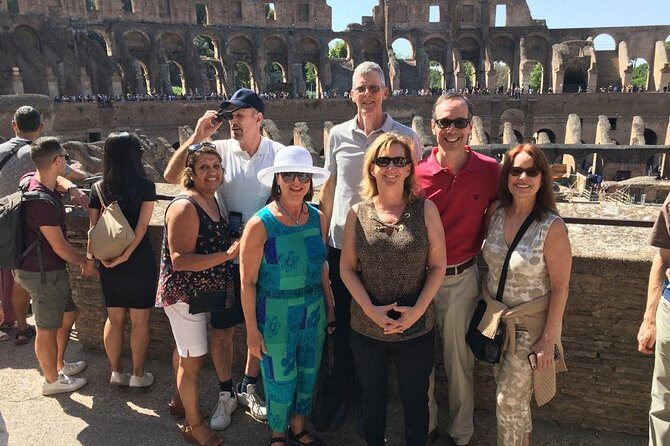
The tour has a maximum group size of 8 travelers. In practice, that tends to make the experience feel calmer than big, noisy tours. You’re not being jostled around constantly. You can stop for photos, read stones longer, and adjust to your own rhythm.
At the same time, self-guided tours put the burden on you for keeping track of where you are. That came up as an issue with entry instructions being insufficient. The Colosseum is famously busy and confusing even when you know what you’re doing, so I recommend building in time to find your way at the start.
One more small detail: some people said they wished there was a printed guide. That’s reasonable. If you like paper notes, bring your own quick checklist in your phone’s notes app: Colosseum arena, hypogeum story, Forum temples/senate/rostra, then Palatine views and palaces. When you can visually tick items off, audio-only tours feel more complete.
Value check: does $47.82 make sense for Colosseum + Forum + Palatine?
At $47.82 per person for about 3 hours, this is priced like a convenience bundle. It includes admissions for Colosseum, Roman Forum, and Palatine Hill, plus an English audio guide.
The Colosseum portion specifically includes an entrance ticket (valued at €18) and a reservation fee (valued at €2). That’s just one piece of the total experience, but it tells you the price isn’t only for the audio app. You’re also paying for reserved access and ticket handling tied to timed entry.
Why that matters: Colosseum access is one of the hardest parts of planning Rome ruins. If you want a day that feels organized, timed entry can be worth more than a few dollars saved by buying in the slowest way possible. This tour also bundles the Forum and Palatine, so you aren’t piecing together separate visits from different sources.
If you’re comfortable navigating ruins on your own, this still gives you structure. If you need a live guide’s human problem-solving, you might feel under-supported because there’s no personal guide.
Practical logistics that can make or break your day
You start and end back at the meeting point by the Colosseum (Piazza del Colosseo, 1). That’s convenient because you’re not guessing how to get to a separate final drop-off.
The most important practical idea is to plan for technology and crowds at the same time. When you’re dealing with timed entry plus an app-based audio guide, you want your phone to be ready and your start time respected.
Also, this experience is weather-dependent. Since it’s outdoors and includes walking between three major sites, you should expect cancellation and rescheduling if conditions are poor. That’s not a deal-breaker, but it’s a reality for Rome in any season.
Finally, it’s a tour with small capacity, max 8 travelers, and it’s typically booked about 18 days in advance on average. I’d treat that as a hint that popular time slots go quickly.
Should you book this audio tour?
I’d recommend booking it if you want three iconic sites done in one organized loop, and you’re happy to rely on an English audio guide app for context. It’s also a strong match if you love photo viewpoints and want the Forum and Palatine story laid out without the pressure of a live guide’s schedule.
Skip it or rethink it if you know you struggle with app-based experiences or you don’t want to manage a phone during busy entry lines. Since there’s no personal guide and no headphones/radio provided, you’re fully responsible for troubleshooting and comfort.
My decision rule is simple: if you’re the kind of traveler who enjoys self-paced walking with good prompts, this tour is a smart way to hit the Colosseum, Forum, and Palatine in about 3 hours. If you want someone to handle every hiccup face-to-face, you’ll probably prefer a guided option.
FAQ
How long is the Rome Colosseum, Roman Forum & Palatine Hill audio tour?
It’s listed at about 3 hours.
Which attractions are included?
You get admission for the Colosseum, the Roman Forum, and Palatine Hill, in one itinerary.
Is the audio guide available in English?
Yes, the audio guide is provided in English.
Are entrance tickets included in the price?
Yes. The tour includes entrance tickets for the Colosseum, Roman Forum, and Palatine Hill, along with the Colosseum reservation fee.
Is there a personal guide during the tour?
No. This experience is audio guide only with no personal guide.
Are headphones provided?
No. The tour notes that no radio and headphones are included.
Where do I meet for the tour?
The start point is Colosseum, Piazza del Colosseo, 1, 00184 Roma RM, Italy, and the activity ends back at the meeting point.