REVIEW · ROME
Colosseum Arena, Forum and Palatine Hill Tour
Book on Viator →Operated by Nicom Tours · Bookable on Viator
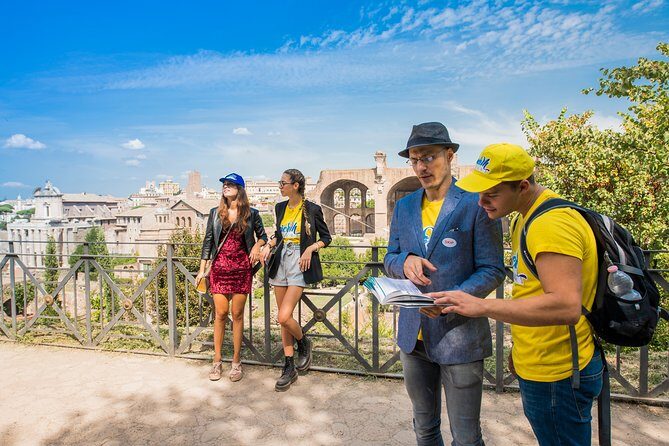
Step where gladiators once stood. This 3-hour Rome tour gives you Colosseum arena access through the restricted Gladiator’s Gate, then pairs it with a guided walk through the Roman Forum and up to Palatine Hill. What you get is more than photo stops: you’ll get a structured route plus live commentary so the ruins make sense fast. Two things I really like are the practical flow (arena first, then the Forum and Palatine Hill), and the on-the-ground guidance—guides like Nunzia and Barbara have been called out as friendly, clear, and fun to follow.
I also like that the tour includes headphones, which means you can actually hear your guide without constantly craning your neck. And even when the tour order can feel like it shifts (some groups start on Palatine Hill and finish at the Colosseum), you’re still covering the same big three ancient sights in one go.
One drawback to keep in mind is crowding and timing. Even with a maximum group size of 24, the Colosseum can still feel busy, and if your guide falls behind or moves quickly, it can be stressful—especially if you want to linger.
In This Review
- Key things to know before you go
- Gladiator’s Gate and Arena-Floor Access
- Colosseum Inside: How the Building Sold the Show
- Palatine Hill: The “Nice Side” of Ancient Rome
- Roman Forum: Daily Life, Major Ruins, and Political Tension
- Headphones, Guides, and the Difference Between “Seeing” and “Getting It”
- Price and Value: What You’re Really Paying For
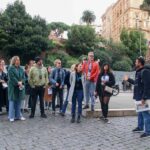
- Where You Start (and Why It Matters)
- Weather Rules: When the Arena Floor Might Close
- Practical Tips to Avoid Entry Headaches
- Should You Book This Colosseum, Forum and Palatine Hill Tour?
- FAQ
- How long is the Colosseum, Forum and Palatine Hill tour?
- How much does the tour cost?
- What’s included in the tour price?
- Where does the tour start?
- Does the Colosseum ticket include arena access?
- What should I do if it rains and the arena floor is closed?
- Is the tour very strenuous?
- How many people are in the group?
- What do I need for entry to the Colosseum and Roman Forum?
- How far in advance can I cancel for a full refund?
Key things to know before you go
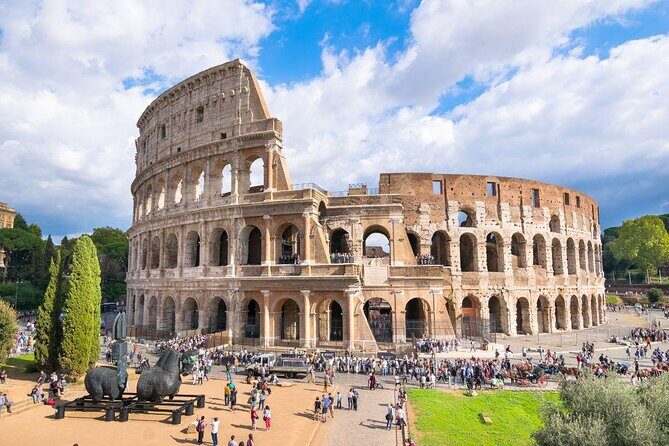
- Gladiator’s Gate arena access: You’ll enter parts of the Colosseum that are not open to the general public.
- Headphones included: You can focus on the ruins instead of fighting the noise.
- Three-site arc: Colosseum, Palatine Hill, and the Roman Forum in about 3 hours.
- Includes specific Roman Forum stops: You’ll see major ruins such as the Temple of Saturn and the Curia.
- Weather rule for the arena floor: Rain can lead to arena-floor closure without notice, with no refund in those cases.
Gladiator’s Gate and Arena-Floor Access
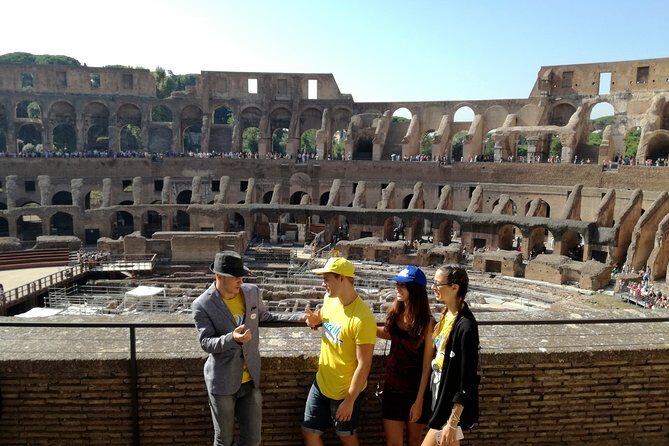
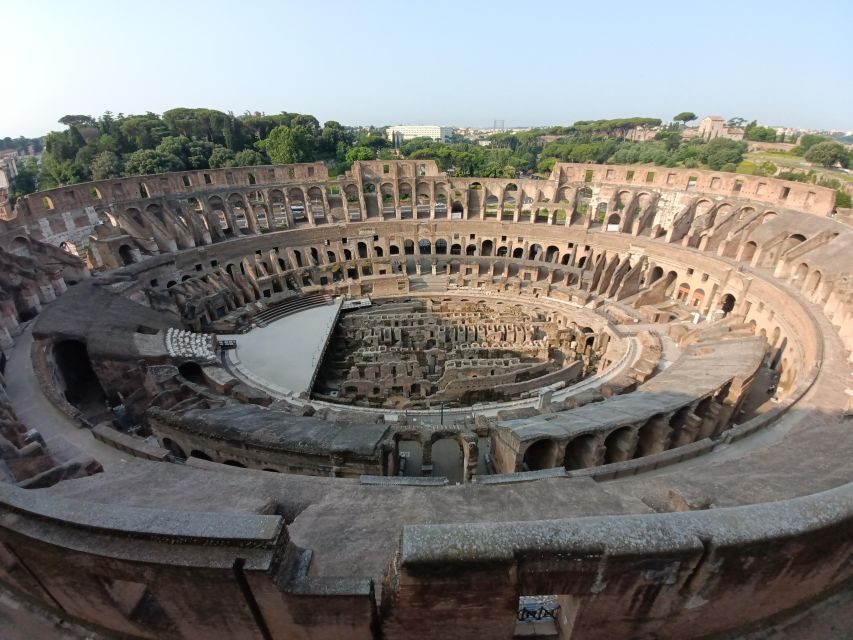
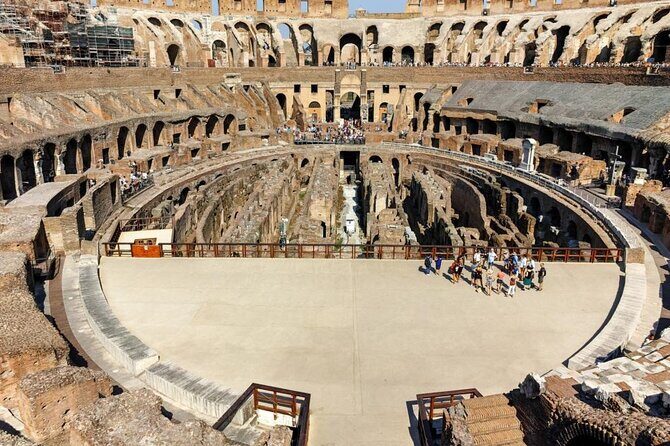
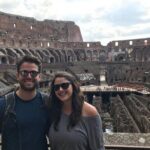
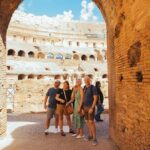
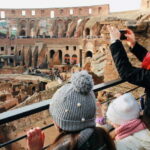
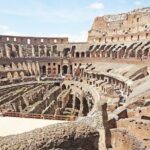
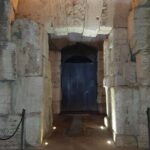
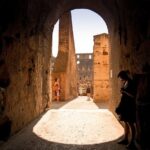
If you’ve ever looked at the Colosseum and thought, I get it, but I want the full picture, this is one of the best ways to do that. The standout part is the approach: you pass through the Gladiator’s Gate and enter the arena floor with a guide. That single detail changes how you experience the place.
On a typical visit, you’re mostly outside—looking in. Here, you’re inside, at the level where the action happened. Your perspective matters. You start to “read” the Colosseum as a built machine for spectacle, not just a big wall of stone. And because you’re not doing this solo, you’re less likely to miss the key features your guide points out.
This tour also includes the Colosseum reservation and the arena-access ticket, so you’re not left piecing together extra add-ons on the spot. For first-timers, that matters. One less thing to manage usually means more time actually enjoying the sites.
More Colosseum, Forum & Palatine combos for the Colosseum & Ancient Rome
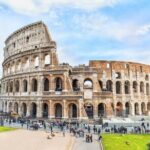
Colosseum Inside: How the Building Sold the Show
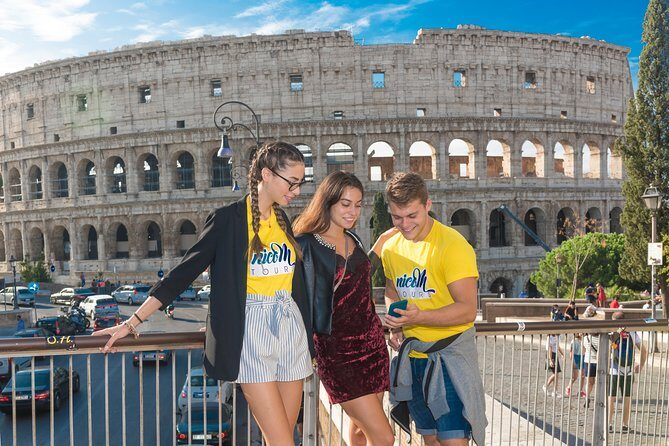
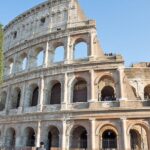
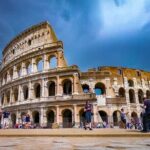
The Colosseum is famous. It’s so famous it can start to feel generic. This tour helps prevent that by giving you the “why” behind what you’re seeing.
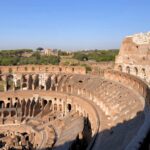
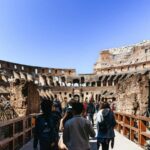
In the arena area, your guide explains how the Colosseum used major engineering ideas to produce huge spectacles in the Ancient world. You’ll learn about the innovative systems that allowed the venue to stage dramatic moments—what the space was designed to do, and how it supported large crowds. Even if you’ve read a few facts before, having them translated into what you can see around you makes it stick.
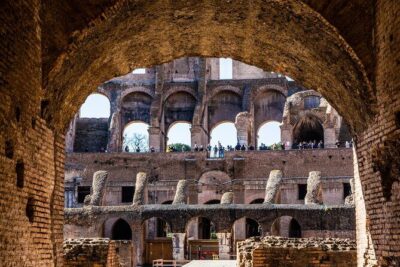
The Colosseum also has layers. Your guide helps you connect the building’s structure to its history and architecture—so the ruins stop being random fragments. You’re not just walking; you’re building a mental map while you go.
One practical tip: the Colosseum route is short on time but not short on steps. Wear shoes you can walk in for a while, and bring water. Even in mild weather, the combination of sun, stone, and crowds can be draining.
Palatine Hill: The “Nice Side” of Ancient Rome
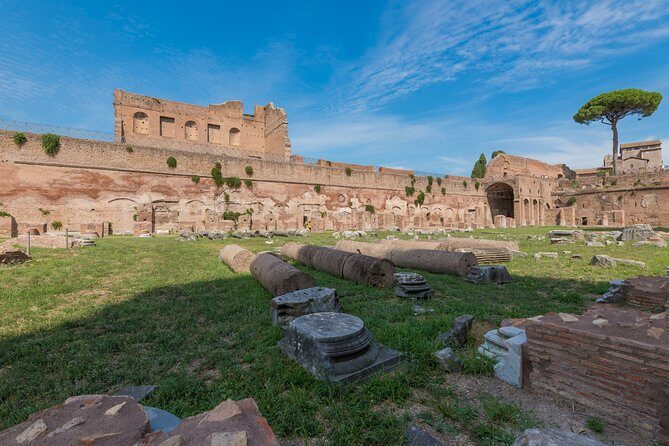
After the Colosseum, the tour shifts from entertainment to power and prestige. Palatine Hill is where the Roman story gets more personal. You climb up the hill and spend time appreciating the opulent houses that once stood here, plus the views over Rome that make the climb feel worth it.
Palatine Hill has a special place in Roman memory as the legendary birthplace of the Eternal City. That myth matters less if you’re here for archaeology, but it still affects how you experience the location. You’re on the ground where Rome imagined itself beginning, and that gives the ruins extra emotional weight.
What you’ll get from this stop is a guided walk that helps you see why people cared about living here. It’s not only that the houses were grand; it’s also the hillside setting—high ground, big views, and proximity to the centers of politics and culture.
A couple of considerations:
- If you’re sensitive to stairs or uphill walking, take it slow on the climb.
- Heat can be real. Bring water and plan to pause when your guide does. That’s often when you’ll get the best explanations.
Guides like Nunzia and Barbara have been praised for how they handled the pacing and clarity, and that shows up most clearly on stops like Palatine Hill, where you want to hear what matters while you’re catching your breath.
Roman Forum: Daily Life, Major Ruins, and Political Tension
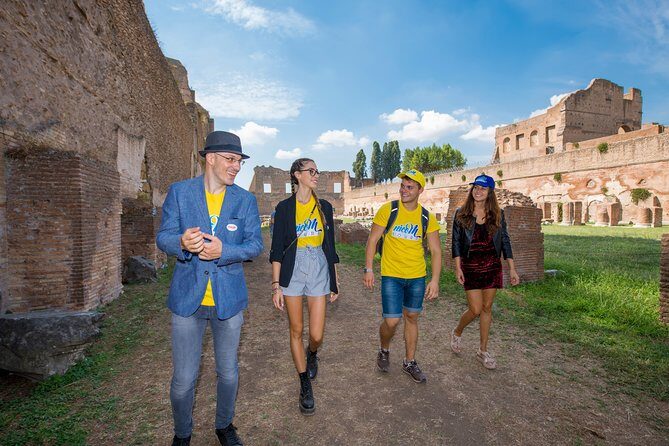
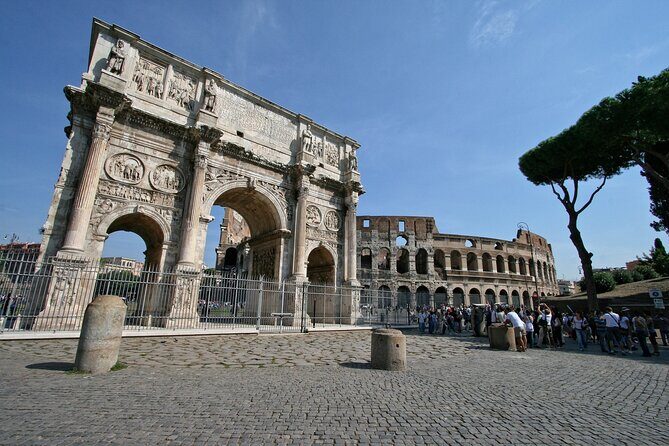
The Roman Forum is where you go from spectacle to the stuff Romans argued about, traded, and legislated. This is the tour stop that feels like a crash course in how the city ran.
Your guide helps you understand how Romans lived their daily life in the Forum and how this space functioned as a hub of political power. The tour also points out the kinds of drama that played out here—acts of political treachery and conflicts that happened on these grounds. It’s a reminder that the Forum wasn’t only a scenic ruin field. It was the stage for real power struggles.
You’ll also see major structures that anchor your mental image of the Forum:
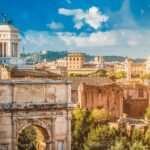
- Temple of Saturn
- Curia
Even if you’ve seen these names in books, seeing them in place with guidance is a different experience. You start to recognize how space, buildings, and movement relate—where people gathered, where authority sat, and how the city’s layout shaped behavior.
One thing to expect: the Forum area can feel busy, and time can become tight near closing hours. Some groups report that the pace felt rushed when time was short. If you’re the type who likes to stand and absorb for a while, this is the moment to decide how you want to travel: learn fast with the group, or slow down and risk falling behind. Headphones help you keep up, but the physical space still controls how long you can pause.
Headphones, Guides, and the Difference Between “Seeing” and “Getting It”
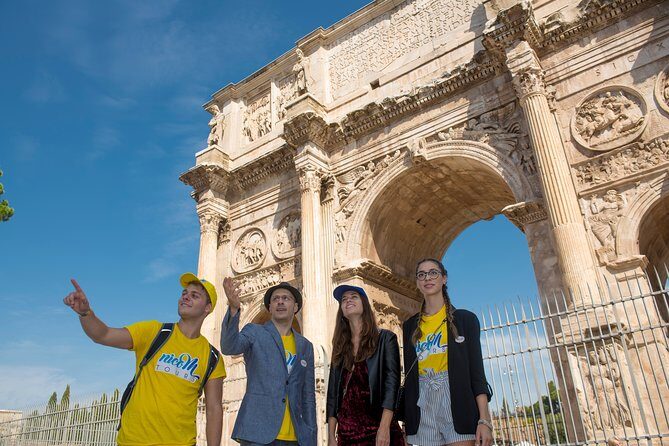
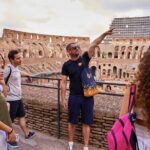
A guided tour is only as good as its delivery. The best part here is that you’ll have a live guide plus headphones. That’s a big deal in a place as loud and busy as Rome’s ancient core.
When the guide works well, you don’t just get facts—you get interpretation. That’s how the Colosseum starts to feel like a system instead of a pile of stone, and how Palatine Hill and the Forum stop being isolated stops and become one connected story.
You’ll also appreciate the role of humor and clarity. Guides Barbara and Nunzia have been highlighted for being funny, kind, and easy to follow. That matters because the route is short. If the guide speaks in a way you can track instantly, you’ll feel satisfied instead of bored or lost.
But here’s the fair warning: group tours can fail when pacing goes wrong. One negative experience included a guide who moved too fast and delayed group management, and another mentioned a late guide and not enough time inside the Colosseum. You can’t control every schedule hiccup, but you can control your readiness:
- arrive early enough to find the meeting point confidently
- keep an eye on the group leader
- ask questions when you’re at a good stopping point
More Palatine Hill tours for the Colosseum & Ancient Rome

Price and Value: What You’re Really Paying For
At $34 for about 3 hours, this tour looks like a bargain. The real question is what that price buys you besides convenience.
Here’s the value breakdown you should care about:
- Colosseum entrance ticket with arena access is listed at €24 per person
- A Colosseum reservation fee is listed at €2 per person
- The remaining amount covers the live guide, headphones, and the services that tie the ticketed experience together
So you’re not paying only for the guide. You’re also paying for a specific access level and the coordination required to make that access work. That’s where the price starts to feel reasonable.
What’s not included:
- transfers (so you’ll need to get yourself to the meeting point)
If you’re already planning to visit all three sites anyway, this kind of bundled plan is often the best value. You avoid multiple separate ticket hassles and you get a guided route that makes each stop feel more complete.
Where You Start (and Why It Matters)
The meeting point is Via delle Terme di Tito, 73, 00184 Roma RM, Italy. The tour ends back at the meeting point, so it’s a loop rather than a one-way trek across town.
Because the tour is time-based and ticketed, location matters. If you’re late, you can miss the group and the schedule. And because Colosseum access depends on having the correct traveler details, being organized makes your day smoother.
The tour also has a max group size of 24. That’s small enough to feel human, but large enough that you still need to stay alert and close when moving between areas.
One more practical note: the meeting time can change, and you may receive a call or text if it does. Keep your phone charged and your settings ready.
Weather Rules: When the Arena Floor Might Close

This tour operates in all weather, but it’s not immune to closures. The key rule is this: in case of rain, snow, frost, or similar conditions, the arena floor may be closed off without notice.
Important nuance: entry through the gladiators’ gate will not be affected, but access onto the arena floor will be prohibited in those cases. In those situations, refunds cannot be provided.
So how do you plan around that risk?
- Check the forecast, but don’t assume weather equals a ruined tour.
- If the arena-floor part is the absolute must-have for you, consider building a little flexibility into your schedule.
- Pack for conditions so you don’t get stuck uncomfortable if you still end up inside the Colosseum but not on the arena floor.
Practical Tips to Avoid Entry Headaches
This experience is ticketed and tied to names. That means you should treat your booking details like they’re part of your passport checklist.
You should provide full names of all travelers when booking. If you show up with mismatched names on your voucher, Colosseum and Roman Forum entry can be denied. Each person also needs a valid passport or ID that matches what you provided.
Also keep these limits in mind:
- aerosols and sharp objects won’t be allowed
- large backpacks aren’t allowed
What to wear:
- comfortable walking shoes
- clothing for weather
- you’ll want water (the walking and heat can be intense)
If you’re traveling with anyone who has a disability, note it during booking. That helps the provider plan appropriately.
Should You Book This Colosseum, Forum and Palatine Hill Tour?
Book it if you want the best single-day logic for Rome’s three ancient heavy-hitters: Colosseum arena access, plus the Forum and Palatine Hill with guidance. The headphones and live guide make a big difference in how quickly you understand what you’re looking at. At $34, you’re also getting value that’s hard to beat if you planned to buy tickets anyway.
Consider skipping or switching tours if:
- you need a very slow pace and lots of unstructured time (this is guided and time-boxed)
- you’re very concerned about rain impacting arena-floor access without refunds
- your schedule is tight and you can’t afford any chance of missing group timing
If you’re a first-timer, this is a strong choice because it turns three famous sites into a coherent story. And if you’ve been to Rome before but want a more cinematic angle on the Colosseum, the gladiator-style entry is the kind of detail that makes the day feel special.
FAQ
How long is the Colosseum, Forum and Palatine Hill tour?
It lasts about 3 hours.
How much does the tour cost?
The price is listed as $34.
What’s included in the tour price?
You get a live guide, headphones, a Colosseum entrance ticket with arena access, and the Colosseum reservation fee. Transfers are not included.
Where does the tour start?
The meeting point is Via delle Terme di Tito, 73, 00184 Roma RM, Italy, and the tour ends back at the same meeting point.
Does the Colosseum ticket include arena access?
Yes. The Colosseum entrance ticket with arena access is included.
What should I do if it rains and the arena floor is closed?
The arena floor may be closed off without notice in bad weather. Entry through the gladiators’ gate is not affected, but arena-floor access is prohibited, and refunds cannot be provided in those cases.
Is the tour very strenuous?
The tour is described as requiring moderate physical fitness level due to walking and climbing, including the climb up Palatine Hill.
How many people are in the group?
The tour has a maximum of 24 travelers.
What do I need for entry to the Colosseum and Roman Forum?
You must provide full names at booking and bring valid identification that matches those names (passport or ID). You may be denied entry if the names don’t match the voucher and traveler details.
How far in advance can I cancel for a full refund?
You can cancel up to 7 days in advance for a full refund. Within 7 days, the amount paid is not refunded.