REVIEW · ROME
Rome Palatine Hill, Roman Forum, Colosseum Panoramic Views Tour
Book on Viator →Operated by Rome Colosseum Tours | Official Guided Tours · Bookable on Viator
The Forum-first approach is the smartest way to see Rome’s ancient power center. This tour keeps you focused on what makes the area so addictive: the Imperial-era ruins, the viewpoints above them, and the big stories your guide ties together as you walk.
I especially like how the pacing protects your attention span. Instead of getting stuck in Colosseum crowds, you get guided time on the Roman Forum and nearby sites, where the architecture actually explains the politics and daily life.
One thing to consider: Colosseum admission isn’t included, and you’ll want your valid ID ready for Roman Forum entry. Add in security screening, and you’ll feel rushed if you show up late.
In This Review
- Key takeaways before you go
- Why this 3-hour Forum focus can feel like more value
- Piazza del Campidoglio panoramic views with Michelangelo’s big idea
- Trajan’s Forum and Trajan’s Column: how to read Rome’s war propaganda
- The Roman Forum: where courts, markets, and temples crowd in
- Palatine Hill: palace ground on Rome’s oldest power stage
- Arch of Constantine and the art of recycling old power
- Colosseum exterior time: big stories, smart photo positioning
- Price and value: what $459.52 buys (and what to double-check)
- Should you book this Rome Palatine/Forum/Colosseum panoramic tour?
- FAQ
- Is Colosseum admission included?
- Which sites have admission included?
- What language is the tour offered in?
- Do I need an ID to enter?
- How long is the tour?
- How many people are in the group?
Key takeaways before you go
- Forum-first routing means you spend your time where the ruins are most meaningful, not just where the lines are longest
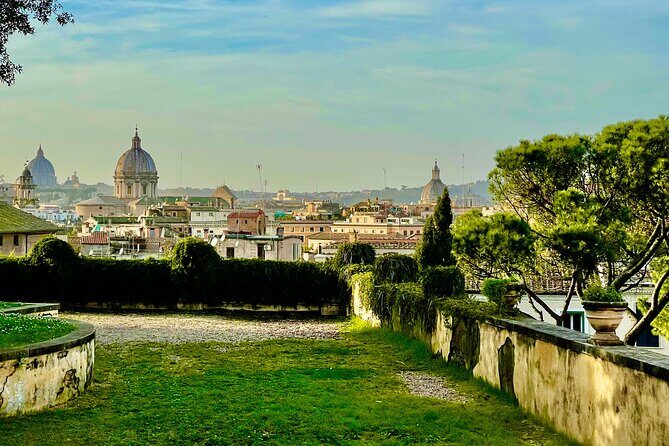
- Capitoline and Palatine panoramic photo stops help you take pictures with context, not just snapshots
- Trajan’s Forum and Column turn Roman warfare into something you can literally read in marble
- Radio and headsets make the explanations easy to follow in busy outdoor spaces
- Small group size (max 24) keeps the guide from losing you mid-sentence
- Colosseum access depends on your ticket since the tour’s Colosseum admission is not included
Why this 3-hour Forum focus can feel like more value
Rome’s ancient sights can blur together fast—stone, heat, noise, repeat. What I like about this experience is that it treats the Forum area as the main character. You’re not just walking from landmark to landmark. Your route is built around understanding how the Romans staged power, law, worship, and entertainment.
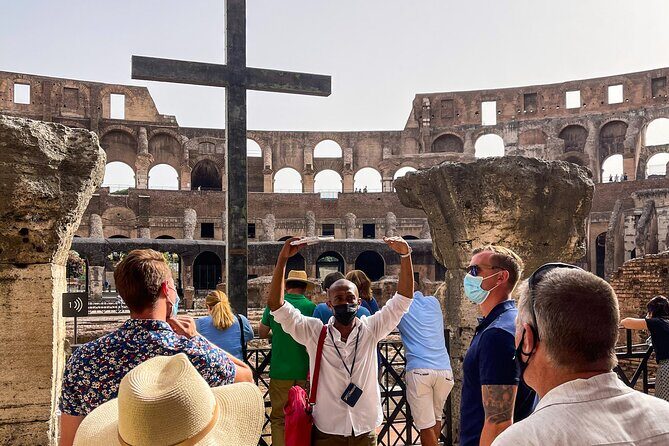
The tour is about 3 hours with a small group of up to 24, in English, led by a professional licensed local Blue Badge guide. That combination matters in Rome. Outdoors, things move quickly. With a guide holding the thread, you’ll notice details you’d otherwise miss—like why certain monuments sit where they do, or what a reused sculpture is hinting at.
There’s also a practical advantage: you’re guided with radio and headsets. So even when people surround you, you won’t be fighting to hear the story. And the itinerary builds in short stops so you can absorb a lot without sprinting for your next checkmark.
More Colosseum, Forum & Palatine combos for the Colosseum & Ancient Rome
Piazza del Campidoglio panoramic views with Michelangelo’s big idea
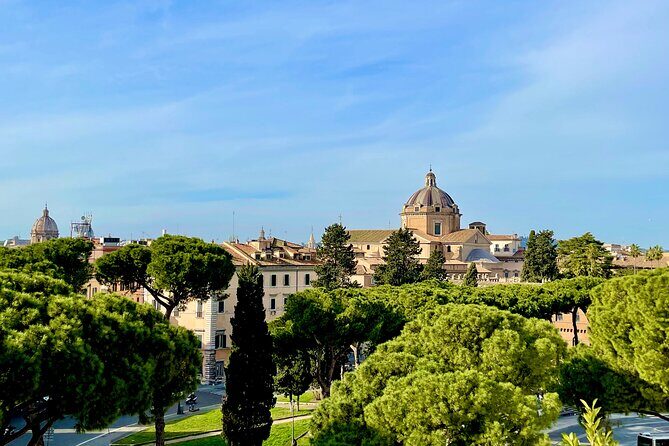
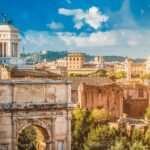
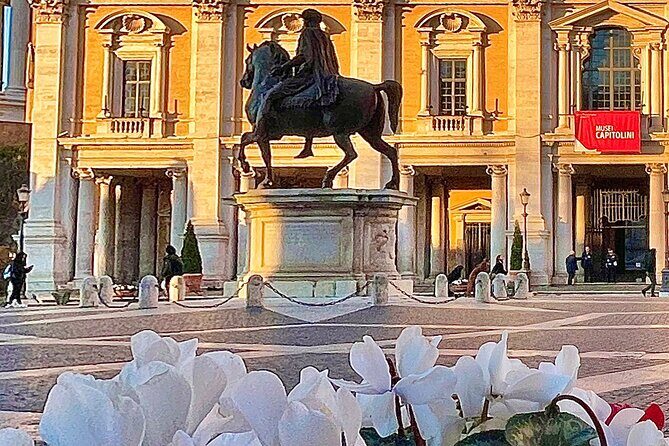
You start on Piazza del Campidoglio, which is one of those places where Rome shows you two time periods at once: ancient hilltop meaning, and Renaissance control of space.
This square was part of a uniform layout project designed with Michelangelo’s genius. The Capitoline hill was an ancient settlement area, and it became a ceremonial spot for Roman deities. Then the Renaissance took over: in 1536, after Charles V’s visit, the hill was reorganized because it had been left in rough shape. Pope Paul III commissioned Michelangelo to redesign the overall plan.
Here’s what you’ll actually care about as a visitor. Michelangelo designed the Cordonata staircase—the giant steps that lead upward quickly—and set up the equine statue of Marcus Aurelius on an elegant podium at the center. That statue isn’t just a famous landmark; it acts like the anchor for how the square frames the city.
And yes, you’re there for views. When you look out from the Capitoline, the Roman Forum ruins stop being random piles of stone. They start reading like a system—hills, sightlines, and civic geography all tied together.
Practical tip: bring your camera expectations down a notch. This isn’t a one-shot view. It’s a stop where you’ll take a few photos, then get oriented so later ruins make sense.
Trajan’s Forum and Trajan’s Column: how to read Rome’s war propaganda
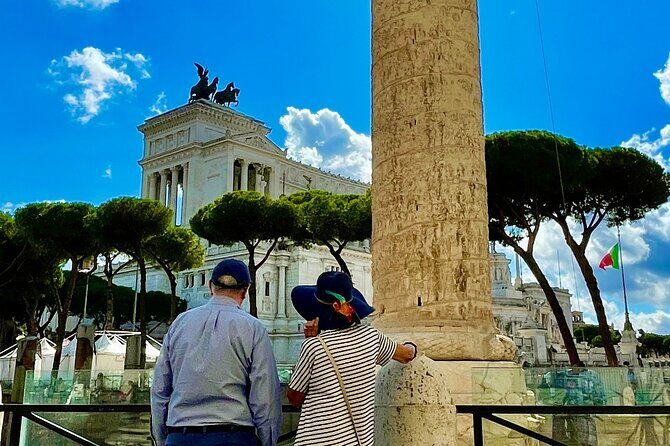
Next you move into the world of Trajan’s Forum, and the guide’s job becomes easier because Trajan’s story is so visual. The forum complex is described as being created by cutting into the Quirinale and Campidoglio slopes, connected across a mountain saddle. Construction likely began under Domitian, then continued after the interruption caused by his death and the fallout from the conspiracy in 96 AD.
Trajan took it forward with funding tied to the conquest of Dacia—present-day Romania—through two military campaigns (101–102 and 105–106 AD). The architect behind the work was Apollodorus of Damascus, a military engineer who had accompanied Trajan on the campaign. That detail matters because it explains the tone: this isn’t just a pretty civic space. It’s built like a trophy.
The forum’s design is more complex than earlier ones. You’ll hear about a big square flanked by porticoes with exedras behind them, plus the dominating Basilica Ulpia. And behind it sits the most famous part of the storytelling—the Trajan’s Column.
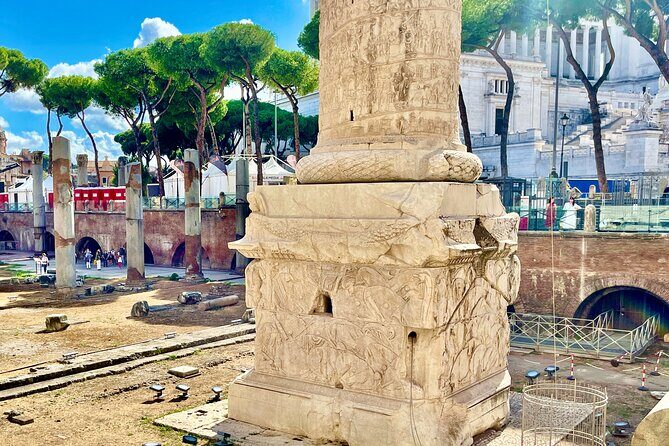
Then you get to the column itself, and you can see why it’s famous. The column narrates the two Dacian campaigns as a continuous spiraling frieze. It’s tied to the forum’s inauguration in 112 AD, financed through the extraordinary war booty.
If you like “Roman engineering facts” (and who doesn’t), this is where your guide may point out the scale: the column rests on a base decorated with reliefs showing stacked weapons. The shaft is about 30 meters high, made of 17 colossal rocks of white Carrara marble, with a spiral staircase inside that totals 185 steps. The carved frieze wraps around as a scroll-like band, about 200 meters long, packed with roughly 2,500 figures.
You won’t stand there counting people. But you will walk away with a sense of how Romans turned politics into images you could walk around and interpret.
The Roman Forum: where courts, markets, and temples crowd in
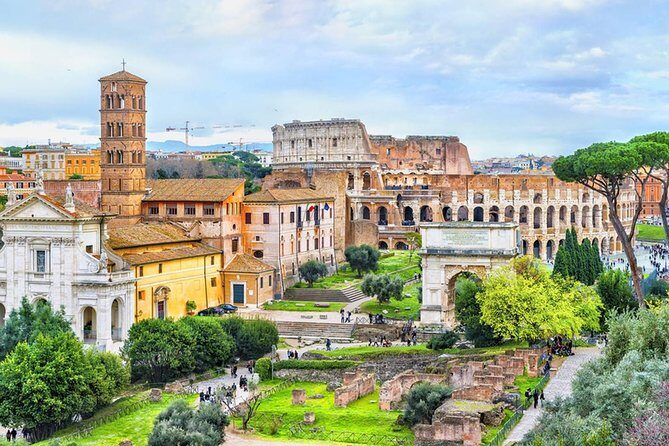
Now you move into Foro Romano, the Roman Forum in its classic role as the meeting and decision center of ancient Rome. It sits in low ground between the Palatine and Capitoline hills, which partly explains why you feel the space as a “room” even though it’s outdoors.
The key idea I want you to remember here: the Forum wasn’t one thing. In republican times, it served public meetings, law courts, and even gladiatorial combat. Under the empire, it leaned harder into religious and ceremonial functions, with many of the city’s major temples and monuments lining the area.
One of the big values of having a guide in this section is learning how to connect the dots between ruins. Without interpretation, it’s easy to see “cool old buildings.” With interpretation, you start seeing a working civic map.
Some of the surviving structures you’ll encounter include:
- Temple of Castor and Pollux
- Temple of the Deified Caesar
- Mamertine Prison
- Curia (the senate house)
- Temple of Saturn
- Temple of Vesta
- Temple of Romulus
- Arch of Titus
- Arch of Septimius Severus
- Cloaca Maxima
A practical reality: this is the area where crowds naturally gather. The tour’s big advantage is that your time is guided and structured, so you’re not spending your energy guessing what you’re looking at. It also helps that this stop runs long enough—about 45 minutes—for the guide to explain how the place functioned, not just name buildings.
If you’re the type who likes to linger, this is where you can slow down after the main points, because the Forum rewards patient looking.
Palatine Hill: palace ground on Rome’s oldest power stage
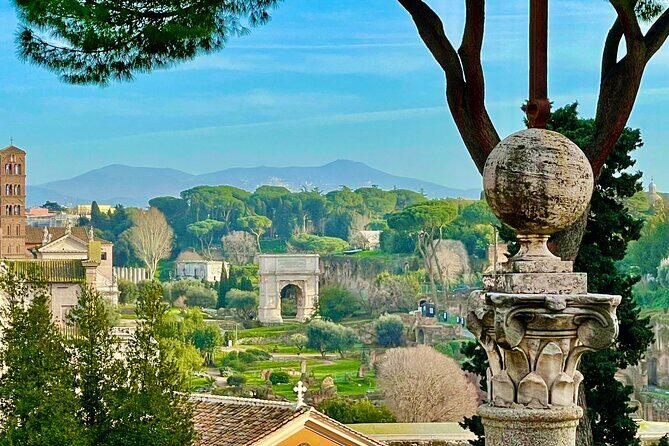
Next comes Palatine Hill, often described as the most central of Rome’s Seven Hills and a core part of the earliest Roman story. This area is now mainly an open-air museum, with a Palatine Museum on site holding finds from excavations.
The hill’s background is what gives the site weight. Imperial palaces were built here starting with Augustus, and before the imperial era, it was largely home to the rich. So as you walk the ruins, you’re walking a history of status—who lived here, why it mattered, and how power got physically positioned.
One of the neat details your guide may mention is the hill’s shape in ancient terms: it originally had two summits, called Palatium and Germalus (or Cermalus). The perimeter enclosed about 63 acres (25 ha), based on the Forma Urbis, and later regional catalogues expanded it to 131 acres (53 ha).
In plain visitor terms, Palatine is where your earlier city orientation pays off. After Campidoglio and the Forum, the hill becomes a vantage point for imagining how elites looked down on civic life below. That’s a powerful feeling even if you don’t buy into every legend.
The stop is about 30 minutes, and it’s long enough for you to get views and then connect them to what you’ve just learned. If you want photo time, this is where you usually get it. The higher you stand, the more the ruins stop being isolated and start being a city.
More Roman Forum tours for the Colosseum & Ancient Rome

Arch of Constantine and the art of recycling old power
Between the Palatine and the Colosseum, you’ll see the Arch of Constantine. This is a triumphal arch dedicated to Constantine the Great, commissioned by the Roman Senate to commemorate his victory over Maxentius at the Battle of Milvian Bridge in AD 312. It was dedicated in 315, and it spans the Via Triumphalis, the route victorious leaders took in triumphal procession.
It’s also a useful stop because it answers a question you might be holding: how do you make a new ruler look like the winner in Rome’s long memory?
The arch is the largest Roman triumphal arch, around 21 m high and 25.9 m wide, with three bays. The central opening is the biggest at 11.5 m high. Construction uses brick-faced concrete riveted in marble.
Here’s the detail that really lands: even though it celebrates Constantine, much of the sculptural decoration uses reliefs and statues removed from earlier triumphal monuments dedicated to Trajan, Hadrian, and Marcus Aurelius. The arch becomes a lesson in visual politics—recycling the imagery of previous emperors to claim legitimacy.
This stop is short—about 10 minutes—but it adds context fast. It also gives you a break from walking while still feeling like you’re moving through the story.
Colosseum exterior time: big stories, smart photo positioning
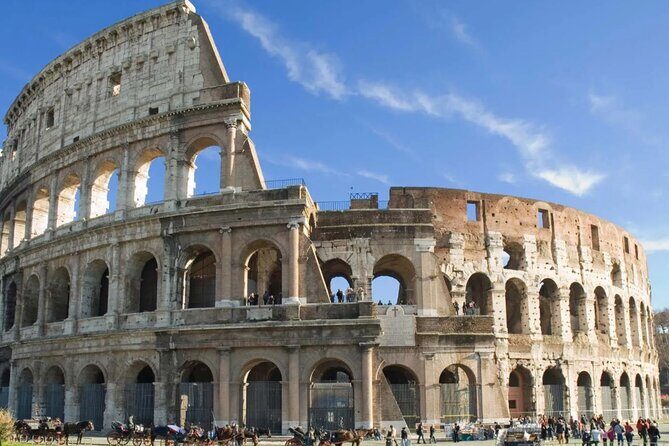
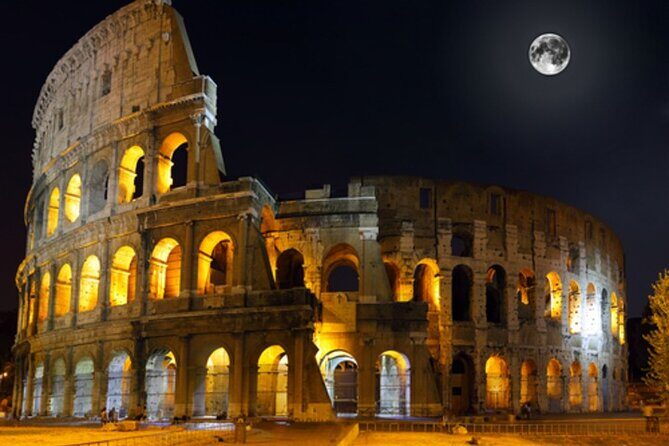
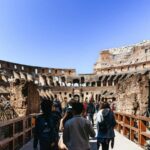
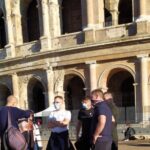
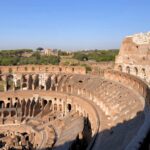
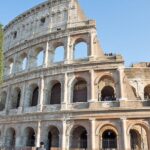
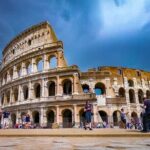
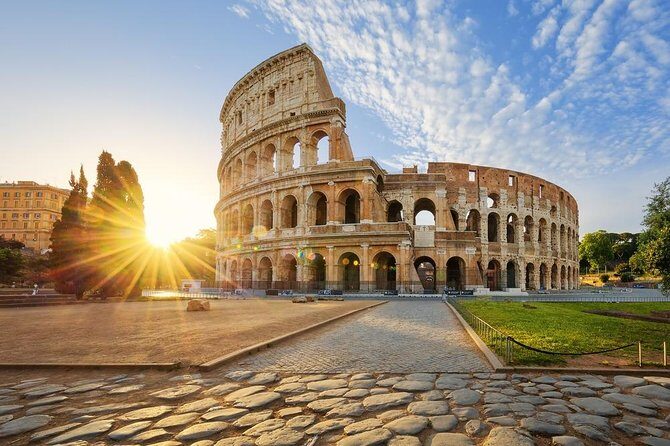
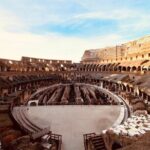
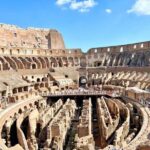
Finally, you reach the Colosseum. Your guide is set up to talk you through what mattered most to Romans: gladiator combat, animal fights, and even stories of sea battles. This is where your mental movie plays. You may not be hearing every single detail live forever, but you’ll catch the main themes.
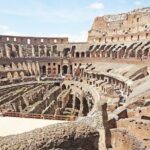
One important point: this experience includes an exterior tour of the Colosseum, and Colosseum admission tickets are not included. That means your access inside—or to certain viewing levels—depends on whether you’ve arranged your entry separately.
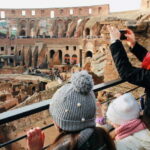
Even so, the guidance is designed to help you see what’s still well preserved and to frame your photos so the monument reads clearly. The Colosseum is a complicated shape. Without help, it’s easy to photograph it “flat.” With a guide, you tend to stand in better spots for angles and scale.
If you already plan to buy a Colosseum ticket for interior exploring, this tour still works well as your orientation. You’ll arrive knowing which parts to notice and why.
Price and value: what $459.52 buys (and what to double-check)
This tour costs $459.52 per person for about 3 hours, in English, with a licensed local Blue Badge guide and radio/headsets included. Entry is included for Trajan Forum, Roman Forum, Palatine Hill, and the Imperial Forum.
That means the value isn’t just “a guide talks while you walk.” You’re also buying a chunk of site access in the Forum complex area, where timing and context make a difference. The “skip the crowds and chaos inside the Colosseum and focus on the Forum” pitch matters because the Forum zone is often where meaningful interpretation happens.
The catch is the Colosseum admission ticket isn’t included. So your final cost depends on what you choose to purchase separately. Before booking, price out what you’ll pay for the Colosseum if you want entry. If you’re mainly after the Forum explanation and photo views around the Colosseum exterior, then this structure can feel like efficient spending.
What I’d call out as a value-protecting move: bring your ID. Entry to the Roman Forum/Trajan Forum requires a valid ID card, and you must match the name on booking. The tour also uses one group ticket, so late entry can mean you don’t get the chance to join the included sites.
If you show up organized, this is one of those tours where your money turns into understanding.
Should you book this Rome Palatine/Forum/Colosseum panoramic tour?
I’d book this if you want Rome’s big ancient story explained in a tight time window, and you care more about making sense of the ruins than collecting stamps. The Forum and Palatine sections are the heart of the experience, and they’re the best places for a guide to help you see patterns: civic space, imperial power, and propaganda in stone.
I’d pause before booking if you’re planning to rely on included access to the Colosseum interior. Since Colosseum admission isn’t included and the Colosseum part is described as an exterior tour, confirm how you’ll handle tickets for whatever level of access you want.
One more personal litmus test: if you like guides who are thorough and passionate, you’re likely to enjoy this. Names like Maria and Francesca have been associated with detailed, history-focused explanations for this kind of Colosseum-area tour style, and that’s exactly what makes the Forum sites click.
If you want the best of the Colosseum without losing your entire afternoon in its chaos, this is a solid match.
FAQ
Is Colosseum admission included?
No. Colosseum admission tickets are not included, and the experience specifies an exterior tour of the Colosseum.
Which sites have admission included?
Admission is included for Trajan Forum, Roman Forum, Palatine Hill, and Imperial Forum.
What language is the tour offered in?
The tour is offered in English.
Do I need an ID to enter?
Yes. You must provide a valid ID card for entry to the Trajan Forum and Roman Forum, and you should have a valid passport or ID document that matches the name used for booking for entry to the Colosseum and Roman Forum.
How long is the tour?
The tour lasts about 3 hours.
How many people are in the group?
The tour has a maximum group size of 24 travelers.