REVIEW · ROME
Imperial Rome Including Colosseum with Roman Forum and Palatine Hill Tour
Book on Viator →Operated by Amitour · Bookable on Viator
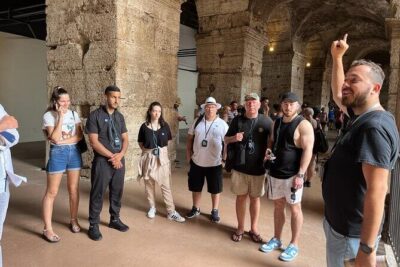
Three icons, one short window of time. This Imperial Rome guided tour strings together the Colosseum, the Roman Forum, and Palatine Hill in about 3 hours, with a professional local guide doing the explaining. I really like that the ticket includes skip-the-line access, so you spend more time inside the ruins and less time standing around.
My second big plus is the audio support. You get headsets to hear the guide clearly, and all the necessary entrance fees are included for the sites you visit. The main thing to consider is that this is not for slow-and-steady walkers: it’s geared to people with moderate physical fitness, and it’s not recommended for anyone with walking problems.
In This Review
- Key things to know before you go
- Why this Imperial Rome tour fits the time crunch
- Meeting at the Arch of Constantine and what to expect
- Colosseum: Flavian Amphitheatre in sand, concrete, and brutal spectacle
- Colosseum stop: the only real drawback
- Roman Forum: walking the Via Sacra through the empire’s social center
- Roman Forum stop: what you’ll get (and what you won’t)
- Palatine Hill: the gathering place and clue to Rome’s start
- The practical part: you finish here
- Value for money: is $87.27 a good deal?
- Headsets, guide narration, and how to make it work
- What to wear and bring for a smoother 3–3.5 hours
- Weather matters, and Rome will not always cooperate
- Who should book this tour
- Should you book Imperial Rome with Colosseum, Roman Forum, and Palatine Hill?
- FAQ
- How long is the Imperial Rome tour?
- Which stops are included?
- Is skip-the-line access included?
- Are entrance fees included?
- Do I get help hearing the guide?
- Where does the tour start and where does it end?
- Is hotel pickup or drop-off included?
- Is food and drink included?
- Is this tour suitable if I have walking problems?
- What happens if the weather is poor?
Key things to know before you go
- Skip-the-line entry helps you avoid the longest waits around the Colosseum.
- Headsets included so you can follow the narration without craning your neck.
- Three major sites in one run: Colosseum, Roman Forum (via Via Sacra), and Palatine Hill.
- Entrance fees are bundled for the Colosseum and archaeological area entrances.
- Small group size capped at 20 travelers.
- Plan for time on your feet. Expect closer to about 3–3.5 hours depending on how the visit moves.
Why this Imperial Rome tour fits the time crunch
Rome has a special talent for making you feel time-poor. This tour respects that reality. In roughly 3 hours, you hit three of the city’s loudest names in Roman archaeology: the Colosseum, the Forum area, and Palatine Hill. Instead of piecing everything together yourself, you’re guided through a logical route that keeps you moving forward instead of backtracking.
The big value here isn’t just convenience. It’s interpretation. The Colosseum is easy to see from the outside; it’s harder to understand while you’re inside the structure and looking at what remains. The same goes for the Forum: walking through ruins without context can feel like sightseeing without meaning. A pro guide changes that by giving you a framework while you’re standing in the right spot.
One more practical note: the tour is run by Amitour, and it’s typically booked far in advance (on average, around 127 days). If your dates are fixed, it pays to lock it in early.
More Colosseum, Forum & Palatine combos for the Colosseum & Ancient Rome
Meeting at the Arch of Constantine and what to expect
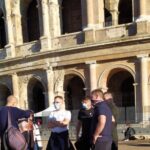
Your tour starts at the Arch of Constantine, on Piazza del Colosseo (00184 Roma RM). It ends at Palatine Hill, at the archaeological park address on Via di S. Gregorio, 30, 00186 Roma RM. So you’re not ending back at the Colosseum area. That’s not a problem, but it does affect your next plan after the tour.
Because there’s no hotel pickup, you’ll want to plan your route using public transport. The meeting point is near transit, which helps a lot in Rome, where timing can go sideways fast if you rely only on taxis.
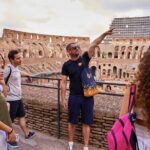
Group size is capped at 20. That’s a sweet spot. You’ll get the benefits of a group (a set pace and a guide keeping things moving) without feeling completely swallowed by the crowd.
Colosseum: Flavian Amphitheatre in sand, concrete, and brutal spectacle
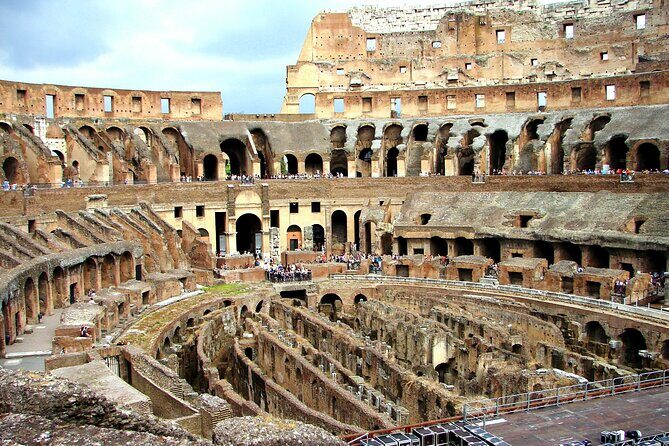
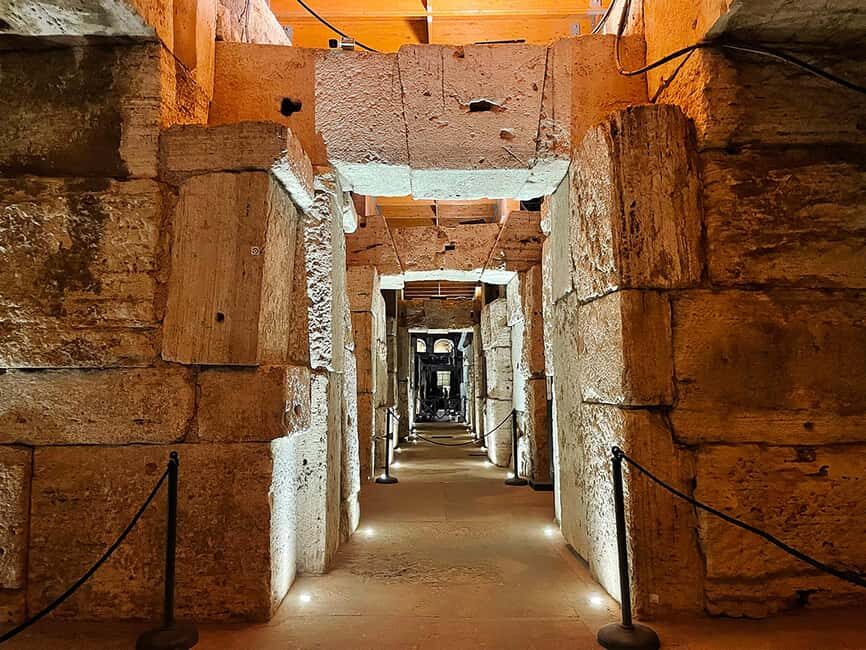
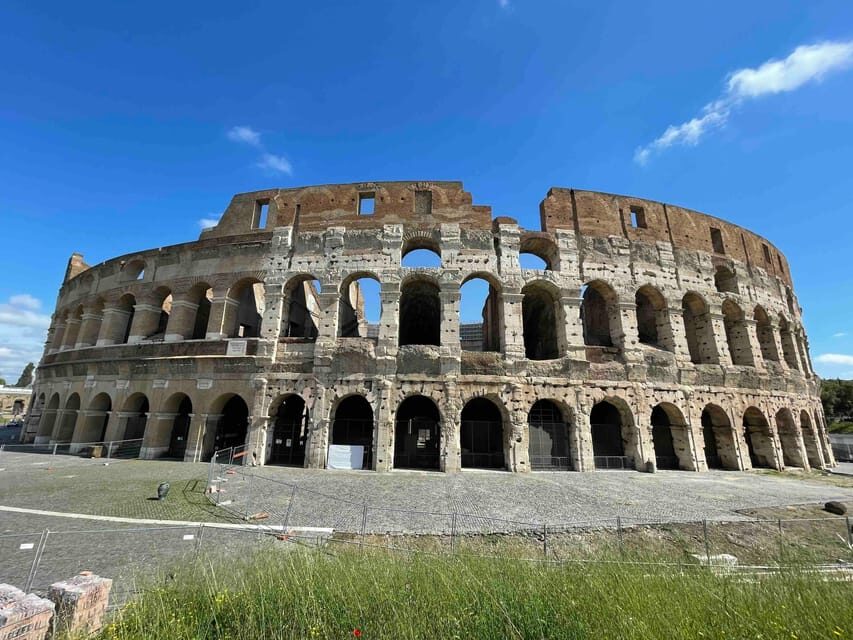
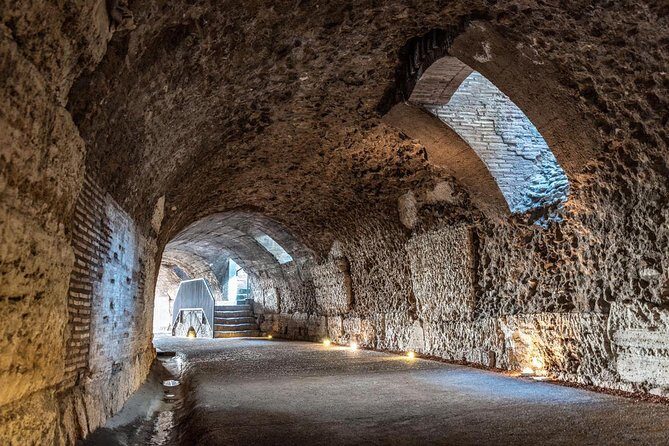
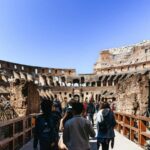
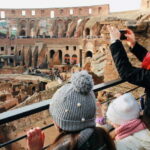
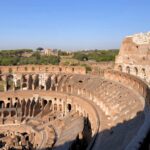
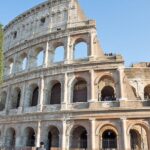
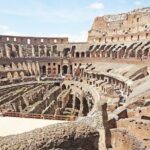
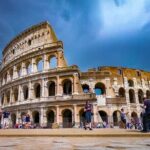
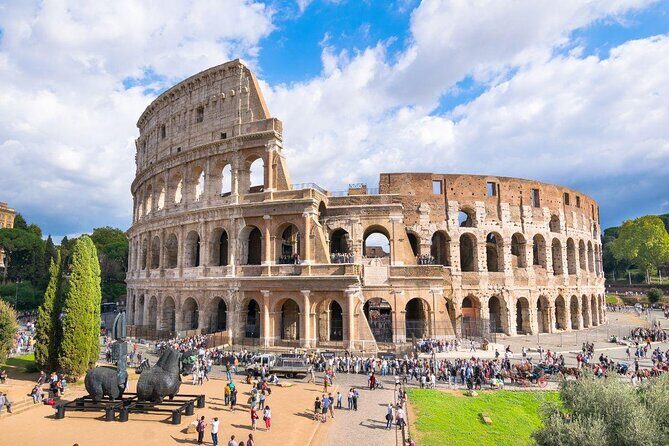
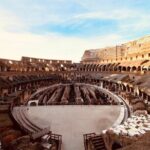
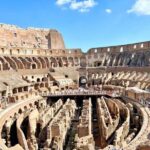
The Colosseum stop is the main event. You’ll spend about 2 hours here, with admission included. The tour frames it as the Flavian Amphitheatre, built by Emperor Vespasian in 80 A.D. and inaugurated by his son Titus.
What I like about the way this gets explained is the shift from postcard to context. You’re not just looking at stone. You’re hearing how the building was tied to political power and public spectacle. The guide includes details like more than 100 days of celebrations at the inauguration and the fact that over 5,000 animals were slaughtered in the sand. That kind of specificity gives you something to anchor to while you’re inside.
Also, the materials are part of the story. The Colosseum was made using concrete and sand, and that’s exactly the kind of fact that helps you “read” the structure instead of just admiring it.
Skip-the-line access matters here. The Colosseum is famously crowded, and long queues can erase the best part of your planning. With skip-the-line, you’re more likely to spend your time where it counts: inside the monument with a guide telling you what you’re looking at.
Colosseum stop: the only real drawback
The Colosseum visit is long enough that you’ll feel it afterward. If you’re sensitive to walking and standing, this is the point where you’ll notice it most.
Roman Forum: walking the Via Sacra through the empire’s social center
Next you move to the Roman Forum (Foro Romano) for about 15 minutes. The quick time here is intentional, but it also means you should come ready to pay attention.
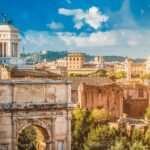
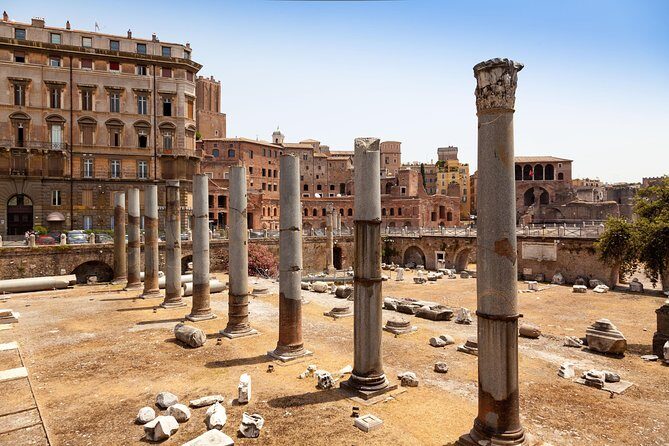
You walk through the Forum via the Via Sacra. That matters, because it ties your route to the idea of movement through power and ceremony. The Roman Forum is described as the social center of the empire’s capital, and the focus is on its archaeological and monumental value. In other words, this stop is about understanding what this space represented, not trying to absorb every stone in existence.
Fifteen minutes sounds short on paper. In practice, it works best when you let the guide set the pace and highlight what’s important. If you try to slow down and look at everything independently, you’ll lose the thread of the narration.
More Roman Forum tours for the Colosseum & Ancient Rome

Roman Forum stop: what you’ll get (and what you won’t)
You’ll get a guided walk and key context. You won’t get a slow, independent “read every inscription” experience. That’s not a flaw here; it’s just the tradeoff for bundling three sites into one tour.
Palatine Hill: the gathering place and clue to Rome’s start
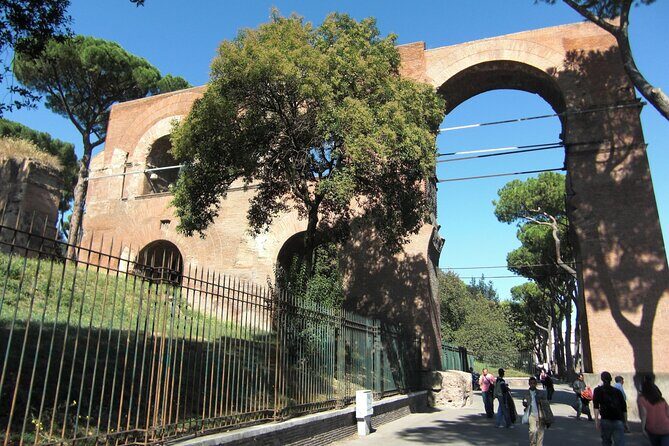
The final stop is Palatine Hill, with about 30 minutes. This is the place the tour uses to connect the dots back to Rome’s beginnings.
Palatine Hill is presented as an important gathering place and an early stable settlement. The guided explanation includes excavation phases in two broad building periods:
- one between the third and second century B.C.
- another from the middle of the first century B.C. until the first decades of the principality
That timeline is genuinely useful. It turns Palatine Hill from a “you’re standing on a hill” stop into a place with a story of development. And the tour wraps up by focusing on what these remains suggest about the foundation of the Eternal city.
At this stage, your legs will know you’ve done the Colosseum and Forum. But the payoff is that Palatine Hill gives you a sense of how Rome transformed over time, not only how impressive it looks at one moment.
The practical part: you finish here
The tour ends at Palatine Hill. If you plan dinner or a museum visit afterward, you’ll want to account for the fact that you’re done at the archaeological park rather than returning to the Colosseum area.
Value for money: is $87.27 a good deal?
At $87.27 per person, this tour isn’t the cheapest way to see the highlights. But here’s where the math starts to make sense: entrance fees are included, and the Colosseum and archaeological area entrances are covered. You’re also paying for a professional guide plus headsets, which help you actually use the time you’re spending at each site.
If you were to buy tickets and scramble to find a guide later, you’d spend time and energy that this format saves. You’d also likely run into access friction around the Colosseum. The skip-the-line component is the kind of value you only notice when you’re standing in a long line, getting passed by people who planned ahead.
A small group cap of 20 also affects value. It’s not private, but it helps keep the visit organized enough for narration to work.
So yes, you’re paying for convenience and interpretation together. If those are priorities for you, this price can feel fair.
Headsets, guide narration, and how to make it work
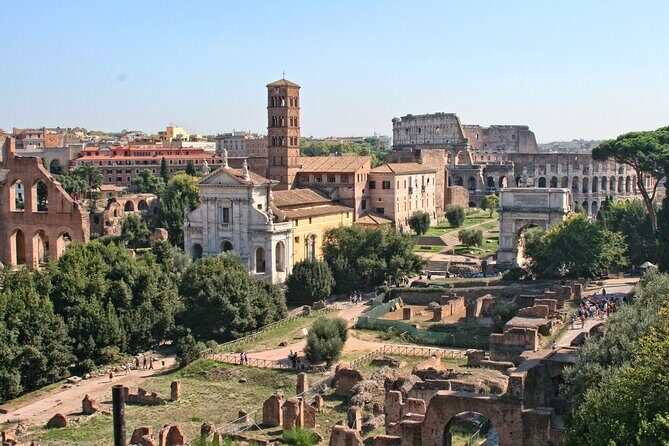
You get headsets to hear the guide clearly. That’s a big deal on an outdoor ruins route where wind, crowd noise, and distance can ruin your ability to follow the story.
I’d still recommend a simple strategy: stay attentive early, and if you drift back, nudge forward when the guide stops to explain something important. The experience depends on hearing the narration, and the headset is there to support you, not to rescue you from standing too far away.
One review also highlighted that the listening equipment was not bad. That lines up with the overall purpose of the headsets: you should be able to follow the visit without constantly saying what. That said, if you’re the kind of person who needs perfect audio, be ready to find a position where your headset signal is strongest within the group.
What to wear and bring for a smoother 3–3.5 hours
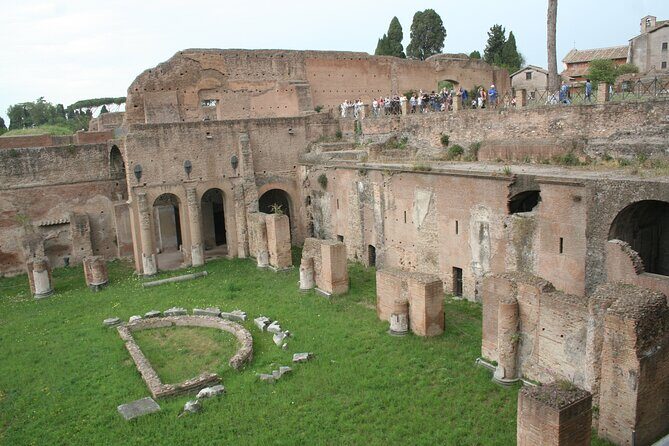
This tour isn’t described as a sit-down museum visit. It’s a moderate walking experience, and not recommended for people with walking problems. That’s the key planning takeaway.
Also, plan around hydration. One of the practical points from feedback is that you need water because you walk through the full route. Rome heat can be sneaky, and even if the weather feels fine in the morning, it can drain you by mid-tour.
So bring:
- hydration (at minimum, water)
- a realistic mindset about walking and standing for most of the visit
Beyond that, keep expectations grounded: this is about moving between major sites with a guide telling you what to notice while you’re there.
Weather matters, and Rome will not always cooperate
The experience requires good weather. If it’s canceled due to poor weather, you’ll be offered a different date or a full refund. In other words, they’re not trying to force a rainy-conditions visit that ruins the route.
Still, build flexibility into your plans. Rome can change quickly, especially around open-air ruins.
Who should book this tour
This works best if you want:
- an organized route through Colosseum + Roman Forum + Palatine Hill
- a guided explanation rather than a self-guided wander
- skip-the-line access and entrance fees bundled into one purchase
- a group size small enough to keep the narration practical (max 20)
It may not be the best choice if you:
- have limited mobility or struggle with walking for an extended period
- hate structured tours and prefer to roam slowly without a timeline
It’s also a smart pick if your time in Rome is short and you still want context for what you’re seeing.
Should you book Imperial Rome with Colosseum, Roman Forum, and Palatine Hill?
If you’re aiming to see the big three without wasting half your day in lines, this is a solid choice. The skip-the-line setup and included entrance fees reduce the friction that makes Roman sightseeing stressful. The headsets also make a difference because the narration is the whole point of the route, not an optional bonus.
Book it if you can handle moderate walking and you want a guide-led timeline connecting the Colosseum to the Forum and then back toward Rome’s earliest story on Palatine Hill. Skip it if your movement limits are tight, or if you’d rather spend a full unhurried day on one site instead of hitting all three.
FAQ
How long is the Imperial Rome tour?
It runs for about 3 hours.
Which stops are included?
The tour includes the Colosseum, the Roman Forum, and Palatine Hill.
Is skip-the-line access included?
Yes. Skip-the-line entry is part of the tour.
Are entrance fees included?
Yes. All entrance fees for the Colosseum and the archaeological area entrances you visit are included.
Do I get help hearing the guide?
Yes. Headsets are included to hear the guide clearly.
Where does the tour start and where does it end?
It starts at the Arch of Constantine in Piazza del Colosseo and ends at Palatine Hill at Parco archeologico del Colosseo on Via di S. Gregorio.
Is hotel pickup or drop-off included?
No. Hotel pickup and drop-off are not included.
Is food and drink included?
No. Food and drinks are not included.
Is this tour suitable if I have walking problems?
It is not recommended for people with walking problems. The tour is for a moderate physical fitness level.
What happens if the weather is poor?
The experience requires good weather. If it’s canceled due to poor weather, you’ll be offered another date or a full refund.