REVIEW · COLOSSEUM UNDERGROUND
Rome: Exclusive Colosseum Underground and Arena Guided Tour
Book on GetYourGuide →Operated by Crown Tours · Bookable on GetYourGuide
Underground Rome hits different. This small-group tour gives you special access below the Colosseum and then continues into the Forum and Palatine Hill.
I especially love the chance to stand on the Colosseum arena floor and look out at the same space where gladiators performed. I also like the added context you get after that, walking through the Roman Forum and Palatine Hill with a guide who ties the whole story together.
One drawback to plan for: the underground part is time-limited, so you can feel a bit rushed there, especially if crowds build up later at the arena.
In This Review
- Key Things to Know Before You Go
- Special Colosseum Access: Arena Floor and Underground Dungeons
- Where You Meet and How to Not Stress About It
- The Colosseum Arena Floor: Standing Where Gladiators Performed
- What to do with your camera
- The Underground Dungeons: The Colosseum’s Hidden Machinery
- Colosseum Attic (Floors 3–5): Why Upstairs Changes Everything
- Roman Forum and Palatine Hill: Ancient Rome’s Power Center
- The best way to enjoy this part
- Small Group Size and How the Tour Actually Feels
- Timing, Crowds, and the 3-Hour Rhythm
- Price and Value: Is $191.68 Worth It?
- Who Should Book This Tour (and Who Might Skip It)
- Should You Book It? My Take
- FAQ
- What’s included in the Colosseum Underground and Arena Guided Tour?
- How long is the tour?
- Is the tour guided in English?
- How big is the group?
- Where do I meet the guide?
- Do I need to bring ID?
- What should I bring or wear?
- Is food and drinks included?
- Are pets allowed?
- Are there any restrictions on what I can bring?
Key Things to Know Before You Go
- Arena floor access means you’re viewing the Colosseum from ground level, not just from the seats
- Underground dungeons are part of the package, including the areas linked to cages and holding spaces
- Small group (max 7) keeps the pace more personal and the questions easier to answer
- English live guide with storytelling meant to connect the Forum and Palatine to what you see in the Colosseum
- Plan for a timed underground visit, typically around 30 minutes, before moving upstairs
Special Colosseum Access: Arena Floor and Underground Dungeons
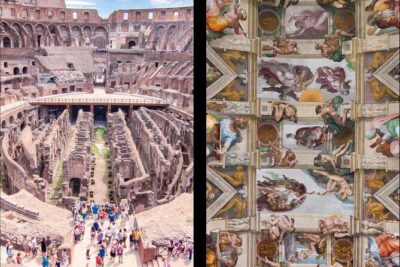
If the Colosseum is the headliner, the underground is the plot twist. This tour is built around going where regular visits don’t: down into the restricted corridors and holding areas associated with the show itself, then back up for the arena experience.
You’ll start on the main monument route, then switch gears to the darker side of the spectacle. Expect stops that focus on the system behind gladiator fights: where people were kept, how the show was staged, and how the animals were handled. The goal here isn’t just photos. It’s building a mental picture of what it meant to go from confinement to performance, especially once you’re back on the arena floor and can see the scale of the building from inside.
The mood shift is real. One minute you’re thinking about politics and power in the Roman Forum; the next you’re hearing about struggle and punishment tied to the Colosseum’s underground world. If that topic makes you uncomfortable, it’s worth knowing going in.
Where You Meet and How to Not Stress About It
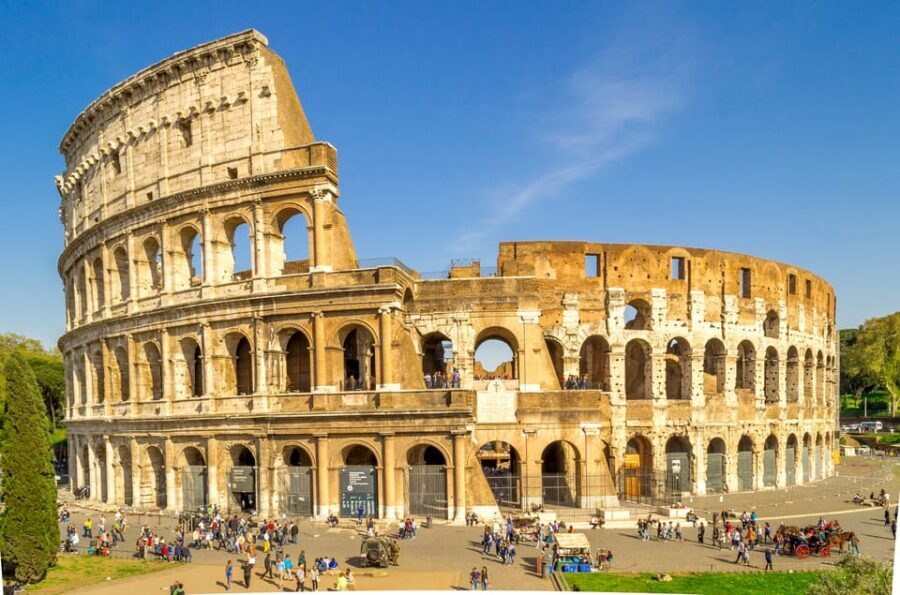
The tour begins at Via della Polveriera, 8, about 100 meters from the Colosseum. If you’re using the Metro, the meeting setup is a little easier to miss than you’d think: you’ll need to go upstairs, walk to the terrace above the Colosseum Metro Station, and use the pedestrian bridge that crosses the road. The office is on the other side, roughly 50 meters up the street.
Look for the purple flags with the Crown Tours logo.
Timing matters a lot on Colosseum tours. You’re asked to arrive at least 30 minutes early, and late arrivals can’t be guaranteed entry. That’s not just a corporate rule—it’s how Colosseum security and timed access usually work. If you’re prone to running late, this is a tour where “later” can become “missed.”
Also bring your passport or ID card. Colosseum staff require a valid ID for security, and you need it for entry.
The Colosseum Arena Floor: Standing Where Gladiators Performed
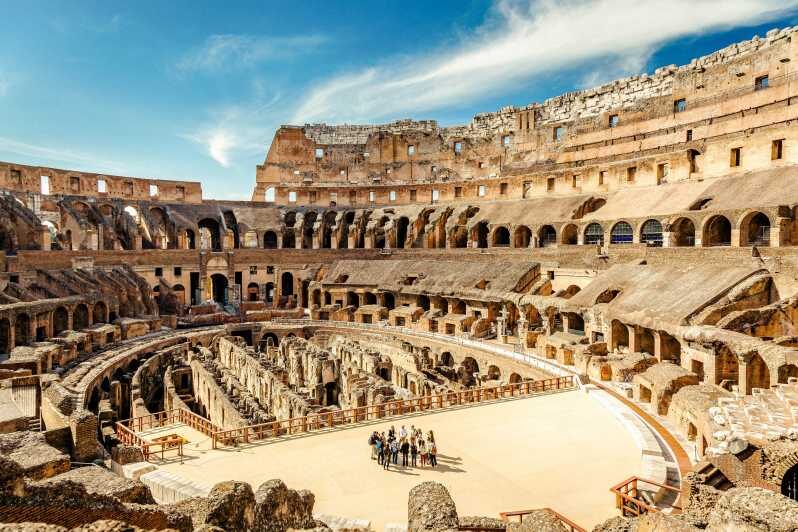
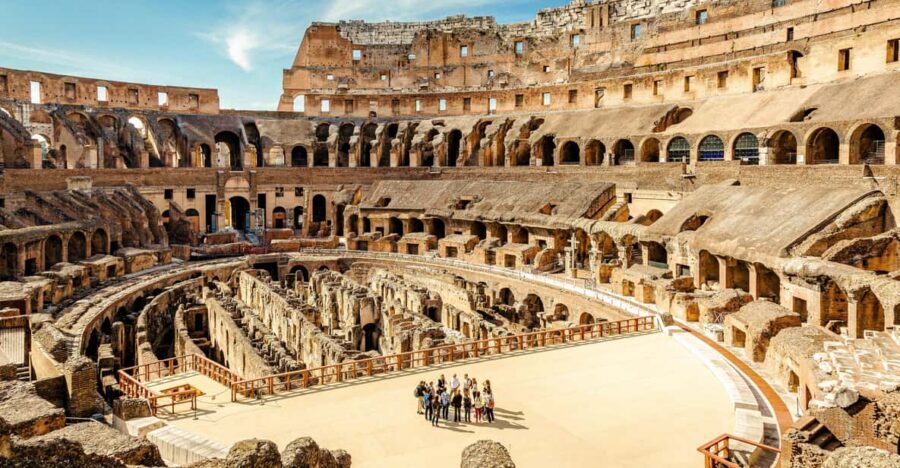
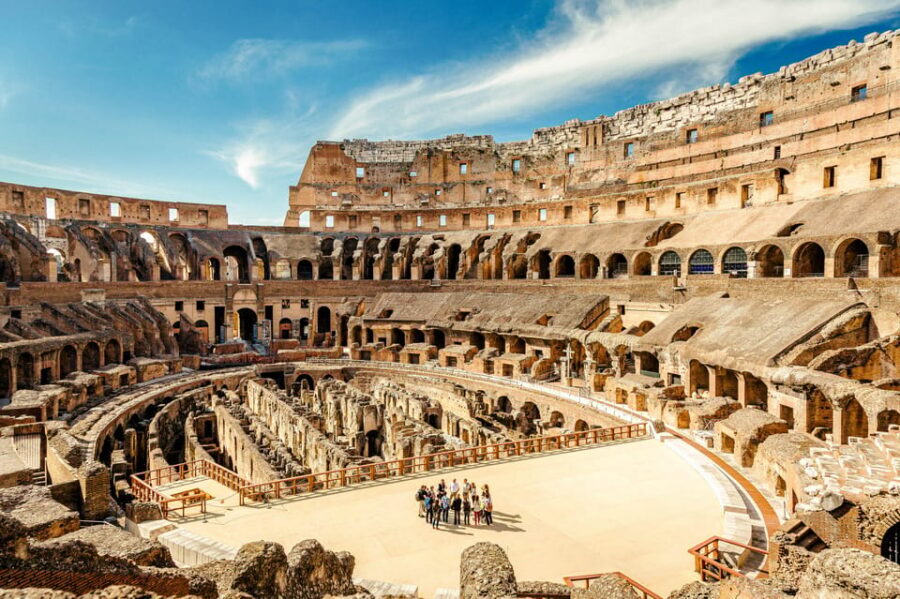
The highlight for most people is the arena floor. You’re not looking at the Colosseum from a viewpoint that feels distant and vertical. You’re on the ground level where the show happened.
Once you get down there, your brain starts doing math: How high the seating goes, how the space compresses the crowd, and why the location mattered for power and spectacle. Your guide shares stories built around that geometry—where fighters would have stood, how the arena was organized, and how the Emperors and officials would have watched from above.
One of the most memorable parts is the “oh, that’s where they’d have been” effect. The tour includes the moment where you understand where the Emperor would have been perched, high above the arena, ready to decide outcomes. It helps you stop thinking of gladiators as a movie plot and start picturing it as an event controlled by people with authority.
You’ll also learn why the Colosseum wasn’t just a stadium. It was a staged system: confinement, preparation, performance, and aftermath—connected by underground passages.
What to do with your camera
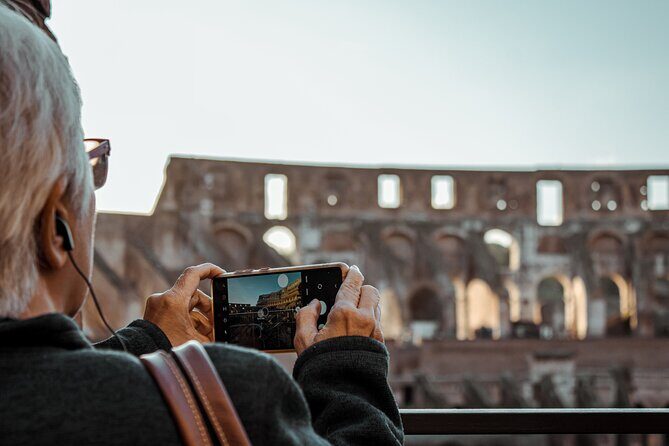
Bring a camera or phone, but don’t let it run your brain. Move slowly first. Then take photos once you’ve stood still and looked around. The arena level is the place where it all becomes readable.
The Underground Dungeons: The Colosseum’s Hidden Machinery
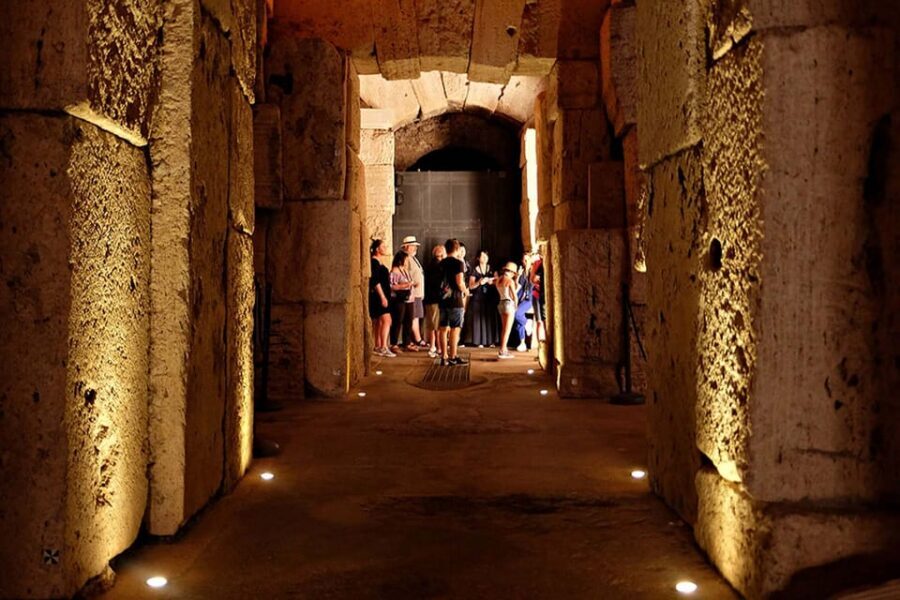
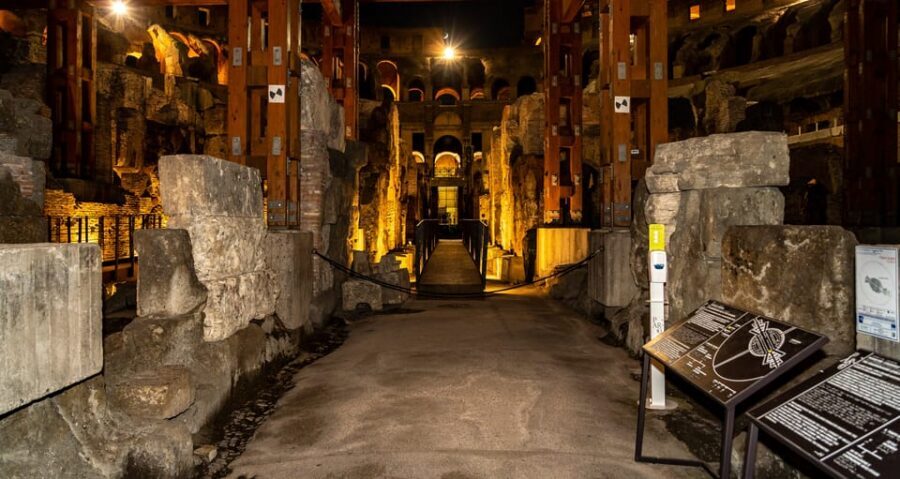
The underground section is the reason this tour isn’t just another “Colosseum guided visit.” You’ll go into the restricted areas tied to how the event worked—places linked to where gladiators were kept and where wild animals were caged.
Your guide brings it to life through stories of the darker side of the games: struggle, torture, sacrifice. It’s history, but it’s not sanitized. I like that the tour doesn’t treat the underground like a spooky photo set. It frames the space as a functioning part of the show.
A practical note: the time underground is limited. The experience is typically about 30 minutes in that area, so you should expect a fast-but-focused pace. If you tend to process slowly, plan to ask questions right away and then absorb the rest. If you’re hoping for a super long wandering session below ground, this won’t feel like that.
Also, the underground can be more intense if you hate claustrophobic spaces. You’ll be in corridors and enclosed areas. If that’s a concern, pace yourself and take breaks as needed.
Colosseum Attic (Floors 3–5): Why Upstairs Changes Everything
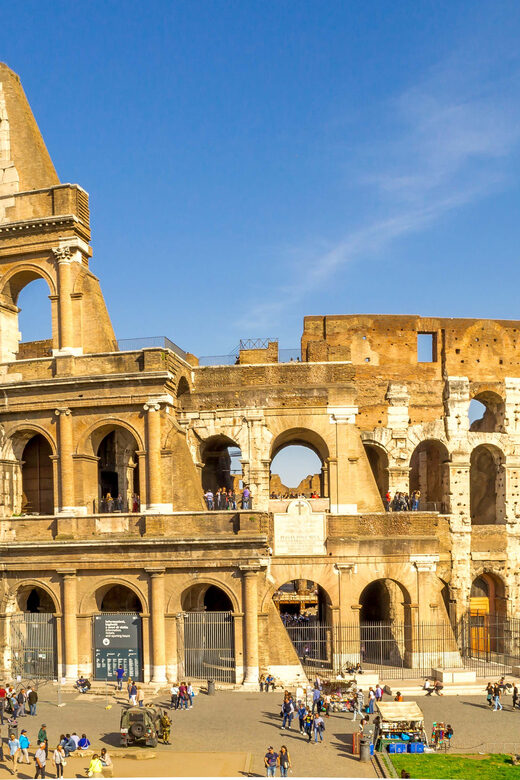
After the arena and underground, the tour includes the Colosseum attic area (floors 3–5) with guided time. This stop matters because it shifts your perspective.
From the upper levels, the Colosseum stops looking like a single arena bowl and starts looking like a complex structure designed for movement, control, and visibility. You see how different levels were built to shape the crowd’s experience. You also get a sense of how sightlines and seating tiers would influence the drama of the show—who could see what, and how officials could oversee everything.
This is also where the “scope” kicks in. Standing upstairs is often the moment when you realize you’re not just looking at ruins. You’re looking at a designed machine for mass entertainment.
If crowds build up, your guide will help you keep moving and focus on the best spots rather than getting stuck waiting.
Roman Forum and Palatine Hill: Ancient Rome’s Power Center
Then the tour walks outward into the city that made the games possible.
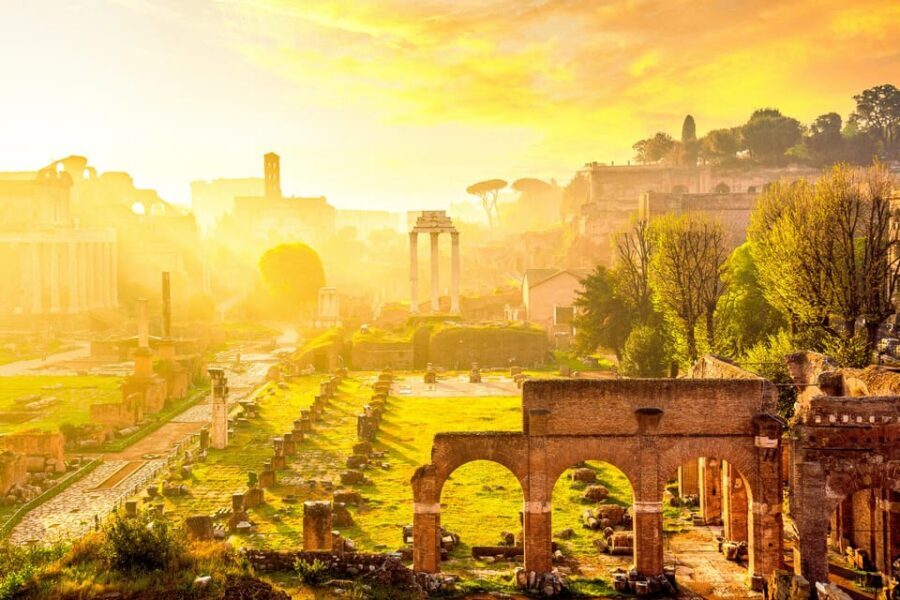
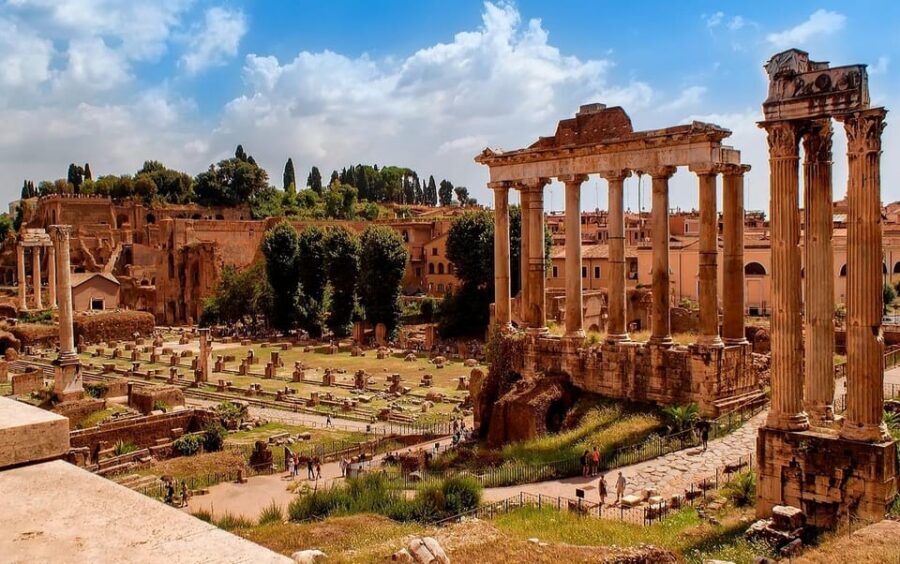
You’ll visit the Roman Forum with a guide, focusing on how it functioned as the political, religious, social, and financial center of Ancient Rome. The Forum can feel like scattered stone unless someone connects it to daily life and governance. With a guide, it becomes a place where you can mentally place people and roles—leaders making decisions, religious authority reinforcing order, and commerce keeping the system running.
Next comes Palatine Hill, where you’ll walk among the ruins and get panoramic views of the Colosseum. Palatine is famous for elite history, and the view makes that clear. You’re looking at the Colosseum not as an isolated monument, but as part of a landscape of power.
This pairing is smart. The Colosseum gives you spectacle and enforcement. The Forum and Palatine give you the reasons it mattered.
The best way to enjoy this part
Walk slower than you think you need to. The Forum and Palatine are large, and the temptation is to “cover ground.” Instead, let the guide’s explanations anchor specific areas, then take a moment to look around. That’s when Rome starts feeling like a connected city rather than three separate sites.
Small Group Size and How the Tour Actually Feels
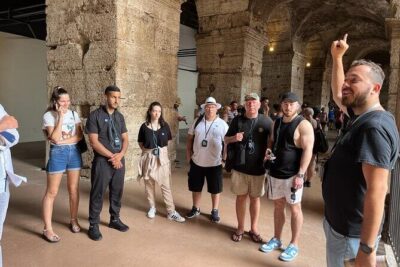
This is a small-group tour limited to 7 participants. That size choice has a big impact. It’s easier to hear questions answered, and you’re less likely to feel like a numbered body shuttled through rooms.
The tour is led in English by a live guide. Based on the guide names that show up for this experience, you might see departures led by people like Eva, Artur, Lumi, or Jessica. Different guides have different storytelling styles, but the through-line is consistent: strong narrative and lots of attention to what you’re looking at.
Headsets are provided, which usually makes the guide easier to follow. That said, one practical issue you should plan for: sometimes headsets aren’t perfect in loud or crowded areas. If you notice you can’t hear clearly, it helps to stand a little closer or adjust your headset fit right away.
Timing, Crowds, and the 3-Hour Rhythm
The total duration is about 3 hours, with starting times depending on availability. In that window, the tour packs a lot: Colosseum visit, underground access, arena floor time, attic floors 3–5, then the Forum and Palatine Hill.
Here’s what to expect rhythm-wise:
- You’ll spend your “special access” time on the Colosseum (underground and arena are the core)
- You’ll then shift to the Forum and Palatine for context and views
Crowd levels can affect how it feels, especially once you’re back up from the underground. One thing to know: underground access can be handled in a controlled way, but the arena and upper areas can get busy.
So aim to show up early, keep your water handy (you just won’t have it included), and don’t plan on lingering too long at every viewpoint on your own. The value is in the guided flow, not in free-form wandering.
Price and Value: Is $191.68 Worth It?
At $191.68 per person, this isn’t a budget Colosseum tour. But the price starts making sense when you look at what’s included:
- Arena floor access
- Underground dungeons access
- Guided Roman Forum and Palatine Hill
- Small-group format (max 7)
- Live English guide
- Colosseum attic floors 3–5 included
Most Colosseum visits focus on the standard routes. What you’re paying for here is the “restricted access” element—standing in the arena and going underground—plus having a guide stitch together what you see with the Forum and Palatine.
You will still need to handle your own food and drinks. If you’re doing this tour as part of a full day in Rome, plan a meal before or after so you’re not stuck hungry while trying to concentrate on the stories.
If you’re excited by gladiator history, architecture, and the full machinery behind the spectacle, the cost feels easier to justify. If you’re mostly interested in quick highlights and you don’t care about restricted areas, you might find cheaper options. But if underground access and arena floor time are your must-dos, this is the kind of tour that makes those priorities real.
Who Should Book This Tour (and Who Might Skip It)
I think this fits best if:
- You want true restricted access rather than just standard viewpoints
- Gladiator stories and the darker side of the games interest you
- You’d like guided connections between the Colosseum, the Forum, and Palatine Hill
- You prefer a small group where your questions get answered
I’d think twice if:
- You’re sensitive to themes of suffering, punishment, and sacrifice (the underground narrative goes there)
- You hate time-limited experiences and want long, unstructured wandering in every space
- You’re trying to keep Rome costs as low as possible and don’t care about arena/underground access
Should You Book It? My Take
If you’re going to Rome once (or only once for Colosseum day), I’d book this if you care about seeing the Colosseum from inside the experience—down on the arena floor and in the underground spaces tied to how the games were run.
The small group size and the structured storytelling make it more than a checklist tour. And the Forum plus Palatine pairing helps you understand why this monument sits where it does, inside a city built on power and performance.
Just go in with the right mindset: the underground portion is limited, the pace is guided (not leisurely), and the subject matter has a dark edge. If that works for you, this is a strong way to get more meaning out of one of the world’s most visited sites.
FAQ
What’s included in the Colosseum Underground and Arena Guided Tour?
It includes guided visits to the Colosseum with access to the arena floor and the underground areas, plus guided visits to the Roman Forum and Palatine Hill.
How long is the tour?
The tour lasts about 3 hours. Exact starting times depend on availability.
Is the tour guided in English?
Yes, it’s a live guided tour in English.
How big is the group?
The group is small and limited to 7 participants.
Where do I meet the guide?
Meet at the activity provider’s office at Via della Polveriera, 8, about 100 meters from the Colosseum, near the purple flags with the Crown Tours logo.
Do I need to bring ID?
Yes. You need a passport or ID card, and Colosseum staff request valid ID for security purposes.
What should I bring or wear?
Bring your passport or ID card. Wear comfortable shoes because you’ll be walking through several major sites.
Is food and drinks included?
No. Food and drinks are not included.
Are pets allowed?
No, pets are not allowed.
Are there any restrictions on what I can bring?
You can’t bring weapons or sharp objects, and alcohol and drugs aren’t allowed.